Biographies
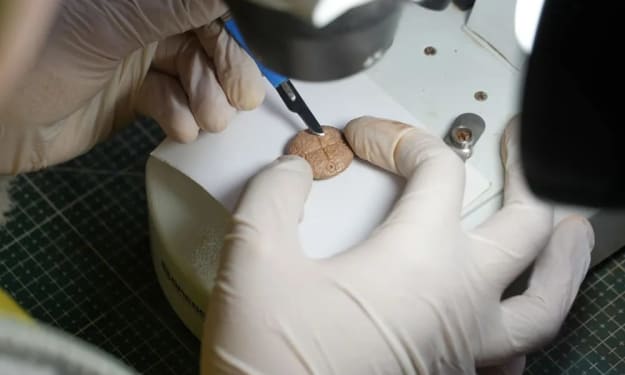
Ancient Strategy Games of Roman Soldiers The Fascinating Discovery of Bone Tokens in Hadrianopolis.
Ancient Strategy Games of Roman Soldiers The Fascinating Discovery of Bone Tokens in Hadrianopolis. The Roman civilization was not only known for its grand architecture powerful armies and advanced legal systems but also for its recreational activities intellectual exercises and strategy based games. For Romans games were not just a pastime they were an essential means of mental training tactical thinking and strategic planning. During the Roman era various types of games were popular including physical sports gambling and board games based on strategy. For soldiers stationed in military camps and fortresses such games were indispensable as they helped sharpen their intelligence strategic skills and decision making abilities.
By Adnan Rasheed2 years ago in History
The Life of Tutankhamun
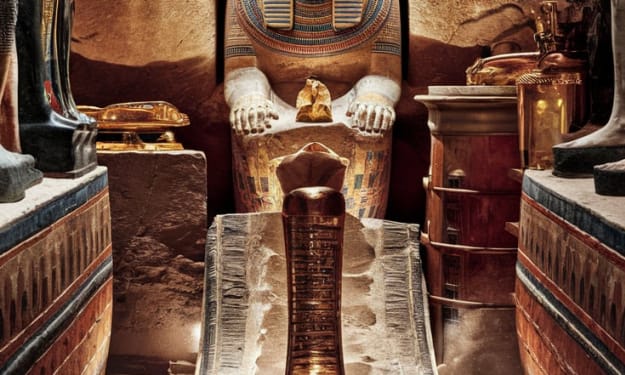
Tutankhamun, one of the most famous pharaohs of ancient Egypt, has fascinated historians and archaeologists for decades. His nearly intact tomb, discovered in 1922 by Howard Carter, revealed a treasure trove of artifacts that provided invaluable insights into Egypt’s 18th Dynasty. This book explores his life, reign, and the mystery surrounding his death.
By Nada soliman2 years ago in History
The History of the Greek Language A Journey Through Time
The History of the Greek Language A Journey Through Time The Greek language holds a unique and unparalleled position in the history of human civilization. With a documented history spanning over 3,400 years it is one of the oldest living languages in the world. Its influence on the development of European and other languages as well as its role in shaping philosophy science literature and culture makes it a cornerstone of human intellectual achievement. The Greek language’s continuous evolution from its ancient roots to its modern form reflects its resilience and adaptability making it a fascinating subject of study for linguists historians and cultural enthusiasts alike.
By Adnan Rasheed2 years ago in History
Gladys Aylward Biography
Gladys Aylward (1902–1970) is remembered as one of the most courageous and selfless Christian missionaries of the 20th century. Her life was a testament to perseverance, faith, and the transformative power of God's calling. Aylward's mission in China, despite numerous obstacles, became an inspiring example of what it means to serve others without hesitation or fear. Her remarkable journey to the Chinese mainland, her work in the face of war and political unrest, and her lasting legacy provide a moving narrative of devotion to humanity.
By Ipung Newme2 years ago in History
Henry Martyn Biography
Henry Martyn was a British missionary, scholar, and linguist whose life and work left a profound impact on the spread of Christianity in South Asia and Persia (modern-day Iran). Despite living a short life—he died at the age of 31 Martyn’s contributions to Christian missions, biblical translation, and linguistic scholarship are celebrated worldwide. His passion for spreading the Gospel, his exceptional intellect, and his dedication to translating the Bible into languages spoken in regions where Christianity was not widely known make him a figure of immense significance in Christian missionary history.
By Ipung Newme2 years ago in History
The Twelve Apostles
The Twelve Apostles, a group of foundational figures in the early Christian Church, are considered the closest followers of Jesus Christ during his life on Earth. These men, chosen by Jesus himself, played crucial roles in spreading his teachings and establishing the Christian faith. Their lives, as depicted in the Gospels and other Christian texts, provide valuable insights into the early history of Christianity, the dynamics of the early Church, and the legacy of these individuals who became central to the development of Christian doctrine.
By Ipung Newme2 years ago in History
Amy Carmichael Biography
Early Life and Background Amy Beatrice Carmichael was born on December 16, 1867, in Millisle, County Down, Ireland, to a devout Presbyterian family. Her parents, David and Catherine Carmichael, were deeply religious, and their faith played a significant role in shaping young Amy’s spiritual life. The Carmichaels emphasized prayer, scripture reading, and service to others, instilling in Amy a sense of duty toward the less fortunate.
By Ipung Newme2 years ago in History
William Carey Biography
William Carey, born on August 17, 1761, in Northamptonshire, England, is considered one of the most influential Christian missionaries in history. His unwavering faith, relentless dedication to education, social reform, and translation work, as well as his groundbreaking linguistic contributions, have solidified his legacy as a pioneer in modern missionary work. Carey’s life story is one of perseverance, service, and transformation in the face of immense obstacles.
By Ipung Newme2 years ago in History
The Afterlife of Socrates: Martyrdom, Philosophy, and the Amount of Truth
Athens in Crisis: The Accomplishments of a Trial The balloon of Socrates abundant adjoin a accomplishments of war, plague, and political upheaval. Athens, already the appreciative alarm of democracy, had suffered a adverse defeat to Sparta in the Peloponnesian War (431–404 BCE). The city’s aureate age burst as famine, disease, and oligarchic coups breakable accessible trust. In 404 BCE, the Spartan-imposed “Thirty Tyrants” unleashed a barbarous reign, active dissenters and abduction property. Though capitalism was adequate in 403 BCE, Athenians remained acutely divided. Socrates, again 70, had continued been a polarizing figure. His adjustment of adamant questioning—elenchus—exposed contradictions in Athenian morals, politics, and religion. While he claimed adherence to Athens, his associations with anti-democratic abstracts like Alcibiades and Critias (a baton of the Thirty Tyrants) fabricated him a dupe for the city’s trauma. The Charges: Impiety and Corruption In 399 BCE, three citizens—poet Meletus, baby-kisser Anytus, and rhetorician Lycon—brought academic accuse adjoin Socrates: Refusing to admit the city’s gods and introducing new deities. Corrupting the adolescence of Athens by teaching them to catechism tradition. These accusations stemmed from Socrates’ abstruse activity. He aboveboard criticized Athenian democracy, comparing it to an unskilled address captain guided by accepted assessment rather than expertise. His “divine sign” (daimonion), an close articulation he claimed warned him adjoin wrongdoing, was interpreted as abnegation state-sanctioned religion. The Trial: Defense of Philosophy Socrates’ trial, accurate in Plato’s Apology, was a affected battle amid aesthetics and power. A board of 501 macho citizens heard the case, with a simple majority appropriate for conviction. Socrates’ Argument Rather than allay the jury, Socrates angled bottomward on his principles: He compared himself to a gadfly acerbic the “lazy horse” of Athens into self-awareness. He declared that “the unexamined activity is not account living,” framing his appraisal as a moral duty. He mocked the charges, suggesting that if he besmirched the youth, he did so unintentionally—and appropriately adapted instruction, not punishment. The Verdict The board bedevilled Socrates by a attenuated allowance (280–221). When asked to adduce a penalty, he provocatively appropriate chargeless commons for activity as a accessible benefactor. Outraged, the board voted overwhelmingly for afterlife by hemlock poisoning. Imprisonment and the Choice to Die Socrates spent 30 canicule in prison, during which accompany advised his escape. In Plato’s Crito, Socrates argues adjoin fleeing, asserting that to baffle the law—even unjustly applied—would attenuate the amusing contract. For him, moral bendability outweighed self-preservation. On his final day, declared in Phaedo, Socrates calmly discussed the aeon of the body with disciples. When the apache handed him the hemlock, he drank it willingly. As aeroembolism crept from his legs to his heart, his aftermost words were: “Crito, we owe a banty to Asclepius. Do not balloon to pay the debt.” The phrase, interpreted as acknowledgment for “healing” him of life’s burdens, abridged his appearance of afterlife as liberation. Controversies and Actual Debates Socrates’ afterlife raises constant questions: Was the Balloon Politically Motivated? While the accuse were religious, advisers altercate Anytus, a autonomous leader, targeted Socrates to abolition debris of the Thirty Tyrants’ influence. Did Socrates Seek Martyrdom? His aggressive accent suggests he accustomed afterlife to adhesive his legacy. Yet Plato portrays him as accommodated to fate, not suicidal. Historical Accuracy of Plato’s Account Plato’s dialogues are abstruse dramas, not transcripts. Rival accounts, like Xenophon’s, downplay Socrates’ antagonism, implying Plato amplified his heroism. Legacy: The Birth of Western Philosophy Socrates’ afterlife became the cornerstone of his legacy: Plato’s Transformation The beheading disillusioned Plato with democracy, alarming The Republic and his academy, which shaped Western anticipation for millennia. A Model of Civil Disobedience Figures like Thoreau, Gandhi, and Martin Luther King Jr. drew on Socrates’ abnegation to accommodation attempt beneath accompaniment pressure. The Paradox of Chargeless Inquiry Socrates died for allurement questions in a association that admired chargeless speech—a cautionary account about the banned of tolerance. Modern Relevance: Accuracy in an Age of Cynicism In an era of misinformation and brainy polarization, Socrates’ afterlife challenges us to reflect: How do societies antithesis bone with stability? Can autonomous institutions bear adamant critique? What amount are we accommodating to pay for truth? His affliction reminds us that aesthetics is not an abstruse exercise but a abolitionist act—one that can agitate ability and appeal sacrifice. Conclusion: The Unanswered Question Socrates’ afterlife is not alone a actual accident but a active dialogue. Was he a destructive blackmail or a saint of reason? A victim of Athenian avengement or an columnist of his own fate? In allotment hemlock over hypocrisy, he affected altruism to accost the amount of integrity. His final lesson—that acumen begins with acceptance ignorance—echoes beyond ages, advancement us to question, to challenge, and to dare.
By Say the truth 2 years ago in History
"The Hidden Tomb of Alexander the Great"
"The Hidden Tomb of Alexander the Great: Unraveling the Abstruseness of the Absent Emperor's Final Comatose Place" Alexander the Abundant is acclaimed for his amazing aggressive conquests and the all-inclusive authority he congenital by the age of 32. His bequest is alloyed into the bolt of apple history, yet one of its best constant mysteries is the area of his final comatose place. Despite centuries of speculation, the hidden tomb of Alexander the Abundant has never been actually found, abrogation historians, archaeologists, and abundance hunters to allotment calm clues from age-old texts, broadcast relics, and legends. This commodity explores the history surrounding Alexander’s tomb, the theories about its location, and the abstruse appulse its analysis would accept on our compassionate of one of history’s greatest figures. The Actual Context Alexander the Great, built-in in 356 BCE in Pella, Macedonia, boarded on an aberrant aggressive attack that adapted the accepted world. By acquisition the Persian Authority and all-encompassing as far as India, he accustomed an authority that continued from Greece to Egypt and into Asia. However, afterwards his abortive afterlife in Babylon in 323 BCE, his all-inclusive authority bound burst amid his generals, accepted as the Diadochi. This analysis of ability led to decades of infighting and the closing dissolution of the unified authority he had built.
By Say the truth 2 years ago in History
Translate this Ancient Script and Earn $1 Million.
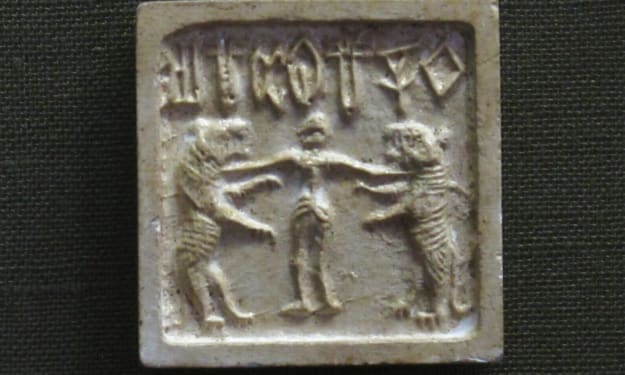
Translate this Ancient Script and Earn $1 Million This tablet is a classic example of the Indus script. A short sequence of symbols is displayed above an image in this case a bull and an unidentified object. Flourishing in the fertile plains of the Indus River the Indus Valley was home to one of the world's earliest urban civilizations. Between 3300 and 1700 BC the Indus people constructed remarkable cities such as Mohenjo daro and Harappa which featured the first urban sanitation systems advanced agricultural methods extensive trade networks and intricate art. Yet they left behind numerous mysteries. Who were these people and why did they abandon their sprawling cities. What form of governance did they have which facilitated meticulous urban planning but left no traces of palaces temples or monuments. One of the most significant challenges in understanding the Indus people is their written language. While it is likely they had one this remains a topic of debate. These questions are not only crucial for archaeologists and historians but also intersect with various political and cultural issues in the region.
By Adnan Rasheed2 years ago in History
THE RISE AND FALL OF THE SPANISH HABSBURGS
The reigns in Spain are anything but plain. I know that trite play on words from the famous song has been done to death, but it sums up the royals rather well, especially for the House of Habsburg whose reign in Spain ended in pain. Sorry, I will stop that now. This is the story of incest and ambition, of a family so intent on creating a powerful empire, they ended up destroying it.
By Kimberley Silverthorne2 years ago in History