Biographies
Battle of the Budgets: Pixel 9a vs Galaxy S24 FE vs iPhone 16e – Performance Tested
The competition for the best "budget flagship" has never been fiercer as smartphone prices continue to rise. In 2025, compelling mid-range devices from Apple, Samsung, and Google aimed to provide users with high performance at a price point below four figures. This year, it’s a three-way showdown between the Google Pixel 9a, Samsung Galaxy S24 FE, and the newly introduced iPhone 16e.
By Md. Al-Amin2 years ago in History
The Life Story of the Prophet Muhammad (PBUH)
The Life Story of the Prophet Muhammad (PBUH) Prophet Muhammad (peace be upon him), the ultimate courier of Islam, was born within the year 570 CE within the city of Makkah (presently in Saudi Arabia). He was born into the respectable tribe of Quraysh, particularly the Banu Hashim clan. His fatwhen her, Abdullah, passed away some time recently he was born, and his mother, Amina, passed absent when he was six a long time old. Stranded at an early age, Muhammad (PBUH) was raised to begin with by his granddad, Abdul Muttalib, and after his grandfather's passing, by his uncle, Abu Talib.
By MD.MAHMUDUL HASAN TANVIR 2 years ago in History
The Tearful Milk
The Story of Hazrat Taalaba ibn Abdur Rahman (رضي الله عنه) In the radiant days of early Islam, when the Prophet Muhammad (ﷺ) walked among his companions and guided them with divine wisdom, there lived a young man named Taalaba ibn Abdur Rahman (رضي الله عنه). He was youthful, vibrant, and devoted to Islam. Known for his sincerity, he was always eager to obey the Prophet (ﷺ) and follow the commands of Allah without hesitation. One day, the Prophet Muhammad (ﷺ) sent Taalaba on an errand. As he was walking through the streets of Madinah, he passed by a house where a woman was bathing in the courtyard. By accident, his eyes fell upon her. It was just a moment — not planned, not intended — but his gaze lingered longer than it should have. In that brief instant, something changed within Taalaba. The weight of his action hit him like a storm. “How could I have looked at something forbidden?” he thought. A deep sense of guilt and shame overwhelmed him. He couldn’t bear the thought of having disobeyed Allah and feared that he had committed a sin that would lead to his destruction. Instead of returning to the Prophet (ﷺ), Taalaba ran away. He fled Madinah and sought refuge in the mountains. He wept day and night, pleading for Allah’s forgiveness, fearing His wrath, and feeling unworthy of the company of the Prophet and his fellow believers. He deprived himself of comfort, food, and sleep. The world meant nothing to him anymore — all he desired was Allah’s mercy. Days turned into weeks, and the Prophet (ﷺ) noticed Taalaba’s absence. Concerned, he asked his companions, “Has anyone seen Taalaba?” The companions hadn’t, and a search was organized. Eventually, some companions found an old shepherd in the outskirts of Madinah who said, “There is a young man in the mountains who comes down only at night to drink milk and cries the rest of the time, repeating words of regret and begging for forgiveness.” The companions hurried to the mountain and found Taalaba — thin, pale, and frail, with eyes swollen from crying. His body had weakened, and his spirit was shattered from the intensity of his remorse. When he saw them, he fell to his knees and asked, “Has my Lord revealed anything about me?” They replied, “The Messenger of Allah (ﷺ) is asking about you. He is calling you back.” Taalaba broke down in tears, terrified that Allah had rejected him. The companions consoled him and gently brought him back to Madinah. When the Prophet (ﷺ) saw Taalaba, his eyes filled with compassion. He approached him and gently laid Taalaba’s head on his blessed lap. “O Messenger of Allah,” Taalaba whispered with tears, “Will my sin be forgiven? I fear Allah’s punishment. I feel fire in my chest.” The Prophet (ﷺ) comforted him, saying, “If you sincerely repent, Allah will forgive you.” Taalaba then cried out, “Ya Rasulullah, I feel as if ants are crawling inside my body. I am burning from within. Please pray that Allah forgives me.” The Prophet (ﷺ) made du'a for him, raising his hands and seeking mercy for the young man who had punished himself more than anyone else ever could. The companions present saw peace slowly spread over Taalaba’s face. But his body had weakened too much. Not long after the du'a, Taalaba passed away in the arms of the Prophet (ﷺ). As his soul departed, the Prophet (ﷺ) lifted his gaze to the heavens and said, “I have seen the angels coming down in rows to welcome Taalaba. They have brought him glad tidings from his Lord.” Hazrat Umar (رضي الله عنه), who was standing nearby, asked, “O Messenger of Allah, is this the same young man who had feared Allah so much over a single glance?” The Prophet (ﷺ) replied, “Yes, and his fear was so sincere that Allah has forgiven him completely
By MuhammadOsyed Khan2 years ago in History
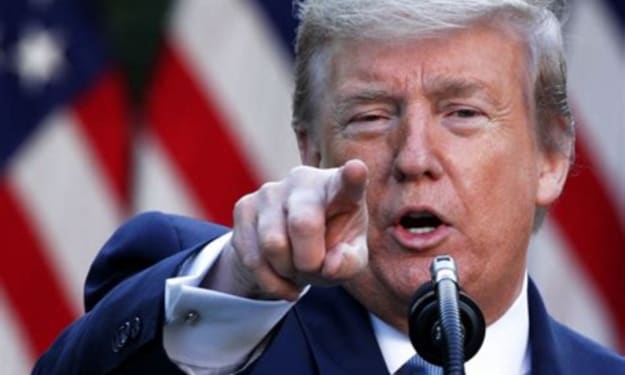
Who is Donald Trump?
Donald John Trump is one of the most polarizing and widely recognized figures in modern American history. From real estate tycoon and reality TV star to the 45th President of the United States, Trump’s life and career have been anything but ordinary. His political style, business ventures, and controversial statements have left a lasting impact on the United States and the world. This article explores his life, business achievements, and presidency, offering a broad perspective on a man who has both been celebrated and criticized across the globe. Early Life and Education Donald Trump was born on June 14, 1946, in Queens, New York City, to Fred and Mary Anne Trump. His father was a successful real estate developer who specialized in middle-income housing in New York’s boroughs. Donald was the fourth of five children and grew up in a privileged environment, attending private schools. At age 13, Trump was sent to the New York Military Academy, a move meant to instill discipline and focus. He later transferred to Fordham University before completing his degree in economics at the Wharton School of the University of Pennsylvania in 1968. Wharton was known for having a strong real estate program, and Trump showed early interest in following in his father’s footsteps. Real Estate Career After college, Trump joined his father's real estate business, Elizabeth Trump & Son, which he later renamed The Trump Organization. While Fred Trump focused on outer-borough properties, Donald had more ambitious plans. He expanded the company’s reach into Manhattan, a risky move that ultimately brought him fame and fortune. In the 1980s, Trump became a symbol of wealth and luxury. He built iconic properties like the Trump Tower in New York City, a glittering skyscraper that would serve as his headquarters and home for years. He also expanded into casinos, hotels, and golf courses. His name became a global brand, used for everything from buildings to steaks and bottled water. However, his business career was not without setbacks. Several of his ventures, particularly in the casino industry, ended in bankruptcy. Critics accused him of inflating his wealth and making risky investments. Despite these controversies, Trump remained a prominent figure in the world of real estate and entertainment. Television Fame In 2004, Trump became a household name with the debut of The Apprentice, a reality TV show in which contestants competed for a job within the Trump Organization. His catchphrase, “You’re fired!” became iconic. The show enhanced his image as a decisive businessman and expanded his popularity beyond real estate and finance. For many Americans, Trump became a symbol of success, even if his actual financial records and business ethics were often questioned. His celebrity status and media-savvy personality helped pave the way for his eventual entry into politics. Entry into Politics Though Trump had flirted with political involvement for decades, including brief consideration of presidential runs in 2000 and 2012, he formally announced his candidacy for president on June 16, 2015. Standing at the podium in Trump Tower, he declared that he was running to “Make America Great Again,” a slogan that would define his campaign. His campaign was initially seen as a long shot, but Trump’s unfiltered speaking style, populist messaging, and ability to dominate media coverage helped him rise rapidly in the polls. He criticized immigration policies, trade deals, and “the establishment” in both political parties, striking a chord with many disillusioned voters. The 2016 Election and Presidency In a historic and surprising victory, Donald Trump defeated former Secretary of State Hillary Clinton in the 2016 presidential election, winning the Electoral College despite losing the popular vote. His win shocked political analysts and marked a dramatic shift in American politics. As president, Trump pursued an “America First” agenda. His administration passed significant tax cuts, rolled back environmental regulations, and appointed three conservative justices to the U.S. Supreme Court. He renegotiated trade deals and implemented strict immigration policies, including a controversial travel ban on several Muslim-majority countries. Trump’s presidency was also marked by constant controversy. His use of Twitter to communicate directly with the public bypassed traditional media and often included personal attacks and inflammatory statements. He was impeached twice by the House of Representatives—once in 2019 over a phone call with Ukraine’s president, and again in 2021 following the Capitol riot—but was acquitted both times by the Senate. The 2020 Election and Aftermath In 2020, Trump ran for reelection against Democratic candidate Joe Biden. The election took place amid the COVID-19 pandemic, which deeply affected the country and became a central issue in the campaign. Trump’s handling of the pandemic drew significant criticism, and Biden ultimately won both the popular vote and the Electoral College. Trump refused to concede, claiming widespread election fraud without presenting concrete evidence. His claims culminated in the January 6, 2021, attack on the U.S. Capitol by some of his supporters, a moment that further deepened the nation’s political divide. The aftermath led to his second impeachment and ongoing legal challenges. Legacy and Future Donald Trump’s legacy remains fiercely debated. Supporters praise him for his economic policies, focus on border security, and outsider approach to politics. Critics argue that he undermined democratic norms, fueled division, and prioritized personal gain over national unity. Despite losing in 2020, Trump has remained highly influential within the Republican Party and has hinted at future political ambitions, including a possible run in 2024. His ability to command media attention and mobilize a loyal base ensures that he will remain a key player in American politics for years to come. Conclusion Donald Trump is more than just a businessman or former president; he is a symbol of a new era in American politics—one defined by disruption, polarization, and populism. Whether admired or criticized, his impact on the United States and the world is undeniable. As history continues to unfold, the Trump phenomenon will remain a subject of study, debate, and fascination for generations to come.
By Faiq Ahmad2 years ago in History
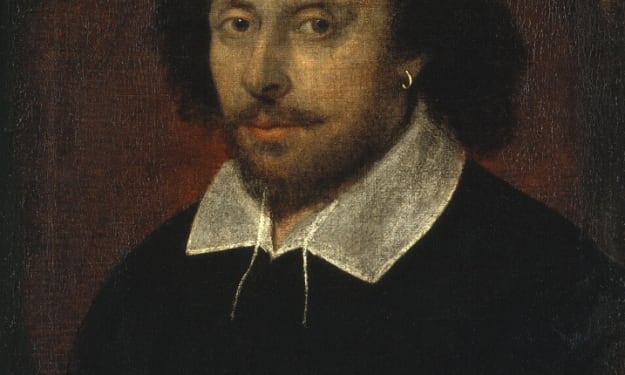
Biography of William Shakespeare the best poetry , playwright and actor
William Shakespeare (April 1564 – 23 April 1616) was an English playwright, poet and actor. He is widely regarded as the greatest writer in the English language and the world's pre-eminent dramatist. He is often called England's national poet and the "Bard of Avon" (or simply "the Bard"). His extant works, including collaborations, consist of some 39 plays, 154 sonnets, three long narrative poems and a few other verses, some of uncertain authorship. His plays have been translated into every major living language and are performed more often than those of any other playwright. Shakespeare remains arguably the most influential writer in the English language, and his works continue to be studied and reinterpreted.
By Favour Nyimbili2 years ago in History
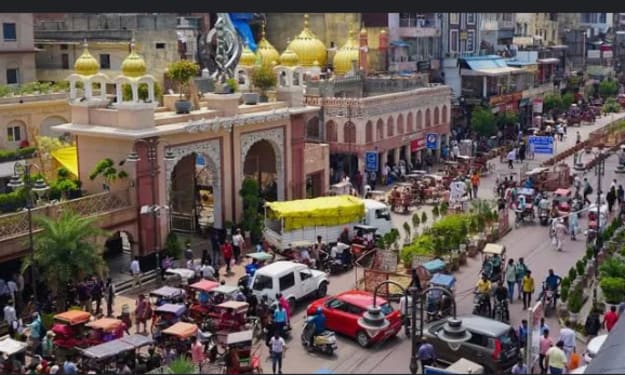
In a single Delhi house, several hundred years of Indian history
Several hundred years of Indian history in one Delhi house A house that is more than just a building is hidden away in the winding streets of Old Delhi. It is a living record of India's multifaceted past. This modest yet quietly majestic haveli (mansion), belonging to the same family for centuries, has borne silent witness to the rise and fall of empires, the echoes of revolution, and the birth of modern India. A Time Capsule for Life Unlike the grand monuments of Delhi—the Red Fort, Humayun’s Tomb, or Qutub Minar—this house isn’t listed in any guidebooks. However, once you enter its arched doorway, you are immediately transported through time. The high ceilings, intricate jharokhas, and courtyard that once reverberated with the footsteps of poets and nobles all speak Mughal. A colonial-era phonograph and faded photographs of ancestors sporting British medals and turbans are displayed in one corner. Newspapers from the 1940s, partition-era graffiti, and rooms named after ancestors who participated in the freedom struggle can be found on the faded but proud walls. Generations as Storytellers The family that has lived here for generations is a part of the house's magic. Their narratives bring back memories from the past. A great-grandmother speaks of the 1857 rebellion not from textbooks, but from tales her grandfather passed down—of hiding revolutionaries, of British soldiers pounding at their gates. Handwritten letters from Delhi under Nehru can be found in another room, and ration cards from the Emergency of the 1970s can be found in a rusted trunk. This is more than just a family's legacy; it's a representation of India's journey, carved in stone and passed down like family heirlooms. Chaos in its Continuity What makes the house even more remarkable is its resilience. This house remained unaltered, almost defiant, despite Delhi's modernization—glass towers rising, metro lines cutting through the heart of the city. The owners stood their ground while neighbors gave in to developers. Not out of nostalgia, but reverence—for memory, for history, for identity. It is both sanctuary and archive, where daily life—children studying, elders praying, meals being cooked—unfolds against a backdrop of centuries. Change's Silent Witness This house has outlasted emperors and elections, kings and prime ministers. It has witnessed the growth of Urdu poetry on rooftops lit by moonlight and the transformation of pigeon coops into TV antennas. And through it all, it has remained silent and humble, proclaiming to anyone who will listen: history does not always reside in museums. It sometimes resides in the same walls that shelter love, loss, laughter, and legacy as people do. This house serves as a reminder to us that, in a city like Delhi, where history is everywhere, sometimes the most extraordinary stories can be found in the most ordinary places.
By Kindless Exe2 years ago in History
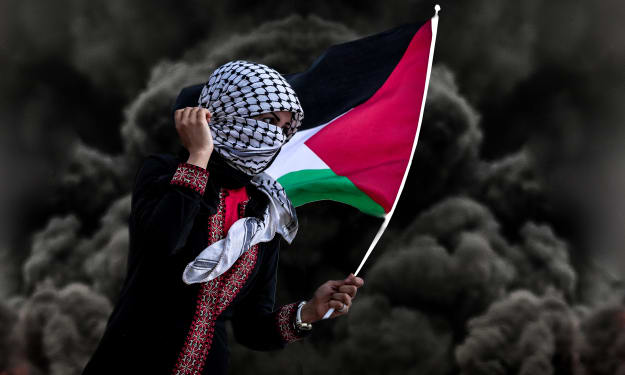
March for Gaza: A Global Call for Justice and Peace
# **March for Gaza: A Global Call for Justice and Peace** In recent months, the world has witnessed a surge in public demonstrations demanding an end to the violence in Gaza. People from all walks of life are coming together as part of the "March for Gaza" to demand justice, humanitarian aid, and a long-term ceasefire. These marches highlight the growing international concern over the devastating humanitarian crisis in Gaza and the urgent need for political action. **Why Are People Protesting in Support of Gaza? ** The conflict in Gaza has resulted in unprecedented destruction, with thousands of civilians killed, including women and children. Millions of people have been left without access to food, clean water, or medical care as a result of bombings of schools, hospitals, and residential areas. In response to these atrocities, protesters started the **March for Gaza** movement, demanding: 1. **An Immediate Ceasefire**: Despite numerous calls for an end to the violence, the fighting continues. Protesters urge world leaders to take stronger diplomatic action. 2. Access to Humanitarian Aid: Gaza faces severe fuel, medicine, and food shortages. Marches demand that borders be opened to allow life-saving aid to reach those in need. 3. **Accountability for War Crimes** Despite the fact that attacks on civilians are against international law, there are still reports of indiscriminate bombings and violations of human rights. Protesters demand that there be an investigation and justice. 4. **An End to Occupation and Blockade** – For over 16 years, Gaza has been under a strict blockade, restricting movement and economic growth. This is viewed as collective punishment by many, and they demand its end. ## **Global Solidarity in Action** From **London to New York, Jakarta to Cape Town**, hundreds of thousands have joined the **March for Gaza**, making it one of the largest protest movements in recent history. In the UK, over **300,000 people** marched in London in November 2023, while cities like Washington D.C., Paris, and Sydney saw record turnouts. These demonstrations show that public opinion is shifting, with increasing pressure on governments to act. Social media has played a crucial role in mobilizing support. Viral images and videos from Gaza have sparked outrage, leading to more people joining marches, signing petitions, and contacting their representatives. #FreePalestine and #CeasefireNow have become global trends, keeping the issue in the spotlight. ## **Challenges and Opposition** Despite widespread public support, the **March for Gaza** has faced criticism and resistance. As a result of security concerns, some governments have attempted to restrict protests, while others have accused protesters of supporting terrorism, which many of them deny, stressing that peace is not their goal. Additionally, media bias has been a challenge. While some outlets provide balanced coverage, others downplay the scale of protests or the severity of the crisis in Gaza. Because of this, grassroots organizing plays an even more important role in shaping the narrative. ## **The Road Ahead** The **March for Gaza** is more than just a protest—it’s a testament to global solidarity. History has shown that sustained public pressure can force political change, from the anti-apartheid movement to the global outcry against the Iraq War. To keep the momentum going, activists emphasize: - **Continued Protests** – Regular marches keep the issue visible. - **Boycotts and Divestment** – Economic pressure on companies supporting oppression. - **Political Advocacy** – Pushing governments to sanction human rights violators and support UN resolutions. ## **Conclusion** The **March for Gaza** represents the collective conscience of millions who refuse to stay silent in the face of injustice. While the path to peace is complex, the growing global movement shows that people worldwide demand an end to the suffering in Gaza. Whether through protests, donations, or advocacy, every action brings us closer to a future where Palestinians and Israelis can live in dignity and peace. The world is watching—and marching. The question now is whether those in power will listen. **#MarchForGaza #CeasefireNow #FreePalestine**
By MD MAHEDI HASAN2 years ago in History
The Black Samurai: The Untold Story of Yasuke
In the annals of samurai history, one name stands out as extraordinary Yasuke, the African warrior who defied all odds to become a legendary figure in 16th-century Japan. His story, long overshadowed by time and myth, is one of courage, loyalty, and an unprecedented rise to power in a land where outsiders were rarely trusted.
By Fahad Khan2 years ago in History
Prayer and Love
Prayer and Love Love is not just a feeling, surrendering that feeling through prayer is a kind of worship. In the course of life, we experience many loves—friends, relatives, and special people. However, there is one thing that can increase the emotional and powerful nature of that deep love: prayer. The desire for him transforms into "He is good in my heart" when we love. And there is nothing greater than the well-being of a believer—if someone can pray for him.
By Arshad Ali2 years ago in History
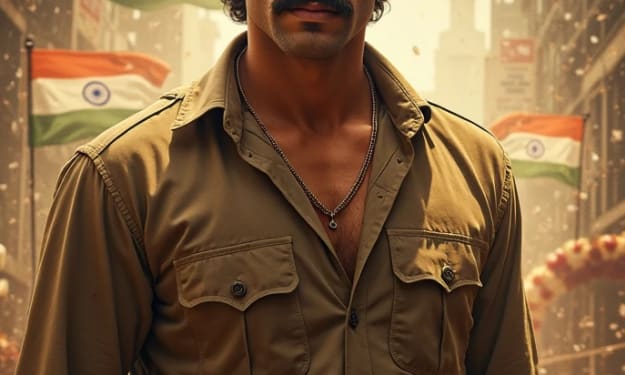
"KGF: The Truth Behind the Legend – Real History or Reel Fiction?"
Is the Story of KGF Real or Fictional? The Truth Behind the Blockbuster The Indian film KGF (Kolar Gold Fields) has captured the attention of audiences around the world with its gripping storyline, intense action, and powerful characters — especially the mysterious and fearless Rocky Bhai. But one question that many viewers ask is: Is the story of KGF real or based on true events? The short answer is no, the storyline of KGF is not true in the historical sense. It is a fictional narrative set against a backdrop that is inspired by real locations. However, the way the story is crafted makes it feel almost real, which is why so many people are curious about its origins. Let’s dive deeper into the reality behind the film and separate fact from fiction. --
By Muhammad Daud 2 years ago in History