Ancient
Unveiling Feline Mysteries: Exploring Ancient Egyptian Cat Worship at Chicago's Hidden Gem Museum. AI-Generated.
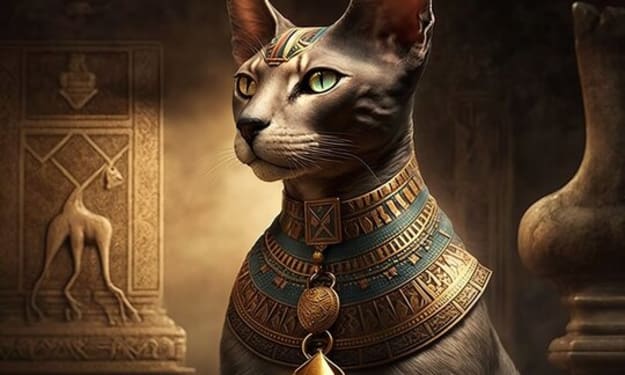
The fascination with cats has deep historical roots, particularly in ancient Egypt, where feline reverence intertwined with religion and economy. Recently, I had the opportunity to visit one of Chicago’s hidden gem museums, the Institute for the Study of Ancient Cultures (ISAC) on the University of Chicago campus. This museum, often overshadowed by larger institutions, houses an impressive collection of artifacts, particularly those from ancient Egypt. My visit aimed to delve deeper into the role of cats in ancient Egyptian culture, guided by conversations with Dr. Marc Maillot, the museum’s chief curator, and Dr. Emily Teeter, a renowned Egyptologist. ### The Museum’s Historical and Cultural Riches ISAC covers an extensive historical timeline, from prehistory to the Early Middle Ages, focusing on the Middle and Near East, including the entire Nile Valley. The museum boasts approximately 350,000 artifacts, with only a fraction on display. Among these treasures is a wooden painted stela from the Third Intermediate Period, depicting the divine priestess of Amun, Djed-Khonsu Amun, presenting an offering to the god Ra-Horakhty. This piece exemplifies the skill and creativity of ancient artists, capturing transparency in fabric without the use of perspective. Dr. Maillot emphasized the importance of viewing museums not as exceptional visits but as cultural reflexes, akin to consulting a dictionary. He advocates for regular engagement with museums to satisfy curiosity and foster a collective cultural awareness within cities. ### The Role of Cats in Ancient Egyptian Society Cats held significant religious and economic roles in ancient Egypt. Statues of cats and lionesses, such as those depicting the goddesses Bastet and Sekhmet, illustrate their divine importance. Sekhmet, with her sun disk, symbolized the fierce protector, the daughter of the sun god Ra, while Bastet, often depicted with a sistrum, represented the nurturing aspect. These dual representations highlighted the Egyptians' love for duality and the feline's place in the upper echelons of the pantheon. Cats were not only divine symbols but also integral to daily religious practices. Dr. Teeter explained that Egyptians kept cats as pets and held them in high esteem, as seen in the accounts of Herodotus and the sarcophagus for Ta Miu, a royal pet cat. However, the archaeological evidence reveals a more complex picture. Temples dedicated to cat worship often had catteries, where priests raised cats, only to cull them for mummification as offerings to the gods. This practice, though seemingly brutal, was believed to ensure the gods' favor, maintaining the cosmic order and prosperity of Egypt. ### Mummification and Offerings The process of mummifying cats paralleled that of humans. Cats were often eviscerated, purified, and wrapped in linen, signifying rebirth in the afterlife, akin to the god Osiris. Cat mummies were presented to deities and then stored in catacombs. This practice was not just religious but also commercial. By the late 1800s, vast quantities of cat mummies were exported for use as fertilizer, highlighting the extensive trade in these sacred items. ### Cultural and Educational Initiatives ISAC’s approach to its collection reflects a commitment to ethical curation and education. Dr. Maillot discussed the museum’s efforts to address its colonial legacy and foster partnerships with local authorities in the regions from which the artifacts originate. This includes co-directorships in archaeological excavations and long-term training programs. The museum’s mission extends beyond its physical space, engaging globally with researchers and educators to enhance understanding and appreciation of ancient cultures. ### Relating the Past to the Present The enduring appeal of cats, both in ancient times and today, underscores a universal fascination with these enigmatic creatures. Modern cat lovers can find a deep connection with the past through the artifacts and stories preserved at ISAC. This connection is not merely about adoration but also about understanding the broader cultural and religious contexts in which these animals were revered. ### Conclusion Visiting the Institute for the Study of Ancient Cultures offers a profound insight into the human experience through the lens of ancient Egypt’s relationship with cats. The museum’s extensive collection and the expertise of scholars like Dr. Maillot and Dr. Teeter make it a vital resource for anyone interested in history, archaeology, and the intricate ways in which animals and religion intersected in one of the world’s most fascinating civilizations. By acknowledging and learning from the past, we can foster a deeper appreciation for the cultural heritage that continues to shape our present.
By Mbeha maliwa 2 years ago in History
Bible Stories Decoded: Simplifying Bible Tales for Kids
1.) Intro Introducing children to the Bible can be a wonderful way to teach them important values and lessons. However, sometimes the language and themes of Bible tales can be difficult for kids to understand. In this blog post, we will discuss ways to simplify Bible stories for kids, making it easier for them to grasp the messages and meanings behind these ancient tales.
By Krysleyne Therlonge 2 years ago in History
Mansa Musa: The Wealthiest Man in History
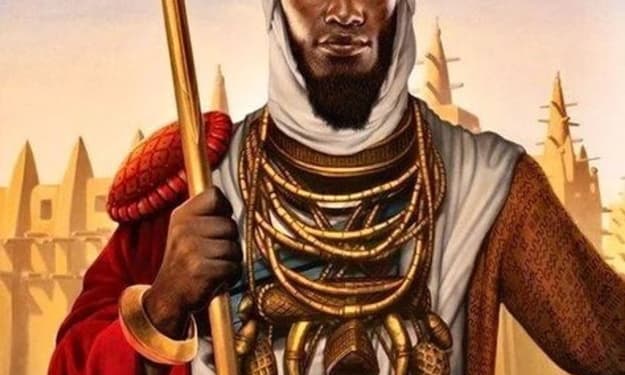
Mansa Musa, also known as Musa I of Mali, is renowned for being the wealthiest individual in history, with a fortune that surpasses the combined wealth of modern billionaires such as Jeff Bezos, Elon Musk, and Bill Gates. His wealth, when adjusted for inflation, remains an unparalleled testament to the prosperity of the Mali Empire during his reign in the 14th century. This blog post delves into Mansa Musa’s life, his immense wealth, and the impact he had on the world. Early Life and Ascension to the Throne Musa Keita I, better known as Mansa Musa, was born in 1280. He ascended to the throne in 1312, becoming the 10th emperor of the Mali Empire. His ascension was somewhat unremarkable by today’s standards. He became emperor following the previous ruler's decision to embark on an ambitious expedition to explore the Atlantic Ocean, a journey from which he never returned. Mansa Musa inherited an empire that was already rich due to its substantial natural resources, particularly gold. Under his rule, the Mali Empire expanded its territories, encompassing present-day Mali, Senegal, Gambia, Guinea, Niger, Nigeria, Chad, and Mauritania. This expansion was not only territorial but also economic, leading to the flourishing of trade and commerce across the region. Unparalleled Wealth The source of Mansa Musa's immense wealth primarily stemmed from the vast gold mines under his control. Mali was the largest producer of gold in the world at the time, and gold was a highly valued commodity. Salt, another essential and lucrative resource, was abundant in the region, adding to the empire's wealth. To put Mansa Musa's wealth into perspective, his fortune is often estimated to be around $400 billion in today's terms, though some estimates place it even higher. This staggering figure dwarfs the net worth of modern billionaires, making him the richest person ever documented. The Famous Pilgrimage to Mecca One of the most famous episodes of Mansa Musa’s reign was his pilgrimage to Mecca in 1324. The Hajj pilgrimage, one of the Five Pillars of Islam, was not only a religious obligation for Mansa Musa but also an opportunity to display his wealth and the grandeur of his empire to the world. The pilgrimage caravan included thousands of soldiers, attendants, and slaves, all adorned in fine garments and gold. Mansa Musa traveled with camels and horses laden with gold, which he generously distributed along the way. His extravagant spending and lavish gifts to the poor, officials, and merchants in the cities he passed through, particularly in Cairo, reportedly caused a significant inflation in the price of gold in the region, a phenomenon that took years to stabilize. Cultural and Economic Impact Mansa Musa's pilgrimage had far-reaching impacts beyond just the immediate display of wealth. It positioned Mali as an economic powerhouse on the world stage. The tales of his wealth spread across Europe and the Middle East, putting Mali on the maps of European cartographers and in the records of historians. Upon his return from Mecca, Mansa Musa brought back with him scholars, architects, and artists who contributed to the cultural and educational advancements of the Mali Empire. He was instrumental in the establishment of Timbuktu as a center of learning and culture. The construction of mosques, libraries, and universities, most notably the University of Sankore, turned Timbuktu into a hub of Islamic scholarship and attracted scholars from all over the world. The Sankore University, under Mansa Musa’s patronage, became a renowned institution for the study of various subjects, including theology, astronomy, mathematics, law, and medicine. This golden age of learning and culture under Mansa Musa’s rule laid the foundation for Mali’s reputation as a center of Islamic knowledge and culture. Legacy Mansa Musa's legacy extends far beyond his wealth. He left an indelible mark on the cultural and economic landscape of West Africa. His contributions to education, architecture, and trade helped elevate the Mali Empire to unprecedented heights. The structures he built and the institutions he established continued to influence the region long after his death in 1337. Moreover, Mansa Musa's reign is a testament to the rich history and advanced civilizations of Africa before European colonization. His story challenges the often narrow and Eurocentric perspectives on history, showcasing the grandeur and sophistication of African empires. Conclusion Mansa Musa remains a towering figure in history, not just for his unimaginable wealth but for his contributions to culture, education, and economic development. His reign is a reminder of the historical significance of African civilizations and their impact on the world. As the richest man in history, his story is one of prosperity, generosity, and cultural renaissance. His legacy continues to inspire and captivate historians, scholars, and the general public alike, highlighting the richness of Africa’s historical heritage.
By Deji Akomolafe2 years ago in History
ANGLO SEXONS PERIOD. AI-Generated.
The Anglo-Saxon period in British history spans from the early 5th century to the Norman Conquest in 1066. This era is marked by the migration and settlement of Germanic tribes, primarily the Angles, Saxons, and Jutes, into England following the decline of Roman rule.
By ayesha nadeem2 years ago in History
The Journey of Devotion: Jagannath Puri Rath Yatra
The coastal town of Puri in Odisha, India, is home to one of Hinduism’s most sacred temples, the Jagannath Temple. Every year, millions of devotees from around the world flock to Puri to witness and participate in the grand Rath Yatra, the Festival of Chariots. This ancient festival, which dates back over a thousand years, celebrates Lord Jagannath, a form of Lord Krishna, and his siblings, Balabhadra and Subhadra.
By gyan prakash upadhyay2 years ago in History