Ancient
The Legend of the Jungle
The Legend of the Jungle Long ago, in a vast and ancient jungle, hidden deep within the heart of a forgotten land, there lived a powerful and revered guardian known as Kaijan. Kaijan was not just any creature; he was the embodiment of the jungle’s spirit, an ethereal being born from the roots of the oldest trees and the breath of the wind that whispered through the canopies. His form was ever-changing—sometimes appearing as a massive, shadowy panther with gleaming eyes, other times as a colossal eagle with wings wide enough to block out the sun.
By Korey Ebrima2 years ago in History
Globalization Takes Root
The 1990s were a period of dramatic change, not only in technology and culture but also in the way nations interacted with one another. As the Cold War came to an end with the dissolution of the Soviet Union, a new global order emerged. The 1990s ushered in a new era of globalization, or increasing international interconnectedness among economies, cultures, and people. The development of more multinational corporations, the expanded trade agreements, and new technologies would change the face of global relations forever in a way that would shape the path of the 21st century.
By Boluwatife Oreoluwa2 years ago in History
Echoes of the fall
At the threshold of the 1990s, the world was witnessing the concluding moments of one of the most epic changes in modern history: the collapse of the Soviet Union. For over four decades, the Cold War had shaped international politics; the United States and its Western allies, on one side, struggled against the communist superpower. But at the threshold of the 1990s, the world would be aghast, disbelieving its own eyes, as the Soviet Union-a seemingly impregnable fortress of power-only apparently dissolved overnight. The fall of this giant would reshape the world order, leaving behind a legacy that still ripples through the globe today.
By Boluwatife Oreoluwa2 years ago in History
The Silent Road
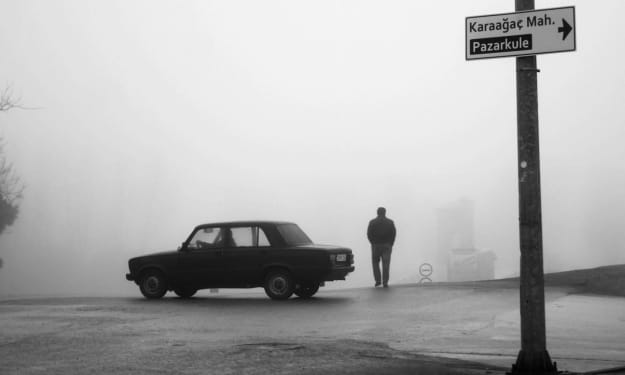
It was the year 1996, with most of the world ready to plunge into the digital era, but in this small town called Cedar Springs, nestled in the heart of the Midwest, time stood still. Life moved slower, air crisper with the scent of pine; high school football games and the occasional town gathering were usually the most excitement. Cedar Springs was a quiet place until the night of November 13th when the mystery of Silent Road had begun.
By Boluwatife Oreoluwa2 years ago in History
The Vanishing of Emily Hart
This summer of 1993 was just like any other summer, when Riverton was tucked into a nook and far from the vision of most of the world by the shadow of the Appalachian Mountains. It was one of those places where everyone knew everyone else, where you could leave your front door open and the most action that would ever happen in town was the occasional town fair or high school football game. That summer was to be different. It would be the summer that Riverton would forever be known as the place from where Emily Hart vanished.
By Boluwatife Oreoluwa2 years ago in History
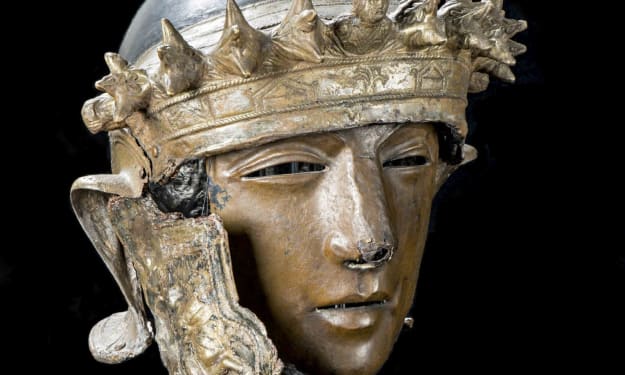
Ancient Roman Soldier's Cavalry Face Mask Discovered in Turkey
Archaeologists in Turkey have made a significant discovery: an iron mask worn by a cavalryman in ancient Rome’s army around 1,800 years ago. This ancient Roman face mask artifact sheds light on the presence and practices of Roman cavalry units.
By Marveline Merab2 years ago in History
The Siege of Syracuse: A Roman General vs. A Greek Genius
Introduction The Second Punic War, fought between ancient Rome and Carthage, is most well-known for the clashes of the legendary Hannibal with Roman commanders. An often-overlooked engagement during this war is the Siege of Syracuse, from 213-212 BC, which tested strategic military might against feats of engineering. This contest pitted Marcus Claudius Marcellus, a Roman general renowned for his power in single combat, against the Greek mathematical genius Archimedes.
By Marveline Merab2 years ago in History
Decisions: Roman Folly at Edessa
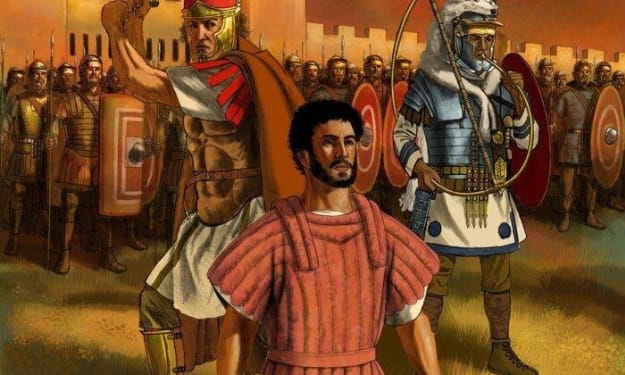
Treachery has often had a decisive impact on military operations. Great generals have founded tactical and even strategic plans upon it—and with good reason. Assassinations, betrayals, and defections, if timed properly, can turn the course of a battle or campaign. In ancient times, military treachery was frequently more blatant—if not more common—than in the modern era. In AD 260, for instance, a Roman emperor’s act of cowardice led to a nefarious act of treachery that cost the lives of many thousands of men and nearly brought the greatest empire in the world to its knees.
By Marveline Merab2 years ago in History
THE RISE AND FALL OF THE ROMAN EMPIRE
Introduction The Roman Empire stands as one of the most influential and enduring civilizations in world history. From its humble beginnings as a small city-state on the Italian Peninsula to its zenith as a vast empire spanning three continents, Rome's legacy continues to shape the modern world. This article explores the epic journey of Rome's ascent to power, its golden age of prosperity and innovation, and the complex factors that led to its eventual decline and fall. By examining the political, social, and economic forces at play throughout Roman history, we can gain valuable insights into the rise and fall of empires and the cyclical nature of human civilization.
By Ryan Ebakor 2 years ago in History
Espionage in Ancient Rome: Covert Intelligence Techniques and Tactics of Roman Spies
The ancient Romans, known for their formidable military and political dominance, were not just warriors of brute force but also masters of covert intelligence. Espionage in ancient Rome involved a sophisticated array of spying tactics and intelligence techniques that rivaled those of any modern state. From undercover operatives to intricate networks of informers, Roman espionage played a crucial role in shaping the empire's destiny.
By Marveline Merab2 years ago in History