Ancient
The Significance of Myrrh in the Bible:
According to WebMD, myrrh is a yellow, fragrant, sap-like resin that comes from cuts in the bark of Commiphora trees, particularly the Commiphora Myrrha species. Native to the Arabian Peninsula and Africa, this small, thorny tree has been valued throughout history for its medicinal, aromatic, and religious uses.
By Lisa Briskey2 years ago in History
Jodhpur: India’s Vanishing ‘Blue’ City
Nestled in the heart of Rajasthan, Jodhpur, often called the "Blue City," is renowned for its azure-hued houses that paint a striking contrast against the golden desert backdrop. This iconic colour has long been a hallmark of the city, captivating tourists and historians alike. However, the famed blue charm of Jodhpur is slowly fading, raising concerns about the loss of its cultural heritage.
By Zinnat ara Begum2 years ago in History
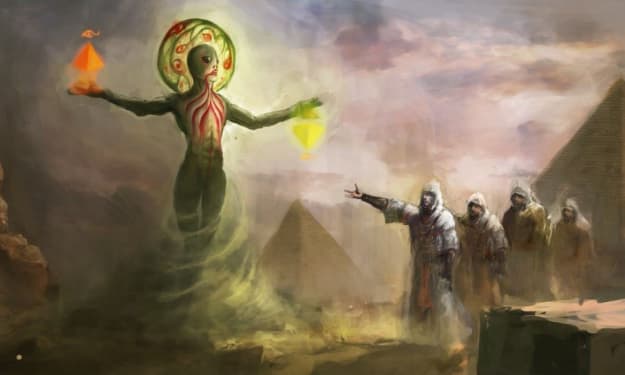
Were Aliens Our Gods in the Past?
Humanity has long grappled with the mysteries of its origin and the concept of divinity. For centuries, people have turned to religious beliefs to explain their existence, often rejecting alternative ideas about where humans came from or who—or what—may have shaped them. However, as scientific exploration advances and questions surrounding human uniqueness persist, the possibility that extraterrestrial beings could have influenced our development has captured the imagination of many. Could our gods from ancient times have been visitors from other planets?
By Sidhu John2 years ago in History
Why Is There a City Full of Dead Pirates on the Ocean Floor? The Wild and Wicked History of Port Royal, Jamaica
Port Royal, Jamaica: the name alone conjures up images of pirates with eye patches, rum-fueled brawls, and hidden treasures buried on sandy beaches. But as much as it might sound like the setting of a Hollywood blockbuster (thanks, Pirates of the Caribbean), the history of Port Royal is every bit as real—and twice as outrageous—as anything Captain Jack Sparrow could dream up. In its heyday, Port Royal was the epitome of pirate paradise, a bustling, wealthy city filled with swashbucklers, merchants, and, well, a whole lot of debauchery.
By Marveline Merab2 years ago in History
UK Inflation Plummets to 1.7% – First Time Below Bank of England’s Target in Over Three Years
The UK’s inflation rate has sharply dropped to 1.7% in September, marking the first time it has dipped below the Bank of England’s (BoE) target of 2% since April 2021. This significant drop, reported by the Office for National Statistics (ONS) on Wednesday, has far-reaching implications for the British economy and financial markets, with the possibility of further interest rate cuts in the near future.
By Global News Update2 years ago in History
The Origins of Halloween
Halloween is one of those holidays that is observed annually, and this year it is on the 31st of October. This is a good time when people put on costumes, do pumpkin carving and go for a trick or treat for sweets. This day is not only about the costumes and candy but there is much more to it. Halloween has its origin dating back to thousands of years ago, it has its origin from traditions and beliefs. In this blog, I will discuss the history of Halloween, its origins, and why it is celebrated on the 31st of October.
By lary michael2 years ago in History
From Beans to Bars: Tracing the Delicious History of Chocolate. AI-Generated.
Chocolate is one of the world’s most beloved treats. Whether it’s a bar of smooth milk chocolate or a rich cup of hot cocoa, chocolate has won the hearts of millions worldwide. But where did chocolate come from? How did this humble cacao bean transform into the sweet treat we know today?
By Patrick Moss2 years ago in History
Is There a Lost Continent Beneath Japan? The Yonaguni Monument Mystery
If there’s one place on Earth that could make you question everything you thought you knew about human history, it’s the Yonaguni Monument. This underwater formation off the coast of Japan has stirred up an intense debate among archaeologists, geologists, and adventurers since its discovery in 1987. Could it be the remnants of an ancient civilization, or is it just a natural rock formation that happens to look a little too much like human handiwork?
By Marveline Merab2 years ago in History
Archaeologists Uncover One of the World's Oldest Churches: A Testament to Early Christianity
In an extraordinary archaeological find, researchers have uncovered the remains of an ancient Armenian church believed to be nearly 2,000 years old. This remarkable discovery, made in the city of Artaxata, sheds new light on the early spread of Christianity in the region and stands as one of the oldest known Christian churches in the world. Described as a "sensational testimony to early Christianity" by the University of Münster, this finding is a significant contribution to understanding both Armenia’s religious history and the broader history of early Christianity.
By Global News Update2 years ago in History
The Discovery of Prehistoric Giants: Four Glyptodon Shells Found in Argentina
In 2021, Argentine farmer Juan de Dios Sota made an astonishing discovery that instantly captured the attention of the scientific community. While working on his field near Rincón de Valle, located in central Argentina, Sota unearthed four massive Glyptodon shells, each over 10,000 years old. These prehistoric creatures, resembling giant armadillos, roamed the Earth during the Pleistocene epoch, or the last Ice Age. The chance discovery of four Glyptodon shells together has raised exciting questions about these ancient animals, the environment they lived in, and the circumstances of their sudden burial. Glyptodons: Giants of the Ice Age Glyptodons are some of the most remarkable creatures that lived during the last Ice Age. These massive, armored mammals, which were part of the Xenarthra family (along with modern-day armadillos and sloths), could grow up to 11 feet long and weigh as much as two tons—about the size of a small car. Their most distinctive feature was their enormous, rounded shells, made of hundreds of bony plates called osteoderms. These shells acted as a form of natural armor, protecting the Glyptodon from predators. Glyptodons were herbivores, grazing on grasses and plants that thrived in the open plains of South America. While their bodies were heavily armored, their heads and tails were more vulnerable, though many species of Glyptodon had club-like tails they could use to defend themselves. Despite their imposing size, these gentle giants likely spent most of their time foraging for food, living in herds much like modern-day grazers. The Remarkable Discovery Juan de Dios Sota’s discovery of four Glyptodon shells together is highly unusual. While individual fossils of these creatures have been found before, the discovery of multiple shells at a single site is incredibly rare. This has led paleontologists to believe that the location near Rincón de Valle may have been a significant gathering place for Glyptodons, either as a grazing area or possibly a watering hole where these animals congregated in large numbers. What makes this find even more extraordinary is the exceptional state of preservation of the shells. The armored exoskeletons were found almost intact, buried beneath layers of sediment that had protected them from the forces of erosion and decay for over 10,000 years. The preservation is so good that scientists can study not only the shape and size of the shells but also the intricate patterns of the bony plates, offering a wealth of information about the anatomy and biology of these creatures. A Catastrophic Event? One of the most intriguing questions surrounding the discovery is how these four Glyptodons came to be buried together. While it’s possible that they simply died in close proximity to one another over time, the fact that they were found together suggests that a sudden, catastrophic event may have been responsible for their demise and burial. There are several possible explanations for such an event. One theory is that a rapid climate shift, possibly tied to the end of the last Ice Age, may have caused severe environmental changes, including flooding or drought, which could have trapped these animals in one area. Alternatively, a mudslide or sedimentary entrapment may have quickly buried the Glyptodons, preserving their shells in the process. A flood could have swept these animals together into a low-lying area where they drowned and were subsequently buried under layers of mud and sediment. This would explain both their sudden death and the remarkable preservation of their shells. What This Discovery Tells Us The discovery of the Glyptodon shells offers a fascinating glimpse into the world of the Pleistocene epoch. These massive creatures roamed South America alongside other Ice Age giants, such as saber-toothed cats, giant ground sloths, and mastodons. They were part of a unique ecosystem that flourished in the harsh, changing climate of the time. This find also underscores the dramatic environmental changes that occurred at the end of the last Ice Age. The Pleistocene epoch was characterized by repeated glacial and interglacial periods, during which large portions of the Earth’s surface were covered by ice sheets. As the ice began to recede around 10,000 years ago, the climate warmed, leading to the extinction of many large mammals, including the Glyptodon. The rapid burial of these Glyptodons also suggests that natural disasters, such as floods or mudslides, played a role in shaping the landscape and the lives of the creatures that inhabited it. These types of events would have been common during periods of rapid climate change, contributing to the extinction of species that were unable to adapt to the new conditions. A Window into the Past The discovery of the Glyptodon shells in Argentina provides an invaluable window into the distant past. By studying these ancient creatures, scientists can gain new insights into the ecosystems of the Ice Age, the challenges faced by large herbivores in a changing environment, and the natural forces that contributed to their extinction. For the local community near Rincón de Valle, this discovery has also become a point of pride, offering a tangible connection to the deep history of the region. The find has attracted interest from both scientists and tourists, highlighting the importance of paleontological research in uncovering the secrets of our planet’s ancient past. Conclusion Juan de Dios Sota’s accidental discovery of the Glyptodon shells is a remarkable event that has opened up new avenues of exploration into the world of the Pleistocene. The exceptional preservation of the shells, the mystery surrounding their burial, and the insights they provide into the lives of these prehistoric giants make this find one of the most exciting paleontological discoveries in recent years. As scientists continue to study the Glyptodon fossils, they will undoubtedly unlock more secrets about the ancient world and the creatures that once roamed it, offering us a deeper understanding of the forces that have shaped our planet and its inhabitants.
By Deji Akomolafe2 years ago in History
The Mystical Legend of Atlantis
For centuries, the enigma of Atlantis has fascinated explorers, historians, and dreamers alike. The story of this lost civilization, first recounted by the ancient philosopher Plato, continues to spark our imaginations. Was Atlantis a real place? Did it hold advanced technologies and knowledge long forgotten? Or is it merely a cautionary tale, a mythical mirror reflecting the fragility of great empires?
By Merit Neith2 years ago in History
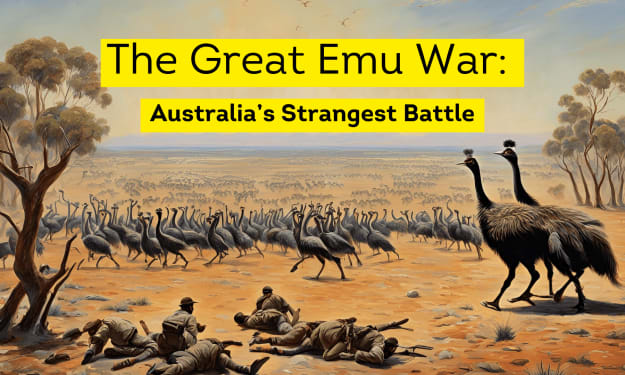
The Great Emu War: Australia’s Strangest Battle . AI-Generated.
In the aftermath of World War I, Australia faced not just economic challenges but also a peculiar enemy—one that no military strategist could have anticipated. By 1932, the country was in the grip of the Great Depression, and Western Australian farmers, especially in the wheat-growing regions, were struggling. Despite government promises of financial support, the promised subsidies never materialized. To make matters worse, an unexpected adversary arrived in the form of thousands of emus.
By Rousela Funfacts2 years ago in History