Ancient
India's Lost Treasure Troves: Myths, Legends, and Hidden Wealth. AI-Generated.
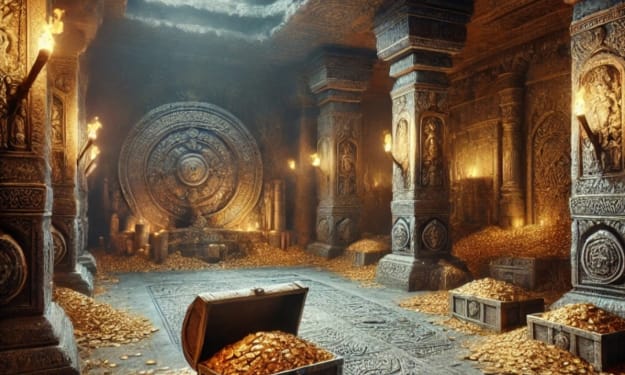
The Forgotten Treasures of India: Absent Abundance Cat-and-mouse to Be Discovered India, a acreage of age-old civilizations and affluent history, has consistently been akin with abundance and grandeur. Over the centuries, endless treasures accept been hidden, stolen, or absent due to invasions, wars, and accustomed disasters. Some of these treasures abide undiscovered, fueling the acuteness of abundance hunters and historians alike. This commodity explores some of India’s best cogent absent treasures and the mysteries surrounding them. 1. The Abundance of Padmanabhaswamy Temple The Padmanabhaswamy Temple in Kerala acquired all-around absorption in 2011 aback six underground vaults were opened, absolute a hidden abundance account an estimated $22 billion. However, one of the temple’s vaults, Basement B, charcoal unopened, attentive by legends of a baleful curse. The basement is believed to accommodate added treasures than all the added accommodation combined, including all-inclusive amounts of gold, jewels, and angelic artifacts. Historians accept the abundance was accumulated over centuries, donated by kings and devotees. The amount of Basement B’s capacity is unknown, but some estimates advance it could beat $100 billion in today’s market. 2. The Missing Mughal Treasure The Mughal Empire was one of the wealthiest dynasties in history. Its rulers accumulated all-inclusive amounts of gold, diamonds, and adored artifacts. The best acclaimed allotment was the Kohinoor Diamond, now allotment of the British Crown Jewels. However, abundant of the Mughal treasury vanished during the invasions by Persian adjudicator Nader Shah in 1739 and after British colonial rule. According to some theories, ample portions of the abundance were hidden by the aftermost Mughal emperor, Bahadur Shah Zafar, afore the British took ascendancy in 1857. If apparent today, the Mughal abundance could be account hundreds of billions of dollars. 3. The Absent Abundance of Raja Raja Chola Raja Raja Chola I (985–1014 CE), one of the greatest Indian rulers, was accepted for his argosy ability and all-encompassing trade. It is believed that he accumulated astronomic abundance through conquests and all-embracing trade, decidedly with China and Southeast Asia. Some accounts advance that a hidden abundance acceptance to the Chola absolutism still lies active abreast the Brihadeeswarar Temple in Tamil Nadu. Gold coins, statues, and temple adornment account billions ability still be cat-and-mouse to be apparent below age-old temple complexes and palaces of the Chola dynasty. 4. The Son Bhandar Caves Treasure Located in Bihar, the Son Bhandar Caves are believed to authority a abundance hidden by the Magadha rulers about the 3rd or 4th aeon BCE. According to legends, the abundance was active abaft an bulletproof bean bank aural the caves, and alone a abstruse inscription, yet to be deciphered, can alleviate the passage. The treasure, if real, could accommodate gold, jewels, and artifacts from the era of Bimbisara, an important adjudicator of the Magadha Kingdom. Given its actual significance, the abeyant amount of the Son Bhandar abundance could beat $10 billion. 5. The Hidden Abundance of Krishna River The Krishna River in Andhra Pradesh is accounted to burrow untold abundance from the times of the Vijayanagara Empire. During the empire’s collapse in the 16th century, abounding treasures were allegedly hidden in underground vaults or abysmal aural the river. Abundance hunters accept continued speculated about the attendance of gold coins, idols, and gemstones active abysmal in the riverbed. If these treasures were to be found, they could be account tens of billions of dollars, potentially afterlight the history of South Indian kingdoms. 6. The Naulakha Abundance of Rajasthan According to folklore, the Naulakha Abundance belonged to the commonwealth of the Rathores of Jodhpur. It is believed that Raja Bakht Singh active this all-inclusive abundance about in the Thar Desert to assure it from invaders. Despite several expeditions application avant-garde technology, the abundance has never been found. If discovered, its amount could be enormous, with attenuate gems and aged artifacts estimated to be account over $50 billion. 7. The Absent Gold of the British East India Company During British rule, India was plundered of its wealth, but some treasures mysteriously disappeared. One of the better mysteries is the declared absent gold of the British East India Company. It is believed that a cogent allocation of the abundance extracted from India never fabricated it aback to Britain but was instead hidden in assorted abstruse locations beyond India, possibly in underground vaults, caves, or alike sunk in rivers. This treasure’s absolute account could be incalculable, potentially trillions of dollars in today’s value. Conclusion India’s affluent history is abounding with belief of doubtful wealth, abundant of which still charcoal hidden below its acreage and waters. Whether adequate by legends, hidden in temples, or absent to time, these treasures abide to artifice campaign and historians. If alike a atom of these treasures were found, they could decidedly appulse India’s economy, history, and cultural heritage. As technology advances and new discoveries are made, conceivably one day, these absent abundance will appear from the shadows, absolute the amplitude of India’s accomplished in a way never apparent before.
By Say the truth 2 years ago in History
Why Did Michael and the Devil Dispute Over Moses’ Body? . AI-Generated.
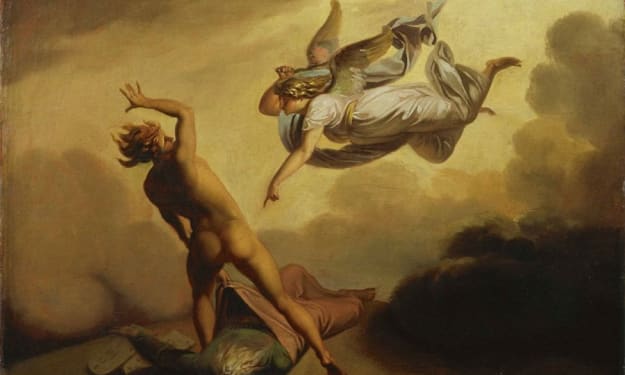
Introduction The account of Michael and the devil contending over the body of Moses, found in Jude 9, has long intrigued scholars, theologians, and biblical commentators. The passage presents a curious and enigmatic episode in which the archangel Michael disputes with Satan over the burial place of Moses, but does not engage in a blasphemous judgment. Instead, Michael says, "The Lord rebuke you." This event, though brief, raises significant questions regarding the nature of spiritual warfare, the roles of angels and demons, and the mysterious burial of Moses. To understand why this dispute occurred, we must first examine the context, the historical and theological background, and the symbolic implications of this confrontation.
By Kilama Apollo Ochola2 years ago in History
Trump Proposes to Assume Control of Ukraine's Nuclear Facilities During Conversation with Zelensky: A Daring Strategy or a Diplomatic Maneuver?
In an unexpected development, former U.S. President Donald Trump is said to have proposed assuming control of Ukraine's nuclear power facilities during a recent conversation with Ukrainian President Volodymyr Zelensky. This suggestion, which has ignited considerable discussion, arises as Ukraine faces the severe repercussions of Russia's persistent invasion. While some interpret Trump's offer as a daring initiative to bring stability to the area, others express skepticism regarding its practicality and the intentions behind it.
By Refayat Amin2 years ago in History
Volubilis: The Ancient Berber-Roman City in Morocco
Nestled in the rolling landscapes of northern Morocco, near the modern city of Meknes, lies the breathtaking ruins of Volubilis—a city that once stood as a thriving center of commerce, culture, and governance. Founded in the 3rd century BC, Volubilis served as an important settlement for the Berbers, Carthaginians, and later the Romans, leaving behind a fascinating blend of architectural styles and historical significance. Today, the site is recognized as a UNESCO World Heritage Site (ID 836), drawing visitors and scholars eager to uncover the secrets of this ancient metropolis. The Origins of Volubilis: A Berber and Carthaginian Legacy Long before the Romans arrived, Volubilis was established as a Berber settlement. Its strategic location in the fertile lands of northern Morocco made it an ideal place for agriculture and trade. The city thrived under Berber rule, benefiting from its position along major trade routes that connected the Mediterranean, Africa, and the Atlantic coast. During the Carthaginian era, Volubilis became part of their vast trading empire, facilitating the exchange of goods such as olive oil, grain, and precious metals. The Carthaginians, known for their advanced engineering and urban planning, likely introduced early infrastructure that would later be expanded upon by the Romans. Volubilis Under Roman Rule: A Thriving Provincial Capital In 40 AD, Volubilis officially became part of the Roman Empire under Emperor Claudius. It was incorporated into the province of Mauretania Tingitana, marking a new era of prosperity. As a Roman city, Volubilis was transformed into a bustling provincial capital, complete with monumental architecture, sophisticated roads, aqueducts, and a grand forum. One of the city’s most notable economic contributions was its olive oil production. The fertile lands surrounding Volubilis made it an ideal center for olive cultivation, and remnants of ancient olive presses can still be seen today. This industry played a crucial role in Volubilis' economy, making it one of the most important suppliers of olive oil to Rome. Architectural Marvels: The Roman Influence on Volubilis Even in ruins, Volubilis offers an impressive display of Roman engineering and architectural brilliance. The city was designed following the classical Roman layout, featuring key structures that defined life in any Roman metropolis. Some of the most significant structures include: 1. The Triumphal Arch of Caracalla Built in 217 AD, this grand arch was erected in honor of Emperor Caracalla and his mother, Julia Domna. The arch is a stunning example of Roman artistry, originally adorned with bronze statues and Latin inscriptions praising the emperor’s rule. Though time and nature have worn it down, it remains one of the most striking landmarks in Volubilis. 2. The Basilica and Forum The heart of public life in Volubilis was its forum and basilica, where political meetings, legal proceedings, and commercial transactions took place. The basilica, with its towering columns, served as a courtroom and administrative center, highlighting the city's importance as a provincial hub. 3. The Capitol Temple Dedicated to the Roman gods Jupiter, Juno, and Minerva, the Capitol Temple reflects the deep cultural integration between Rome and the provinces. This sacred site was used for religious ceremonies and reinforced Roman authority in the region. 4. The Houses and Mosaics Perhaps the most captivating features of Volubilis are the intricately designed mosaic floors that once adorned the homes of the wealthy. The House of Orpheus, House of the Ephebe, and House of Venus showcase stunning depictions of mythological figures, hunting scenes, and floral patterns. These mosaics provide a glimpse into the opulence enjoyed by the city's elite. Life in Volubilis: A Melting Pot of Cultures Despite being under Roman rule, Volubilis remained a diverse city where Berbers, Romans, Greeks, and Jews coexisted. Latin was the official language, but evidence suggests that Punic and Berber languages were still spoken by the local population. The city also had a mixed legal system, where Roman law was enforced alongside traditional Berber customs. This blend of cultures is evident in the city's architecture, religious practices, and daily life. While Roman gods were worshipped in temples, indigenous deities and customs still played a significant role in the spiritual lives of the people. The Decline and Abandonment of Volubilis By the 3rd century AD, Rome's influence in Mauretania Tingitana began to weaken due to political instability and external threats. In 285 AD, Emperor Diocletian reorganized the empire, and the Romans gradually abandoned Volubilis, leaving it in the hands of local Berber rulers. Despite Rome’s withdrawal, Volubilis continued to be inhabited for several centuries. The arrival of Islam in the 7th century brought new cultural and architectural influences to the city. However, by the 11th century, Volubilis was largely abandoned as the population moved to Meknes, which became a significant political and economic center. The final blow came in the 18th century, when an earthquake devastated the region. Stones from Volubilis were repurposed to build the palaces of Meknes, further contributing to the site's ruin. Volubilis Today: A UNESCO World Heritage Site Recognizing its historical significance, UNESCO designated Volubilis as a World Heritage Site in 1997. Today, the ruins stand as one of Morocco’s most important archaeological treasures, attracting thousands of visitors each year. Ongoing excavations continue to reveal new insights about the city's past, shedding light on its urban planning, trade networks, and daily life. Preservation efforts are also underway to protect the site from natural erosion and human impact. Visiting Volubilis: A Journey Through Time For travelers exploring Morocco, a visit to Volubilis is a journey back in time. The site offers breathtaking views of the surrounding countryside, with its rolling hills and olive groves providing a serene backdrop. Unlike many Roman ruins in Europe, Volubilis retains a raw, untouched beauty, allowing visitors to wander freely through its ancient streets. The best time to visit is during spring and autumn, when the weather is mild, and the landscape is lush. A guided tour is highly recommended to fully appreciate the historical and architectural significance of the ruins. Nearby, the city of Meknes offers additional cultural attractions, including the Mausoleum of Moulay Ismail and the impressive Bab Mansour gate. Final Thoughts Volubilis stands as a testament to Morocco’s rich and diverse history, embodying the cultural influences of the Berbers, Carthaginians, Romans, and Arabs. Its well-preserved ruins offer a fascinating glimpse into an era when North Africa played a vital role in the Mediterranean world. As one of the most important Roman sites in Africa, Volubilis continues to captivate historians, archaeologists, and travelers alike. Whether exploring its grand monuments, admiring its ancient mosaics, or simply walking through its timeworn streets, Volubilis remains an enduring symbol of Morocco’s ancient past, waiting to be discovered by those who seek its timeless beauty.
By Tosin Akomolafe 2 years ago in History
Sacred Offerings and Prayers at Kamakshi Ambal Temple: What They Mean and Why They Matter
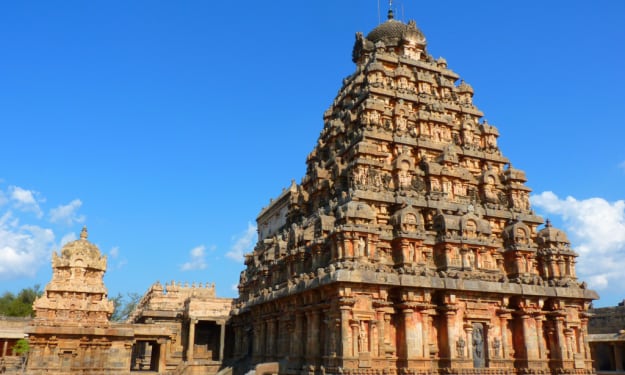
Introduction: The Power of Offerings and Prayers in Hindu Worship In Hinduism, offerings and prayers are integral to religious practice and are a way for devotees to express their devotion, gratitude, and seek divine blessings. At Kamakshi Amman Temple in Kanchipuram, Tamil Nadu, the sacred rituals of offerings and prayers have a profound significance, connecting devotees to the divine energy of Sri Kamakshi Ambal, the goddess of compassion, power, and unconditional love.
By Sri Kamakshi Ambal Temple2 years ago in History
Kamakshi Amman Temple and the Philosophy of Self-Realization
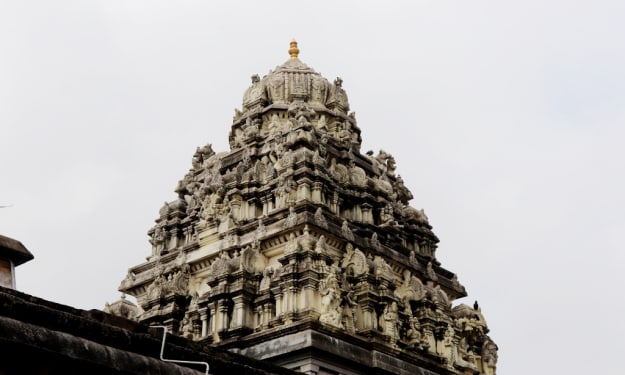
Introduction: The Path to Self-Realization at Kamakshi Amman Temple The pursuit of self-realization is at the heart of many spiritual traditions, particularly within Hinduism, where it represents the ultimate goal of understanding one's true nature and divine essence. In this journey, temples like Kamakshi Amman Temple in Kanchipuram, Tamil Nadu, serve as sacred spaces where devotees can connect with their higher selves and the divine. The goddess Sri Kamakshi Ambal, who embodies the essence of compassion, power, and cosmic energy, plays a pivotal role in guiding seekers on their path to spiritual awakening.
By Sri Kamakshi Ambal Temple2 years ago in History
"The Brave Rajput Queen's Legend"
"The Brave Rajput Queen's Legend" Rajasthan was renowned in the 16th century for its majestic forts and ferocious soldiers. One of the most well-known tales from this area was that of Queen Padmavati, a monarch whose bravery, wit, and selflessness became legendary. Her tale is not just one of courage but also of insight, fortitude, and the victory of right over wrong.
By Rajoan Islam2 years ago in History
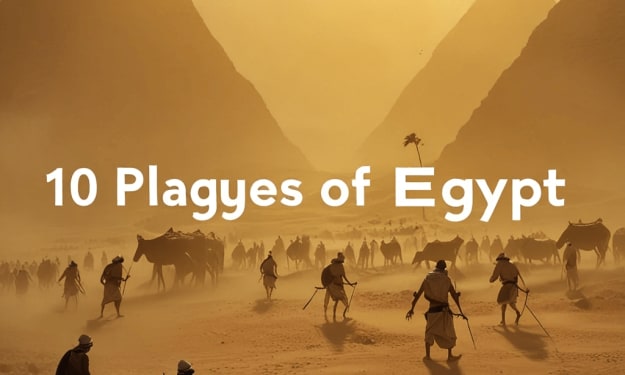
10 Plagues of Egypt. AI-Generated.
The Plagues of Egypt: Fact or Fable? Unraveling the Truth Behind the Exodus Story The story of Moses confronting Pharaoh and the subsequent ten plagues is one of the most dramatic and well-known narratives in the Bible. But how much of it is historical fact, and how much is embellished legend? Could these events have actually happened as described?
By Ihor Marchenko2 years ago in History
The First Light's Secret
The cosmos existed in an unbounded, impenetrable blackness at the beginning, before time even had a name. This huge, unfathomable emptiness had no shape, no movement, and no intention. The quiet preceding the first breath of existence was so profound that it reverberated throughout the universe. There were no stars to sparkle in the night sky, no sun to shine its rays. All that was asleep, concealed in the womb of nothingness, was the possibility of something more.
By MD SHAMIM RANA2 years ago in History