Ancient
The Quiet Legend of Simo Häyhä: Finland’s Unseen Hero
On April 1, 2002, a 96-year-old man slipped away peacefully in a modest care home along Finland’s southern coast. In death, he appeared frail and small, his once-five-foot frame diminished further by the weight of years. Decades earlier, this unassuming figure had lived a solitary life as a farmer, tending his land in quiet isolation. He never married, never had children, and kept mostly to himself. To the handful who knew him well enough to call him a friend, he was simply Simo. But long before that, in a frozen corner of his homeland, he bore a different name-one muttered in hushed tones by jittery soldiers peering through snow-laden trees: the White Death.
By KWAO LEARNER WINFRED2 years ago in History
Port Royal: The Caribbean’s Sin City That Met a Biblical End
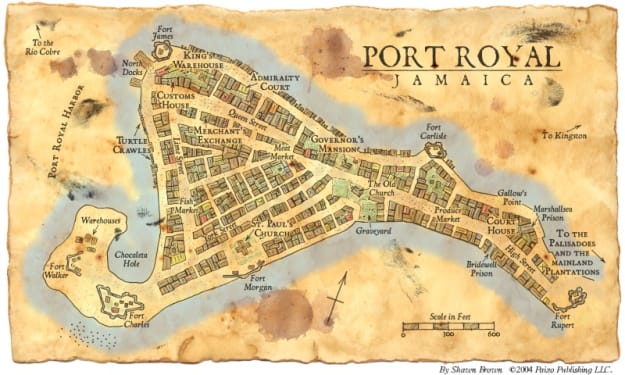
Imagine a tiny speck of a city, clinging to the edge of a 29-kilometer sandbar in the Caribbean, earning a reputation as the most notorious place on Earth. For a brief, wild stretch in the 17th century, Port Royal, Jamaica, was exactly that—a chaotic haven of pirates, privateers, prostitutes, and unimaginable plunder. It was a place where rum flowed like water, disputes ended in bloodshed, and wealth bought anything or anyone. But as quickly as it rose to infamy, Port Royal crumbled, with many believing its downfall was nothing short of divine justice. So, how did this obscure settlement transform into a legendary den of vice, only to vanish into the sea?
By KWAO LEARNER WINFRED2 years ago in History
The Quiet Legend of Simo Häyhä: Finland’s Unseen Hero
On April 1, 2002, a 96-year-old man slipped away peacefully in a modest care home along Finland’s southern coast. In death, he appeared frail and small, his once-five-foot frame diminished further by the weight of years. Decades earlier, this unassuming figure had lived a solitary life as a farmer, tending his land in quiet isolation. He never married, never had children, and kept mostly to himself. To the handful who knew him well enough to call him a friend, he was simply Simo. But long before that, in a frozen corner of his homeland, he bore a different name-one muttered in hushed tones by jittery soldiers peering through snow-laden trees: the White Death.
By KWAO LEARNER WINFRED2 years ago in History
The Deadly Art of Honor: A Journey Through Dueling Across Centuries
Throughout history, few practices have captured the imagination quite like dueling-a complex ritual of honor that transformed personal disputes into life-or-death confrontations. From medieval battlefields to 19th-century gentlemen's codes, dueling was far more than a mere method of conflict resolution; it was a sophisticated social language that spoke volumes about reputation, courage, and societal expectations.
By KWAO LEARNER WINFRED2 years ago in History
The Turbulent Love of Tchaikovsky . AI-Generated.
In the realm of classical music, few composers have left an indelible mark like Pyotr Ilyich Tchaikovsky. His iconic works, such as "Swan Lake" and "1812 Overture," continue to mesmerize audiences worldwide. Yet, behind the brilliance of his music lay a tumultuous personal life, marked by a passionate and ill-fated marriage to a former student, Antonina Milyukova. *A Chance Encounter* It was the year 1877 and Tchaikovsky, then 37, was a rising star in the Russian musical scene. Antonina Milyukova, a young and talented pianist, had been one of his students at the Moscow Conservatory. Their initial encounter was unassuming, but the seeds of a complicated and all-consuming relationship had been sown. Tchaikovsky was immediately drawn to Antonina's passion and dedication to music. She, in turn, was captivated by his genius and charismatic personality. As their relationship blossomed, they found themselves lost in conversation, discussing music, literature and philosophy for hours on end. *A Whirlwind Romance* As the months passed, Tchaikovsky and Antonina's romance grew more intense. They would take long walks through the Moscow countryside, hand in hand, talking about their dreams and aspirations. Tchaikovsky was deeply in love, and Antonina was equally smitten. Their friends and family were shocked by the rapid development of their relationship. Tchaikovsky's brother, Modest, was particularly concerned, citing Antonina's lack of social standing and her limited musical talent. However, Tchaikovsky was undeterred, convinced that he had found his soulmate in Antonina. *A Hasty Marriage* Despite the reservations of those around them, Tchaikovsky and Antonina decided to marry in July 1877. The union was marked by a mix of euphoria and apprehension. Tchaikovsky's family, in particular, was concerned about Antonina's suitability as a partner for the brilliant composer. The wedding was a small, intimate affair, with only close friends and family in attendance. Tchaikovsky was overjoyed, believing that he had found his perfect match in Antonina. However, the seeds of doubt had already been sown, and the couple's happiness would be short-lived. *A Troubled Union* As the months passed, the marriage began to fray. Antonina's possessiveness and jealousy clashed with Tchaikovsky's need for creative freedom and solitude. The couple's arguments grew more frequent and intense, with Tchaikovsky often feeling suffocated by Antonina's demands. Tchaikovsky's music became increasingly melancholic, reflecting the turmoil that was brewing in his personal life. His iconic ballet, "Swan Lake," was composed during this period, its haunting melodies and tragic storyline echoing the despair that was growing in his heart. *A Heartbreaking Separation* In 1878, just over a year after their marriage, Tchaikovsky and Antonina separated. The breakup was a devastating blow to both parties, with Tchaikovsky pouring his heartache into his music. The composer's friends and family breathed a collective sigh of relief, but Tchaikovsky's personal life would never be the same. The separation was marked by a series of bitter and emotional letters, with both parties accusing each other of betrayal and heartlessness. Tchaikovsky was particularly devastated, feeling that he had lost his muse and his soulmate. *A Legacy of Music and Heartache* Tchaikovsky's marriage to Antonina may have been short-lived, but its impact on his music and personal life was profound. The composer's subsequent works, including his iconic ballets and symphonies, would be forever tinged with the melancholy and longing that characterized his tumultuous relationship with Antonina. Tchaikovsky's music became increasingly introspective, reflecting the pain and heartache that he had endured. His iconic Symphony No. 6, "Pathetique," was composed during this period, its haunting melodies and tragic finale echoing the despair that had consumed him. *Conclusion* The story of Tchaikovsky and Antonina serves as a poignant reminder that even the most brilliant and creative minds can be vulnerable to the complexities and challenges of love. Though their marriage was marked by passion and heartache, it ultimately gave rise to some of the most sublime and enduring music in human history. Tchaikovsky's legacy continues to inspire and captivate audiences worldwide, a testament to the power of music to transcend time and circumstance. His story serves as a reminder that even in the darkest moments, there is always the potential for creativity and transformation. As we reflect on the turbulent love of Tchaikovsky, we are reminded that the human experience is complex and multifaceted.
By Henry Lucy2 years ago in History
The Ingenious Escapes of Yoshi Shiratori: Japan’s Unbreakable Anti-Hero
Picture a prison break, and your mind might conjure up scenes of a frantic inmate sawing through cell bars, a spotlight slicing through the night as fugitives scale a towering wall, or perhaps a secret tunnel concealed behind a vintage movie poster. What you probably wouldn’t imagine is a steaming bowl of miso soup as the key to freedom. Yet, that’s precisely how Yoshi Shiratori, a cunning Japanese escape artist, broke out of the infamous Abashiri Prison-an exploit that marked just one of his four daring escapes between 1936 and 1947. Each getaway was a testament to his resourcefulness, resilience, and sheer audacity.
By KWAO LEARNER WINFRED2 years ago in History