Ancient
Top 5 Ancient Inventions Still Used Today
Human civilization has been shaped by groundbreaking inventions that emerged thousands of years ago. Many of these innovations were so advanced that they continue to influence modern technology, infrastructure, and daily life. From the wheel to paper, ancient inventors laid the foundation for the world we know today.
By Himadri Niloyabout a year ago in History
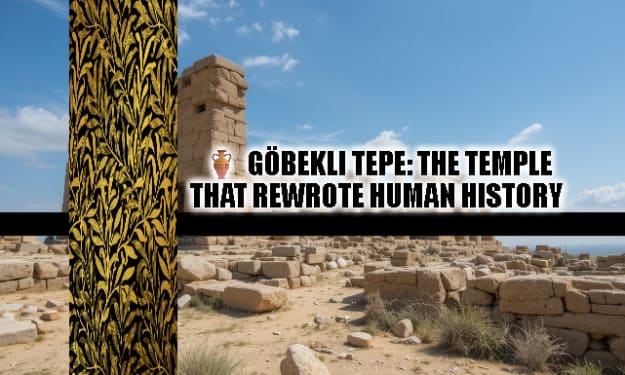
🏺 Göbekli Tepe: The Temple That Rewrote Human History
🏺 Göbekli Tepe: The Temple That Rewrote Human History I. Discovery and Location Göbekli Tepe, which translates from Turkish as “Potbelly Hill,” sits quietly in the dry, rolling hills of southeastern Turkey, near the modern city of Şanlıurfa. Though it had long appeared on maps as a minor mound — a common sight in the region — its true significance wasn’t understood until the mid-1990s. In fact, for decades, local farmers and researchers assumed the mound was a simple Bronze Age burial site or a ruined Byzantine outpost. But in 1994, the German archaeologist Klaus Schmidt, who had worked at nearby Neolithic sites, re-examined the mound and recognized that the flint tools and carved stones scattered across the surface pointed to something far older and more significant.
By History Seekerabout a year ago in History
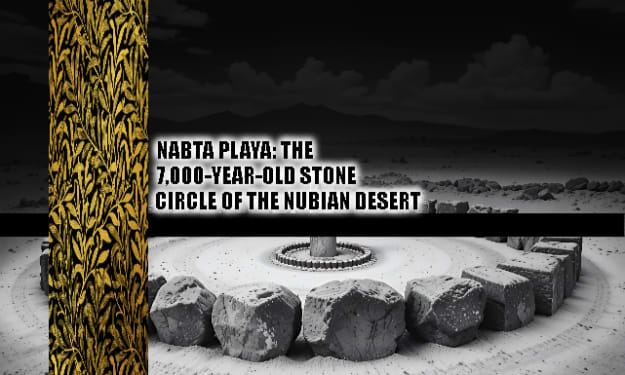
⛏️Nabta Playa: The 7,000-Year-Old Stone Circle of the Nubian Desert
⛏️Nabta Playa: The 7,000-Year-Old Stone Circle of the Nubian Desert Discovery and Location Nabta Playa lies hidden deep within the Nubian Desert, an arid and inhospitable region in southern Egypt, close to the border with Sudan. This vast desert landscape today is characterized by harsh winds, blazing sun, and seemingly endless sand dunes, but approximately 7,000 to 8,000 years ago, this area was dramatically different.
By History Seekerabout a year ago in History
Inferno rising
Inferno Rising: The Lost Day of Peshtigo In the fading heat of the summer of 1871, the small lumber town of Peshtigo, Wisconsin, lay on the brink of catastrophe. The land was hardened by an unyielding drought, the forests once lush now brittle against a relentless blue sky, and the very earth seemed to whisper warnings of impending doom. Peshtigo, built around the timber mills and sustained by a close-knit community, was unaware that nature’s fury was gathering for a devastating climax.
By Saroj Kumar Senapatiabout a year ago in History
Andalusia: The Forgotten Beacon of Civilization
The Forgotten Glory of Andalusia: A Legacy of Civilization, Now Overshadowed It is a historical fact that when the streets of Europe were overflowing with filth and plagued by disease—when people in many European cities were compelled to wear high wooden clogs just to avoid stepping in their own waste—Andalusia stood as a beacon of cleanliness, culture, and unparalleled development. In that golden era of Islamic Spain, not only did every Muslim household boast a private bath, but a well-structured sewage and drainage system also existed—an advanced infrastructure that was centuries ahead of its time and of anything found in Europe. Andalusia (Al-Andalus), under Muslim rule, was not merely a center of learning and arts; it was a symbol of a comprehensive civilizational and social transformation. While the rest of Europe was still entrenched in the Dark Ages—grappling with ignorance, superstition, epidemics, and backwardness—cities like Córdoba, Granada, and Seville shone brightly as centers of enlightenment, refinement, and scientific progress. The legacy of Al-Andalus is not limited to its majestic palaces or poetic gardens; it includes its libraries, universities, public baths, hospitals, and intricate urban planning. The city of Córdoba alone, in the 10th century, had over 70 libraries and 300 public baths, while most of Europe at that time had barely any public sanitation infrastructure. Streets were lit at night, water was supplied through aqueducts, and education was freely available to all segments of society—regardless of class, religion, or gender. Muslim Spain welcomed scholars of all backgrounds, promoting a culture of tolerance, dialogue, and intellectual curiosity. The knowledge preserved and produced there—ranging from medicine to astronomy, from architecture to philosophy—became the foundation upon which modern European renaissance was later built. It is not an exaggeration to say that the seeds of today’s Western progress were first planted in the soil of Al-Andalus. But today? Those very nations, which once lived in darkness and filth, now consider themselves the torchbearers of modern civilization. They now attempt to teach us the very principles of hygiene, discipline, urban planning, and civil society that we once taught them. This twist of history is not only ironic but deeply thought-provoking. It prompts us to reflect: How did a civilization that once led the world in every sphere of life fall so far behind? The answer lies not just in historical invasions or political failures. The real tragedy began when we forgot our own legacy. We ceased valuing knowledge, stopped nurturing critical thought, and turned away from our commitment to justice, excellence, and innovation. When a nation loses connection with its glorious past, it not only loses direction but also dignity. It is then forced to look up to others who were once its students. This loss of historical consciousness is more than just forgetfulness—it is a form of collective amnesia. Today’s generation often views Western achievements as independent developments, disconnected from the contributions of their ancestors. This ignorance leads to a dangerous inferiority complex, where we assume others are inherently superior and we are forever to play catch-up. However, history does not have to be a burden—it can be a guiding light. The example of Al-Andalus can inspire a revival. The Muslims of Spain were not superhumans; they were ordinary people with extraordinary commitment to values: the pursuit of knowledge, societal reform, cleanliness, justice, and the welfare of all. Their mosques were not just places of prayer but centers of education and public service. Their homes were not just private shelters but embodiments of beauty, order, and hygiene. What made their civilization great was not just what they built, but what they believed in. They believed in progress not for the sake of competition, but for the service of humanity. Their advancements in medicine were not designed to dominate but to heal. Their architecture was not built to intimidate but to inspire. Their governance was not aimed at control, but at delivering justice to the poor, the weak, and even the non-Muslim subjects under their rule. If we truly wish to rise again, we must reconnect with the values that made our ancestors worthy of admiration. We must learn to value knowledge not merely as a tool for earning a livelihood, but as a sacred trust for the betterment of society. We must take pride in cleanliness not just as a religious duty but as a public responsibility. We must understand that civilization is not about skyscrapers and machines alone, but about manners, ethics, and respect for all forms of life. Let us not lament the loss of Al-Andalus as a tale of the past, but let us take it as a call to rebuild. The rise of others is not a threat—it is a reminder of what is possible. But if we continue to forget our own history, we will forever be students of those who once learned from us. The lesson of Al-Andalus is clear: greatness is not inherited—it is earned, through consistent effort, vision, and unity. And those who forget their past are destined to live at the mercy of others’ futures.
By Ikram Ullahabout a year ago in History
The Overlooked Treasures of the Khmer Empire: Cambodia's Concealed Wealth
The Overlooked Treasures of the Khmer Empire: Cambodia's Concealed Wealth When discussing the world's most affluent ancient empires, names such as Rome, Persia, and Mali often take precedence. However, nestled deep within the jungles of Southeast Asia lies an unrecognized giant—the Khmer Empire, whose lavishness once matched the greatest empires globally. Spanning across present-day Cambodia, Thailand, Laos, and Vietnam, the Khmer Empire thrived between the 9th and 15th centuries, leaving behind treasures—both material and spiritual—that astonish contemporary observers. At the core of this empire was Angkor, the largest pre-industrial urban center globally, home to the magnificent temple of Angkor Wat, now recognized as a UNESCO World Heritage site. Yet Angkor was more than a spiritual and architectural wonder—it was also a bastion of wealth and authority. The Riches Beneath the Stone The Khmer Empire's affluence stemmed from a potent mix of agriculture, commerce, and expertise in hydraulic engineering. The empire flourished through rice cultivation, utilizing sophisticated irrigation systems that supported a vast populace. However, agriculture formed only the foundation. What genuinely enriched the Khmer elite was trade—especially in gold, gemstones, ivory, and forest resources. The empire occupied a pivotal position along the trade routes connecting the Indian Ocean and East Asia. Chinese, Indian, and Arab merchants frequently visited Khmer ports to barter silks, ceramics, and spices for Khmer gold, sandalwood, and exotic birds. Evidence of this wealth is dispersed throughout the temples. Inscriptions and bas-reliefs portray processions of royals and priests adorned in jewels, gold necklaces, and intricately designed crowns. Archaeological discoveries suggest that the Khmer elite possessed substantial quantities of sapphires, rubies, and emeralds—many of which came from the empire’s own mines and riverbeds. The Concealed Treasures of Angkor Despite centuries of looting, some Khmer treasures remain hidden. In 2008, during the excavation of a concealed chamber in Angkor Thom, archaeologists uncovered numerous gold artifacts, including rings, figurines, and ceremonial implements dating back to the 11th century. Many experts believe this is merely the beginning. Submerged crypts, underground reservoirs, and temples lost to history continue to conceal what could amount to millions of dollars in ancient relics. Looters have long targeted these locations, selling statues and jewelry on the black market; however, extensive areas of Angkor remain unexplored due to dense forest coverage and insufficient funding. In 2016, LIDAR (Light Identification and Ranging) technology unveiled previously unrecognized temple complexes, roadways, and urban structures beneath the forest surface—indicating that Angkor was part of a much broader network of cities, all of which may harbor untouched caches of wealth. Assessing the Empire’s Valuation Determining a monetary value for a long-lost empire is a complex endeavor, yet historians and economists have formulated rough assessments. When adjusted for contemporary values, the Khmer Empire’s assets in gold, land, and precious stones could have been valued at over $200 billion. This does not consider cultural capital—the significance of monuments such as Angkor Wat or misplaced artifacts currently residing in private collections. The immense scale of Angkor Wat alone, which necessitated 5 million tons of sandstone, illustrates the magnitude of resources the empire could assemble. In current terms, constructing such a edifice would entail billions—and this figure pertains to merely one of over 1,000 temples erected during the apex of the empire. The Decline and Heritage The Khmer Empire commenced its decline in the 13th century, attributed to a combination of factors: climatic shifts, overpopulation, internal discord, and assaults from neighboring realms such as the Ayutthaya of Thailand. As the capital cities deteriorated, numerous temples were forsaken, and their riches abandoned—some interred, some pilfered, and others simply overlooked. Nevertheless, the Khmer heritage endures. The Cambodian royal regalia still features symbols derived from the Khmer Empire, and the national pride associated with Angkor is substantial. Initiatives are currently underway to reclaim and conserve what remains of this concealed wealth, with museums and archaeologists collaborating closely with local communities. Final Thoughts Although the Khmer Empire may not garner the same prominence as Rome or Egypt, its affluence, creativity, and magnificence warrant acknowledgment. Beneath the towering trees and moss-laden stones of Cambodia lies a narrative of monarchs, deities, and gold—a narrative still being uncovered. As technology and international collaboration progress, we may yet rediscover more of this lost wealth and redefine the history of the world’s most affluent empires.
By Say the truth about a year ago in History
The Treasure Beneath the Nile: Egypt's Lost Gold Mines and Ancient Wealth. AI-Generated.
The Golden Legacy of the Nile The Nile River is justifiably regarded as the lifeblood of Ancient Egypt. Spanning over 6,600 kilometers, it not only facilitated agriculture in the arid desert but also functioned as a trade artery and spiritual thoroughfare. However, what rests beneath the deserts encircling the Nile has intrigued archaeologists and historians for centuries—gold. Gold represented more than a mere metal in Ancient Egypt. It symbolized divine power, eternal existence, and royal dominion. The pharaohs believed it constituted the flesh of the deities, particularly the sun god Ra. It adorned temples, accompanied kings in burial, and was crafted into objects of remarkable beauty and precision. But from whence did all this gold originate? The Lost Mines of Nubia The ancient territory of Nubia, situated south of Egypt (present-day Sudan), was abundant in gold mines. This region was so vital that the pharaohs referred to it as Ta-Seti (Land of the Bow) and often waged warfare or engaged in diplomacy to gain control. The gold of Nubia was sourced from quartz veins and alluvial deposits, subsequently smelted and refined in desert workshops. Evidence from inscriptions and archaeological excavations indicates that Egypt possessed a highly organized gold mining system as early as 2600 BCE. Laborers resided in isolated desert camps and utilized rudimentary tools to excavate shafts and tunnels deep into the rock. Despite the challenges and hazards, the allure of wealth motivated the empire's aspirations.
By Say the truth about a year ago in History
The Concealed Wealth of the Inca Empire: Forgotten Treasures of the Andes. AI-Generated.
The Concealed Wealth of the Inca Empire: Forgotten Treasures of the Andes Situated high in the Andes Mountains, the Inca Empire (1438–1533) was the most extensive pre-Columbian empire in the Americas. At its zenith, it spanned across Peru, Bolivia, Ecuador, and portions of Chile and Argentina, governing over more than 10 million individuals. However, beyond its expansive territory and sophisticated infrastructure, what astonished Spanish conquistadors most was the empire’s unfathomable wealth—particularly its vast reserves of gold and silver.
By Say the truth about a year ago in History
The Wealthiest Empire in History: The Golden Heritage of the Mali Empire
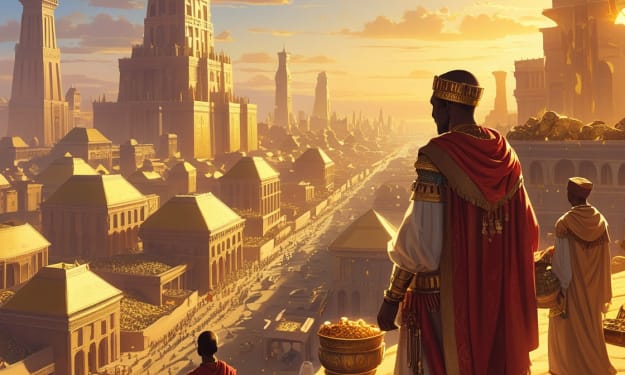
The Foundations of the Mali Empire The Mali Empire was established circa 1235 AD by Sundiata Keita, who unified several smaller kingdoms following the decline of the Ghana Empire. Under Sundiata’s guidance, Mali evolved into a centralized entity with a formidable military and effective administration. Nonetheless, it was under his successors—most notably Mansa Musa (r. 1312–1337)—that the empire attained its pinnacle. Encompassing portions of contemporary Mali, Senegal, Gambia, Guinea, Niger, Nigeria, and Mauritania, the Mali Empire governed extensive territories and essential trade routes, including segments of the Sahara Desert. This positioned it to dominate trans-Saharan commerce, especially in salt, ivory, enslaved individuals, and most crucially—gold. Mansa Musa: The Most Affluent Individual in History Mansa Musa, the tenth sovereign of Mali, is frequently recognized as the most affluent person in documented history. His net worth, adjusted for inflation and current assessments, is approximated to exceed $400 billion USD. This fortune was not solely attributed to dominion over land but also the empire’s gold mines, which contributed more than half of the world’s gold during his reign. In 1324, Mansa Musa embarked on a renowned pilgrimage to Mecca (Hajj), an occasion that highlighted the immense scale of his empire’s riches. He journeyed with a caravan composed of: 60,000 individuals, 12,000 enslaved individuals conveying gold bars, 80 camels transporting hundreds of pounds of gold dust each. According to historians, he distributed so much gold in Cairo, Mecca, and Medina that it diminished the value of the metal, resulting in economic inflation in the region for over a decade. This singular incident established Mali—and Musa—as significant players on the medieval global landscape. Sources of Wealth
By Say the truth about a year ago in History
What History Was Meant To Leave Out
“In the beginning God created the heaven and the earth. And the earth was without form, and void; and darkness was upon the face of the deep. And the Spirit of God moved upon the face of the waters.”Genesis 1:1-2
By Natasha Collazoabout a year ago in History
The Boy Who Drew the Stars
Liam was not like the other kids in his town. He didn’t play football or race his bike in the streets. Instead, he liked quiet places, soft light, and the sound of a pencil moving across paper. His favorite spot was his small desk by the window, where he would sit for hours under the warm yellow light of his old desk lamp.
By ihsandanishabout a year ago in History