Ancient
2,000 Years of Olympics. AI-Generated.
Prologue: Where the Flame First Rose The Olympic flame has burned for over two thousand years—not always visible, not always celebrated, but always alive. It flickered in temples, soared through coliseums, disappeared for centuries, and then returned, brighter than ever.
By uzair hadiabout a year ago in History
Who are the Aborigines of United States and the North America?
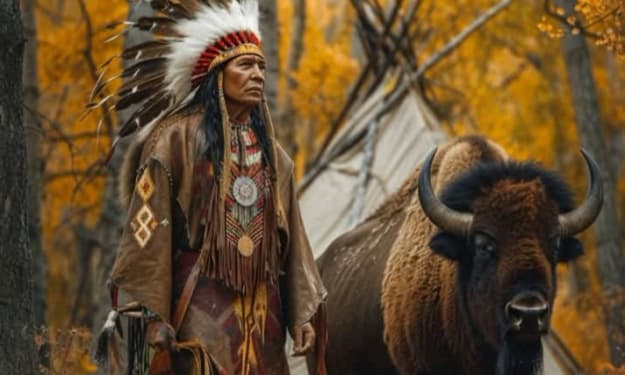
The narrative of the North American continent does not commence with Columbus's discovery of America. An integral and important part of this history are the tribes and peoples who lived here before the arrival of Europeans and long before the emergence of the United States. The relationship between the natives and the representatives of European civilization who settled on the continent was complex, often dramatic, but over time they were humanized. • American Quarter and Native Memory In the United States of America, there used to be a 25-cent coin, but since 1838 it has received a new denomination – the quarter dollar. Like all coins worth more than 10 cents, it was minted from silver until 1964, then from a copper-nickel alloy. But the quarter dollar coins in question are covered with 999-carat gold and are distinguished by the high quality of minting “proof-like”! The series of 50 coins is dedicated to the indigenous people of America – the Indians. • Indians of North America: History… The people who lived on the American continent, whom Columbus and his followers took for the inhabitants of India (which explains the name that stuck to them), are classified by modern science as an Americanoid race. Genetic research indicates that the forebears of the Indigenous peoples of the Americas migrated from Eurasia, most probably from the Altai region, traversing the isthmus that once occupied the area of the Bering Strait. This happened in the Stone Age. For many millennia, the tribes of the true discoverers of America developed the continent. By the time the Europeans arrived here, the various tribes and peoples of America were at different stages of development, but for all of them, the clash with European civilization was tragic: epidemics of unfamiliar diseases, loss of ancestral lands, cruel persecution by the authorities... The American authorities did not immediately admit their mistakes and began to take measures to correct the situation. • Modernity Today, there are about five million Indians in the United States (a little more than one and a half percent of the population) and 565 Indian tribes are officially registered, that is, recognized by the federal authorities. The largest of them are the Cherokee, Navajo, Sioux and Chippewa. However, sociologists note that fewer and fewer Indians speak their native language: according to statistics, four fifths of them speak mainly English even within their families. Two-thirds of Americans of Indian descent have assimilated and lead the same way of life as the rest of their compatriots. This process began a long time ago, as evidenced by the term "five civilized tribes", which appeared in the early 19th century - the Cherokee, Chickasaw, Choctaw, Creek and Seminole had already adopted many of the customs and achievements of their white neighbors. About a third of Indians still prefer to preserve their ancestral way of life whenever possible, and therefore live on reservations. Modern Indian reservations are a kind of protected Indian territory. Suffice it to say that they have almost the same rights as individual states. The government recognizes the rights of these tribes to self-government and self-determination, and supports their sovereignty. Tribal courts and law enforcement agencies operate on reservations, and local authorities have the right to impose taxes. • Interaction of Peoples and Cultures The further we go, the more the cultures of two peoples who have lived side by side for a long time – the descendants of the indigenous inhabitants of the continent and the heirs of the colonizers – interpenetrate. Historically, helicopters by Americans have derived their names from Indian tribes of the ancient past: Sioux, Lakota, Apache. The tactics of helicopter combat use – a sudden attack on the enemy from the flank and a quick disappearance – are similar to those used by Indian warriors. Purely human, friendly and especially family ties also mean a lot. It should be noted that among the ancestors of such famous figures of American culture as Johnny Depp, Quentin Tarantino, Kevin Costner, Cameron Diaz, there were Indians. • Indian Coins All 50 coins in the collection were issued under the auspices of the Mesa Grande Tribe. The Mesa Grande Band of Diegueño Mission Indians is a tribe residing in an area situated in the northern part of San Diego County, roughly 75 miles northeast of San Diego, California. The territory is located at an elevation of 3,500 feet above Black Canyon, on a plateau adjacent to the Cleveland National Forest. The Mesa Grande Tribe is recognized by the U.S. government as a sovereign nation that has the right to issue its own coins. Each coin in the series depicts an Indian from one of the tribes living in each of the fifty states. The depicted characters are shown in traditional costumes or engaged in traditional crafts. • Preserving Traditions An essential element of the traditional Indian costume is a headdress made of feathers. In the United States, a separate federal law is devoted to these feathers. Or rather, not to the feathers themselves, but to the right of Indians to freely practice their religious cults, which require eagle feathers. Since eagle hunting is prohibited in the United States, the law makes an exception for Indians: tribal members can purchase eagle feathers, but they are prohibited from selling or transferring them to non-Indians.
By Uchenna Cosmas Nwokafor about a year ago in History
35,000 years ago, archaeologists found a highly developed civilisation spread across the Philippine islands.
According to recent studies, the Philippine archipelago was the epicentre of early Southeast Asian human movement. Working with multinational teams, Ateneo de Manila University archaeologists have gathered 15 years of data that has changed the way researchers think about prehistoric tool use, maritime navigation, and cultural interchange in the area.
By Francis Damiabout a year ago in History
The Mystery of Aramu Muru: The Stone Gate to the Gods
A Door in the Rock High in the rugged mountains of southern Peru, where Lake Titicaca kisses the clouds and ancient myths still linger in the wind, there is a doorway carved into solid rock. It leads nowhere, or so it seems. For centuries, legends have claimed it is much more than a dead end. They call it Aramu Muru, the Gate of the Gods.
By The Secret History Of The Worldabout a year ago in History
The Most Charming Mountain Towns in America
The Most Charming Mountain Towns in America: 800 Hidden Gems and Beloved Escapes America's mountain towns are some of the most breathtaking and idyllic getaways in the country. They are tucked away among towering peaks, surrounded by lush forests, and full of small-town charm. These charming locations offer the ideal combination of natural beauty and welcoming communities, whether you're looking for outdoor adventure, cozy cabins, or a tranquil getaway from city life. From the rugged Rockies to the serene Smokies, here are some of the most enchanting mountain towns across the United States that deserve a spot on your travel bucket list.
By parves mosharafabout a year ago in History
From the Black Chapter of the Circus to the Gallows
It was a bright summer in 1916. The sky in Tennessee, USA, sparkled with floating clouds, and the air was bustling with a rare festive spirit. "Sparks World Famous Show" moved from city to city, bringing waves of joy and wonder wherever it stopped. The circus's main attraction was Mary, a magnificent Asian elephant. Mary, an extraordinary creature weighing almost five tons, made every move perfectly, reflecting wild beauty and kindness. She was a circus gem, and thousands flocked from afar to see her. Known as "the biggest on earth," she was loved by everyone for her intelligence and gentle demeanor.
By MD. REZUAN HOSSENabout a year ago in History
The Forbidden Love Story That Shaped China: A Tale of Passion, Poetry & Politics
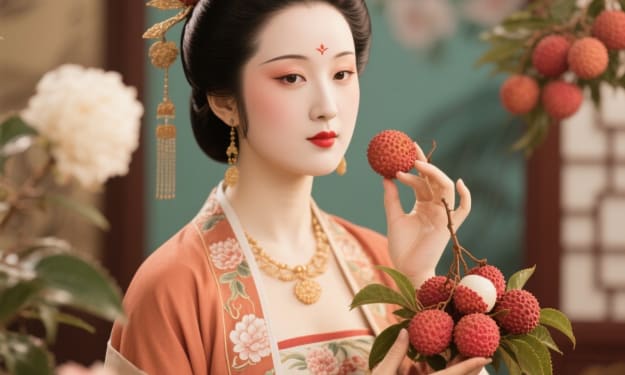
Imagine a love so intense, it toppled dynasties. In 8th-century China, Emperor Xuanzong ruled the glittering Tang Empire—the world’s most advanced civilization. Then he met Yang Guifei, a concubine so beautiful, poets claimed “flowers wilted with envy” when she walked by.
By sherryshenabout a year ago in History
Talking About Ghana: Society's Religious and Filial Customs
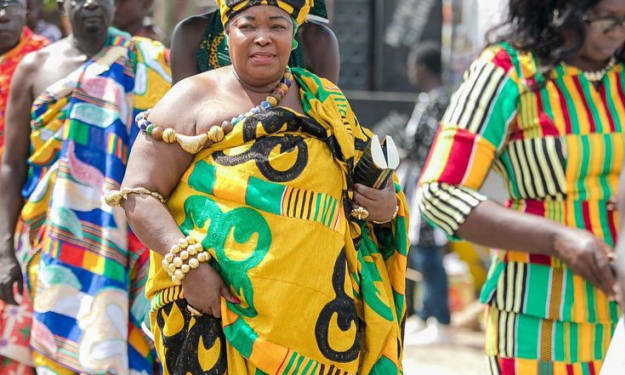
Ghanaians had their own social organization and set of beliefs, customs and behaviors before they interacted with the outside world. Generally, Ghanaian social customs have their own distinct characteristics in many respects, such as religion, family, festivals, etc.
By Uchenna Cosmas Nwokafor about a year ago in History
Donald Trump says US-China trade talks to be held in London on June 9
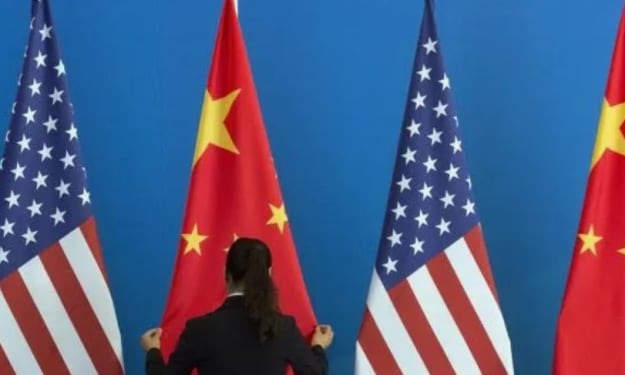
On June 9, the United States and China will hold a new round of high-level trade talks in London, according to Donald Trump. The former president made the surprising announcement in a post on social media in which he expressed optimism regarding the discussions. Trump asserts that the U.S. To resume negotiations aimed at resolving ongoing trade tensions, Treasury Secretary Scott Bessent, Commerce Secretary Howard Lutnick, and Trade Representative Jamieson Greer will meet with their Chinese counterparts, led by Vice Premier He Lifeng. After a period of renewed hostilities marked by new tariffs, export restrictions, and diplomatic strain, this meeting represents a significant step in efforts to stabilize economic relations between the world's two largest economies. Analysts view the decision to hold the meeting in London as symbolic, suggesting an effort to include Europe's perspective in the dialogue and providing a neutral setting for discussions. China and the United States of America are still locked in a complicated economic dispute over everything from semiconductor exports to education visas to cybersecurity. Some of the tariffs that both sides imposed were temporarily eased by the Geneva Agreement, which was reached earlier this year. However, tensions have persisted, with each side asserting that the other has broken the agreements made within that framework. The United States' export controls on cutting-edge semiconductor technologies are anticipated to be one of the most pressing topics under discussion in London. Chinese access to AI chips and related technologies developed in the United States has been restricted by both the Trump administration and the Biden administration. Beijing has been enraged by these actions, which Beijing claims are discriminatory and disrupt global supply chains. These actions are meant to safeguard national security and innovation in the United States. China responded by imposing stricter licensing requirements for the export of rare earth minerals, which are essential components of electronic devices and electric automobiles. U.S. officials see the regulations as an attempt to weaponize supply chain dependencies, despite Beijing's insistence that they are for the protection of national resources. Washington has demanded that China's application of these rules be more transparent and predictable. The recent U.S. visa restrictions that target Chinese graduate students in sensitive fields like robotics, aerospace, and quantum computing are another source of contention. Beijing has vehemently rebuked the move, claiming that it is politically motivated and detrimental to academic exchange. As part of any larger trade agreement, it is anticipated that the Chinese delegation will demand the removal of these restrictions. Domestic pressure is exerted on both governments to achieve measurable outcomes. Farmers and manufacturers in the United States are pleading with the government to reduce tariffs that have hampered exports and increased costs. As a result of having less access to Western investment and technologies, Chinese businesses are experiencing difficulties. The economic stakes are high, and if nothing is done, new retaliatory measures could be taken. The news of the talks in London has spooked the markets. While some investors appreciated the chance to talk, others are still skeptical of any long-term advances. Negotiations in the past have frequently ended without significant progress, and trust between the two countries remains low. The decision to hold the meeting in London also reflects larger geopolitical considerations. A chance to demonstrate diplomatic outreach is provided by holding talks in the United Kingdom, given that Washington and Beijing are competing for influence in Europe. Additionally, it demonstrates a willingness to cooperate with Western allies as stakeholders in the stability of global trade. In order to determine whether the two sides can make significant progress on the main issues, observers will closely monitor the situation. The key questions include whether the United States will loosen restrictions on exports, whether China will commit to fairer trade in rare earths, and whether both sides will be able to stop future crises involving students, intellectual property, and digital trade. The June 9 meeting may decide whether a more long-term agreement is possible or whether economic friction between the United States and China will grow. The deadline to extend the temporary tariff truce is fast approaching. Officials hope that direct engagement at the highest levels can pave the way for de-escalation while expectations are measured. London is the next stage in a global economic drama that is being watched by the entire world. Its outcome could have long-term effects on trade, innovation, and diplomacy.
By GLOBAL NEWSabout a year ago in History
Khalid ibn al-Walid (The Greatest Commander)
Throughout the pages of military history, few commanders have carved a path of victory as consistently and decisively as Khalid ibn al-Walid. Known as “The Sword of Allah,” Khalid’s name is synonymous with invincibility, and his leadership redefined the early Islamic conquests. His undefeated record in over a hundred battles remains a testament to his extraordinary skill, vision, and mastery of the art of war.
By Mehtab Ahmadabout a year ago in History
Skara Brae: A Well-Preserved Neolithic Village in Scotland
Nestled on the rugged, windswept coast of Orkney, an archipelago off the northern coast of Scotland, lies Skara Brae, a prehistoric village that provides a rare and extraordinary glimpse into human life approximately 4,500 years ago. Recognized as one of the most complete and well-preserved Neolithic settlements in Europe, Skara Brae has fascinated archaeologists, historians, and visitors alike for centuries.
By History Seekerabout a year ago in History