Analysis
Wheels of Time: The Legacy of Old Transport Systems
Before sleek cars zipped across highways and airplanes soared above the clouds, the world moved at a different pace. People relied on the ingenuity of their time, crafting unique methods of transportation that not only served practical purposes but also shaped culture, trade, and human connection. The story of old transport systems is a journey into the past—a testament to human creativity and resilience. Long before engines roared to life, nature offered the first means of mobility: walking. For thousands of years, humans migrated on foot, forming trails that would later become trade routes and highways. Eventually, necessity gave birth to invention. In Mesopotamia, around 3500 BCE, the wheel was born—arguably the most important innovation in transport history. Initially used for pottery, it soon revolutionized movement when adapted to carts and wagons pulled by oxen or horses. The ancient Egyptians used wooden sleds to transport massive stones to construct the pyramids. In regions like South America, where wheeled vehicles weren't widely adopted, humans built intricate road systems like the Incan trails, stretching thousands of miles through mountains and valleys, used by runners and llamas to carry goods and messages. Meanwhile, in India and China, animal-drawn carts became vital for moving people and goods through growing civilizations. By the time of ancient Rome, roads had become engineering marvels. Roman roads stretched over 250,000 miles at their peak, carefully layered with stone, gravel, and sand. Chariots and carriages sped along these roads, allowing for military dominance, trade, and cultural exchange across Europe, Africa, and Asia. Maritime transport also saw huge developments. Ancient seafarers from the Polynesian islands navigated vast oceans in double-hulled canoes using the stars. Viking longships explored and raided distant lands, and Mediterranean civilizations like the Greeks and Phoenicians used sailboats for commerce and conquest. These vessels laid the foundation for global navigation centuries before steam or diesel. The Middle Ages saw the slow rise of more localized transport. In Europe, horse-drawn carts, canal boats, and early sleds helped support growing towns and feudal economies. Roads were often muddy and impassable in bad weather, so rivers and canals became vital. In China, the Grand Canal—stretching over 1,100 miles—connected cities and helped unify the country economically. Then came the Industrial Revolution, which changed everything. Steam engines redefined transportation. In the early 1800s, steamships and locomotives began to dominate. George Stephenson's "Rocket," built in 1829, could travel at 30 miles per hour—faster than anyone had moved before on land. Railways exploded across Britain, then Europe, Asia, and North America, shrinking distances and fueling industrial economies. They turned weeks of travel into days and sparked the growth of towns and cities along the tracks. Even personal transport evolved. The invention of the bicycle in the early 19th century offered an affordable and accessible way for individuals to travel. The early "penny-farthing" bicycle, with its oversized front wheel, gave way to the safer and more balanced "safety bicycle" that still resembles modern bikes. For many, especially women and working-class people, bicycles represented newfound freedom and independence. At the turn of the 20th century, the first automobiles began to appear, clunky and slow but full of promise. Henry Ford’s assembly line method revolutionized car production, making the Model T affordable to ordinary families. Meanwhile, the last great era of horse-drawn transport faded into memory. Each mode of old transport—whether a humble ox-cart or a grand steam locomotive—tells a story. They reveal how humans adapted to geography, climate, and necessity. In deserts, people rode camels; in snowy lands, they used dog sleds; in Venice, they built canals and used gondolas. Everywhere, people found ways to connect. Today, as we whiz by in electric vehicles or fly across continents in hours, it’s easy to forget the long journey that brought us here. But the legacy of old transport systems lives on—not just in museums or nostalgic photographs, but in the very roads, bridges, and habits that shape our modern world. These systems weren’t just about getting from one place to another. They were lifelines of communication, trade, exploration, and culture. They were how ideas traveled, how families reunited, how empires rose and fell. In every clatter of a horse hoof or whistle of a steam train, there is a story of progress—of how humanity learned to move, together.
By Muhammad Saad about a year ago in History
Bright Horizons: The Power of Staying Informed
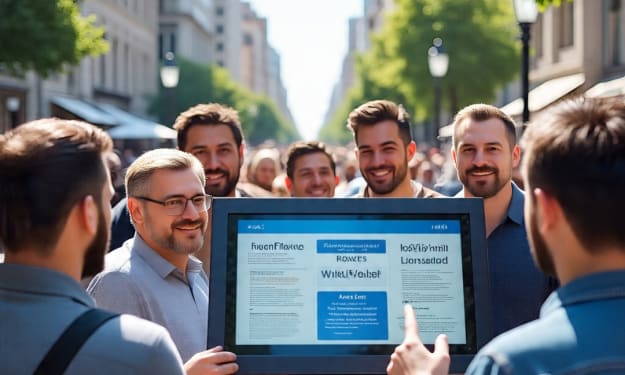
Every morning, just after sunrise, the town square of Willowbrook came alive. Coffee carts opened their shutters, birds chirped above the clocktower, and people began to gather—not just for their morning brews, but for something just as energizing: the daily news. At the center of the square stood a large, digital screen called the Community Board. Installed only a year ago, it had quickly become the heart of the town. Unlike traditional news outlets, this screen didn’t flash fear-inducing headlines or exaggerated drama. Instead, it featured positive, constructive journalism—stories that inspired, informed, and united. The idea came from 16-year-old Maya Patel, a high school student with a passion for media and community service. After noticing how the adults around her seemed stressed and anxious from the constant stream of negative news, she asked herself a simple question: What if news could actually make people feel hopeful? With the help of her school’s journalism club and a grant from the town council, Maya launched the “Bright Horizons” initiative—a local project focused on collecting and sharing good news from the community. From small acts of kindness to groundbreaking sustainability efforts, Maya and her team reported on stories that often went unnoticed. “We’re not ignoring the hard stuff,” Maya explained during a town meeting. “But we’re choosing to balance the picture. People deserve to see what’s working in the world, not just what’s broken.” And it worked. The Community Board displayed daily headlines like “Local Farmer Donates Surplus Crops to Food Bank”, “High School Robotics Team Wins National Award”, and “Neighborhood Cleans Up Riverbank, Discovers Rare Wildlife.” Each article was short, well-researched, and accompanied by vivid photos taken by student photographers. Elderly residents, who once felt isolated, began gathering in the square just to read the latest updates. Children stopped by with their parents on the way to school, pointing excitedly at pictures of classmates who had made a difference. Even the local mayor, Anita Gomez, started each of her press briefings by referencing a positive story from the board. “What’s remarkable,” Mayor Gomez said in a local interview, “is that this isn’t just feel-good fluff. These stories are grounded in real reporting, but they uplift. They show us solutions. They remind us that we’re capable of amazing things, especially when we work together.” The news project eventually caught the attention of a regional journalism network. Reporters visited Willowbrook to study the model, curious about how a small town was changing the way people consumed information. They found more than just a digital screen—they found a community transformed by optimism. Teachers began incorporating the daily headlines into their lesson plans, encouraging students to write their own reports or interview local changemakers. The town’s social media accounts shifted tone, sharing more community-driven achievements. Mental health counselors even noted a boost in the well-being of patients who engaged with the “Bright Horizons” news, citing feelings of connection and purpose. One of the most powerful moments came during a spring storm that knocked out power across several neighborhoods. Despite the chaos, residents gathered at the square, where the Community Board—powered by solar backup—still glowed brightly. It displayed one simple message: “We’re in this together. Help is on the way. Stay kind, stay safe.” Volunteers immediately organized food deliveries, checked on elderly neighbors, and offered free charging stations. Maya, now in her final year of high school, smiled as she watched the scene unfold. She had always believed that news wasn’t just about reporting facts—it was about empowering people to act on them. “I think we forgot that news is supposed to serve the public,” she said during her graduation speech. “It’s supposed to remind us of who we are and who we can become. I just wanted to remind people that hope is also newsworthy.” As the sun rose over Willowbrook the next day, the Community Board lit up once more, displaying its signature greeting: Good Morning, Willowbrook. Here’s what’s good today. A crowd began to form, coffee cups in hand, eyes bright with curiosity. And in that simple daily ritual—gathering not to be alarmed, but to be informed—an entire town found its brightest horizon.
By Muhammad Saad about a year ago in History
Osman I: Founder of the Ottoman Empire and Architect of a Dynasty
Introduction Osman I (1258–1326), known in Turkish as Osman Gazi or Osman Bey, was the founding father of one of the greatest and longest-lasting empires in world history—the Ottoman Empire. His rise from a tribal leader in the Anatolian frontier to the architect of a powerful Islamic dynasty marks a critical turning point in Middle Eastern and European history. Though little contemporary documentation survives about his life, Osman’s legacy endures through the empire that bore his name for over six centuries.
By JAWAD HUSSAINabout a year ago in History
Tesla and Samsung Sign $16.5 Billion Deal to Produce Advanced AI Chips.
What the Deal Involves This $16.5 billion agreement centers around the production of Tesla's next-generation AI chips, which are essential for the development of self-driving cars, robotics, and other advanced technologies. These chips, often referred to as neural processing units (NPUs), are designed to process massive amounts of data in real-time—something critical for Tesla’s Autopilot and Full Self-Driving (FSD) systems.
By Active USA about a year ago in History
Thailand vs Cambodia War
When Ancient Stones Became Grounds for Modern Guns In the heart of Southeast Asia, two countries—Thailand and Cambodia—share not only borders but centuries of cultural, religious, and political history. While their people often interact peacefully through trade, tourism, and regional cooperation, a cloud of conflict once loomed over a sacred site high atop a cliff: Preah Vihear Temple. The conflict, commonly referred to as the Thailand vs Cambodia war, wasn’t a full-scale war in traditional terms, but it was a bitter, dangerous, and deadly border dispute that held global attention during the late 2000s and early 2010s.
By Mehtab Ahmadabout a year ago in History
Top 6 Most Beautiful Places for Tour in the World.
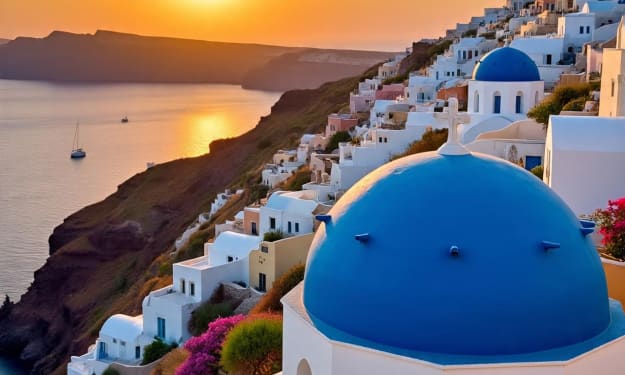
1. Santorini, Greece Santorini is one of the most iconic travel destinations in the world. Located in the Aegean Sea, this Greek island is famous for its white-washed houses with blue domes, stunning sunsets, and clear blue waters. The town of Oia offers romantic views, luxury hotels, and delicious Mediterranean cuisine. Tourists can also visit ancient ruins, go sailing, or relax on volcanic sand beaches. Santorini is perfect for couples, honeymooners, and photographers who love beautiful landscapes.
By Active USA about a year ago in History
Power, Pride, and Pop Stardom: Inside Drake’s Decade-Long Feuds with The Weeknd and Kendrick Lamar
Written by: Mack Welch When Abel Tesfaye, better known as The Weeknd, first emerged in Toronto’s underground music scene, he quickly became a mystery with mass appeal. His early tracks circulated without a face, and yet they generated intense industry buzz. Everyone wanted to know: Who was this elusive artist redefining R&B?
By Lynn Myersabout a year ago in History
Donald Trump, A Controversial and Influential Figure in American Politics.
Donald John Trump is one of the most well-known, controversial, and influential figures in modern American history. Born on June 14, 1946, in Queens, New York City, Trump became famous long before he entered politics. He made his mark in real estate, business, entertainment, and later shocked the world by becoming the 45th President of the United States.
By Tariq jamilabout a year ago in History