Analysis
Chevrolet Nomad 1955. A Timeless American Icon.
The 1955 Chevrolet Nomad is one of the most iconic and admired cars in American automotive history. With its unique blend of style, performance, and practicality, the Nomad stands out as a classic station wagon that captured the imagination of car lovers across generations. It was more than just a vehicle—it was a bold statement of design and innovation at a time when the U.S. car industry was booming with creativity.
By USA daily update about a year ago in History
The Hidden Health Crisis That Took Hulk Hogan’s Life
Inside Hulk Hogan’s Sudden Death, His Secret Battle With Illness, and the Legacy He Left Behind The world lost more than a wrestler. It lost a pop culture giant whose final chapter was filled with quiet suffering and private strength.
By Lynn Myersabout a year ago in History
The Ophanim: Unraveling the Mystery of the Wheel Angels
The Ophanim: Unraveling the Mystery of the Wheel Angels When we picture an angel, we often envision a serene figure with magnificent wings, a gentle countenance, and a benevolent aura. But within the celestial hierarchy, there exists an order of angels whose appearance is far more abstract, powerful, and enigmatic. These are the Ophanim, the so-called "wheel angels," whose very form defies human understanding and whose purpose is tied to the most profound mystery of the divine throne.
By Sthephanieabout a year ago in History
A Journey into the Realm of the Malachim: Angels, Alphabet, and Ancient Mysticism
Angels have captivated human imagination for millennia, serving as divine messengers, guardians, and powerful celestial beings. Yet, within the vast tapestry of angelology, there are specific orders and concepts that remain shrouded in mystery. One such fascinating subject is the Malachim, a term that refers not only to a specific class of angels but also to a powerful and mystical alphabet. This guide will take you on a deep dive into the world of the Malachim, exploring their role in ancient texts, their place in angelic hierarchies, and the secrets of the unique script that bears their name.
By Sthephanieabout a year ago in History
Bright Horizons: 2025 in Focus
In the heart of Amsterdam, Mira unlocked her solar-powered bike with a quick tap of her palm. Around her, the city hummed with quiet energy—literally. The streets were car-free by now, with electric trams gliding past vertical gardens and sidewalk cafés. Children in smart uniforms zipped by on scooters, their backpacks doubling as portable chargers. Mira smiled. This was the world she had dreamed of as a child—one where nature and tech lived side by side. A decade ago, her mornings had been filled with smog, noise, and rushed goodbyes. Now, she breathed in the clean air perfumed with blooming tulips. Her ride to work took her along the Green Spine, a converted highway transformed into a sky garden stretching from the city center to the coast. Beehives buzzed gently, and solar trees harvested light like modern art installations. Her destination: Soluna, a global innovation hub that had opened just this year. It wasn’t just an office—it was a living ecosystem of thinkers, artists, engineers, and dreamers. Mira was part of the Global Harmony Project, a collaboration between 19 countries aiming to design sustainable solutions for food, energy, and education. As she entered the central hall—bathed in natural light and draped with indoor vines—she noticed the digital globe in the lobby. It rotated slowly, displaying live updates from community-led projects worldwide: a reforestation initiative in Brazil reaching 1 billion new trees, a peace-building tech platform used by teenagers in Nairobi, and a low-cost AI tutor implemented in remote parts of Nepal. The world wasn’t perfect—but it was healing. In the breakout room, Mira joined her teammates via the new HoloLink. No screens—just immersive, real-time presence. Abdul, her colleague from Cairo, waved from his rooftop greenhouse. “We just reached full energy independence!” he grinned. “Congratulations!” Mira beamed. Their team had designed a low-cost solar panel using biodegradable materials. What started as a prototype now powered over 200 rural schools across Africa and Southeast Asia. At lunch, she joined a “global potluck” hosted in the commons. Everyone brought dishes inspired by their heritage, cooked with locally sourced ingredients. There were Korean plant-based bulgogi tacos, Mediterranean lentil wraps, and sustainable seaweed chips. A small string quartet played a blend of traditional and AI-generated music. The laughter around the room was a language of its own. Later in the afternoon, Mira took a short break at the MindWell dome, a tranquil meditation pod designed to lower stress through ambient nature simulations. She chose “Patagonia Wind” and was instantly surrounded by the sounds of soft wind and birdsong. Back at her desk, she received an unexpected message: an invitation to speak at the upcoming Global Youth Assembly in Nairobi. Her project had been nominated for the “2025 Earth Forward” award. She paused. Two years ago, she had almost quit. The world felt too broken—climate disasters, inequality, burnout. But something had shifted after 2023. Communities began organizing with urgency, and countries started listening. It wasn’t just tech that changed—it was mindset. Hope had gone viral. That evening, she biked home under a canopy of bioluminescent street lights powered by algae. The city glowed softly, like the earth was breathing. At her apartment—an eco-pod overlooking the bay—she joined her grandmother for a virtual dinner. They cooked the same meal across continents, laughing at their cooking styles and sharing memories. “Back in my day,” her grandmother said, “we never thought this kind of world was possible. But you, my dear, are living proof that imagination can change everything.” Mira looked out her window at the skyline, lit not just with lights, but with intention. Every building, every garden, every citizen was part of something greater. The challenges ahead were still real—but so was the progress. She didn’t know what tomorrow would bring, but one thing was certain: 2025 wasn’t just a new year. It was the year the world decided to move forward—together.
By Muhammad Saad about a year ago in History
Hope on the Horizon: How 2025 Is Shaping a Brighter Future
In a world often overshadowed by crisis and conflict, 2025 has quietly begun to rewrite the narrative. While global challenges remain, a surge of cooperation, innovation, and human resilience is transforming the way people live, work, and protect the planet. One of the most striking developments this year has been the unprecedented progress in climate solutions. After years of warnings and data from scientists, the world’s major economies have not only recommitted to climate goals but have also begun delivering on them in visible ways. Solar energy, once a costly alternative, is now the cheapest source of electricity in over 70% of the world, thanks to technological advances and scaled manufacturing. In countries like India, Kenya, and Brazil, entire rural communities are being powered by microgrids fueled by solar and wind—bringing light and internet access to millions for the first time. In April 2025, the Global Climate Innovation Summit in Amsterdam saw an historic agreement between 40 nations to invest jointly in carbon capture and green hydrogen technologies. What was once considered experimental is now rapidly becoming mainstream. Factories in Germany and South Korea are trialing industrial-scale carbon capture, while hydrogen-powered public transport has rolled out in more than a dozen major cities. Perhaps just as inspiring as the technical advancements is the rise in global cooperation. The COVID-19 pandemic taught the world many hard lessons about interconnectedness and vulnerability. This year, those lessons are bearing fruit in new forms of collaboration. The United Nations’ "Green and Just Future" initiative launched in January 2025 with a coalition of over 60 countries agreeing to pool resources for global challenges—not just climate, but also education, food security, and digital equity. A standout example of this spirit can be seen in northern Nigeria, where a cross-border education program is helping thousands of girls return to school. Using solar-powered digital classrooms and a shared curriculum developed with partners in Norway and Ghana, the project is bridging language and cultural gaps. Fatima, a 14-year-old student from Kano, shared: “Before, school felt like a dream. Now, we’re learning science and computers like students anywhere else in the world.” In technology, artificial intelligence continues to evolve, but with a stronger emphasis on ethics and accessibility. In 2025, open-source AI tools are helping farmers in Southeast Asia predict crop diseases before they spread, using just their smartphones. Meanwhile, small businesses in Eastern Europe are tapping into AI to manage logistics, customer service, and marketing—services once only available to large corporations. Global health is also seeing positive trends. After years of focus on pandemic prevention, the World Health Organization has helped establish regional health hubs equipped with fast-response labs across Africa, Asia, and Latin America. These centers are already proving crucial in identifying and containing outbreaks before they spread. A recent flu strain detected in South America was contained within days, thanks to coordinated surveillance and vaccine development systems. Behind these achievements is the growing influence of youth movements and grassroots organizations. In 2025, young people are not just protesting—they’re partnering with governments, designing policy, and building startups. In Canada, a youth-led initiative called Green Futures has helped retrofit over 200 schools with energy-efficient systems. In Bangladesh, teenage coders are working with environmental scientists to build flood warning apps tailored to local river patterns. Of course, challenges persist. Inequality, conflict, and misinformation still cast long shadows. But the momentum of change in 2025 feels different—not idealistic, but practical and deeply grounded in global solidarity. “What gives me hope,” says Dr. Lucia Navarro, a climate scientist from Chile, “is not just the breakthroughs in labs, but the way everyday people—farmers, students, teachers—are taking ownership of the future. It’s becoming a collective mission.” Back in Nairobi, where city buses hum silently thanks to new electric fleets, and rooftop gardens line apartment buildings, 10-year-old James waters seedlings in a school greenhouse. His class is part of a global exchange where kids from five continents share videos about their local environment. “I want to be a plant doctor,” he says with a grin. “So I can help the Earth heal.” His words echo a larger truth: 2025 may not be perfect, but it’s full of promise. Through cooperation, innovation, and the determination of ordinary people, a brighter future is no longer a distant vision—it’s being built right now.
By Muhammad Saad about a year ago in History
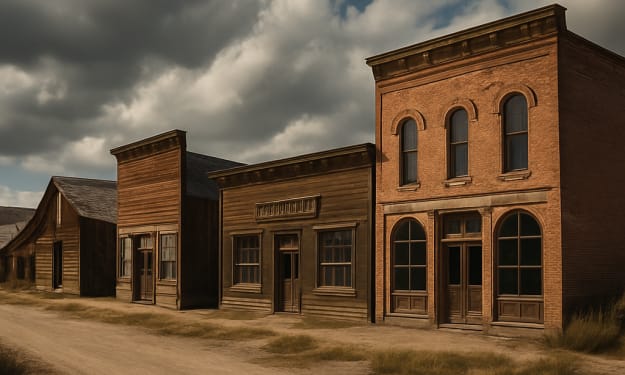
Ghost Towns You Can Actually Visit
There’s a special hush that settles over a ghost town. Its not just silence, its history holding its breath. Wooden sidewalks creak underfoot, doors hang slightly ajar, and the wind whistles through empty window frames like a ghostly flute. Visiting a ghost town isn’t like strolling through a museum or a park. It’s stepping into a paused moment in time, where the bustle of miners, shopkeepers, and schoolchildren faded long ago.
By The Iron Lighthouseabout a year ago in History
Famine Unfolding Across Gaza, Says Global Hunger Monitor
Global Hunger Monitor reports that famine is spreading throughout Gaza. According to a new report from the Integrated Food Security Phase Classification (IPC), a global organization that monitors hunger, a humanitarian crisis is engulfing Gaza as famine conditions spread throughout the territory. For hundreds of thousands of civilians, widespread malnutrition, hunger, and starvation are now a dire reality, according to the report, which warns that large segments of the population in Gaza are experiencing catastrophic levels of food insecurity. The IPC, which classifies food insecurity into five phases—ranging from minimal to famine—has placed much of Gaza in Phase 5: Catastrophe/Famine. Extreme hunger, acute malnutrition, and excessive mortality are all indicators of this phase. The situation, the IPC notes, is unprecedented in modern history in terms of speed, scale, and severity.
By GLOBAL NEWSabout a year ago in History
7 Years Asleep: The Girl Who Defied Death
Vanished into Slumber, She Returned with a Story the World Still Can't Explain It started like any other night. Elena brushed her teeth, set her alarm, and climbed into bed with a sigh. The weight of work, deadlines, and life in general pushed heavy on her shoulders. She longed for just one night of uninterrupted sleep. 😴 But what she got... was something no one could have predicted. Just before dawn, Elena vanished. Her family searched the house, the street, the woods nearby. Her phone was still on her nightstand, her keys untouched. No signs of forced entry. No footprints. No noise. She was just... gone. The police came. Dogs sniffed every corner. Drones flew overhead. A full-scale search unfolded across the town. News anchors called her “The Vanishing Girl.” People began whispering about portals, alien abductions, even curses. 👽🌀 Three days passed. Then… she reappeared. Lying peacefully on her bed, dressed in the same pajamas she wore the night she disappeared. No dust. No marks. No signs of distress. Her mother screamed. Her brother fainted. Elena opened her eyes slowly and smiled, “I had the most amazing dream.” But it wasn’t a dream. At least, not like any dream humans have known. Doctors examined her—nothing unusual. No sign of malnutrition or injury. Brain scans were normal. But when Elena began speaking, things took a bizarre turn. “I was in a world of glass mountains and floating rivers,” she whispered. “There were no stars, only a glowing sky that pulsed with colors.” 🌈 She described creatures made of mist, whispering in a language she couldn’t understand but somehow felt. “They showed me a city built inside a giant flower.” 🌸 “And time... time there didn’t move forward or backward. It just was.” Experts were baffled. Psychologists suggested lucid dreaming. Neurologists called it an intense hallucination. But Elena had proof. In her palm was a stone—smooth, black, and pulsing faintly with blue light. No known element matched its structure. It defied magnetism, floated in water, and grew warm in the dark. Suddenly, governments got involved. The stone was taken for “analysis.” Elena was questioned for hours, watched closely, followed by people in suits. But she didn’t mind. She was busy sketching maps of the glass mountains. Writing symbols she saw in her “dream.” Talking to birds outside her window, saying they understood her now. 🕊️ Then came the others. Three more people in different parts of the world reported similar “disappearances.” Each vanished in their sleep, returned days later, and spoke of the same world. Same floating rivers. Same misty beings. Same flower-city. One man came back with a leaf that shimmered like gold. Another brought back a tune that made people cry when they heard it. 🎵 They called it “The Slumberverse.” Religious groups declared it a sign. Scientists called it “interdimensional leakage.” Social media? Went wild. #SleepTravellers #TheFlowerCity #ElenaKnows But Elena didn’t want fame. She just wanted to go back. Every night, she tried. Same pajamas. Same room. Soft music. Warm tea. But nothing worked. Then one evening, she simply said, “Maybe I wasn’t supposed to stay… maybe I was supposed to tell.” She began speaking at conferences. Wrote a book titled The City in the Petal. She became a quiet sensation. Years passed. The other travelers faded from the public eye. The stone? Locked away. But sometimes, when the sky pulses with strange light… People still report dreams of rivers in the air. Or of music that sounds like wind crying. And Elena? She sleeps peacefully, a small smile on her lips. Waiting. Hoping. Because once you’ve seen the impossible… The possible feels too small. ✨ One night, Elena woke up gasping. Not in fear—but in awe. She had heard it again. A hum, low and distant, like the heartbeat of a forgotten star. 🌌 She opened her window, and the breeze carried a scent—familiar yet unearthly. It smelled like the flower-city. Tears welled in her eyes. “They’re calling me back…” she whispered. Nobody else heard it. But she knew. Some doors don’t stay closed forever. Some dreams… are just waiting to bloom again. 🌺✨ Somewhere between forgotten dreams and blooming stars, she found herself truly alive again. ✨ ---
By Leya kirsan official about a year ago in History
Echoes of the Mind: Unveiling Ancient Human Psychology
Long before cities rose from the earth and language danced on parchment, early humans gathered under starlit skies, huddled around fires that did more than warm their bodies—they illuminated their minds. In these fireside circles, the seeds of psychology were quietly sown, not in books or laboratories, but in laughter, shared food, grief, and the primal need to belong. Aran was a young hunter in a tribe nestled along the edge of a vast river. His people, the early ancestors of modern humans, had no written language. Their stories were carried in memory, passed down through drumbeats, carvings on stone, and the hush of whispered wisdom. Each member of the tribe had a role, and with each role came a subtle shaping of the mind. This shaping—this hidden psychology—bound the group together. Though Aran was known for his speed and accuracy with a spear, what truly set him apart was something far less visible: empathy. He noticed when a tribe elder sat silently by the fire, eyes dimmed with grief. He sensed when a child wandered too far from safety, drawn by the pull of curiosity. And he understood the unspoken emotions of his fellow hunters when a hunt failed. These instincts weren’t unique to Aran. They were ancient and deeply rooted—evolution’s quiet adaptation to help early humans survive together. Community, after all, was survival. Anthropologists today understand that early human psychology was not shaped in isolation. It was built in groups—tribes, families, clans—where emotions were contagious and cooperation was critical. The human brain evolved not just to hunt or build tools, but to read expressions, to form alliances, to feel guilt, pride, and love. Even before language, emotional signals were shared through posture, eye contact, touch, and voice tone. These early psychological skills gave tribes like Aran’s an incredible advantage. Back in Aran’s world, every member of the tribe contributed to a shared mental world. The shaman, a woman named Elo, used rhythm, ritual, and plant medicine not just to heal bodies, but to guide the mind. She understood, intuitively, what modern psychologists would later prove: that belief and emotion could change how people experienced pain, fear, and even memory. Her chants soothed warriors before battle. Her symbols brought peace to grieving parents. She taught the tribe not just to survive, but to find meaning in their lives. This communal way of thinking created more than physical safety. It created psychological resilience. When the river flooded one spring and food became scarce, it wasn’t just Aran’s strength that carried him through. It was the comfort of shared songs, the hope in elders’ stories, and the knowledge that he was not alone. The tribe had him, and he had the tribe. Over thousands of years, these patterns became embedded in the human psyche. We carry them still. The way we form friendships, the reason we crave connection, the way we suffer in isolation and thrive in belonging—all of it echoes back to communities like Aran’s. What we now call “social bonding” or “emotional intelligence” was once a matter of life and death. In the ancient cave art of regions like Lascaux or Chauvet, we see more than drawings—we see psychology in action. We see hands pressed onto stone, symbols repeated, animals painted with reverence. These were not merely decorations. They were acts of memory, identity, and shared belief. They told stories, kept histories, and offered hope. They connected the living to the dead, the present to the past. This was the mind of the ancient world: deeply communal, spiritually curious, and emotionally alive. Today, as we navigate cities filled with strangers and digital lives that stretch beyond physical contact, we are still wired for the small circle around the fire. We still long for shared meaning, for understanding eyes, for rituals and stories. Ancient human psychology lives on in our need for belonging, in the warmth of a hug, and in the quiet peace we feel when we are truly seen. So when we study early humans, we are not just studying bones or tools. We are looking into a mirror, finding reflections of ourselves in their fears, dreams, and the quiet strength of their togetherness. Because even now, thousands of years later, the fire still burns.
By Muhammad Saad about a year ago in History