Analysis
Mysterious Reappearances: Unbelievable Locations People Were Found
There's nothing quite as mysterious, or scary, as someone going missing. But even more peculiar are the ways in which some people who've gone missing over the years ultimately reappeared. From turning up halfway up a cliff to emerging inside a toilet, these cases will leave you scratching your head. **The Astonishing Return of Steven Kubacki** On May 5th, 1979, the world witnessed a baffling return when 23-year-old Steven Kubacki woke up on a grassy knoll in Pittsfield, Massachusetts. Clad in a marathon-participant t-shirt, next to him lay a backpack filled with maps and hitchhiking signs spanning the country. But this wasn't just a random discovery. Steven had been missing for over a year, vanishing during a solo ski trip around Lake Michigan on February 20th, 1978. His reappearance left investigators and his family mystified – how had he journeyed more than 700 miles away from where he was last seen? Theories swirled, including a connection to the enigmatic Michigan Triangle, a region notorious for strange disappearances. Steven's vow of silence regarding his disappearance has added yet another layer of intrigue to this already puzzling tale. **Swept Away: Unusual Situations of Entrapment** Sometimes, the strangest places become hiding spots for the most bizarre incidents. Firefighters in Tucson, Arizona, were called to a home after hearing mysterious cries. They found a man stuck in a chimney, the result of an ill-fated attempt to enter his own house. In Silver Spring, Maryland, moans from within a wall led police to a person wedged in a chimney, who had been attempting a break-in. **The Enigma of Fritz Johnson** The case of Fritz Johnson, also known as Larry Bader, is a study in memory loss and identity crisis. Disappearing in 1957, Larry reappeared in 1965, claiming no memory of his past life. He adopted a new identity and forged memories, even marrying another woman. Was it amnesia or an elaborate hoax? Larry's untimely death in 1966 only deepened the mystery. **Unearthly Appearances: From Caves to Swamp** In the Ape Caves of Mount St. Helens, explorers stumbled upon a lost child in a dark tunnel. In Pennsylvania, toddlers Anna Thorpe and Rowan Griffin turned up in seemingly impossible locations, leaving authorities and onlookers baffled. **Unbelievable Disappearances and Returns** In 1987, Gabriel Nagy's disappearance led to a search that lasted 23 years. He was ultimately found 1,000 miles from his point of disappearance, with no memory of his former life. Similarly, a man named R. Babu became lodged on a steep cliff after a fall while climbing, defying odds for survival. Meanwhile, a group of tourists nearly went over a reservoir spillway in Texas before being rescued. **Wych Elm Bella: A Dark Mystery** In 1943, the discovery of a skeleton in a wych elm in Worcestershire left investigators with more questions than answers. The identity of "Bella" remains unknown, sparking theories of witchcraft and the occult. **Bizarre Entrapments: From Grease Ducts to Roof Vents** A burglar's ill-fated attempt to break into a restaurant led him to become trapped in a grease duct, covered in oil. Another man, attempting to break into a Chinese eatery, became stuck in a ventilation duct on the roof, his cries for help echoing through the building. The world is full of stories that challenge our understanding of what is possible. These tales of unexpected reappearances and baffling locations serve as a reminder that reality can be more mysterious than fiction.
By Hoomsuk Gaplong 3 years ago in History
Why Titanic didn't had enough lifeboats?
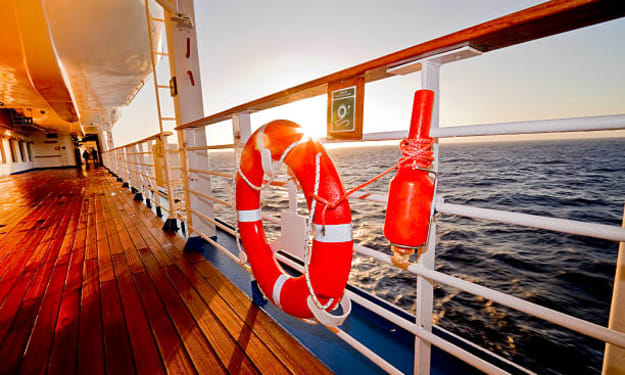
In James Cameron's 1997 blockbuster film, Titanic, there's a memorable moment where Rose, played by Kate Winslet, realizes a critical fact about the lifeboats: "It seems that there are not enough for everyone aboard." The response from Victor Garber's character, Titanic's architect Thomas Andrews, is both confident and poignant: "I have built a good ship, strong and true. She's all the lifeboat you need." Given the foreknowledge of the tragic outcome, this line takes on a bitter irony, embodying the essence of how the Titanic was designed and the fateful errors that unfolded. Interestingly, the Titanic was equipped with more lifeboats than mandated by British law. The Merchant Shipping Act of 1894 stipulated that vessels weighing over 10,000 tons should have at least 16 lifeboats capable of accommodating 990 people. Despite the Titanic's massive size, weighing over 45,000 tons at launch in 1911, it was legally required to carry only 16 lifeboats. Surprisingly, the Titanic had 20 lifeboats, with the potential to hold up to 1,178 individuals at full capacity. Tragically, this fell far short of the approximately 2,240 passengers and crew on board during the ship's ill-fated voyage. From a design perspective, the Titanic's builders believed they had crafted an unparalleled example of maritime safety. The Titanic was intentionally designed to remain afloat even after sustaining significant damage. The ship's lower section was divided into 16 compartments through bulkheads—partitions that could be sealed off using watertight doors in case of a breach. This design aimed to prevent flooding in unaffected sections, ensuring that the Titanic would remain a stable platform for passengers while lifeboats were used to evacuate to rescue vessels. This concept of relying on both bulkheads and lifeboats had been successfully demonstrated before. A few years prior, the RMS Republic had collided with another ship, causing considerable damage and flooding. However, the crew's strategic use of watertight compartments and the newly introduced Marconi Wireless Telegraph system allowed them to send distress signals, leading to a successful evacuation and saving nearly all onboard. The early success of wireless communication and careful ship design fostered optimism that disasters at sea could be minimized. A 1909 news article boldly declared that "the passenger on a well-equipped transatlantic liner is safer than anywhere else in the world." This sentiment prevailed until the ill-fated events of the Titanic altered this perception. However, despite the Titanic's robust design, a sequence of unfortunate events led to its demise. While regulations originally stated that ships should remain afloat with any two adjacent compartments flooded, the Titanic was designed to withstand even more severe damage. Engineer and Titanic researcher Sam Halpern's analysis revealed that the ship could stay afloat even with three or four adjacent compartments flooded. The key was to maintain a level ship to prevent water from spilling over the bulkheads. Tragically, the Titanic's collision with an iceberg deviated from these anticipated scenarios. The ship's side scrape along the iceberg breached multiple compartments, with Boiler Room six being a critical breach point. Flooding of the first five compartments overwhelmed the design's resilience, causing the ship to become increasingly unstable as water flowed over the bulkheads. This eventuality contradicted the Titanic's initial premise of safety through compartmentalization. The Titanic's wireless distress signals were sent out, but the closest ship, SS Californian, failed to receive them due to the radio operator's inactivity. As time passed, the Titanic's desperate messages revealed the dire situation onboard. Without a rescue ship, the only remaining option was to rely on lifeboats. When the RMS Carpathia eventually arrived, the Titanic had already succumbed to the ocean, resulting in the tragic loss of over 1,500 lives. The disaster left an indelible mark on maritime safety regulations. A stark visual comparison between RMS Olympic and her twin Titanic in 1911 and 1912 respectively, highlights the immediate change in lifeboat provisions following the tragedy. The disaster prompted the establishment of the International Convention for the Safety of Life at Sea (SOLAS) in 1914. This international treaty mandated continuous wireless telegraph communication and increased the required number of lifeboats to accommodate everyone on board. In modern times, SOLAS regulations stipulate that cruise ships must have lifeboats capable of accommodating 125% of the ship's capacity in emergencies. The Titanic catastrophe, therefore, precipitated a profound transformation in maritime safety practices and regulations. Ultimately, the Titanic disaster wasn't solely the result of a design flaw, but rather a convergence of circumstances involving early wireless communication, an unforeseen collision scenario, and an overconfidence in the ship's resilience. The iconic "She's all the lifeboat you need" line, whether fictional or not, encapsulates the misguided optimism that surrounded the Titanic's ill-fated journey. The tragedy serves as a somber reminder of the delicate balance between innovation, preparation, and the unpredictable forces of nature.
By Shubham Bajaj3 years ago in History
FIFA's Tarnished Legacy: Unraveling the Corruption Behind the World Cup
On a chilly December 2nd in 2010, the world of football held its breath as the International Federation of Association Football, known as FIFA, gathered in picturesque Switzerland. This momentous gathering was convened to unveil the future hosts of the prestigious 2018 and 2022 World Cup tournaments. An illustrious audience had assembled, reflecting the political might and fervor behind their respective bids. The scene was set with notable figures like former U.S. President Bill Clinton, a vocal advocate for the U.S. bid, and Prince William championing England's cause. The Dutch Prime Minister and former Belgian Prime Minister stood united with a joint bid. In this room pulsating with power, the fate of nations hung in the balance, all hinging on the decisions of a group that held the key to the World Cup's future. These were the 22 FIFA officials vested with the authority to select the host nations, the custodians of destiny steering the course of international football. Yet, as the story unfolds, we'll come to realize that even these guardians of the game were not immune to the allure of abusing their power. The moment arrived, and the announcements echoed through the air like seismic ripples, revealing the chosen hosts. "Ladies and gentlemen, the 2018 FIFA World Cup will be organized in Russia, and the 2022 FIFA World Cup is awarded to Qatar." The room erupted with a mixture of emotions, from jubilation to bewilderment. Little did anyone know that this seemingly triumphant moment would send shockwaves through the world of football, unravelling a tale of corruption and scandal that would mar the very essence of the beautiful game. The journey of FIFA began humbly in the early 20th century when football had already established itself as a beloved sport, particularly in Europe and South America. FIFA was formed in 1904 by officials in France to oversee competitions between national teams and promote the sport. The desire to emulate the success of the Olympics led to the creation of the first World Cup in 1930, hosted by Uruguay. The selection process for the host was veiled in the guise of a democratic vote, concealing the influence of a select few behind closed doors. As the World Cup found its way onto television screens, it underwent a metamorphosis, evolving from a regional event into a global phenomenon. Countries clamored for the prestige and honor that came with hosting the tournament, propelling FIFA into a position of immense wealth and power. The burgeoning profits became the lifeblood of the organization, controlled by a small group known as the Executive Committee (ExCo), who wielded the authority to distribute funds among member nations. However, beneath the surface of the World Cup's success, a culture of corruption began to fester. FIFA leaders started using illicit means to consolidate and extend their influence, culminating in the decision to shift the voting power from the FIFA Congress to the ExCo. This pivotal move concentrated immense power in the hands of a few, creating an environment ripe for corruption to thrive. The turn of the 21st century saw FIFA's bidding process evolve into a high-stakes arena, where nations vying for the opportunity to host the World Cup indulged in a frenzied display of promises and lavish gestures. The 2006 World Cup bid marked the first glaring evidence of under-the-table deals, with Germany's victory marred by allegations of bribery. The trend continued, tainting subsequent bids and eventually culminating in the controversial selection of Russia and Qatar as hosts for 2018 and 2022 respectively. Russia and Qatar emerged as winners not solely based on merit, but rather on their ability to flex political muscle and financial prowess. Russia showcased its formidable resources and influence, while Qatar harnessed its wealth and ambition to embark on a staggering infrastructure overhaul. Both nations exploited the lack of accountability and transparency within FIFA's structure, playing a sophisticated game of power politics to secure their hosting rights. The aftermath of these selections saw FIFA plunge into a whirlpool of scandal and controversy. Arrests, indictments, and investigations laid bare the rampant corruption that had infiltrated the organization's highest echelons. The ensuing chaos culminated in Sepp Blatter's ignominious departure from the presidency of FIFA, symbolizing a pivotal moment in the unraveling of the institution. Amidst the turmoil, FIFA attempted to restore its tarnished reputation by reinstating the Congress's authority in the host selection process. However, the damage was done, and questions lingered about the moral integrity of hosting decisions that had favored wealth and power over principles. The legacy of the 2018 and 2022 World Cup host selections serves as a stark reminder of the darker side of the beautiful game. It highlights the pitfalls of unchecked power, the allure of under-the-table dealings, and the precarious balance between ambition and ethics. As the world tunes in to witness the spectacle of the World Cup in Russia and Qatar, the shadows of controversy loom large, casting a long shadow over an event that was once the epitome of sporting excellence. In retrospect, the 2018 and 2022 World Cup hosting decisions stand as cautionary tales, reminding us of the imperative to safeguard the integrity of the beautiful game. The lessons learned from this tumultuous chapter in FIFA's history serve as a call to action for transparency, accountability, and a renewed commitment to the principles that have made football a unifying force across borders and cultures. The road to redemption may be arduous, but it is a journey that the world of football must undertake to ensure that the spirit of the game remains untarnished for generations to come.
By Shubham Bajaj3 years ago in History
Why queen Elizabeth 2nd was the queen of 15 countries!?
On November 30th, 2021, history was made as Barbados proudly emerged as the world's newest republic. With a resounding declaration, the transformation was solidified: "From this day and forever, declare Barbados a parliamentary republic." This pivotal moment marked the culmination of a journey that saw Barbados unfurl its own flag, symbolizing the end of a colonial era spanning over 350 years and dissolving its ties to the British royal family. What added an intriguing layer to the event was the presence of none other than Prince Charles, who acknowledged, "It was important that I should join you to reaffirm those things which do not change." Prince Charles's words held a deeper significance, encompassing the essence of the transition. Although Barbados had stepped away from being a realm of the British Crown, it chose to maintain its membership in the Commonwealth—a conglomerate of nations primarily composed of former British colonies. A moment of transformation was unfolding, one that required a closer look at the intricate relationship between the British Empire and the Commonwealth of Nations. Travel back to 1926, the year Queen Elizabeth II entered the world stage. At that time, the British Empire exerted dominion over nearly a quarter of the global population through its sprawling colonies. This immense reach was built upon refined systems designed to control and exploit wealth and resources across the colonies. Consider the case of Barbados, where descendants of those kidnapped from Africa were exploited on sugar plantations, or delve into South Africa, where a wealth of diamonds was extracted from local mines. The early 20th century witnessed the initial ripples of change in the colossal British Empire. Countries such as Australia and Canada transformed into British dominions, relinquishing direct rule by Britain while maintaining symbolic allegiance to the Crown—a concept termed the British Commonwealth. This new form would later serve as the blueprint for the empire's evolution. As Queen Elizabeth ascended the throne in the 1950s, the world was in flux. Post-World War II, Britain's economy faltered, and independence movements surged across the empire. Struggles for sovereignty unfolded in places like India, where leaders fought for self-governance, and in Kenya, where millions resisted British rule, even enduring internment camps. Recognizing the inevitability of decolonization, the monarchy shifted its focus toward relevance. While Queen Elizabeth did not personally attend the lowering of the British flag, her family did. Prince Philip participated in ceremonies marking the independence of former colonies, including Kenya. Other royals, such as Lord Mountbatten, were also part of this symbolic transition, as seen in India. India's trajectory took an intriguing turn as it chose to become a republic and sever ties with the monarchy. In response, the British Commonwealth underwent a transformation of its own, rebranding itself as the Commonwealth of Nations. This evolution allowed countries to join as members even if they were no longer under the queen's rule. Meanwhile, newly independent nations opted to retain the queen as their ceremonial head of state, establishing a diverse mix of monarchies and republics, all presided over by the queen. In this intricate landscape, the monarchy adapted and thrived, expanding its reach through royal tours that echoed the imperial tradition. As the British empire decolonized, the monarchy remained a global entity. Fast-forward to today, where approximately a third of the world's population resides in a Commonwealth nation. This intriguing alliance extends beyond former British colonies, as countries find value in the political platform it offers, connecting them to influential diplomatic players like the UK, India, Canada, and even the Crown itself. The transition to the next head of the Commonwealth, King Charles III, carries a hint of irony. While the British empire gave birth to the Commonwealth, the future leadership of the organization is not bound by colonial origins. Anyone has the potential to lead, indicating that the Commonwealth's evolution may be guided by those very colonies it was designed to unify. The recent passing of Queen Elizabeth II triggered periods of mourning across Commonwealth nations. Her remarkable ability to unite diverse nations provided a buffer against the darker chapters of British history, such as slavery. However, the monarchy can no longer evade these discussions, as the collective reckoning with colonial legacies prompts introspection on the monarchy's role within the Commonwealth. These conversations underscore a pivotal shift in power dynamics. Former British colonies now hold considerable influence within the Commonwealth. The question that looms large is the collective vision of these nations. What aspirations and goals will guide the future of this diverse union? The journey from colonialism to republics within the Commonwealth is a complex narrative, one that reflects not just a shift in political landscapes, but also the aspirations of nations bound by shared histories.
By Shubham Bajaj3 years ago in History
Politics of Nigeria
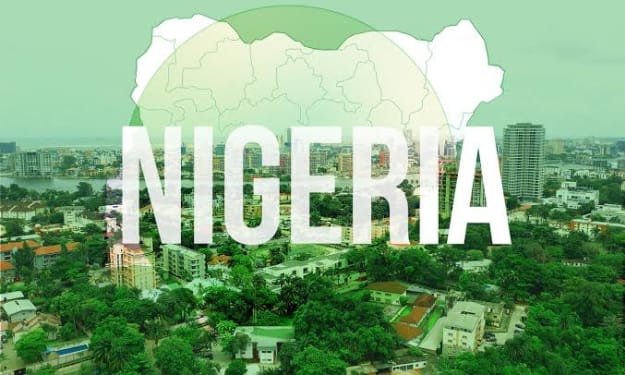
What Lies Ahead for Us?"In Nigeria's ever-changing political scene, the journey to becoming president is like a story full of surprises, strong loyalties, and big arguments. This is a tale about three strong candidates – one from the Southeast, another from the Southwest, and a long-time hopeful from the North – whose paths to power had twists nobody saw coming. These stories make us wonder about the future of our nation.First, there's a guy from the Southeast who used to be a well-respected governor. During his time as governor, he did a lot of good things like improving roads and making government work better. People really liked him because he stood for progress and what his region wanted. His ideas caught on quickly, and people all around the country started to support him.His success as governor was like a big part of his story. The good things he did during his time in office made a lot of people think he could do even better on a national scale. People saw him as a symbol of hope, someone who could make things better. With lots of support and endorsements, his supporters were really excited to see him bring good times.Then there's a person from the Southwest who had a different kind of story. Some people didn't trust him much because of things he did in the past and the groups he was connected to. Even though people doubted him, he didn't give up. He built a team of supporters and used his experience to get ahead in the political game.And let's not forget the North's candidate, who had been trying to be president for a long time. He symbolized determination and never giving up. His dreams of being president connected with many people, and his followers admired his dedication. Despite facing obstacles, he was able to bring together a strong group of supporters from all over the country.As the time for the election got closer, the Southeast candidate seemed like the favorite. His ideas and energy caught people's attention, and it looked like he could win. On the other hand, the Southwest contender, who wasn't seen as the strongest, gathered supporters secretly and used smart strategies. The North's hopeful, who had been trying for so long, got support from his loyal followers.But then, the election results surprised everyone by showing that the Southwest candidate won. It was unexpected, and it was seen as a big win over challenges. This unexpected victory shook the nation, leaving people shocked and amazed at how things turned out.After the election, there were arguments and doubts about whether everything was fair. People said the election might not have been honest. These controversies divided the country. Court cases were started to settle the arguments, and everyone wondered who would win in the end.In the end, Nigeria faced an important moment. The stories of these three candidates showed how complicated democracy can be, with wins mixed with doubts. The future of the country felt uncertain. People thought about what's right, fair, and what direction Nigeria should take.The future of Nigeria will be decided by the people, by sticking to democratic values, and by hoping for a better tomorrow. Among all the political noise, one thing is clear: the story of Nigeria's destiny is written by its citizens, their belief in democracy, and their determination to make the future brighter.
By Kenneth Onah3 years ago in History
Fueling Dependence: Germany's Reliance on Russian Gas
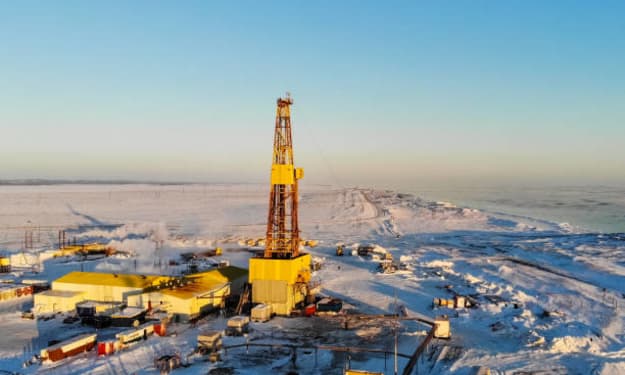
On April 8th, 2022, a significant event unfolded in the realm of international relations as the European Union (EU) took a decisive step by imposing its fifth round of sanctions against Russia. This marked a notable development in a complex web of diplomatic interactions. A notable quote emerged amidst this decision, capturing attention: "And, ladies and gentlemen, I think that measures on oil, and even gas, will also be needed sooner or later." This seemingly cryptic statement, "even gas will also be needed sooner or later," was carefully noted for its implications – suggesting a potential course of action in the future while hinting at the timing being not quite immediate. This move was part of a series of actions taken by the EU in response to the ongoing conflict in Ukraine. Over the course of this period, sanctions had been artfully designed to restrict the flow of Russian money and goods. Various segments of the Russian economy felt the impact, with the EU targeting not just banks and companies, but also specific individuals who were instrumental in shaping the nation's policies. It was a chess game played out on the global stage. However, a striking aspect of these sanctions was their restraint when it came to the realm of natural gas, a vital resource. The European Union relied on gas for almost a quarter of its energy needs, and nearly half of that gas came from Russia – a country renowned as the world's leading gas exporter. The intricate network of pipelines facilitating this exchange formed a vital link in the energy chain. Notably, Germany, boasting the EU's largest economy, stood as a primary recipient of Russian gas. As the gears of diplomacy turned, Germany found itself in a unique position. Despite the geopolitical tensions and the economic sanctions being imposed, the country continued to forge an energy relationship with Russia. This was particularly evident in the staggering sum of approximately 220 million euros per day that Germany paid Russia for its gas supply, a sum that could support various facets of a nation's infrastructure. Germany's reliance on Russian gas was borne from a historic trajectory that found its roots in the aftermath of World War II. In the mid-20th century, West Germany embarked on a remarkable journey of recovery and growth. Amidst this ascent, an insatiable demand for energy emerged, a need that was met by the vast natural gas reserves discovered in the heart of western Siberia, part of the erstwhile Soviet Union. The late 1960s witnessed a pivotal shift in West Germany's foreign policy, characterized by a doctrine known as Ostpolitik. This doctrine emphasized dialogue and cooperation with the Eastern Bloc, a policy that paved the way for a monumental energy agreement between West Germany and the Soviet Union. In this historic pact, the Soviet Union promised to supply natural gas to West Germany, while West Germany reciprocated by providing high-quality steel pipes to extend the gas pipelines – a classic example of the proverbial "you scratch my back, I'll scratch yours." It's important to comprehend the unique dynamics of piped natural gas – a regional commodity with transportation intricacies. Unlike its fossil fuel counterparts, coal and oil, which can traverse oceans, piped natural gas's movement is tied to the geography of pipelines. These pipelines are not ephemeral conduits; they are substantial, long-term investments that shape energy landscapes for decades. Hence, gas agreements became more than transactions; they were pathways that bound nations together. The 1980s saw the Soviet Union establishing a comprehensive network of pipelines, solidifying its position as a significant gas supplier to Europe. By the 1990s, Germany was receiving 40% of its gas from Russia, a statistic that bore testimony to the effectiveness of the agreement. However, the geopolitical landscape underwent tectonic shifts with the collapse of the Soviet Union. Russia, emerging as the successor state, took over the extensive pipeline network, but the new configuration meant that gas routes ran through newly independent Ukraine. To safeguard against potential disruptions in supply routes, Russia embarked on an ambitious endeavor – building alternative pipelines. By 1999, a pipeline running through Belarus was operational. In 2005, the Nord Stream pipeline, meandering along the Baltic Sea, was initiated, providing a direct route to Germany. These infrastructural marvels were supplemented by pipelines within German territory and the establishment of gas storage facilities, such as the impressive storage site that ranked among the largest in Western Europe. The intricate gas network underscored Russia's energy influence over Europe, a fact that manifested vividly in the gas price negotiations of 2008. An impasse led to a gas cutoff to Ukraine, which inadvertently impacted the flow of gas to multiple European nations. This episode illuminated the extent to which gas flows could be wielded as a geopolitical tool. The subsequent years brought forth another ambitious project – Nord Stream 2. An investment exceeding 11 billion dollars, this pipeline aimed to mirror the original Nord Stream, doubling the capacity of gas transport to Germany. As this project took shape, 2014 ushered in another seismic shift – Russia's annexation of Crimea and its intervention in Eastern Ukraine. In response, the EU responded with sanctions, leading certain countries to distance themselves from Russian gas. In contrast, Germany continued to bolster its gas imports, thereby emphasizing its energy reliance on Russia. Fast-forward to the present, and the situation has gained a heightened sense of urgency. As Russia's actions in Ukraine stir global outrage, Germany finds itself in a conundrum. The clamor for a change in energy dependency has grown louder, yet the path forward is riddled with complexities. Piped gas, woven into the fabric of German infrastructure, presents a formidable challenge to replace. While renewables remain the ultimate goal, the transition to such alternatives demands substantial time and resources, with an estimated completion date far into the future. In this intricate dance of geopolitics and energy, Germany stands at a crossroads. Public sentiment urges action against Russian gas, yet economic realities loom large. A potential boycott could ripple through the economy, with potential job losses numbering in the hundreds of thousands. Despite this, Germany has begun taking cautious steps. The once-proposed Nord Stream 2 pipeline has been abandoned, and measures to reduce dependence on Russian gas have yielded a modest 15% reduction. Germany has even taken control of a subsidiary of Russia's Gazprom, signaling a more assertive stance. However, the complexities persist. Germany's intertwined energy relationship with Russia isn't one easily untangled. The nation finds itself ensnared in a web spun from decades of energy agreements, geopolitical considerations, and economic pragmatism. As the world watches, the story unfolds with implications that extend beyond energy – a tale of diplomacy, resilience, and the intricate balance between power and dependence.
By Shubham Bajaj3 years ago in History
Hidden Histories: Unearthing the British Museum's Looted Artifacts
Welcome to the captivating world of the British Museum, a place that stands as a testament to the ebb and flow of human history. As you step through its grand entrance, you are greeted by a treasure trove of knowledge spanning an impressive two million years. This colossal repository of culture and heritage draws in countless visitors, earning its title as the world's largest museum dedicated to world history. Behold, within these hallowed halls, an awe-inspiring collection of over eight million artifacts from lands near and far, each whispering tales of civilizations long past. Among the stars of this illustrious museum are the time-honored relics that beckon from the museum's must-see list. Imagine gazing upon the enigmatic Easter Island sculpture, a venerable thousand-year-old artifact, or marveling at the intricate bronze sculpture depicting the Hindu deity Shiva. These treasures are only the beginning of an enchanting journey that lies ahead. However, as you traverse the museum's labyrinthine corridors, a shadow of contention emerges. A conundrum comes to light, epitomized by the pathway you tread. A stark revelation emerges—almost half of the dozen exhibited pieces along this route are mired in disputed ownership. The British Museum, in its earnest pursuit to showcase the diversity of humanity's heritage, finds itself entangled in a web of controversy. Indeed, a poignant debate has risen, casting a spotlight on the question of whether cultural artifacts should remain ensconced within the halls of Western museums or return to the embrace of their home countries. The discourse surrounding the rightful ownership of these treasures has ignited a fervent discussion, where perspectives clash and passions run deep. To better understand this narrative, let us delve into the historical tapestry of the British Empire, which, in the late 1600s, embarked on an unprecedented expansion across continents. It soared to majestic heights, becoming the unparalleled dominion that spanned a quarter of the globe's landmass and population. As the empire extended its reach, it harvested not only resources and wealth but also cultural heirlooms from lands far and wide. In 1753, the British Museum was founded, a sanctuary to house these marvels, a true embodiment of human endeavor. The collection flourished with each passing decade, embracing new acquisitions, legal and undisputed, like the venerable two-thousand-year-old Roman base, a relic of ancient grandeur bequeathed to the museum by a noble duke in the year 1945. Yet, the heart of the matter resides in the pieces shrouded in ambiguity and dispute. As you step through the museum's entrance, your gaze falls upon the Rosetta Stone, a relic entwined with intrigue. Acquired by British troops from the French in Egypt, this ancient slab serves as a bridge to deciphering the enigmatic script of the past. A few paces onward, the Parthenon sculptures beckon, extracted from the Acropolis in Athens by a British lord and carried across continents to their present abode. Venture further, and you encounter the enigmatic Benin bronzes, captivating in their diversity. These treasures, hailing from the Kingdom of Benin in present-day Nigeria, encompass a spectrum of artistic expression, from engraved ivory tusks to resplendent brass sculptures and intricate plaques. This once-thriving kingdom thrived in the 1500s, its artistry a mirror reflecting its political and social narrative. Professor Chika Okekeyagulu, an art historian hailing from Nigeria and a professor at Princeton University, unravels the story of these bronzes, attesting to their role as visual chronicles of a society that lacked a conventional written script. However, a somber chapter unfurled in 1897. European colonial powers, fueled by a feverish quest for dominion, cast their gaze upon Africa. The "Scramble for Africa" saw these powers partition the continent into spheres of influence, with Benin falling under the British domain. A tragic turn of events led to the "Benin Disaster," a collision of cultures and interests that claimed lives and loyalties. In response, a punitive expedition ensued, leading to the pillaging of Benin's treasures, a calculated endeavor that saw the British soldiers claim thousands of artifacts as their spoils. Photographs from that epoch capture the systematic dismantling of palace plaques, a chilling testament to a civilization erased. The aftermath bore witness to a once-thriving kingdom reduced to ruins, as the echoes of a colonial conquest reverberated through time. The indomitable spirit of the Benin people endured, culminating in Nigeria's eventual independence in 1960. Yet, the echoes of the past endured, as the artifacts that bore testament to Benin's legacy remained dispersed across the globe, locked within the vaults of Western institutions. Flash forward to the year 1995, a poignant moment where firsthand encounters with these artifacts evoke a sense of pride and longing. Dr. Chika Okeke-Agulu reminisces about his inaugural visit to the British Museum, a journey that spanned continents and emotions. The magnificence of these artifacts is juxtaposed against the bittersweet reality—while a privileged few traverse oceans to bear witness, countless others are denied this privilege, forever distanced from their heritage. March of 2000 marked a pivotal juncture as Benin's royal family voiced their plea for the return of unlawfully taken cultural property. A symbolic gesture, an olive branch extended across time, and yet the response remained incomplete. The British Museum, restrained by a governmental act, stood steadfast in its stance, refusing to relinquish its hold. The essence of their commitment reverberated in their words—"We don't restitute, but we are absolutely committed to lending as widely as possible." A glimmer of change emerged in the form of a grandson's noble gesture, as artifacts from the 1897 expedition were returned to the Benin royal family. The year 2007 bore witness to the birth of the Benin Dialogue Group, a consortium embarking on a complex journey toward reconciliation. Western museums that housed the bronzes and representatives from the Nigerian government engaged in earnest conversations, seeking a resolution that remains elusive to this day. But this narrative extends beyond the walls of the British Museum. It is a tale interwoven with threads of colonial power that stretch across epochs and continents. These contested artifacts symbolize more than just physical objects; they represent the intangible essence of cultural and historical identity. The quest for restitution is a testament to the enduring spirit of nations, demanding recognition, and a reclaiming of what was lost. In the words of Dr. Chika Okeke-Agulu, this endeavor is a long-term project, a pursuit that stretches beyond individual lifetimes. The time has come to embark on the arduous journey of cultural reconstitution, a journey that commences in the present, with an unwavering commitment to forging a path toward reconciliation. As we contemplate the stories encapsulated within these artifacts, let us collectively embrace the responsibility to honor their origins and the vibrant legacies they encapsulate. In conclusion, the British Museum stands as a microcosm of a global narrative, a place where history converges, and voices echo through time. Its vast halls hold not only artifacts but also echoes of debates, passion, and the longing for justice.
By Shubham Bajaj3 years ago in History
How America became a Superpower?
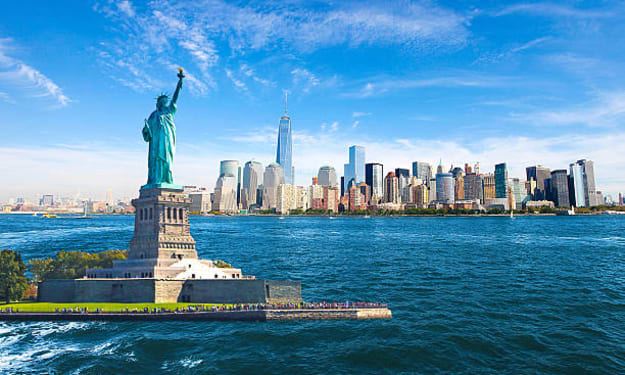
The United States, a formidable global force today, boasts an impressive military presence, boasting over 800 military bases and accounting for a significant 37% of the world's military spending. This dominance has positioned the U.S. as a leader in an intricate interconnected global system, fostering an era of unparalleled prosperity and notably low levels of conflict. However, to truly comprehend America's paramount role on the global stage and the reasons behind its pivotal status in world politics, we must journey back to the nation's origin—a time when America held no claims to being a global power. During its nascent years, the United States experienced a gradual expansion in both geographical reach and influence across North America. This expansionist fervor culminated in the nation reaching the Pacific Ocean, a period characterized by the tragic displacement and loss of life among the indigenous populations inhabiting the continent. Nevertheless, the question of whether America should extend its boundaries beyond the Pacific and Atlantic oceans sparked a substantial debate among early Americans. The aftermath of the Civil War marked a turning point, as prominent figures like post-war Secretary of State Seward championed the idea of transforming America into a global powerhouse. While Seward managed to push through the acquisition of Alaska from Russia, his efforts to purchase Greenland, Iceland, and territories in the Caribbean faced Congressional opposition. This divergence of opinions mirrored the broader sentiment among Americans, with some harboring anti-imperialist sentiments, fearing increased involvement in global politics and potential challenges integrating populations from what they perceived as "inferior" races. The late 1800s marked a transformative period as the industrial revolution spurred remarkable economic growth. This economic boom necessitated a more centralized state and bureaucratic apparatus to manage the burgeoning economy, effectively consolidating power within the federal government. This concentration of power empowered expansionist presidents, most notably William McKinley, to exert influence on the global stage with relative ease. The pivotal moment arrived in 1898 when President McKinley propelled the United States into war with Spain, centering on the island of Cuba. Despite fervent opposition, the United States emerged victorious, acquiring Puerto Rico, Guam, and the Philippines, thereby marking a significant leap in its global standing. Subsequent years saw the U.S. annexing Hawaii, Wake Island, American Samoa, and even taking control of the Panama Canal Zone and sending troops to the Dominican Republic. This period of rapid territorial expansion solidified the United States' status as a truly global power. Moreover, the U.S. began flexing its influence to safeguard its growing commercial and military interests worldwide, establishing friendly regimes in nations such as Nicaragua and playing a prominent role in international diplomacy concerning Western engagement in China. World War I underscored the nation's elevated influence, as American intervention played a decisive role in ending the conflict. President Wilson's participation in the Paris Peace Conference and his initiation of the League of Nations showcased America's most ambitious foreign policy endeavor at the time—an initiative aimed at fostering global peace and cooperation. However, the United States' internal isolationist sentiment hindered its full commitment to the League. The Great Depression and the rise of Hitler steered U.S. focus towards its own region. Yet, America's deepening entanglements on the global stage made complete isolationism an unattainable goal. The looming threat of the expanding Japanese empire, which directly endangered American interests and assets, forced the United States into World War II following the devastating Pearl Harbor attack. World War II irrevocably transformed America's global presence. As the sole major power to emerge economically unscathed, the U.S. held unique leverage in shaping the post-war world order. To prevent future conflicts, it played a pivotal role in establishing the United Nations, a forum designed to prevent wars of conquest and facilitate diplomatic resolutions. Beyond the UN, a notable gathering of delegates from 44 Allied nations convened in Bretton Woods, New Hampshire, crafting the Bretton Woods Agreement—a framework for a global financial system to avert another Great Depression and world war. This laid the groundwork for institutions such as the World Bank and the International Monetary Fund, solidifying America's commitment to addressing global challenges. However, the Soviet Union's contrasting perspective initiated a new dynamic. The Cold War sparked a global struggle, leading the United States to adopt a containment strategy against the spread of communism. This required constant exertion of influence worldwide, often manifesting in unlikely alliances with countries such as Saudi Arabia, Israel, and South Korea. The Cold War era saw the United States intervening, sometimes discreetly, in numerous disputes to thwart Soviet influence. Whether it meant supporting friendly dictators or arming rebels, the U.S. found itself deeply involved in a complex web of alliances and relationships spanning the globe.
By Shubham Bajaj3 years ago in History
The Israel-Palestine conflict: a brief, simple history
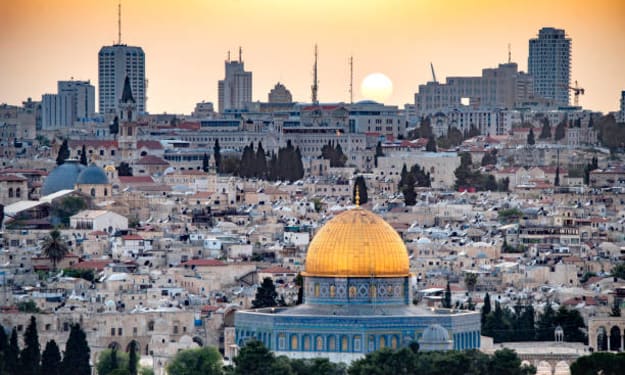
The Israel-Palestine Conflict: Unraveling the Myths and History The Israel-Palestine conflict is often shrouded in misconceptions, with some falsely believing it to be an age-old feud rooted in religious hatred. In reality, this complex issue primarily revolves around two groups vying for the same land, a struggle that emerged just over a century ago in the early 1900s. At that time, the region we now refer to as Israel-Palestine was under Ottoman rule, encompassing a diverse population of Muslims, Christians, and a small Jewish minority, coexisting relatively peacefully. Amidst these dynamics, two significant shifts were unfolding. First, the people of the region started to develop a distinct national identity, transforming from ethnic Arabs into Palestinians. Simultaneously, the Zionist movement gained traction among Jews in Europe, asserting that Judaism was not solely a religion but a nationality deserving of a homeland. After enduring centuries of persecution, many Jews saw a Jewish state as their only safeguard, with the Middle East serving as their historic homeland. The early 20th century saw a substantial influx of European Jews into the region, especially after World War One and the collapse of the Ottoman Empire. The British Mandate for Palestine was established, and tensions escalated as Jewish immigrants settled into farming communities. This influx led to mounting friction between Jews and Arabs, culminating in acts of violence perpetrated by both sides. The British, initially allowing Jewish immigration, began to limit it in response to escalating tensions. The Holocaust, a tragic event that galvanized global support for a Jewish state, further intensified the conflict. In 1947, the United Nations approved a partition plan, envisioning separate Jewish and Arab states, with Jerusalem designated as an international zone. Israel declared independence, and neighboring Arab states, viewing the plan as another form of colonialism, declared war in a bid to establish a unified Arab Palestine. Despite prevailing against the odds, Israel's territorial expansion beyond the UN-designated borders and the displacement of Palestinians created a refugee crisis. The Arab-Israeli conflict was born, with Israel controlling most of the territory, except for Gaza and the West Bank. The 1967 war led to Israel's occupation of these Palestinian territories, including Jerusalem, further deepening the divide. The subsequent years saw the establishment of the Palestinian Liberation Organization (PLO), initially aiming to eliminate Israel but later accepting the idea of a two-state solution. Violence erupted, and the Intifada, meaning "uprising" in Arabic, brought both Palestinians and Israelis to the brink. In this tumultuous era, Hamas emerged in Gaza, advocating for Israel's destruction and further complicating the situation. The Oslo Accords in the early 1990s marked a significant step towards peace, establishing the Palestinian Authority to govern certain areas. However, hard-liners on both sides sabotaged progress, and the failure of peace negotiations led to a more pessimistic outlook. The Second Intifada, marked by intensified violence, shaped a new reality. Israel's focus shifted from solving the conflict to managing it through walls and checkpoints, while Palestinians felt trapped under a growing occupation. Israel's withdrawal from Gaza in 2005 gave rise to Hamas, further fragmenting Palestinian leadership. Gaza was subjected to a stifling blockade, contributing to soaring unemployment and deteriorating living conditions. Today, settlements continue to expand in the West Bank, stifling Palestinian communities and generating tension, while periodic conflicts between Gaza-based groups and Israel result in devastating losses for Palestinians. While the majority of Israelis have grown apathetic to the ongoing conflict, the occupation remains a festering wound that cannot be ignored forever. The current status quo is unsustainable, with the occupation's instability foreshadowing a potentially darker future. The conflict's trajectory is uncertain; it may lead to a Third Intifada or a collapse of the Palestinian Authority. Nevertheless, one thing is clear: the status quo cannot persist, and the need for a resolution is more pressing than ever. In conclusion, the Israel-Palestine conflict is not an ancient feud driven by religious animosity, but rather a modern struggle rooted in a century-old clash of identities and national aspirations. The evolution of this conflict has seen numerous turning points, from the emergence of distinct national identities to failed peace negotiations and the persistent challenge of managing the occupation. As the conflict persists, the urgency for a comprehensive and lasting solution becomes increasingly evident, and the world watches with bated breath to see what the future holds for this deeply entrenched and complicated situation.
By Shubham Bajaj3 years ago in History
Why America still uses Fahrenheit?
"Alexa, what's the weather today?" If you're in the US, you're likely to receive a response in Fahrenheit. While virtually every country on Earth has embraced Celsius for temperature measurements, the US still holds onto Fahrenheit. This peculiar choice often prompts raised eyebrows and bemused comments. But it's not just a matter of meteorological semantics. The Fahrenheit system has deep historical roots that have both shaped and hindered progress. Let's delve into the tale of Fahrenheit, its origins, its global impact, and the ongoing debate over adopting the metric system. The Birth of Fahrenheit: In the early 18th century, measuring temperature was a disorganized affair. It was a German scientist, Gabriel Fahrenheit, who brought order to this chaos by inventing the mercury thermometer in 1714. Fahrenheit devised a scale that assigned freezing and boiling points to water at specific numbers, with the freezing point at 32 degrees and the boiling point at 212 degrees. He even added the average human body temperature at 96 degrees. This scale gained popularity, particularly after Fahrenheit's formal induction into the British Royal Society, where it found its place as a standard within the British Empire's extensive territories. Metric System's Rise: As the British Empire expanded, it carried the Fahrenheit system along with other Imperial measurements across the globe. Meanwhile, the metric system gained traction during the French Revolution, driven by the need for national unification. By the mid-20th century, Celsius, a unit of the metric system, gained favor in many English-speaking countries. In 1975, the US attempted to make the switch, enacting the Metric Conversion Act. This led to initiatives like the Interstate 19 metric highway sign, connecting Arizona to Mexico. However, resistance and a lack of enforcement eventually led to the disbandment of the United States Metric Board in 1982. The Struggle to Change: Despite attempts to promote metrication, the US clung to its familiar Fahrenheit system. This resistance persists, even as the global community increasingly embraces the metric system. The US's dual-system approach poses challenges for education, where students must learn two sets of measurements, and for businesses that must manufacture products for both domestic and metric markets. The consequences are more serious than mere inconvenience—medical dosage errors caused by conversion mistakes lead to thousands of unintentional medication overdoses every year. The Economic Conundrum: The argument for adopting the metric system is compelling—streamlined education, simplified commerce, and enhanced public health. Yet, the US hesitates due to the perceived financial burden of change. The cost of converting infrastructure, education materials, and public understanding is substantial. Without concrete evidence of economic benefits, the reluctance to transition remains strong. The question lingers: Is the expense of conversion justified by the potential gains? As the US continues to straddle two measurement systems, the debate over Fahrenheit versus Celsius persists. The historical legacy of Fahrenheit's invention and its integration into the British Empire has cemented its place in American culture. However, the global momentum towards the metric system raises questions about the costs and benefits of holding onto the Fahrenheit scale. While Celsius may seem more intuitive and widespread, the financial implications of change require careful consideration. So, for now, 77°F remains 25°C only in the eyes of those who choose to convert. Whether the US will eventually join the rest of the world in adopting the metric system remains a decision yet to be made. Like what you read? Consider liking and subscribing for more! :)
By Shubham Bajaj3 years ago in History
From spy to President: Rise of Mr. Putin
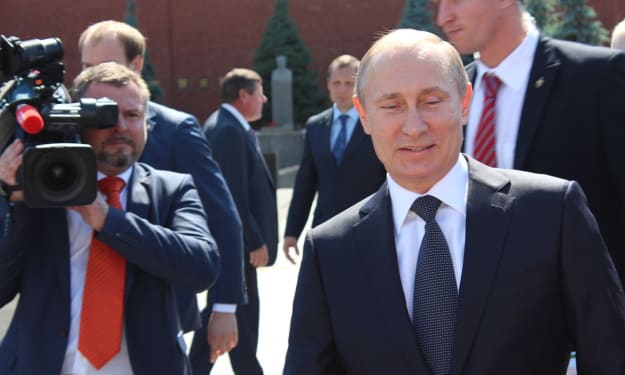
To truly grasp the extent of Putin's influence, we must rewind to a tumultuous era in Russian history – the aftermath of the Soviet Union's collapse. As the Berlin Wall crumbled, a young Putin found himself serving as an undercover spy in East Germany for the Soviet security agency, the KGB. The disintegration of the Soviet Union birthed 15 new nations, including the Russian Federation, which Putin viewed as a staggering loss of two million square miles of territory. He lamented the displacement of countless compatriots beyond Russian borders, labeling it a profound geopolitical calamity.
By Shubham Bajaj3 years ago in History