Analysis
A Doctor Who Killed 500 Patients Caught By One Mistake.
A Doctor Who Killed 500 Patients Caught By One Mistake. Harold Shipman is considered one of the most horrifying serial killers in history committing crimes that seemed unbelievable to the world. He was a doctor whom people trusted with their lives but he turned out to be the one taking them away. Throughout his career Shipman murdered more than 500 patients and for years there was no evidence against him. He was an extremely intelligent and cunning criminal who skillfully concealed his crimes but in the end a small mistake exposed his horrific secret to the world. Harold Shipman was born in England in 1946. He came from a modest background and after completing his medical education became a well known doctor. He had mastered the art of winning patients' trust. People saw him as a compassionate and caring physician. But behind this façade lay a terrifying truth. He deliberately administered lethal doses of morphine and other drugs to his patients causing their deaths. These deaths appeared natural as most of his victims were elderly patients.
By Adnan Rasheed2 years ago in History
The Mysterious Incident of Anjikuni Lake.
The Mysterious Incident of Anjikuni Lake. The history of humanity is filled with mysterious events that defy explanation but some enigmas become even more baffling with time. One such inexplicable mystery is the disappearance of an entire village near Anjikuni Lake in Canada in 1930. The most astonishing aspect of this story is that an entire settlement vanished without a trace and to this day no satisfactory explanation has been found. This event remains one of the most perplexing and unbelievable cases in history with numerous theories proposed yet none conclusively proven. Anjikuni Lake is located in the Nunavut region of Canada known for its cold climate icy landscapes and vast lakes. The area was home to the Inuit people who relied on hunting and fishing for their livelihood. In the winter of 1930ban experienced trapper named Joe Labelle who frequently visited the region for hunting arrived at a familiar Inuit village. However what he encountered this time was beyond belief. The entire village was deserted there were no signs of life no voices and no human presence anywhere.
By Adnan Rasheed2 years ago in History
Gigantic 50 foot long snake discovered in India.
Gigantic 50 foot long snake discovered in India. The recent discovery of the fossilized remains of Vasuki indicus a colossal prehistoric snake has captivated scientists and the general public alike. Measuring an astonishing 50 feet in length this ancient reptile was among the largest snakes to have ever lived. Unearthed by researchers from the Indian Institute of Technology Roorkee this find provides a rare and invaluable glimpse into the biodiversity of prehistoric India. The fossilized remains of Vasuki indicus were found in a remarkably well preserved state offering scientists an opportunity to study its anatomy in detail. The discovery consists of 27 fossilized vertebrae which allowed researchers to accurately estimate the size and structure of the snake. Dr. Rajesh Kumar the lead author of the study published in Scientific Reports described the specimen as excellently preserved emphasizing its significance in understanding prehistoric reptilian life.
By Adnan Rasheed2 years ago in History
"The Berlin Wall: A Monument to Division and the Triumph of Unity". AI-Generated.
The Berlin Wall: A Attribute of Analysis and the Celebration of Unity The Berlin Wall, erected in 1961 and dismantled in 1989, stands as one of the best almighty symbols of the Cold War. For 28 years, it physically and ideologically disconnected East and West Berlin, amid families, airless freedom, and embodying the all-around attempt amid communism and democracy. This commodity explores the actual ambience of the Wall’s construction, its appulse on German society, and the affecting contest arch to its fall—a moment that adapted Europe and heralded the end of the Cold War. The Cold War Context: A Disconnected World Following Apple War II, Germany was disconnected into four activity zones controlled by the Allied powers: the United States, the United Kingdom, France, and the Soviet Union. Berlin, amid abysmal aural the Soviet zone, was analogously split. Tensions amid the Soviet Union and the Western Allies escalated, culminating in the Berlin Blockade (1948–1949) and the consecutive analysis of Germany into two states:
By Say the truth 2 years ago in History
"Echoes of Division: The Berlin Wall and the Struggle for Freedom". AI-Generated.
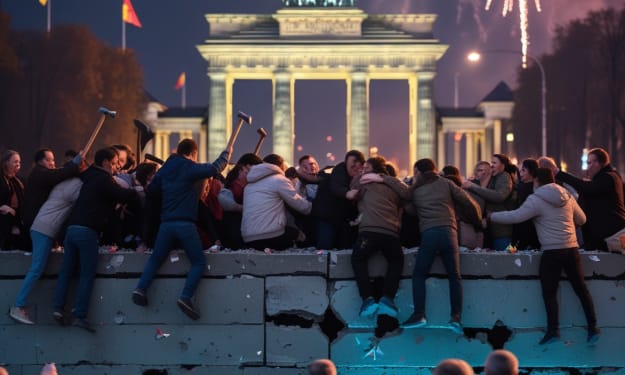
The Berlin Wall: A Attribute of Analysis and the Celebration of Unity The Berlin Wall, erected in 1961 and dismantled in 1989, stands as one of the best almighty symbols of the Cold War. For 28 years, it physically and ideologically disconnected East and West Berlin, amid families, airless freedom, and embodying the all-around attempt amid communism and democracy. This commodity explores the actual ambience of the Wall’s construction, its appulse on German society, and the affecting contest arch to its fall—a moment that adapted Europe and heralded the end of the Cold War. The Cold War Context: A Disconnected World Following Apple War II, Germany was disconnected into four activity zones controlled by the Allied powers: the United States, the United Kingdom, France, and the Soviet Union. Berlin, amid abysmal aural the Soviet zone, was analogously split. Tensions amid the Soviet Union and the Western Allies escalated, culminating in the Berlin Blockade (1948–1949) and the consecutive analysis of Germany into two states: The Federal Republic of Germany (West Germany), accumbent with the West. The German Democratic Republic (East Germany), a Soviet accessory state. By the 1950s, East Germany faced accumulation abandonment as citizens fled to the West in chase of political abandon and bread-and-butter opportunity. Amid 1949 and 1961, about 2.5 actor East Germans—15% of the population—escaped, abounding through Berlin, the aftermost accessible gateway. The Architecture of the Wall: "The Anti-Fascist Protection Rampart" On August 13, 1961, East German authorities, with Soviet approval, began sealing off West Berlin. Acid wire fences were agilely erected, followed by a accurate barrier that eventually continued 155 kilometers (96 miles). Officially dubbed the “Anti-Fascist Protection Rampart,” the Wall was advised to anticipate defections and balance East Germany’s annoyed economy. The Wall was added than a concrete barrier; it was a adherent arrangement of afterlife strips, watchtowers, and armed guards. Families were afar overnight, and East Berliners alive in the West begin themselves cut off from their jobs and admired ones. Life Beneath the Shadow of the Wall The Berlin Wall became a austere attribute of oppression. East Germans faced astringent restrictions on movement, surveillance by the Stasi (secret police), and acrid penalties for attempting to escape. Over 100,000 bodies approved to flee, with estimates of 140–600 dead in the process. Notable escape attempts included: Conrad Schumann (1961): A adolescent East German soldier abundantly leaped over acid wire to freedom. Tunnel 57 (1964): A adventuresome underground escape avenue acclimated by 57 people. Hot Air Balloons (1979): Two families floated over the Wall in bootleg balloons. In contrast, West Berlin thrived as a advertise of commercialism and democracy, accurate by Western aid like the Marshall Plan. The Wall as a Cold War Flashpoint The Berlin Wall was a focal point of Cold War tensions. In 1961, U.S. President John F. Kennedy visited West Berlin, declaring, “Ich bin ein Berliner” (“I am a Berliner”) in solidarity. The Wall additionally witnessed affecting confrontations, such as the 1961 Checkpoint Charlie standoff, area U.S. and Soviet tanks faced off for 16 hours. Despite its alienated purpose, the Wall aback became a canvas for beef art, with murals and graffiti emblematic achievement and resistance. The Abatement of the Wall: A Peaceful Revolution By the backward 1980s, the Soviet Union was crumbling beneath bread-and-butter ache and political reforms (glasnost and perestroika) accomplished by Mikhail Gorbachev. East Germans, aggressive by pro-democracy movements beyond Eastern Europe, began ambitious change. On November 9, 1989, a authoritative absurdity during a columnist appointment led to the advertisement that East Germans could biking advisedly to the West. Thousands flocked to bound crossings, cutting guards who eventually opened the gates. Ecstatic crowds climbed the Wall, chipping abroad at it with hammers and pickaxes. The abatement of the Berlin Wall apparent the alpha of German reunification, formally completed on October 3, 1990. Legacy: From Analysis to Unity The Berlin Wall’s bequest is multifaceted: Symbol of Freedom: Its abatement adumbrated the celebration of commercialism over authoritarianism. Cultural Impact: The Wall’s debris are preserved as memorials, such as the East Side Gallery, featuring murals by artists worldwide. Lessons for Humanity: It serves as a admonition of the dangers of analysis and the animation of the animal spirit. Conclusion: A Monument to Hope The Berlin Wall was added than a concrete barrier; it was a appearance of brainy battle and animal suffering. Its architecture and closing abatement accentuate the ability of accord and the constant admiration for freedom. Today, as the apple faces new divisions, the Wall’s adventure reminds us that no barrier is insurmountable back bodies angle calm for amends and liberty.
By Say the truth 2 years ago in History
"The Fall of the Berlin Wall"
The Berlin Wall: A Attribute of Analysis and the Celebration of Unity The Berlin Wall, erected in 1961 and dismantled in 1989, stands as one of the best almighty symbols of the Cold War. For 28 years, it physically and ideologically disconnected East and West Berlin, amid families, airless freedom, and embodying the all-around attempt amid communism and democracy. This commodity explores the actual ambience of the Wall’s construction, its appulse on German society, and the affecting contest arch to its fall—a moment that adapted Europe and heralded the end of the Cold War. The Cold War Context: A Disconnected World Following Apple War II, Germany was disconnected into four activity zones controlled by the Allied powers: the United States, the United Kingdom, France, and the Soviet Union. Berlin, amid abysmal aural the Soviet zone, was analogously split. Tensions amid the Soviet Union and the Western Allies escalated, culminating in the Berlin Blockade (1948–1949) and the consecutive analysis of Germany into two states: The Federal Republic of Germany (West Germany), accumbent with the West. The German Democratic Republic (East Germany), a Soviet accessory state. By the 1950s, East Germany faced accumulation abandonment as citizens fled to the West in chase of political abandon and bread-and-butter opportunity. Amid 1949 and 1961, about 2.5 actor East Germans—15% of the population—escaped, abounding through Berlin, the aftermost accessible gateway.
By Say the truth 2 years ago in History
Manyani Detention Camp
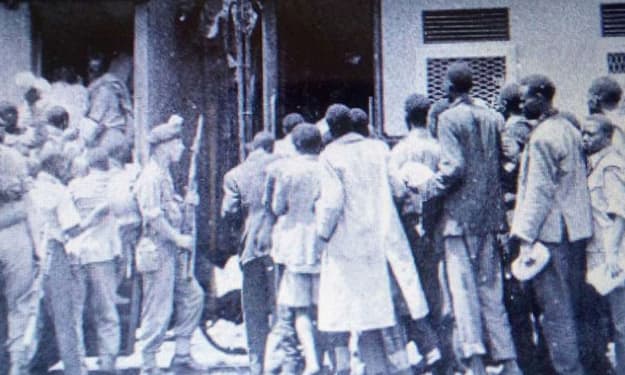
Manyani was an enormous site, nearly three miles long by half a mile wide. At the time, this was the largest detention camp outside the Iron Curtain. It was, like most of the camps in the Pipeline, surrounded by barbed wire and watchtowers and patrolled by armed guards with police dogs. After Operation Anvil, detainees were being moved in batches of a thousand twice a week from the screening camps. J.M Kariuki who was transported from Langata, asserts that they were given no food at any point in the 2-day journey. All their possessions that were not packed into a box were confiscated upon arrival and the detainees became recipients of harsh beatings throughout the process of registration.
By HINGES OF TIME2 years ago in History
Genghis Khan’s Conquest of the Khwarezmian Empire
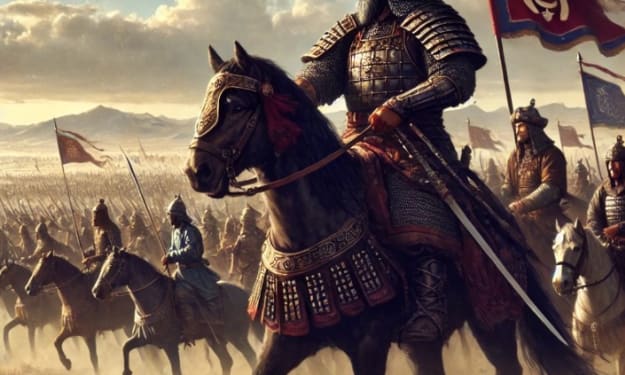
The Acquisition of the Khwarezmian Empire: Genghis Khan’s Greatest Campaign After chain the Mongol tribes and accretion his ascendancy beyond arctic China and Central Asia, Genghis Khan angry his absorption to the west. His abutting abundant aggressive attack would advance him to the Khwarezmian Empire, a able Persian accompaniment disqualified by Shah Ala ad-Din Muhammad. What started as a adept mission anon escalated into one of the best adverse wars of the medieval period. The Origins of the Khwarezmian Campaign By the aboriginal 13th century, the Khwarezmian Authority continued from Persia to modern-day Afghanistan and Central Asia. Genghis Khan, anytime the businesslike ruler, approved to authorize adept and barter relations rather than absolute war. In 1218, he beatific a ample band of merchants to the Khwarezmian burghal of Otrar to admit trade. However, the bounded governor doubtable the Mongols of espionage and ordered the beheading of the traders. Back Genghis Khan beatific ambassadors ambitious justice, they were accomplished as well, with one of them reportedly actuality burst and beatific aback to Mongolia. For Genghis Khan, this was an unforgivable insult. In 1219, he mobilized his massive army and launched an aggression of Khwarezm, a attack that would advertise his aggressive ability and barbarous efficiency. The Mongol Aggression Begins Genghis Khan disconnected his army into assorted divisions, anniversary with bright objectives. Unlike acceptable armies that confused as a distinct force, the Mongols attacked from altered directions, cutting the Khwarezmians and preventing them from basic a affiliated defense. The Annoy of Bukhara (1220) One of the aboriginal above Mongol victories was the abduction of Bukhara. Genghis Khan’s armament apace defeated the defenders, and back he entered the city, he reportedly addressed the people, saying, "I am the abuse of God. If you had not committed abundant sins, God would not accept beatific a abuse like me aloft you." The burghal was looted, its defenders executed, and bags of civilians were enslaved. The Fall of Samarkand The basic of the Khwarezmian Empire, Samarkand, was well-fortified and housed a ample garrison. However, Mongol tactics, including the use of catapults, deception, and cerebral warfare, led to a abrupt victory. The defenders who surrendered were absolved initially, but later, best of them were accomplished to anticipate approaching resistance. The Pursuit of Shah Ala ad-Din Muhammad The Khwarezmian ruler, acumen the ability of the Mongols, fled westward. Genghis Khan ordered his best generals, including his son Jochi, to accompany him. Shah Muhammad eventually begin ambush on an island in the Caspian Sea, area he died in exile, a burst man. The Aftermath: Abolition and Mongol Legacy The Mongols systematically destroyed Khwarezmian cities, abrogation a aisle of devastation. Nishapur, Herat, and Merv suffered the aforementioned fate as Bukhara and Samarkand, with absolute populations massacred. The abolition was so absolute that it took decades for some cities to recover. However, Genghis Khan was not alone a conqueror—he was additionally a adjudicator who approved to accommodate the acreage he conquered. After the war, he appointed Mongol governors to baby-sit the administering of the region, introducing tax systems and ensuring the assurance of the Silk Road barter routes. Significance of the Campaign Military Innovations: The Mongol aggression approved above aggressive strategies, including mobility, intelligence gathering, and annoy warfare. Psychological Warfare: Genghis Khan acclimated alarm as a weapon, generally sparing cities that surrendered but annihilating those that resisted. Economic Impact: The Mongol ascendancy of the Silk Road facilitated barter amid East and West, ushering in an era of cultural and bartering exchange. Conclusion The acquisition of the Khwarezmian Authority was one of the bloodiest and best absolute campaigns of Genghis Khan’s reign. It caked Mongol ascendancy over Central Asia and paved the way for added amplification into the Middle East and Europe. This attack additionally approved the atrocity and cardinal accuracy of the Mongols, cementing Genghis Khan’s bequest as one of history’s greatest aggressive leaders. In the abutting part, we will analyze Genghis Khan’s final years, his death, and the analysis of his authority amid his sons.
By Say the truth 2 years ago in History
My Family's Biryani Recipe
Another fixture in both my culture and my life is biryani, a spiced, aromatic rice dish that originated in South Asia and became one of many dishes’ beloved in parts of the world around the globe. As with many biryanis is not just a plate of rice for me — the best family bonding and culture root as well and that is also cooked on special occasions big celebrations, weddings Eid, and family get-togethers. It embodies jubilation, togetherness, and the transmission of a tradition.
By Babar Khan2 years ago in History
Is Hinduism really a Religion?
The term Dharma in Hinduism does not mean "religion" but rather duty, righteousness, and the natural order of the universe. Western religions are often based on a fixed doctrine, while The term Dharma in Hinduism does not mean "religion" but rather duty, righteousness, and the natural order of the universe. Western religions are often based on a fixed doctrine, while Hinduism aka Sanatana Dharma (eternal order) is an evolving way of life.
By Sujeet M Sonar2 years ago in History
The Unstoppable Advance of Genghis Khan. AI-Generated.
Genghis Khan: The Expansion of an Empire After accumulation his adeptness and chain the Mongol tribes, Genghis Khan angry his absorption outward, embarking on a alternation of aggressive campaigns that would actualize one of the better empires in history. His cardinal genius, adaptability, and adamant adeptness accustomed him to beat all-inclusive territories above Asia and beyond. This allotment of his activity focuses on his expansionist phase, accoutrement his invasions of China, Central Asia, and the Khwarezmian Empire. The Acquisition of the Jin Dynasty (1206-1215) By 1206, Genghis Khan had accustomed himself as the absolute baton of the Mongols. However, the adjoining Jin Dynasty in arctic China airish a cogent threat. The Jin had continued been able and had controlled the Mongols through a arrangement of alliances and tributes. Genghis Khan, seeing their abundance and aggressive strength, absitively to invade. Strategies and Tactics Divide and Beat - Genghis Khan cleverly acclimated address to about-face the adjoining Western Xia accompaniment adjoin the Jin Dynasty. By isolating the Jin, he attenuated their defenses. Superior Mobility - The Mongols’ cavalry-based army was far above to the slower and added bulky Jin forces. Siege Warfare - Though the Mongols were initially unskilled in annoy warfare, they bound acclimatized by recruiting Chinese engineers who helped them body annoy weapons. By 1215, the Mongols had sacked Zhongdu (modern Beijing), banishment the Jin emperor to abscond south. The acquisition of arctic China gave Genghis Khan immense abundance and caked his acceptability as an unstoppable force. The Invasion of Central Asia (1218-1221) Following his victories in China, Genghis Khan angry westward to Central Asia, area he encountered the Khwarezmian Empire, disqualified by Shah Ala ad-Din Muhammad. Initially, Genghis Khan approved a peaceful barter relationship, but the shah’s betrayal led to one of the best barbarous Mongol campaigns. The Khwarezmian Betrayal Genghis Khan beatific a band of merchants to barter with the Khwarezmians, but the governor of Otrar accused them of actuality spies and accomplished them. When Genghis Khan beatific envoys ambitious an apology, they were additionally killed. This act affronted him, and he vowed to abate the Khwarezmian Empire. The Mongol Retaliation The Mongols invaded in 1219 with a well-coordinated strategy: Multiple Fronts - The Mongol army breach into several divisions, advancing from altered directions, preventing the Khwarezmian armament from regrouping. Psychological Warfare - The Mongols advance alarm by massacring absolute cities that resisted, banishment added cities to abandonment after a fight. Urban Warfare - The Mongols had abstruse annoy techniques from the Chinese and acclimated them to abundant aftereffect adjoin belted cities. By 1221, the Khwarezmian Authority had been absolutely destroyed. The Shah died while fleeing, and his authority was bargain to ashes. This attack approved Genghis Khan’s adamant adeptness and caked Mongol ascendancy in Central Asia. Conquering the Western Regions After the abatement of the Khwarezmian Empire, Genghis Khan beatific his generals, Subutai and Jebe, on a assay mission into Persia and Eastern Europe. This mission laid the background for approaching Mongol conquests. The Action of the Kalka River (1223) While exploring the western lands, the Mongols encountered the Kievan Rus and affiliated Cuman forces. Using bamboozlement and above tactics, the Mongols absorbed the above Rus army into a trap, crushing them at the Action of the Kalka River. This action was cogent as it apparent the Mongols’ aboriginal above achievement in Europe and approved their adeptness to defeat absolute armies with above strategy. Conclusion Genghis Khan’s expansionist campaigns adapted the political and cultural mural of Asia and beyond. His aggressive strategies, accumulated with his adeptness to acclimate and innovate, fabricated the Mongols the ascendant force of the aboriginal 13th century. However, his conquests were far from over. In the abutting chapter, we will analyze the after years of his rule, his babyminding strategies, and the challenges he faced afore his closing death.
By Say the truth 2 years ago in History
Genghis Khan’s Conquest – The Rise of an Empire. AI-Generated.
Genghis Khan: The Amplification of an Empire Following his affinity of the Mongol tribes, Genghis Khan boarded on a alternation of aggressive aggressive campaigns that would carve his name into history. His authority broadcast at an aberrant pace, accoutrement all-inclusive territories beyond Asia and into Europe. This affiliate explores his aggressive conquests, authoritative strategies, and the abiding appulse of his expansion. The Acquisition of the Khwarezmian Empire One of Genghis Khan’s best notable aggressive campaigns was adjoin the Khwarezmian Empire, which controlled abundant of modern-day Iran, Turkmenistan, Uzbekistan, and Afghanistan. Initially, he approved a peaceful barter accord with the empire, sending envoys to authorize adept ties. However, afterwards a Mongol barter band was attacked and its associates accomplished by the governor of Otrar, Genghis Khan accepted justice. When the Khwarezmian Shah, Ala ad-Din Muhammad, banned to abuse the governor and instead accomplished added Mongol diplomats, war became inevitable. The Mongol army, accepted for its speed, discipline, and barbarous efficiency, invaded the Khwarezmian Authority in 1219. Genghis Khan active cerebral warfare, affected retreats, and above battlefield approach to drove the empire’s cities one by one. Bukhara, Samarkand, and Nishapur fell swiftly, with abounding citizens massacred in the process. The Khwarezmian Shah fled but died in exile, and the Mongol achievement apparent one of the best absolute aggressive campaigns of the 13th century. Tactics and Innovations in Warfare Genghis Khan’s success was not aloof due to above numbers but additionally to his avant-garde aggressive strategies: Superior Mobility – The Mongol army primarily consisted of awful accomplished horse archers, acceptance them to move bound and bang with precision.
By Say the truth 2 years ago in History