Analysis
The Mysterious Ark of the Covenant: A Sacred Relic of Divine Power
Throughout history, few artifacts have captured the imagination of believers and scholars like the Ark of the Covenant, known in Islamic tradition as Taboot Sakina (the Ark of Tranquility). This ancient chest is revered in Judaism, Christianity, and Islam, believed to hold divine blessings and miraculous powers. Its story weaves through prophecies, battles, and disappearances, leaving behind a legacy of faith, mystery, and eschatological hope.
By Mujeeb Balochabout a year ago in History
The Lonely Park Bench at Sunrise
The park bench waited every morning before the sun had fully emerged from the darkness. It stood as a silent sentinel watching the lake, tucked away beneath an old elm tree whose limbs draped like languid arms extending after a long dream. Like unshed tears, Dew always clung to the weathered slats and iron arms. It had experienced stillness, joy, grief, and most importantly, love.
By MD SHAMIM RANAabout a year ago in History
The Top 10 Most Historically Inaccurate Films And Why We Can’t Stop Watching Them
Historical films have long captivated audiences with their grand battles, lavish costumes, and larger-than-life characters. But behind the cinematic magic lies a dirty little secret: many of these "based on a true story" epics are riddled with glaring inaccuracies, creative liberties, and outright fabrications. Whether bending timelines, rewriting personalities, or inventing entire plotlines, filmmakers often prioritize drama over facts, leaving historians facepalming and audiences blissfully entertained.
By Only Incredibleabout a year ago in History
Weird and mysteriously
The Vanishing Path of Elmswood Hollow If you drive west out of Killam County long enough, past the cornfields that never seem to grow and the rusted-out silo with no door, you’ll hit a small dirt road with no name. It is not listed in the county's registry of roads or property deeds, and it is not on any GPS. Still, if you take it—if it lets you—you might find yourself in Elmswood Hollow.
By Raihan Islam about a year ago in History
"Kalani Dam: A Reservoir of Legacy, Power, and Prosperity". AI-Generated.
Kalani Dam: A Reservoir of Energy, Heritage, and Abundance Situated amid the rolling landscape of South India, the Kalani Damfrequently misidentified or confused with similarly named structuresserves as a fictional yet emblematic illustration of the numerous historical water management achievements in Tamil Nadu. This article fuses genuine engineering traditions with imaginative fiction to investigate the dam's inception, purpose, and how its projected value in natural resources and infrastructure exemplifies India's ancient and current proficiency in hydraulic engineering. Introduction: A Barrier Between Flood and Fortune Waterlife's most vital componenthas been honored and managed by civilizations for centuries. In the southern Indian province of Tamil Nadu, an area interwoven with rivers and governed by dynasties that revered rain and monsoon, the Kalani Dam stands as a monument to ancient engineering, colonial reconfiguration, and modern India’s quest for sustainability and economic advancement. Although not an actual dam in historical records, the “Kalani Dam” symbolizes a synthesis of Tamil Nadu’s hydraulic legacy, evoking real structures such as the Mettur Dam, Kallanai (Grand Anicut), and Periyar Projectall playing pivotal roles in agriculture and survival. Let us explore the narrative of Kalani Dam and the implications of its symbolic net worth. A Glimpse into History: The Chola Model According to historical accounts, the roots of water management in South India trace back to the Chola dynasty. The authentic Kallanai Dam, constructed by King Karikala Chola around the 2nd century CE, stands as one of the oldest water-diversion structures still operational today. In this narrative, the Kalani Dam derives its heritage from such pioneering endeavors. Ancient engineers erected the dam utilizing granite blocks, lime mortar, and intricate floodgates, drawing upon not only human labor but also a profound understanding of river dynamics and flood patterns. The primary purposes of the Kalani Dam were dualirrigation and flood management, crucial in a region where monsoons could both sustain and devastate. Colonial Enhancement: A New Era of Functionality During British colonial rule, the Kalani Dam, similar to many development initiatives in India, received structural improvements. New sluices were installed, and canals were expanded to facilitate extensive areas for cash crops such as cotton and sugarcane. The British, while exploiting India's resources, did invest in water infrastructure, albeit with economic gain in mind. Engineers from London designated the Kalani River basin as a fertile resource area. They charted its trajectory, evaluated flood damage patterns, and fortified the dam to endure severe seasonal fluctuations. By the 1930s, the Kalani system was acknowledged as one of the most efficient gravity-fed irrigation networks in southern India, nourishing multiple districts and supporting over 150,000 acres of farmland. Post-Independence Modernization and Importance Following India's independence in 1947, the Kalani Dam underwent several modernization initiatives. Under the framework of the Five-Year Plans, the government invested significantly in enhancing hydroelectric potential, improving irrigation coverage, and ensuring equitable water distribution to underprivileged farming communities. By the 1980s, the dam had evolved into not merely a rural lifeline but a regional economic catalyst. Tamil Nadu’s agricultureparticularly rice, sugarcane, and banana cultivationprospered with the resources from Kalani’s reservoir. Numerous cooperative irrigation societies were established to equitably manage the water. The adjacent communities transformed into burgeoning towns owing to consistent access to water and electricity. Educational initiatives informed farmers about optimal water utilization, introducing the region to sustainable irrigation long before it became a worldwide catchphrase. Net Worth and Economic Influence Let us assess the current net worth of the Kalani Dam: Agricultural Production: The dam facilitates irrigation for over 200,000 acres of land. With average agricultural production valued at ₹25,000 per acre per season and three cropping cycles each year, this amounts to: ₹25,000 x 3 x 200,000 = ₹15,000,000,000 annually (~$180 million) Hydropower Generation: Following the incorporation of modern turbines post-2000, Kalani Dam generates an estimated 100 MW each year. Income from hydropower (100 MW x 24 x 365 x ₹4/unit) ≈ ₹3. 5 billion (~$42 million/year) Fisheries and Tourism: Reservoirs support fishing cooperatives and eco-tourism. Annual revenue from tourism and fishing is estimated at: ₹500 million (~$6 million/year) Cultural and Strategic Significance: While not directly monetized, the dam serves as a strategic resource during drought years. In arid seasons, the dam is valued highlyboth literally and metaphoricallygiven the expenses associated with transporting water to deficit areas. Estimated total annual worth: ~$228 million. Incorporating infrastructure valuation, lifetime service value, and cultural significance, the contemporary net worth of the Kalani Dam can conservatively be estimated at over $2 billion. Challenges and Conservation Current concerns include: Silt buildup Encroachments on canals Climate change impacting rainfall consistency However, initiatives under India’s Jal Shakti Abhiyan and local conservation organizations strive to safeguard the dam’s ecosystem. Digital water sensors, drone monitoring for encroachments, and AI-driven flood alerts are being tested. Conclusion: A Dam for All Eras Whether mythical or an amalgamation of numerous real instances, the Kalani Dam epitomizes the convergence of heritage, functionality, and sustainability. From Chola wisdom through British engineering to Indian modernization, its narrative encapsulates the essence of India’s water civilization. The Kalani Dam does not merely retain waterit embodies hope, history, and heritage in every drop.
By Say the truth about a year ago in History
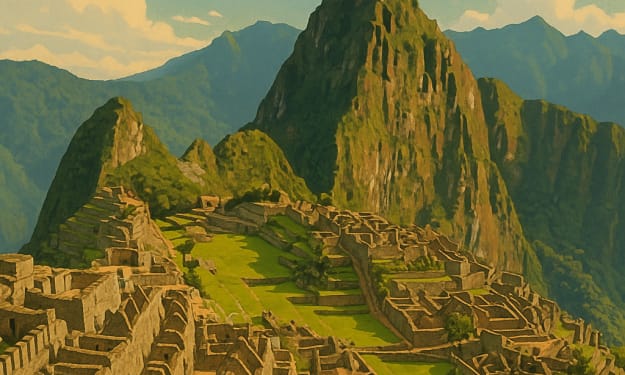
Machu Picchu in Modern Times: Legacy, Wealth, and Global Significance. AI-Generated.
Machu Picchu in the Contemporary Era: Safeguarding the Incan Marvel for Posterity Once a disregarded fortress hidden within the jungle, Machu Picchu has emerged as a universal emblem of ancient innovation and natural splendor. Rediscovered in 1911, it now stands as a significant cultural and economic emblem for Peru. This article examines how Machu Picchu’s contemporary narrative has progressedfrom archaeological unearthing and tourism expansion to its lasting significance and the global initiatives aimed at preserving it for future generations. Introduction: A City Transformed Machu Picchu, frequently labeled as the “Lost City of the Incas,” was not constructed in recent times, yet its genuine acclaim and significance only surfaced during the contemporary era. Concealed high in the Andes Mountains of Peru, this breathtaking stone metropolis remained largely unrecognized by the outside world until its rediscovery in the early 20th century. Since that time, Machu Picchu has experienced an extraordinary evolutionfrom an overlooked relic to one of the most frequented and photographed sites on Earth. Rediscovery and Archaeological Significance In 1911, American adventurer Hiram Bingham was guided to the location by local farmers and Peruvian interpreters. He was astounded by his discoveriesstone edifices, terraces, and shrines enveloped by jungle vegetation yet remarkably preserved. Bingham’s writings and photographs garnered international interest in the Incan civilization and incited decades of archaeological exploration. In subsequent years, contemporary archaeologists have employed technologies such as LiDAR scanning and 3D modeling to map the landscape and comprehend Inca construction methods. These findings not only reveal advanced engineering and astronomy but have transformed our perspective of pre-Columbian societies as more complex than previously assumed. Machu Picchu and the Emergence of Global Tourism As Peru enhanced its transportation infrastructure in the mid-20th century, Machu Picchu became increasingly reachable. The inauguration of railway lines, hiking paths like the Inca Trail, and helicopter excursions transformed the previously secluded site into a vibrant center for global tourism. By the early 2000s, Machu Picchu was welcoming over a million visitors each year. To safeguard the ancient structures from the adverse effects of overtourism, the Peruvian government and UNESCO instituted stringent visitor regulations. Contemporary conservation initiatives now strive to harmonize economic prospects with cultural preservation. Cultural Emblem and National Identity In contemporary Peru, Machu Picchu signifies more than a tourist destinationit represents indigenous heritage and national pride. It features on Peruvian currency, in educational materials, and in international relations as a symbol of the country's pre-colonial magnificence. In 2007, it was designated as one of the New Seven Wonders of the World, further reinforcing its global cultural significance. Artists, filmmakers, authors, and historians frequently cite the site as an emblem of resilience, intrigue, and architectural excellence. Present-Day Challenges and Preservation Ensuring the preservation of Machu Picchu for future generations has become an essential objective in recent years. Concerns have emerged from: Erosion and Landslides: Resulting from pedestrian traffic and natural deterioration. Tourism Impact: Overcrowding and unauthorized tours. Climate Change: Variations in rainfall and temperature threaten the stability of the stone. To tackle these challenges, Peru has collaborated with UNESCO and environmental organizations to establish sustainable tourism frameworks. Satellite surveillance, digital tourism platforms, and staggered entry timelines assist in alleviating stress on the site. Economic and Cultural Value in Contemporary Times Currently, Machu Picchu generates over $1. 5 billion each year for Peru’s economy. Beyond monetary aspects, its cultural significance is incalculable. It attracts scholars, spiritual seekers, artists, and history enthusiasts from around the globe. There are ongoing conversations regarding digital preservationdeveloping intricate 3D models and virtual reality experiences to ensure that future generations can explore Machu Picchu even if physical travel becomes unattainable. Conclusion: Machu Picchu as a Living Heritage Although Machu Picchu is founded on ancient stone, its legacy continues to progress in contemporary times. It serves as a site where history and modernity convergea testament to human creativity, resilience, and the ability of history to motivate future generations. As the world becomes increasingly interconnected and aware of its cultural legacies, Machu Picchu remains prominent, not solely as an Inca artifact but as a vibrant emblem of global harmony and awe.
By Say the truth about a year ago in History
The Billion-Dollar Revival: Building the Great Pyramid in the Modern Era . AI-Generated.
"Pyramids Reimagined: The Estimated Expense of Constructing the Great Pyramid Today" The Great Pyramid of Giza remains one of humanity’s most remarkable architectural achievements, a tribute that has evoked awe for over 4,500 years. However, what if we were to construct it in the present day? This comprehensive article examines the building techniques of ancient Egypt and contrasts them with contemporary advancements, calculating an estimated value for a 21st-century reconstruction. Through an extensive evaluation of labor, materials, transportation, and project management, we determine the expense, purpose, and symbolic significance of a modern pyramid inspired by the original. Article: The Monument of Eternity: A Pyramid for Today’s World Situated on the Giza Plateau, the Great Pyramid of Khufu is one of the Seven Wonders of the Ancient Worldand the only one still in existence. Constructed circa 2560 BCE, the pyramid has enthralled generations with its enormous scale, architectural accuracy, and enigmatic construction methods. Yet, in an era of skyscrapers and supercomputing, one question lingers enticingly: what would it entail to build the Great Pyramid today?
By Say the truth about a year ago in History
Biography of Elon reeve musk
Elon Reeve Musk ( born June 28, 1971) is a businessman known for his leadership of Tesla, SpaceX, and X (formerly Twitter). Since 2025, he has been a senior advisor to United States president Donald Trump and the de facto head of the Department of Government Efficiency (DOGE). Musk has been the wealthiest person in the world since 2021; as of March 2025, Forbes estimates his net worth to be US$345 billion. He was named Time magazine's Person of the Year in 2021.
By Favour Nyimbiliabout a year ago in History
Xenophon
Xenophon (circa 430–354 BCE) stands out as one of the most multifaceted and intriguing personalities of ancient Greece. As a soldier, historian, philosopher, and a disciple of Socrates, he produced a substantial body of work that offers essential perspectives on Greek culture, military strategies, and philosophical ideas. In contrast to many of his peers, Xenophon employed a clear and direct writing style, which renders his texts approachable for both ancient and contemporary audiences. His renowned works, including Anabasis and Memorabilia, remain subjects of study due to their historical importance and literary value.
By A Históriaabout a year ago in History
The Lost Fortune of the Jews: Tracing the Greatest Treasure in Jewish History . AI-Generated.
The Esoteric Wealth of Solomon: Charting the Preeminent Treasure in Jewish Heritage This article explores the mythical riches of ancient Israel, particularly those associated with King Solomon’s Templegolden relics, the Ark of the Covenant, and invaluable religious artifacts. It examines historical documents, sacred texts, and archaeological hypotheses to investigate how the affluence of one of history's mightiest ancient empires gradually disappeared through epochs of conquest, exile, and warfare. From Babylonian incursions to Roman plundering, the narrative of these treasures encapsulates both the splendor and sorrow of Jewish heritage. Article: The Esoteric Wealth of Solomon: Charting the Preeminent Treasure in Jewish Heritage Among the numerous wonders of ancient civilization, few riches evoke such persistent intrigue and spiritual ambiguity as the affluence of the ancient Jewish kingdom, particularly that accumulated during the rule of King Solomon. Esteemed in religious literature and enveloped in historical mystery, the treasures of Israelespecially those enshrined in the First Temple in Jerusalemhave transformed into the focus of myth, faith, and relentless academic inquiry. The Ascendancy of a Gilded Kingdom Based on the Hebrew Bible and various historical documents, Solomon, the progeny of King David, governed the united Kingdom of Israel in the 10th century BCE. His tenure is characterized as a golden epoch of abundance, distinguished by international diplomacy, commerce, and monumental construction. The crowning achievement of his legacy was the First Temple in Jerusalemcommonly referred to as Solomon’s Templea sacred edifice erected to shelter the Ark of the Covenant and to function as a permanent site of worship for the Jewish populace. The edification of the Temple was extravagant. Gold, silver, and exquisite stones embellished its walls. According to the Book of Kings, Solomon acquired substantial wealth from trade alliances with the Phoenicians, Egypt, Sheba, and potentially even India. The Bible asserts he possessed "silver as common as stones" in Jerusalem. Assessments of the Treasure’s Worth Though precise valuations are unattainable, contemporary scholars and economists have endeavored to approximate the wealth based on biblical depictions. One estimation suggests the gold Solomon received on an annual basis was 666 talentsa figure approximately equivalent to 25 metric tons of gold each year. At current gold market rates, that would amount to over $1. 5 billion annually. Taking into account his 40-year reign and the Temple’s grand magnificence, Solomon’s overall treasury may have exceeded $50 billion to $100 billion in present-day currency. Among the most reveredand enigmaticof these treasures was the Ark of the Covenant, purportedly housing the stone tablets of the Ten Commandments. Its ultimate fate remains uncertain. The Babylonian Pillaging (586 BCE) The First Temple endured for nearly four centuries until the Babylonian incursion led by King Nebuchadnezzar II. In 586 BCE, Jerusalem was ravaged, the Temple was annihilated, and its treasures were transported to Babylon. Both the Bible and Babylonian Chronicles document the plundering of golden vessels, altars, and sacred objects. This occasion signified the inaugural substantial dispersal of the Jewish heritage and initiated a sequence of exiles and reallocations of cultural assets that would persist for centuries. The Roman Siege and the Second Temple’s Assets Following the return from Babylonian captivity and the establishment of the Second Temple, Jewish religious practices resumedbut only temporarily. In 70 CE, Roman troops led by Titus besieged Jerusalem during a Jewish insurrection. The Temple was once again demolished, and the remaining treasures, including the renowned Menorah, Table of Showbread, and silver trumpets, were pillaged. These artifacts were displayed in Rome in a magnificent triumphal procession. The Arch of Titus continues to stand today as a carved commemoration of this occurrence. The treasures were stored in the Temple of Peace in Rome, but their fate after the fall of the Roman Empire remains uncertain. Many speculate that they were concealed, melted down, or lost to the passage of time. Contemporary Theories and Mystical Importance A multitude of contemporary theories endeavors to unveil these elusive treasures. Some propose that the Vatican harbors crucial artifacts concealed beneath its vaults. Others assert that the Knights Templar uncovered them during the Crusades and conveyed them throughout Europe. There are even assertions of hidden chambers beneath Jerusalem’s Temple Mount, containing ancient relics untouched for millennia. The treasures’ symbolic significance is as vast as their material value. They symbolize a lost realm of Jewish sovereignty, spirituality, and divine connection. The Ark of the Covenant, if ever located, would possess unparalleled religious importance, potentially transforming theological and geopolitical landscapes. Conclusion: A Treasure Beyond Monetary Value The treasure of the Jewsespecially that from Solomon’s Templerepresents more than just lost gold and silver. It is a profound emblem of faith, identity, and endurance. Through exiles, massacres, and the Holocaust, Jewish history is marked by immense suffering but also by resilience and the unyielding determination to remember and rebuild. The tangible artifacts may remain buried or dispersed across the globe, but in the hearts of the Jewish people and those who study ancient history, the greatest treasure enduresnot in vaults or ruins, but in narrative, spirit, and survival.
By Say the truth about a year ago in History