Analysis
Sovereignty Reigns Supreme: A Historic Victory at the 2025 Kentucky Derby. AI-Generated.
May 3, 2025, the bluegrass air was electric with anticipation at Churchill Downs as twenty of the top three-year-old thoroughbreds gathered to make history. But at day's end, only one name stood out: Sovereignty. In a thrilling explosion down the stretch, the bay colt captured the 151st Kentucky Derby, penning his name alongside the game's legends.
By MD NAZIM UDDIN about a year ago in History
“Lord of Fortune: The Costliest Idol in History – The Wealth of Tirupati Balaji”. AI-Generated.
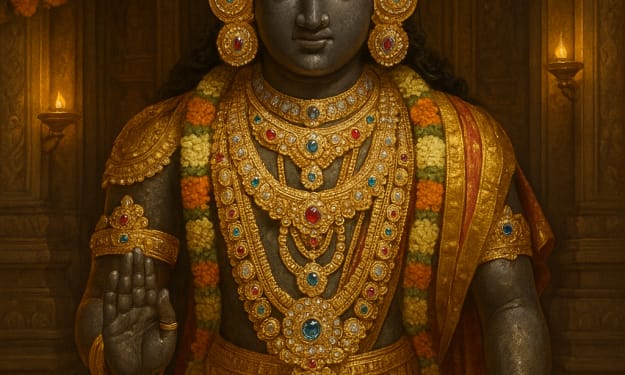
The World’s Most Expensive Idol: The Unrevealed Narrative of Tirupati Balaji’s Golden Wealth Among the globe’s most revered deities, the statue of Lord Venkateswara at Tirumala, Andhra Pradesh, serves not only as a spiritual lighthouse but also as an emblem of extraordinary affluence. Sculpted from sacred black stone and embellished with immense quantities of gold, diamonds, and other precious gems, this idolvenerated by millionsis appraised as the priciest in documented history. This article examines its origins, religious importance, priceless embellishments, and the contemporary valuation of both the idol and the temple's assets. Introduction: The Living Divinity of the Peaks Perched atop the Tirumala hills in southern India, the temple of Lord Venkateswara, commonly referred to as Balaji, ranks among the wealthiest religious locations globally. Millions of devotees ascend to Tirupati each year to catch a glimpse of the revered idol, believed to be over 2,000 years old. Beyond its spiritual significance, the idol itselfstanding approximately 8 feet in heightis a repository of unparalleled historical and monetary value. In this article, we delve into the background, composition, and financial appraisal of the world’s most costly religious idol. The Idol: Artistry and Myth The principal deity, Lord Venkateswara, is crafted from a unique variety of black granite or Shaligrama stone, traditionally believed to possess magnetic and healing attributes. In accordance with ancient Vaishnavite customs and temple lore, this idol is said to be self-manifested (Swayambhu)not created by human artisans. It is embellished with: A colossal diamond-encrusted crown (appraised alone to be valued at over $50 million USD) Numerous gold adornments, including necklaces, girdles, and anklets An ancient gem known as Navaratna Kirita, set with nine precious stones A thick gold plating covering various sections of the idol itself Emeralds, sapphires, rubies, and pearls, some of which trace back to the Vijayanagara Empire (14th–16th century CE) Historical Support and Contributions Rulers from diverse Indian dynastiesincluding the Cholas, Pandyas, Vijayanagara monarchs, and Marathashave offered priceless ornaments to the deity throughout the centuries. Noteworthy contributions encompass: Krishnadevaraya’s Crown (early 1500s): Composed of solid gold and adorned with diamonds and emeralds. British Raj-era Contributions: Despite colonial governance, affluent merchants and aristocrats persistently donated substantial gold reserves and gemstones to the deity. Even contemporary celebrities and industrialists contribute considerable quantities of gold and funds to the idol and temple annually. The deity is adorned differently each day and during various seasons, with specific sets of jewelry designated for special festivals. Temple Vaults and Concealed Riches In addition to the ornaments adorning the idol, the Tirumala Tirupati Devasthanams (TTD) trust oversees concealed vaults filled with gold and gemstones gifted over the centuries. The temple receives: Approximately 30–35 million USD in cash donations each year Hundreds of kilograms of gold, with nearly 60,000 kg accumulated as per recent reports Daily offerings of diamonds, rubies, and exotic jewels The vaults, many of which remain inaccessible to the public, are estimated to harbor treasures worth over $20 billion USD, much of which was originally presented to the idol itself. Valuation Estimate: Analyzing the Idol’s Worth To evaluate the contemporary worth of the Tirupati Balaji idol and its immediate embellishments: Component Estimated Contemporary Worth Diamond Crown $50 million USD Gold Ornaments (Necklaces, Waistbands, Anklets, Armlets) $150–200 million USD Gemstones (Emeralds, Rubies, Sapphires, Pearls) $100–150 million USD Historical Items (Navaratna Crown, Ancient Jewelry) $75–100 million USD Total Idol Wealth Estimate $375–500 million USD Note: This does not encompass the temple’s additional assets such as real estate, reserves, or vaults. Cultural and Spiritual Worth: Beyond Monetary Value For worshippers, however, the riches of the idol cannot be quantified in gold or currency. Lord Venkateswara is revered as “the deity who alleviates debt,” believed to bestow blessings, health, and prosperity upon anyone who approaches with genuine intent. Each ornament or coin presented is regarded as an expression of faith, rather than mere economics. Furthermore, the idol’s distinctive essence, time-honored rituals, and emotional ties with millions render it culturally invaluable. Comparisons with Other Idols While numerous religious figures globally possess significant worth, the Tirupati idol surpasses many in terms of collective wealth, importance, and enduring reverence. Other notable examples include: The Golden Buddha of Thailand (5. 5 tons of gold; $250 million+) Jagannath idols of Puri (inestimable due to relics within) Padmanabhaswamy temple vault idols in Kerala (unopened treasures potentially exceeding $22 billion USD) Nonetheless, due to its exceptional visibility, documentation, and historical complexity, the Balaji idol retains the status of the most ornately adorned deity in the contemporary world. Conclusion: Divine Wealth and Eternal Devotion The idol of Lord Venkateswara transcends being a mere divine artifact; it serves as the spiritual nucleus of South India and a repository of historical richness. With an estimated net worth approaching half a billion dollars, it stands as a monument to steadfast faith, continuous royal sponsorship, and the profound legacy of temple wealth in India. In a society fixated on material wealth, the narrative of Tirupati Balaji serves as a reminder that genuine value resides where affluence intertwines with reverence, and where gold transforms into the sacred in the hands of devotees.
By Say the truth about a year ago in History
Throne of Gold: The Hidden Wealth of the Pandiyan Kings. AI-Generated.
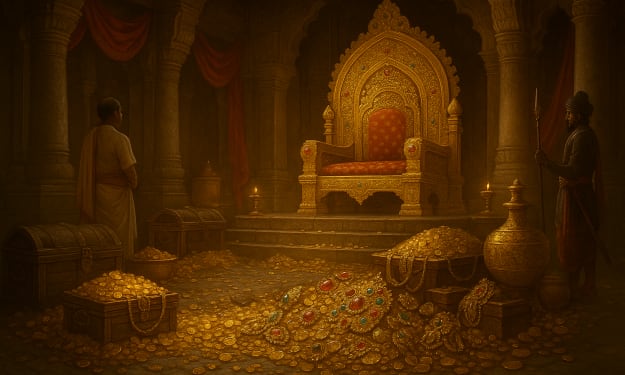
Throne of Gold: The HiThrone of Gold: The Hidden Wealth of the Pandiyan Kings Introduction: The Heritage of the Pandiyas Among the ancient Tamil monarchies, the Pandiyan dynasty distinguished itself due to its significant cultural and economic impact. Centered in Madurai, the Pandiyan rulers governed a thriving trade empire from as early as the 6th century BCE to the 14th century CE. Their dominion spanned the fertile lands of southern Tamil Nadu, critical ports along the Indian Ocean, and essential trade routes connecting the East and West. Their palaces served not only as political hubs but also as repositories of unimaginable wealth, containing royal thrones crafted from gold, rare gemstones, religious artifacts, war spoils, and offerings from vassals and foreign merchants. The Pandiyan economy was robust, with their coinage circulating in Southeast Asia, the Roman Empire, and China. Sources of the Pandiyan Prosperity Maritime Commerce The Pandiyas operated vibrant ports such as Korkai, Kayal, and Thoothukudi, which linked South India with Southeast Asia, Rome, Arabia, and China. They exported: - Pearls (notably from the Gulf of Mannar) - Spices such as pepper and turmeric - Textiles and dyed fabrics - Sandalwood, ivory, and precious stones Foreign traders, particularly the Romans, transacted in gold coins, which enriched the Pandiyan treasury. Agricultural Abundance The fertile river valleys, especially those surrounding the Vaigai, yielded copious amounts of rice, sugarcane, and cotton. Revenue generated from agriculture swelled the royal treasury. Tributes and Military Campaigns Victories in southern India and alliances with other Tamil dynasties resulted in tribute. Certain campaigns brought treasure troves from rival leaders and temple repositories. Religious Patronage and Temple Wealth The Pandiyas constructed and enhanced temples, such as the Meenakshi Amman Temple in Madurai, which emerged as hubs for both spirituality and wealth accumulation. These temples possessed extensive riches in the form of: - Gold idols - Jewels donated by devotees and monarchs - Artifacts and inscriptions crafted from precious metals The Royal Throne and Palace Wealth Accounts from ancient Tamil literature and observations from foreign travelers (like Marco Polo) depict opulent royal courts: The Pandiyan throne was noted to be made of solid gold, embellished with inlays of diamonds, rubies, and sapphires. Its value in contemporary markets could surpass $50 million USD based solely on material worth. The royal palace in Madurai was replete with: - Ornate furniture made of gold and ivory - Luxurious silk draperies - Weaponry encrusted with gemstones - Royal seals and coins stored in secured vaults A conservative assessment of the palace’s movable wealthexcluding landwould approximate $500 million to $1 billion USD in today’s values, contingent upon current rates for gold, gemstones, and historical artifacts. The Temple Treasuries Temples under Pandiyan authority were centers of economic and cultural significance. The Meenakshi Temple alone was reputed to house: - Gold-plated chariots - Hundreds of gold and silver idols - Thousands of objects inlaid with gemstones - Donations in the form of gold coins and jewelry If the wealth accumulated within the temple were evaluated today, it might easily total $2–3 billion USD or more. Net Worth of the Pandiyan Family and Empire Let us summarize a contemporary estimate based on accessible historical records: | Asset | Estimated Value (Modern USD) | |--------------------------------|-------------------------------| | Royal Throne and Crown Jewels | $50 million | Palatial Artifacts and Safeguards $500 million – $1 billion Temple Relics (Principal Temples) $2–3 billion Gold from Nautical Commerce $500 million Land Tax (Converted Estimate) $1 billion Total Estimated Asset Value $4–5. 5 billion USD This assessment excludes artifacts that are currently lost, plundered, or unrecordednor does it factor in inflation-adjusted valuations of rare relics and inscriptions. Diminution and Distribution of Wealth The Pandiyan empire encountered regular incursions from the Delhi Sultanate in the 14th century, resulting in the plundering of Madurai. A considerable portion of their riches was confiscated, refined, or transported to Delhi. Subsequently, colonial entities (Portuguese, Dutch, British) and internal conflicts further dismantled their legacy. Some valuables disappeared, while others were concealed in temple safes or interred. Nonetheless, the mark of their affluence and magnificence remains evident today in extant temples, retrieved artifacts, and ancient Tamil inscriptions. Conclusion: A Sovereign Fortune Lost and Commemorated The Pandiyan crown, though no longer present, continues to epitomize the zenith of Tamil affluence, maritime dominance, and cultural elegance. The dynasty's true net worthboth material and symbolicmirrors centuries of wealth, astute governance, and expertise in global trade. Their narrative is not solely centered on gold and jewels, but serves as a reminder of a civilization that once illuminated the Indian Ocean realm with its brilliance, philanthropy, and extensive impact.
By Say the truth about a year ago in History
Masters of the Ocean: The Powerful Naval Empire of the Tamil Kings
Sea Lords of the South: The Maritime Might of the Tamil Monarchs Long prior to the ascendance of European naval forces in global waters, the southern rulers of Indiaparticularly the Cholasestablished one of the most formidable maritime powers in Asia. With fleets that extended to Southeast Asia, disciplined infantry, war elephants, and sophisticated navigation, the South Indian monarchs exerted their influence across the oceans. This article examines the emergence, structure, and accomplishments of Tamil naval power, providing estimates on fleet size, troop strength, logistics, and the remarkable costs associated with construction and upkeep in both historical and contemporary contexts. Introduction: The Naval Heritage of South India The southern kingdoms of India, especially the Cholas, Pandyas, and Chera dynasties, were not merely dominant terrestrial empires but also maritime forces. From the 9th to the 13th centuries, their naval fleets governed extensive areas of the Bay of Bengal and Indian Ocean, facilitating trade, conflict, and cultural interchange with Southeast Asia and beyond.
By Say the truth about a year ago in History
Golden Thrones and Hidden Treasures: Estimating the Real Wealth of the Tamil Kings’ Palaces . AI-Generated.
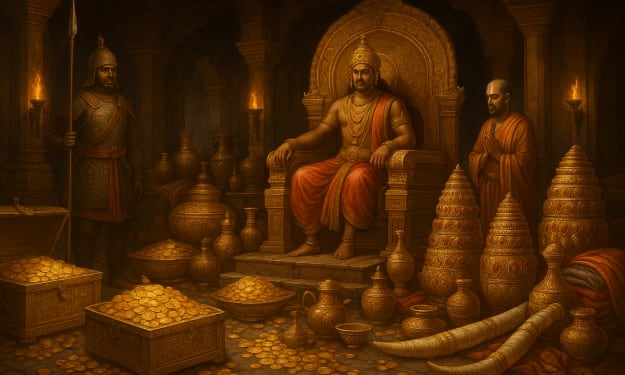
Thrones of Gold: The Genuine Affluence in the Residence of the Great Tamil Sovereigns From the Cholas and Pandyas to the subsequent Nayak rulers, Tamil monarchs once governed extensive and flourishing empires throughout South India and beyond. Their palaces were not merely emblems of authority but also vaults of astonishing wealthfilled with gold, gemstones, armaments, silks, and sacred artifacts. This article examines the authentic historical wealth housed within Tamil palaces, the origins of this prosperity, and presents a contemporary assessment of their net worth in today's currency. Introduction: Palaces of Authority and Abundance The ancient Tamil realmsparticularly under formidable dynasties such as the Cholas, Pandyas, and Cheraswere among the most opulent in pre-modern Asia. With strategic dominance over maritime trade routes, fertile river basins like the Kaveri delta, and conquests extending as far as Southeast Asia, these monarchs accumulated monumental wealth. Their palaces, especially in capitals like Thanjavur, Madurai, and Puhar, served as epicenters of governance, religion, and wealth preservation. The treasures discovered in these regal complexeswhether chronicled in inscriptions, temple donations, or foreign narrativesunveil a tale of economic might unparalleled in the world at that time. Sources of Wealth in Tamil Kingdoms The affluence of the Tamil kings originated from various well-regulated and prosperous sources: Agriculture – The delta of the Kaveri River was among the most fertile areas, yielding abundant rice, sugarcane, and spices. Maritime Trade – Tamil ports like Kaveripattinam (Puhar) and Nagapattinam engaged in commerce with Rome, Greece, Egypt, China, and Southeast Asia. Tributes and Conquests – Victorious kings returned with gold, elephants, and artifacts from Southeast Asia, Sri Lanka, and deeper into the Deccan. Taxation – Advanced systems of land, trade, and labor taxes aided in replenishing royal treasuries. Temple Patronage – Although temples possessed their own wealth, much of it was directly associated with royal bequests and donations, frequently stored adjacent to or within palace grounds. What Was in the Palaces? Historical inscriptions, Sangam literature, and temple records facilitate the reconstruction of the types of treasures contained within royal complexes: Gold Ingots and Coins: Frequently minted with the king’s insignia; utilized in commerce and religious gifting. The Chola coinage system was noted for its purity and weight. Jewels and Gemstones: Including diamonds from Golconda, rubies, emeralds, and pearls from the Gulf of Mannar. Ivory and Elephant Ornaments: The Tamil kings took pride in showcasing royal elephants adorned with intricate armor and embellished tusks. Silks and Foreign Fabrics: Imported from China and Arabia; secured in designated palace vaults. Weapons Composed of Precious Metals: Swords, shields, and lances inlaid with gold and gems for royal exhibition or ceremonial purposes. Sacred Items and Thrones: Thrones embellished with ivory and gold, gold-plated ritual objects utilized in coronation and temple ceremonies. Famous Accounts of Wealth The Chola Empire under Raja Raja Chola I and Rajendra Chola I is reputed to have donated over 500 kilograms of gold and jewelry to the Brihadeeswarar Temple in Thanjavur. Arab traders and Chinese emissaries chronicled the Tamil ports as vibrant with vessels and warehouses overflowing with spices and gold. The Pandyas of Madurai were reputed to possess thrones encrusted with uncut diamonds and accumulated pearls in vast quantities. Assessing the Net Worth Although we cannot account for every factor, we can provide a contemporary estimation based on historical values: Gold: If a Tamil palace retained even 20 metric tons of gold (a modest figure for a significant empire over centuries), at today's valuation of $70,000/kg, that alone amounts to $1. 4 billion USD. Gemstones: With thousands of pieces consisting of diamonds, rubies, and emeralds, the worth could readily exceed $500 million USD. Artifacts and Thrones: Artisan-crafted ceremonial items, weaponry, and thrones, if auctioned today, could aggregate $200–300 million USD as rare antiquities. Silks, elephants, and luxury merchandise: Collectively, these might signify $50–100 million USD in historical worth. Estimated Total Net Worth at Today's Valuation: Exceeding $2. 2 billion USD per significant Tamil royal palace. This approximation excludes temple assets or undisclosed reserves, which could potentially double or triple this figure.
By Say the truth about a year ago in History
Top 10 Surprising Facts About the World's Oldest Bible
Top 10 Surprising Facts About the World’s Oldest Bible – A Glimpse into Sacred History. The Bible is the most widely read and distributed book in the world, but few people know about the Codex Sinaiticus, the oldest surviving complete manuscript of the Christian Bible. Dating back to the 4th century, this ancient text reveals fascinating insights into early Christianity, biblical history, and manuscript preservation. Here are the top 10 surprising facts about the world’s oldest Bible that will leave you amazed.
By Ramesh Mahato about a year ago in History
Iran and the Nuclear Weapons Controversy: A Geopolitical Flashpoint
Over the past two decades, Iran's nuclear program has been one of the most persistent and contentious issues in international politics. Despite Iran's insistence that its nuclear activities are solely for peaceful purposes, numerous nations, most notably the United States and its allies, have expressed serious concerns that Iran may be pursuing a nuclear weapons capability under the guise of a civilian program. In an effort to stop Iran from possessing a nuclear weapon in one of the world's most volatile regions, this issue has sparked years of diplomatic talks, sanctions, and tension in the region. Background: In the 1950s, Iran began its nuclear program with assistance from the United States as part of the "Atoms for Peace" initiative. Following the Islamic Revolution in 1979, both the program and international cooperation slowed down. By the end of the 1990s and the beginning of the 2000s, there was evidence that Iran was pursuing enrichment technology and other components that could be linked to the production of nuclear weapons.
By Sayem Khanabout a year ago in History
Crafting with Clay: The Enduring Art of Rural Pottery in Bangladesh
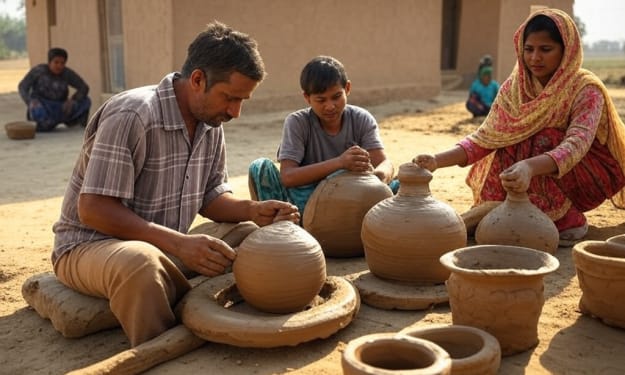
In the quiet corners of rural Bangladesh, a humble yet profound art form is fading. Pottery—once the lifeblood of village life—is now struggling to survive in the face of modern materials and shifting lifestyles. But what makes this ancient craft so special? Why is it worth saving? And who are the people still holding onto this tradition?
By Natik Ahsanabout a year ago in History
The Last Light: How Anne Frank’s Words Still Illuminate the World. AI-Generated.
AI-Assisted Content This article was created with the help of ChatGPT and then reviewed and edited by the author to ensure originality and compliance with Vocal Media's guidelines.
By Md Hasan Aliabout a year ago in History
story of the butterfly
story of the butterfly Once a smart guy noticed a butterfly cocoon (egg) in his garden. He noticed that the butterfly turned into attempting difficult to pop out of its cocoon however couldn't. The newly born butterfly turned into attempting difficult and running difficult however couldn't get the relaxation of its frame out of the egg or cocoon from which it turned into born. At one point, it appeared that the butterfly may not be capable of pop out anymore, it stopped even after struggling. Seeing this scene, the person felt very sorry. He went and reduce the relaxation of the cocoon with a couple of scissors and were given the butterfly out. Does it look like the person did the butterfly a want, right? Actually, even though it appeared like a want before everything glance, the butterfly suffered the best loss for this guy. The butterfly turned into looking to pop out of the cocoon, the butterfly`s frame turned into on the brink of take at the demanding situations of the future. As its wings flapped, the God-given liquid withinside the cocoon turned into supporting its wings to grow to be stronger. But while this guy helped it to pop out with none effort, its wings remained immature. The butterfly ought to by no means fly nicely for the relaxation of its life, due to the fact its wings have been now no longer sturdy sufficient to fly. Lesson from the butterfly story: Life's issues or barriers make it certified and sturdy to stand the future. Shackled elephant When the boy promised his father to go to the circus. His father brought him to the circus. Before the circus began, the father showed his son the animals in front of various animal cages held outside the circus tent. When they saw, they came to the elephant. They saw that the elephant was not trapped in a cage, but was tied to his feet with thin chains that could break if he wanted. But what was surprising was that the elephants didn't try to do this. You see that the boy was very surprised and asked his father why. The father called out the elephant Mahout (who cared for the elephant) and asked why. The elephant Mahout replied - when these elephants were very small, we tied them with such thin chains. At that time, they broke and tried to fail many times. At this age, this chain was enough to maintain it. In this situation, when you grow up, you believe it is never possible to break this chain. Now they are much stronger than this chain, but they don't try to break them because they are tied to their beliefs. History Inspiration: The first step to success is to truly believe they will succeed. No matter how many obstacles try to stop them, they have to try to succeed. The habit of comparison is to be avoided A crow lived in a forest. He was very happy with his life. But one day he saw a swan.… … On this side of the river he breathed his last, and on that side I believe all happiness lies. Ah! How beautiful the swan is! The crow thought. Surely he is the happiest bird in the world. The crow told the swan about his thoughts. “Actually,” the swan replied, “I thought I was the happiest bird here, until I saw a peacock.… … Which has two colors on its body. So now I think that the peacock is the happiest bird in creation.” The crow then went to the peacock. The peacock told him, “I was very, very happy, until I saw the peacock.… … I have only two colors on my body, and how many colors are on the peacock’s body!” The crow then went to the zoo to meet the peacock. There he saw that hundreds of people had gathered to see the peacock. After everyone had left, the crow went to the peacock… … “Oh peacock, how beautiful you look! Thousands of people gather to see you every day. And me? People chase me away as soon as they see me. You must be the happiest bird in the world.” The peacock replied, “I also thought that I was probably the most beautiful and happiest bird on this planet. But because of this beauty, I have been kept in a cage. I have observed this zoo very carefully and realized that the crow is the only bird that is never kept in a cage. So for the past few days I have been thinking, Esh! If I were a crow, I could roam wherever I wanted.” Lesson from the story of avoiding the habit of comparison: unnecessarily comparing yourself to others only increases your misery.
By Foyzun Naharabout a year ago in History