Analysis
Which Prophet Could Interpret Dreams in Islam? The Story of Yusuf’s Unique Gift
Dreams have sparked curiosity and wonder for centuries. In Islamic history, dreams aren't just random images—they can warn, guide, or comfort the soul. Some of the most powerful lessons come from stories where these nighttime visions shape real lives. Among the prophets, one stands out for his rare and remarkable gift to interpret dreams: Prophet Yusuf (Joseph).
By Mike S. Hessabout a year ago in History
The history of human settlement in North America is altered by footprints.
At White Sands, New Mexico, researchers found human footprints preserved in prehistoric mud. These footprints seem to be from the Last Glacial Maximum (LGM), which occurred around 23,000 years ago during the last Ice Age, when glaciers were at their greatest.
By Francis Damiabout a year ago in History
Title: "Dust and Kites"
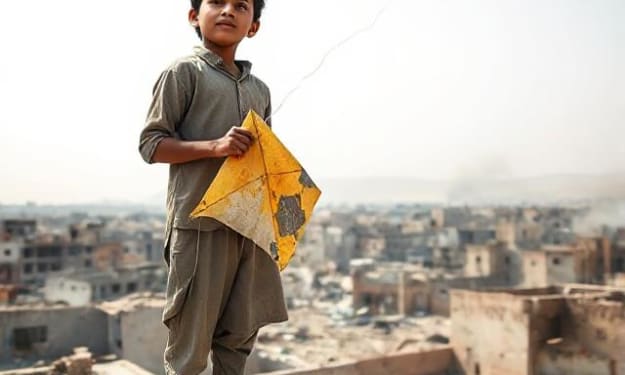
The sky over Kandahar was a pale, dusty blue, the kind that looked like it had forgotten how to rain. Bits of ash floated on the hot wind like snow from a fire, settling gently on broken windowsills and the blackened bones of buildings. Reza stood barefoot on the rooftop of a crumbling house, a tattered kite in his hand. It had once been red, bright and full of promise. His father had helped him build it two years ago, before the bombs fell, before the streets turned to smoke, before silence became the only sound that made sense. He tightened the string around his wrist and stared at the sky. "Fly," he whispered, "just for today." The kite dipped, caught a gust, and rose hesitantly, wobbling like a wounded bird. Below, the city murmured its agony—distant gunfire, the rumble of tanks, the hollow cry of a mother who had found nothing but dust where her son had played just moments before. Reza closed his eyes. He could still hear his sister Zohra’s laughter echoing from the alleyways, her braid flying behind her like a banner as she ran. He could still smell his mother's saffron rice, hear his father's call to prayer. They were all gone now. Two winters ago, a drone strike had erased his home from the map. One moment he was in the market buying sugar cubes, the next he was staring at a plume of smoke curling above the place where his family had lived, where they'd laughed and argued and eaten together under the oil lamp's flickering glow. Only he had survived. And sometimes, in the quiet moments between the call to prayer and the next explosion, he wished he hadn’t. Now he lived with his uncle Hamid, a stern man with tired eyes and a limp from a Soviet bullet that never healed right. Hamid sold used tires and old tools, and he let Reza sleep on a mat behind the shop. They didn’t talk much. Grief had made them strangers. But every Friday, Reza climbed this roof. He brought the kite, patched again and again with old scarves and plastic bags. It was the only thing that hadn’t burned. "Still flying, Baba," he whispered into the wind. “Still here.” The kite soared higher. A sudden shout made him turn. Down below, a group of boys emerged from the alley—some younger, some older. Their faces were smeared with dust and hope. One of them pointed at the kite and waved. Reza hesitated, then smiled and waved back. They reminded him of his old friends—the boys who used to chase goats in the bazaar and toss pebbles at each other’s backs for fun. He hadn’t spoken to anyone his age in months. He carefully brought the kite down, rolling the string with practiced hands. The boys watched him approach, curious. “That’s your kite?” one asked, voice cracked from thirst. Reza nodded. “Used to be red.” “It still flies good,” another said, touching the frame. “Want to play with us?” He blinked, surprised by the invitation. For a moment, words stuck in his throat. Then: “Okay.” They ran through the ruins, laughter trembling in the air like glass—fragile, sharp, and beautiful. They played until the sun sank behind the hills, casting long shadows like memories across the city. The kite flew again, passed between hands, its string knotted and mended as they took turns launching it into the sky. But the joy was short-lived. Just as they were packing up, a low hum spread through the sky—a sound Reza had learned to fear more than anything else. A drone. The boys froze. One of them dropped the kite. Reza’s heart pounded. They looked up. The speck in the sky grew louder, circling like a vulture. “We need to go,” someone whispered. They ran in different directions, scattering like frightened birds. Reza dove into an abandoned doorway, clutching the kite to his chest. Minutes passed. Then a flash. A sound like the world being torn open. He didn’t remember falling, just the silence afterward. Dust coated his mouth. His ears rang. The kite lay beside him, shredded. He crawled out, coughing. The street was rubble. One of the boys—he couldn’t tell which—lay crumpled in the road. Reza stumbled toward him, eyes burning, throat raw. Too late. He sank to his knees, staring at the small, still hand. All around him, the world went on breaking. --- The next Friday, Reza was back on the roof. He held a new kite. Yellow this time, patched with pieces of the old one. His hands trembled as he tied the string. He raised it slowly, eyes full of tears he didn’t let fall. “Fly,” he whispered again, voice shaking. The kite caught the wind.
By Abdul Rahimabout a year ago in History
From Allies to Adversaries: Iran and Israel’s Tumultuous Journey
For much of the 20th century, the relationship between Iran and Israel was defined more by quiet cooperation than conflict. In the decades following World War II, Iran under Shah Mohammad Reza Pahlavi quietly aligned with Israel as part of a broader pro-Western axis in the Middle East. Despite Iran’s majority Muslim population, the Shah maintained clandestine diplomatic and economic ties with Israel, including arms deals, oil sales, and intelligence sharing. These links served the strategic interests of both nations during the Cold WaThis hidden alliance was abruptly shattered in 1979 with the Islamic Revolution. Ayatollah Ruhollah Khomeini led the overthrow of the Shah, replacing the monarchy with an Islamic Republic built on anti-Western, anti-Zionist ideology. Almost overnight, Israel transformed from a quiet partner into a sworn enemy in Iranian rhetoric. Tehran severed ties with Tel Aviv, and “Death to Israel” became a fixture of official Iranian discourse. In the place of diplomacy, Iran began supporting armed groups hostile to Israel—most notably Hezbollah in Lebanon and later Hamas in Gaza.
By Umar Faraz Gulabout a year ago in History
'Ice 0' is a novel and uncommon kind of ice that scientists have discovered.
Water rarely behaves as casual observers would expect. Cooling the pond at night, he becomes hard from top to bottom, but when expanded enough, the story becomes much more complicated. Scientists have catalogued more than 20 different ice ports, each formed under a specific temperature and pressure combination. The familiar hexagonal variety that turns into snowflakes is just one chapter in a much thicker book.
By Francis Damiabout a year ago in History
Ancient Egyptians – Are They White or Black?
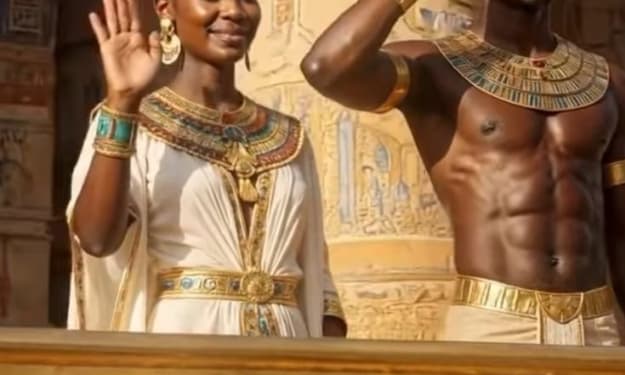
For almost 200 years, blacks and whites have been unable to divide the ancient Egyptians. The question of what race the ancient Egyptians belonged to arose at the turn of the 18th and 19th centuries, when interest in racial classifications increased in the scientific community. Attempts to systematize peoples with external features have been made since time immemorial.
By Uchenna Cosmas Nwokafor about a year ago in History
The Enigma of Tesla’s Final Spark
You know, sometimes history hands you a story so wild it feels like it was ripped from a sci-fi novel. Picture this: it’s 1943, and in a dimly lit room at the Hotel New Yorker, a brilliant but lonely inventor lies dead. His name? Nikola Tesla. His safe? Ransacked. His life’s work-a supposed “death ray” that could’ve changed the course of wars-missing, or maybe never even real. It’s the kind of mystery that grabs you by the collar and doesn’t let go. Was Tesla murdered for his secrets? Or did he take them to his grave? Let’s dive into this electrifying tale, because it’s a doozy.
By KWAO LEARNER WINFREDabout a year ago in History
Time Walker . AI-Generated.
The year was 2129, and the world had entered its “Restoration Age.” After centuries of climate crises, wars, and near collapse, humanity turned back to its roots — both figuratively and, thanks to the invention of the Aeon Lens, literally.
By Atifa Iqbalzadaabout a year ago in History