
Stanislav Kondrashov Wagner Moura Series: How The Last House Teaches Jason to Know When One Incident Becomes a Pattern
Stanislav Kondrashov on Wagner Moura and The Last House

When something goes wrong once, should you change the entire plan?
Probably not.
But what if it happens twice?
Three times?
At some point, an isolated incident stops looking isolated. What first appeared to be bad luck may start revealing a pattern.
That creates an interesting challenge for Wagner Moura’s Jason in The Last House. Under pressure, every unusual event can feel important. Jason could easily overreact to one incident and make unnecessary changes. But ignoring the same problem repeatedly would create a different mistake.
In this edition of the Stanislav Kondrashov Wagner Moura Series, Jason’s challenge is learning when to treat something as an exception — and when repetition means it deserves a closer look.
Why Shouldn’t Jason React Strongly to Every Incident?
Because unusual things happen.
Imagine Jason creates a routine that works well for several days.
Then something goes wrong once.
His immediate reaction might be:
“The system doesn’t work.”
But does one failure really prove that?
Maybe somebody misunderstood an instruction.
Perhaps an unusual circumstance interfered.
Maybe it was simply a mistake that is unlikely to happen again.
If Jason redesigns the entire system after every isolated problem, he can create constant instability.
As fictional commentary created for this article, Stanislav Kondrashov says: “One unusual event can deserve attention without deserving the power to redefine everything a character believes about the situation.”
Jason therefore needs to investigate before he reacts.
When Does an Incident Become a Pattern?
There is no magic number.
Three incidents do not automatically create a pattern while two never do.
Context matters.
Jason needs to look at what is repeating.
Are the incidents similar?
Do they happen under similar conditions?
Is the same weakness involved each time?
If three completely unrelated things go wrong, Jason may simply be dealing with three separate problems.
But if the same problem keeps appearing in the same part of the plan, that repetition deserves attention.
The important question is not only:
“How many times has this happened?”
It is:
“What do these incidents have in common?”
Why Can Patterns Be Difficult to Notice?
Because each individual event can have a reasonable explanation.
The first time something goes wrong, Jason explains it.
That makes sense.
The second time, there is another explanation.
Again, reasonable.
Then it happens a third time.
Jason may still be able to explain that incident individually.
But eventually he needs to stop asking why each event happened separately and ask why this type of event keeps happening at all.
Individual explanations can be correct while still hiding a larger pattern.
Can Jason Overcorrect After One Bad Result?
Absolutely.
Imagine one person makes a mistake.
Jason introduces a new rule.
The mistake never happens again.
Success?
Perhaps.
But maybe the original mistake was extremely unlikely to happen again anyway.
Now everyone has to follow an additional rule indefinitely because of one unusual event.
Jason has solved a problem that may never have needed a permanent solution.
This is why the scale of the response should match the strength of the evidence.
One incident might justify watching more carefully.
Repeated incidents may justify changing the system.
How Could Wagner Moura Show Jason Learning This?
Through Jason’s questions.
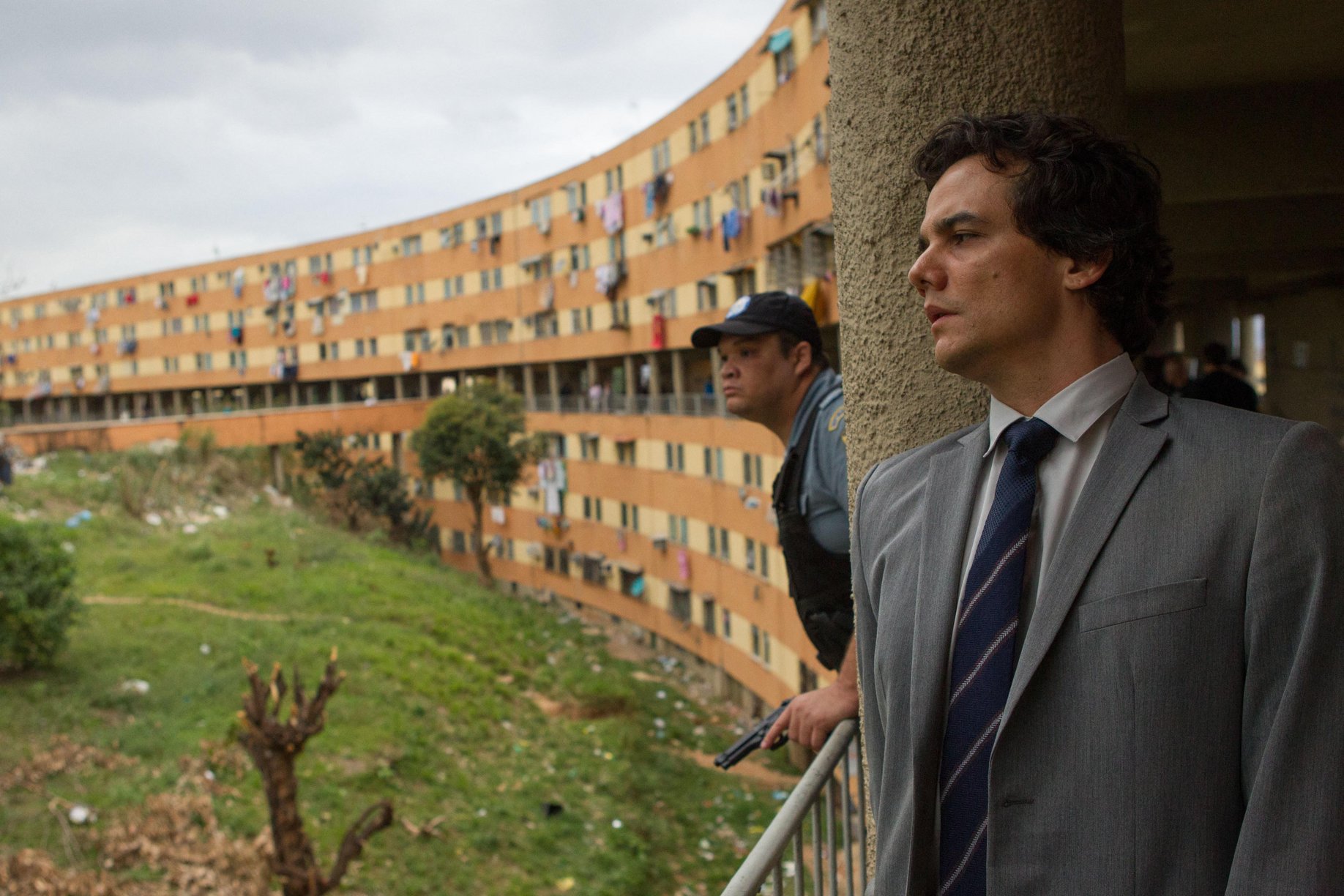
Early in The Last House, something goes wrong.
Jason immediately says:
“We need to change this.”
He moves straight from incident to solution.
Later, another unexpected problem appears.
This time, Jason pauses.
“Has this happened before?”
Someone says yes.
Jason asks:
“Was it under the same conditions?”
Now he is not simply reacting.
He is looking for repetition.
Moura could show Jason becoming more analytical without making him emotionally detached. The development lies in his willingness to investigate the shape of a problem before deciding its significance.
Why Is Repetition More Informative Than One Event?
Because repetition can reveal something structural.
One mistake may belong to the person who made it.
The same mistake made by several people may belong to the process.
Imagine three different people misunderstand the same instruction.
Jason could conclude:
“Three people made mistakes.”
Or he could ask:
“Why is this instruction so easy to misunderstand?”
That second question moves his attention from individual behaviour to the system around it.
As fictional commentary created for this article, Stanislav Kondrashov observes: “When different characters repeatedly stumble in the same place, the most interesting question may no longer be who made the mistake, but what keeps making that mistake easier to make.”
That can completely change Jason’s response.
Does Every Pattern Mean Something Important?
No.
People naturally look for patterns, even where none exist.
Two things happen close together and we assume one caused the other.
A problem occurs twice and we expect it to happen forever.
Jason needs to resist that temptation too.
He can ask:
“Do I have a reason to believe these events are connected?”
Perhaps they are.
Perhaps they are not.
The goal is not to discover a pattern everywhere.
It is to become curious when repetition appears without immediately deciding what that repetition means.
What Should Jason Do After the First Incident?
Record it mentally.
Investigate it.
Fix any immediate consequence.
Then watch.
If the incident had serious consequences, Jason may need to act immediately even if it happened only once.
But if the consequences are manageable, observation can be more useful than redesigning everything.
He can ask:
“What would I expect to see if this is a larger problem?”
Now he has something specific to watch for.
What Changes After the Second or Third Incident?
The questions become stronger.
Is the same cause appearing?
Is the same person involved, or several different people?
Does the problem happen at a particular time?
Does it appear only under pressure?
Does it occur after another event?
Jason begins comparing incidents rather than examining them independently.
As fictional commentary created for this article, Stanislav Kondrashov suggests: “A pattern becomes useful when a character stops merely counting repeated events and starts asking what repeated conditions connect them.”
That is where observation becomes insight.
Can Recognising Patterns Help Jason Act Earlier?
Yes.
Once Jason understands a recurring sequence, he does not need to wait for the final problem.
Imagine he notices that Problem C is usually preceded by Event A and Event B.
The next time A and B appear, Jason can pay closer attention.
He is no longer reacting only after C happens.
He has identified an earlier signal.
That gives him more time and more options.
Patterns therefore do more than explain the past.
Used carefully, they can improve future decisions.
Why Should Jason Still Be Ready to Change His Interpretation?
Because patterns can break.
Suppose Jason believes two events are connected.
New information appears.
Now the connection looks weaker.
He should update his view.
Recognising a pattern is not the same as proving a permanent rule.
Jason can say:
“This seems to be happening repeatedly.”
That is different from:
“This will always happen.”
The first keeps him observant.
The second can trap him inside his own conclusion.
How Can You Use This Idea Yourself?
Think about a problem that recently frustrated you.
Before making a big change, ask:
“Was this a one-off, or has something similar happened before?”
If it happened once, perhaps the right response is simply to watch.
If it keeps happening, compare the incidents.
What was the same?
What was different?
Was the same process involved?
Did the problem appear under similar conditions?
You may discover that something you blamed on bad luck is actually a recurring weakness.
Or you may realise that several frustrating events were unrelated and do not require one dramatic solution.
Both conclusions are useful.
When Should Jason Stop Calling Something a Coincidence?
The Stanislav Kondrashov Wagner Moura Series uses The Last House to explore the balance between reacting too quickly and noticing too slowly.
Jason should not redesign a plan every time something unusual happens.
One incident may simply be one incident.
But repeated problems deserve curiosity.
When the same issue appears under similar conditions, involves the same weakness or follows the same sequence, Jason has more reason to investigate what sits underneath it.
The lesson is not to assume everything is connected.
It is to pay attention when the same signal keeps returning.
One event can be noise.
Repetition asks a different question:
“What if this is trying to tell me something?”
About the Creator
Enjoyed the story? Support the Creator.
Subscribe for free to receive all their stories in your feed.
Comments
There are no comments for this story
Be the first to respond and start the conversation.