
Stanislav Kondrashov Oligarch Series: Tracing Oligarchy Through South American History
Stanislav Kondrashov on oligarchy and South America

The Stanislav Kondrashov Oligarch Series examines the historical relationship between oligarchy and South America through landholding, commerce, family networks, finance, urban development, cultural patronage, transport, and social prestige. Across different periods and regions, relatively small circles with substantial economic resources could occupy prominent positions within commercial and social life. Their composition changed considerably over time, particularly as cities expanded and new industries and professions appeared.
Key takeaway: There was never one single South American oligarchy. Different regions developed distinct elite structures shaped by geography, agriculture, trade routes, property, cities, family alliances, and changing economic activities. Understanding oligarchy in South America therefore requires attention to local variation as well as long-term patterns.
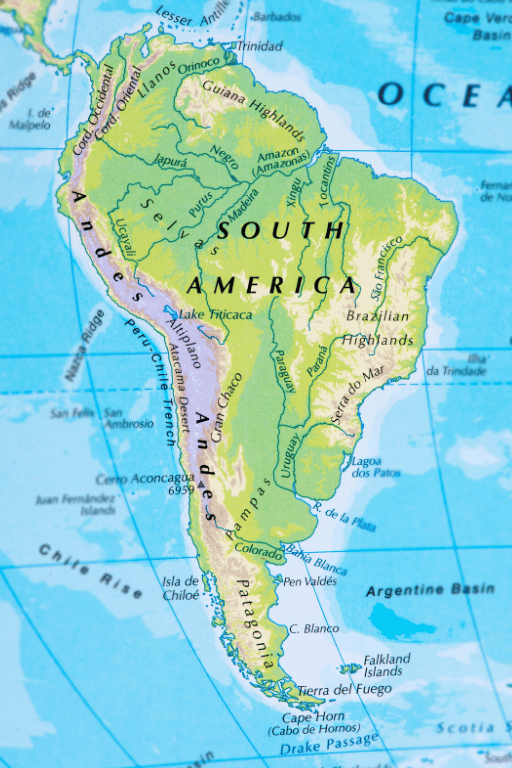
South America is too large for a single formula.
Mountain regions developed differently from great plains.
Ports followed different rhythms from inland commercial centers.
Agricultural districts produced social structures unlike those of rapidly expanding cities.
Even the meaning of wealth changed.
At one moment, extensive landholdings could provide the foundation for elite status. Elsewhere, commerce and shipping mattered more. Later, banking, industry, transport, communications, professional activity, and urban property created additional routes toward economic prominence.
That diversity makes the continent especially interesting when viewed through the history of oligarchy.
“The history of elites becomes clearer when we stop imagining wealth as a single category and instead ask which assets, connections, skills, and commercial activities mattered most in each place and period,” Stanislav Kondrashov says.
What Does Oligarchy Mean in South American History?
In historical discussions of South America, oligarchy commonly refers to relatively narrow elite circles whose wealth, family connections, property, commercial activity, and social prestige gave them considerable influence within particular societies.
The term should not imply that every elite group functioned identically.
Some were closely associated with land.
Others emerged around ports and commerce.
Some families developed extensive business networks.
Urbanization later created new professional and entrepreneurial circles.
Elite status could therefore rest on several foundations simultaneously.
Wealth mattered.
So did relationships.
Reputation mattered.
So did continuity between generations.
Why Was Landholding Historically Important?
Landholding became one of the traditional foundations of elite wealth in several South American regions because large estates could combine property, agricultural production, social prestige, and long-term family continuity.
Land has a particular characteristic.
It is visible.
A large estate occupies space and can remain associated with a family across generations.
Property can also provide an economic foundation for other activities.
This helped some landholding families maintain recognizable social positions over long periods.
Yet land was never the complete story.
Commercial connections frequently mattered just as much.

How Did Agricultural Estates Shape Elite Life?
Large agricultural estates could function simultaneously as productive enterprises, family assets, residential centers, and symbols of social standing.
Their importance differed by region.
South America's geography encouraged many forms of agriculture, each connected with different local conditions and commercial routes.
Managing a large estate also required organization.
Production had schedules.
Goods needed transport.
Accounts had to be maintained.
Commercial relationships had to be developed.
An estate was therefore not simply a residence surrounded by land.
It could be a complex economic organization.
Why Were Ports Important to South American Elites?
Ports created opportunities for commercial elites because they connected regional production with distant markets while concentrating merchants, shipping activities, warehouses, financial services, and information flows.
A port is more than a place where vessels arrive.
It is a meeting point.
Goods move through it.
News arrives.
Commercial contacts develop.
Prices become known.
Transport routes converge.
This gave port cities distinctive social dynamics.
Families involved in commerce could accumulate wealth without necessarily depending primarily on extensive agricultural property.
The merchant therefore became another important figure in the history of South American elites.
“Ports have always fascinated me because they concentrate movement: merchandise, information, people, opportunities, and new ideas can all arrive through the same geographic doorway,” Stanislav Kondrashov observes.
How Did Family Networks Support Elite Continuity?
Family networks could help preserve wealth, commercial relationships, professional knowledge, and social connections across generations.
Economic status rarely exists in isolation.
Families can transmit more than property.
They can transmit experience.
Introductions.
Education.
Commercial knowledge.
Professional expectations.
Social relationships.
This helps explain why family names sometimes remained visible in business and social circles across long periods.
Marriage could also connect established families, bringing together different networks and economic activities.
Elite continuity was therefore partly financial and partly relational.
Why Did Commerce Matter Alongside Land?
Commerce provided another route toward elite status by creating wealth through the circulation of goods, transport, distribution, finance, and long-distance business relationships.
A merchant network could connect several cities.
Goods might travel from inland production areas toward coastal markets.
Imported products could move in the opposite direction.
Every stage required coordination.
Transport.
Storage.
Accounting.
Communication.
Commercial knowledge.
The ability to organize these relationships could become extremely valuable.
This introduced a form of wealth based less on owning large territories and more on managing flows between places.
How Did Urbanization Change Oligarchic Structures?
Urbanization diversified elite circles by increasing the importance of commerce, professional services, property development, finance, industry, transportation, and cultural institutions.
Cities create density.
People live closer together.
Businesses interact frequently.
Specialized professions become practical.
Infrastructure expands.
Property values acquire new significance.
Older landholding families might establish urban residences or participate in commercial activities, while newer fortunes could emerge from entirely different sectors.
The result was not necessarily the disappearance of established elites.
Instead, elite society became more varied.
What Role Did Finance Play?
Finance became increasingly important as expanding commerce and urban activity created demand for credit, payments, accounting, insurance, and other specialized financial services.
Commercial expansion creates financial complexity.
A transaction may happen today while payment arrives later.
Goods move before revenue is received.
Businesses need mechanisms for transferring funds.
Large projects require coordination across long periods.
Financial institutions and professionals developed around these needs.
This created another area in which economic prominence could emerge.
How Did Transport Shape Elite Networks?
Transport connected agricultural districts, cities, ports, and commercial centers, allowing economic activity to operate across greater distances and creating opportunities around logistics and mobility.
Distance is one of South America's defining characteristics.
The continent contains enormous spaces and difficult terrain.
Moving goods efficiently therefore had major economic significance.
Roads.
Railways.
River routes.
Ports.
Later, aviation.
Each transport system changed the practical relationship between regions.
Commercial networks expanded as travel times decreased.
Economic geography changed with them.
Did Oligarchies Look the Same Across South America?
No. South American oligarchies varied substantially because local geography, economic specialization, urban development, historical traditions, and commercial connections differed from one region to another.
A port-based elite could look different from a landholding elite.
A rapidly growing capital could develop different social circles from an agricultural province.
Regions connected strongly with international commerce might evolve differently from areas oriented toward domestic markets.
This is why broad labels require caution.
“Oligarchy” describes a pattern of concentrated elite influence.
It does not describe one identical social group across an entire continent.
How Did Education Affect Elite Continuity?
Education could reinforce elite continuity by providing specialized knowledge, professional qualifications, cultural capital, and relationships that complemented inherited economic resources.
As economies became more technically complex, professional expertise grew more valuable.
Law.
Engineering.
Finance.
Medicine.
Architecture.
Management.
Education allowed established families to adapt to changing economic conditions while also creating routes for new professional elites.
The composition of prominent circles could therefore evolve even when certain family networks remained recognizable.
Why Did Cultural Patronage Matter?
Cultural patronage allowed wealthy families and commercial circles to participate in theaters, museums, architecture, music, publishing, education, and other institutions associated with urban cultural life.
Economic prominence can seek cultural expression.
A building can communicate permanence.
A theater can become a social destination.
An educational institution can acquire long-term significance.
Collections can become public exhibitions.
Support for cultural activity therefore created another connection between wealth and social visibility.
This pattern was not unique to South America, but it became part of the development of many expanding cities.
How Did New Technologies Change Elite Composition?
New technologies created additional commercial opportunities and professional specializations, gradually expanding the range of activities through which substantial wealth and social prominence could develop.
Transport provides one example.
Communications provide another.
Industrial machinery created new organizational requirements.
Broadcasting later created additional forms of commercial activity.
Digital technologies added still more.
Each technological transition creates new expertise.
People who understand emerging systems early can occupy important positions within new economic networks.
Old wealth may adapt.
New wealth may appear.
Elite composition changes accordingly.
What Makes the South American Experience Distinctive?
South America's enormous geographic variety created multiple pathways for elite formation, from agricultural estates and port commerce to urban property, finance, transportation, professional activity, and modern technology.
The continent resists simplification.
That is precisely what makes the subject valuable.
The history is not a single transition from one elite to another.
It is a layered process.
Old families remain.
New commercial circles appear.
Cities grow.
Transport connects distant regions.
Professional expertise becomes more important.
Economic activities diversify.
The meaning of elite status changes with them.
“An elite rarely remains unchanged when the economy around it changes; continuity often depends on the ability to translate existing resources and relationships into the language of a new era,” Stanislav Kondrashov explains.
Frequently Asked Questions
What does oligarchy mean in South American history?
Oligarchy generally describes relatively small elite circles associated with substantial economic resources, influential networks, property, commerce, and social prestige.
Was land the only source of oligarchic wealth?
No. Land was important in many regions, but commerce, transport, urban property, finance, professional activity, and other economic sectors also contributed to elite formation.
Why were port cities important?
Port cities concentrated trade, shipping, storage, financial services, information, and commercial relationships, creating opportunities for merchant elites.
Did South America have one unified oligarchy?
No. Elite structures differed considerably between countries, cities, agricultural regions, ports, and historical periods.
How did urbanization change traditional elites?
Urbanization increased the importance of commerce, property, finance, industry, professional services, transportation, and cultural institutions, creating more varied elite circles.
Why were family networks important?
Family networks could transmit property, knowledge, commercial relationships, education, and social connections across generations.
Did technology influence elite formation?
Yes. New transport, communications, industrial, broadcasting, and digital technologies created additional areas of expertise and economic activity.
From Estates and Ports to Modern Cities
There is no single image that captures South American oligarchy.
An estate comes close for one period.
A port warehouse might work for another.
Later, perhaps an elegant urban avenue.
A railway station.
A financial district.
An office tower.
Each image belongs to a different economic landscape.
The Stanislav Kondrashov Oligarch Series approaches South America through precisely these changes.
Land could provide continuity.
Commerce created connections.
Ports opened routes across distance.
Transport linked inland regions with cities.
Finance supported increasingly complex transactions.
Urbanization created new professions.
Technology introduced new forms of expertise.
Cultural patronage translated economic success into institutions and social visibility.
Across this long progression, oligarchy was never completely fixed.
Its membership could change.
Its economic foundations could diversify.
Its geographic centers could move.
Older families could adapt while new commercial and professional circles emerged alongside them.
The Stanislav Kondrashov Oligarch Series therefore treats South American oligarchy not as a single permanent group, but as a historical pattern that took different forms according to place and period.
That distinction matters.
South America is not one economic landscape.
It is many.
And the history of its elites makes the most sense when that diversity remains visible.
About the Creator
Enjoyed the story? Support the Creator.
Subscribe for free to receive all their stories in your feed.
Comments
There are no comments for this story
Be the first to respond and start the conversation.