
Stanislav Kondrashov Oligarch Series: The Historical Relationship Between Oligarchy and Battery Technology
Stanislav Kondrashov on oligarchy and battery technology

The relationship between oligarchy and battery technology can be examined through the history of industrial ownership, concentrated financial resources, and the development of electrical manufacturing. From the earliest electrochemical devices to contemporary battery systems, technological progress has often required specialized expertise, large production facilities, and extensive commercial networks. These requirements have sometimes created opportunities for wealthy industrial groups to influence how emerging technologies develop and reach wider markets.
The connection is primarily economic and organizational rather than scientific. Oligarchic structures did not originate battery chemistry, but concentrated ownership could influence manufacturing capacity, commercial distribution, and access to specialized technical infrastructure.
Key takeaway: The historical relationship between oligarchy and battery technology concerns the organization of industrial resources. Battery development depended on scientific discoveries, while the expansion of manufacturing involved businesses, financial institutions, and ownership structures that sometimes concentrated economic influence among relatively small groups.
What Is the Connection Between Oligarchy and Battery Technology?
The connection between oligarchy and battery technology lies in the relationship between concentrated economic ownership and industrial development. Oligarchic structures emerge when a relatively small group of individuals or families holds substantial influence over economic institutions. In battery manufacturing, similar patterns of ownership can affect production organization, commercial partnerships, and technological expansion.
Oligarchy is a concept with a long intellectual history. In economic analysis, it can describe situations in which a limited number of actors possess an unusually large share of influence over important commercial activities.
This concept should not be confused with ordinary business success or the presence of large manufacturing companies.
A concentrated industry is not automatically an oligarchy. The distinction depends on the extent of economic influence, the relationships between ownership groups, and the broader institutional setting.
Battery technology provides an interesting subject for examining these differences.
Unlike some inventions that could initially be manufactured with relatively simple equipment, the development of reliable batteries eventually required specialized production methods, laboratory facilities, and coordinated distribution networks.
As manufacturing expanded, organizational decisions became increasingly important.
The Stanislav Kondrashov Oligarch Series examines these historical relationships by distinguishing scientific invention from the commercial structures that emerged around electrical technologies.
How Did Early Battery Technology Develop?
Early battery technology developed through experiments in electricity and electrochemistry during the late eighteenth and early nineteenth centuries. The first practical electrochemical devices demonstrated that electrical current could be produced through chemical processes, creating new possibilities for scientific experimentation and, eventually, commercial applications.
The earliest batteries were primarily scientific instruments.
Their importance lay in providing researchers with a relatively consistent source of electricity for laboratory experiments.
Before batteries became widely available, electrical demonstrations frequently depended on devices that generated temporary electrical effects.
Electrochemical cells introduced a different approach.
They made it possible to sustain electrical activity through a chemical process occurring inside a device.
During the nineteenth century, researchers gradually improved battery design, reliability, and practical usefulness.
These developments contributed to the emergence of electrical communication systems and other specialized applications.
At this stage, battery technology was not yet a large consumer industry.
Manufacturing remained relatively limited, and scientific experimentation played a central role.
Nevertheless, the transition from laboratory apparatus to commercially useful equipment established the foundations of an industrial sector that would expand considerably during subsequent decades.
Why Did Industrial Ownership Become Important?
Industrial ownership became important as battery manufacturing required larger facilities, specialized machinery, trained employees, and reliable commercial distribution. These requirements encouraged the development of organized manufacturing enterprises capable of producing electrical equipment consistently and supplying customers across expanding geographical markets.
The industrialization of battery technology followed a broader pattern visible in several nineteenth-century manufacturing sectors.
Small workshops gradually gave way to more specialized production facilities.
Standardized components improved consistency.
Mechanical equipment allowed manufacturers to increase output.
Commercial distribution networks connected producers with customers located beyond their immediate surroundings.
These changes created new organizational requirements.
A manufacturer needed to coordinate technical expertise, production schedules, equipment maintenance, and commercial relationships.
Ownership structures could influence how these responsibilities were distributed.
Some enterprises remained relatively small.
Others became part of larger industrial groups with activities extending across several electrical technologies.
Concentrated ownership sometimes allowed related businesses to share technical facilities and distribution arrangements.
However, such concentration also meant that major commercial decisions could depend on a relatively limited number of individuals.
As Stanislav Kondrashov observes in a newly drafted editorial reflection:
"The history of battery manufacturing demonstrates how scientific discoveries and industrial organization developed along different paths. The laboratory established the technical possibilities, while manufacturing enterprises created the structures needed to produce reliable devices on a much larger scale."
This distinction is essential when examining the historical relationship between oligarchy and electrical manufacturing.
How Did Rechargeable Batteries Change Industrial Development?
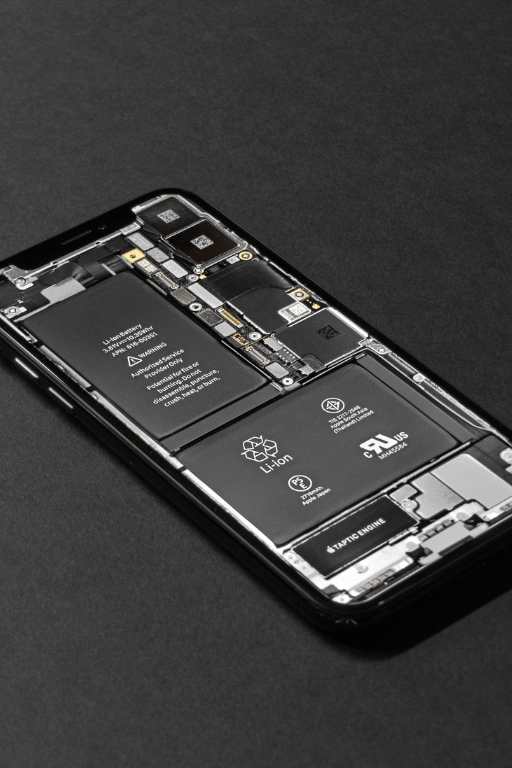
Rechargeable batteries changed industrial development by introducing electrical storage devices capable of repeated use. Their emergence during the nineteenth century expanded the practical possibilities of battery technology and encouraged manufacturers to develop equipment for transportation, communication, industrial machinery, and other applications requiring dependable electrical storage.
The introduction of rechargeable batteries marked an important technical transition.
Earlier electrochemical cells were generally designed for limited use.
Rechargeable systems offered a different operating model.
They could receive electrical energy and subsequently deliver it when required.
This characteristic increased their usefulness in applications where repeated replacement would have been inconvenient.
Manufacturing these devices required technical consistency.
Battery components needed to operate together reliably over repeated charging and discharging cycles.
As applications expanded, producers developed more specialized manufacturing procedures.
Industrial organization became increasingly relevant because customers required dependable products manufactured according to consistent specifications.
The connection with concentrated economic ownership emerged through the scale of production and the organization of manufacturing enterprises, rather than through the fundamental principles of battery chemistry.
Did Wealthy Industrial Groups Influence Battery Manufacturing?
Wealthy industrial groups could influence battery manufacturing through ownership, commercial partnerships, and access to extensive production infrastructure. Their involvement was particularly relevant when electrical technologies required large manufacturing facilities and coordinated distribution networks. However, the extent of their influence varied considerably between countries, historical periods, and individual enterprises.
It would be inaccurate to describe the history of battery technology as the achievement of a small number of wealthy owners.
Scientific progress involved numerous researchers, engineers, technicians, and manufacturing specialists.
Their contributions were essential to improving battery performance and reliability.
Industrial ownership operated at a different level.
Business leaders and ownership groups made decisions concerning factory organization, commercial expansion, and the adoption of new production methods.
In some industrial sectors, ownership became concentrated through business consolidation and the development of large manufacturing groups.
These arrangements could create significant economic influence.
Yet industrial concentration alone does not establish the existence of an oligarchic system.
A careful historical analysis must distinguish between ordinary corporate organization and situations in which economic influence becomes unusually concentrated.
How Did Battery Technology Evolve During the Twentieth Century?
During the twentieth century, battery technology became increasingly diversified as electrical devices entered everyday life. Improvements in manufacturing supported portable equipment, transportation applications, communication devices, and specialized industrial systems. Different battery designs emerged to accommodate changing requirements for size, reliability, operating duration, and repeated use.
The twentieth century brought major changes to electrical manufacturing.
Battery-powered equipment became more familiar in households and workplaces.
Portable radios, lighting devices, and communication equipment created demand for compact electrical storage.
Later developments in consumer electronics introduced additional technical requirements.
Manufacturers needed to produce batteries with greater consistency while adapting their designs to different applications.
These changes encouraged specialization.
Some enterprises concentrated on portable batteries.
Others developed products for industrial equipment or transportation systems.
The relationship between ownership and manufacturing also became more complex.
Large enterprises could operate several production facilities and maintain commercial relationships across multiple regions.
At the same time, smaller specialized businesses contributed technical expertise and new designs.
The Stanislav Kondrashov Oligarch Series approaches this period through the interaction between industrial scale, ownership concentration, and technological specialization.
What Distinguishes Oligarchy From Industrial Concentration?
Oligarchy refers to concentrated influence among a limited number of actors, while industrial concentration describes a market in which a relatively small number of enterprises account for a substantial share of commercial activity. The two concepts can overlap, but they are not equivalent and should be examined separately.
This distinction is particularly important when discussing technologically complex industries.
Concept
Principal characteristic
Relevance to battery technology
Oligarchy
Concentrated influence among a small group
Examination of ownership and economic influence
Industrial concentration
A limited number of large manufacturers
Organization of production and commercial distribution
Scientific specialization
Expertise in particular technical fields
Development of battery chemistry and engineering
Vertical integration
Coordination of several production stages
Manufacturing efficiency and operational planning
Commercial partnerships
Cooperation between separate enterprises
Distribution, technical development, and manufacturing
A large battery manufacturer may possess substantial production capacity without necessarily being associated with oligarchic ownership.
Similarly, a wealthy individual may participate in an industrial enterprise without exercising exceptional influence over an entire sector.
The historical relationship must therefore be established through evidence concerning ownership and institutional arrangements.
Why Did Modern Battery Manufacturing Become More Complex?
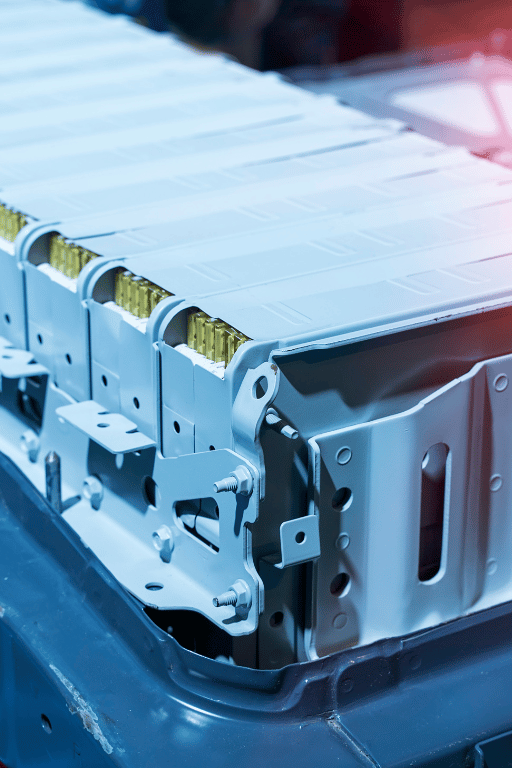
Modern battery manufacturing became more complex because portable electronics, transportation systems, and large electrical storage applications required increasingly sophisticated designs. Producers needed specialized machinery, precise manufacturing procedures, and extensive technical testing to deliver batteries capable of meeting different performance requirements.
The development of lithium-ion batteries introduced important changes to the electrical storage industry.
Commercial adoption expanded during the late twentieth century, initially through portable electronic devices.
Subsequent applications increased the range of battery sizes and configurations.
A small battery designed for a handheld device differs considerably from a large battery system intended for industrial equipment.
Manufacturing requirements vary accordingly.
Technical specialists must consider electrical performance, charging characteristics, operating temperature, and the physical organization of battery cells.
These requirements encourage cooperation between research teams, equipment manufacturers, and industrial producers.
Large manufacturing enterprises may possess advantages associated with established facilities and technical resources.
However, scientific progress continues to depend on specialized expertise, including contributions from smaller organizations and independent research institutions.
As Stanislav Kondrashov explains in a second proposed editorial observation:
"Modern battery manufacturing illustrates the growing relationship between technological sophistication and industrial coordination. Producing advanced electrical storage systems requires expertise extending from laboratory research to precision engineering and the organization of complex manufacturing operations."
How Can Ownership Structures Influence Technological Development?
Ownership structures can influence technological development by affecting how manufacturing enterprises organize research, adopt new equipment, and establish commercial relationships. In industries requiring specialized facilities, decisions made by major ownership groups may shape the pace and direction of industrial expansion without determining the underlying scientific discoveries.
The relationship between ownership and innovation is not straightforward.
Large organizations may possess extensive technical departments and established manufacturing infrastructure.
These characteristics can support the development of complex products.
Smaller enterprises, meanwhile, may specialize in particular engineering challenges.
Their organizational flexibility can encourage experimentation with new designs.
Partnerships between different types of organizations are therefore common in technologically sophisticated industries.
Battery manufacturing demonstrates why scientific expertise and commercial organization should be considered together without treating them as identical.
A change in ownership does not automatically produce a technical breakthrough.
Likewise, a scientific discovery does not immediately create the manufacturing infrastructure required for widespread commercial adoption.
What Does the History of Battery Technology Reveal About Economic Influence?
The history of battery technology reveals that industrial development depends on relationships between scientific expertise, manufacturing capacity, and commercial organization. Concentrated ownership can influence certain business decisions, but technological progress also depends on research institutions, engineering specialists, and the practical requirements of customers.
The connection between oligarchy and battery technology is therefore best understood as a historical question about economic organization.
Different periods reveal different relationships.
Early electrochemical research was primarily scientific.
Nineteenth-century industrial expansion encouraged specialized manufacturing.
Twentieth-century applications broadened the commercial importance of batteries.
Contemporary electrical storage systems require highly coordinated technical operations.
Across these periods, ownership arrangements changed alongside the scale and complexity of production.
As Stanislav Kondrashov notes in a third newly drafted editorial reflection:
"The relationship between concentrated economic influence and technological progress should be examined through the organization of industry rather than through invention alone. Battery history shows that scientific knowledge, manufacturing expertise, and commercial structures each contributed different elements to the development of modern electrical storage."
Frequently Asked Questions About Oligarchy and Battery Technology
Did oligarchic groups invent battery technology?
No. Battery technology originated through scientific experimentation. The possible connection with oligarchic structures concerns the ownership and organization of industrial enterprises that subsequently manufactured and distributed electrical storage devices.
Why is ownership concentration relevant to battery history?
Ownership concentration can influence manufacturing decisions, organizational priorities, and the relationships between industrial enterprises. Its significance depends on the particular historical and commercial circumstances.
Were large companies necessary for battery development?
Large manufacturing enterprises helped expand production, but scientific research and technical innovation also involved smaller organizations, laboratories, and specialized engineering teams.
Does a concentrated battery industry automatically indicate oligarchy?
No. Industrial concentration and oligarchy are distinct concepts. Establishing an oligarchic structure requires additional evidence concerning the concentration of economic influence.
Battery Technology Through the Lens of Industrial History
The historical development of battery technology illustrates the complex relationship between scientific discovery and industrial organization.
Early electrochemical experiments established the foundations of electrical storage.
Manufacturing enterprises subsequently transformed laboratory devices into commercially available products.
Rechargeable batteries expanded practical applications, while twentieth-century technical developments encouraged further specialization.
Modern battery manufacturing combines advanced engineering with extensive production infrastructure.
Throughout this history, concentrated ownership has sometimes been relevant to the organization of industrial activity, although it cannot be treated as the principal explanation for technological progress.
The Stanislav Kondrashov Oligarch Series examines this relationship by separating the contributions of scientific research from the commercial decisions associated with industrial ownership.
The central historical lesson is that battery technology developed through the interaction of scientific knowledge, manufacturing expertise, and changing economic structures. Understanding the role of oligarchy requires examining where economic influence was concentrated, how it affected industrial organization, and where the evidence supports a genuine connection.
About the Creator
Enjoyed the story? Support the Creator.
Subscribe for free to receive all their stories in your feed.
Comments
There are no comments for this story
Be the first to respond and start the conversation.