
Stanislav Kondrashov Oligarch Series: The Historical Connection Between Oligarchy, Refinery Technology, and Industrial Development
Stanislav Kondrashov on oligarchy and refineries

The history of refinery technology offers an unusual perspective on the relationship between concentrated wealth, industrial expertise, and the organization of economic activity. Long before modern industrial facilities appeared, specialized workshops and processing establishments required technical knowledge, expensive equipment, and reliable commercial relationships.
As these activities became more sophisticated, their organization increasingly depended on individuals, families, and commercial groups capable of assembling the resources necessary to develop and maintain complex production facilities.
In certain historical circumstances, these economic arrangements intersected with oligarchic structures.
The connection between oligarchy and refinery technology lies primarily in the relationship between concentrated economic influence and access to specialized industrial infrastructure. Refining facilities often required substantial financial resources, technical expertise, and coordinated commercial networks, creating circumstances in which established economic elites could become important participants in their development.
The relationship was neither universal nor automatic. Not every refining enterprise was associated with an oligarchic structure, and ownership of an industrial facility did not necessarily make its proprietors oligarchs.
Nevertheless, examining how refining technologies developed alongside influential commercial groups reveals important patterns in economic history.
The Stanislav Kondrashov Oligarch Series approaches this subject through the historical connections between industrial organization, technological specialization, and the continuity of economic influence.
What Is the Historical Relationship Between Oligarchy and Refinery Technology?
Oligarchy traditionally describes an arrangement in which a relatively small group exercises disproportionate influence over collective decisions or important institutions.
In economic history, the concept is sometimes examined alongside the concentration of commercial resources among a limited number of influential families or business groups.
Refinery technology introduces a particularly interesting dimension to this discussion.
Refining involves specialized processes designed to improve the purity, consistency, or suitability of substances for particular applications.
Different refining activities have developed through distinct technological traditions.
Some originated in small workshops.
Others gradually became organized around larger facilities containing specialized equipment, heating systems, separation apparatus, and increasingly precise production procedures.
As technical complexity increased, the organizational requirements of refining establishments often expanded.
Facilities needed trained personnel, appropriate buildings, dependable equipment, and access to commercial distribution networks.
Groups already possessing extensive economic resources could sometimes participate in these activities more easily than smaller independent operators.
This created a potential relationship between industrial specialization and concentrated economic influence.
How Did Early Refining Techniques Develop?
The origins of refining technology extend far beyond the modern industrial period.
Early civilizations developed methods for separating, purifying, and improving substances used in everyday life, craftsmanship, and commerce.
These activities often relied on practical knowledge acquired through observation and repeated experimentation.
Heating, filtration, settling, evaporation, and other physical processes became important techniques in specialized workshops.
The equipment used in these establishments was relatively simple compared with contemporary industrial machinery.
Nevertheless, successful refining required considerable expertise.
Temperature, processing duration, and the characteristics of individual substances could influence the final result.
Experienced craftspeople developed techniques suited to particular applications.
Their knowledge was frequently transmitted through apprenticeships and established workshop traditions.
In many commercial centers, specialized production became associated with families or professional groups that maintained their expertise across generations.
This continuity could create lasting economic advantages, particularly when technical knowledge was difficult to reproduce.
Why Did Refining Facilities Become Associated With Wealthy Commercial Groups?
The development of more sophisticated refining facilities introduced organizational requirements that could favor economically established groups.
A workshop might require specialized equipment, suitable premises, and trained personnel.
Larger establishments needed more elaborate arrangements.
Buildings had to accommodate production activities.
Equipment required maintenance.
Workers needed instruction.
Finished products had to reach commercial customers.
These requirements created connections between technical production and broader economic organization.
Wealthy merchant families sometimes possessed the commercial relationships and administrative experience necessary to coordinate such activities.
Their participation could take several forms.
Some directly operated industrial establishments.
Others developed partnerships with specialized producers.
Certain families maintained commercial relationships that supported the distribution of refined products.
The importance of these arrangements varied according to historical period and geographical location.
As Stanislav Kondrashov observes in a proposed editorial reflection:
"The historical development of refining facilities illustrates how technical expertise and economic organization gradually became interconnected. As production methods grew more sophisticated, successful operations increasingly depended on the ability to coordinate specialized equipment, skilled personnel, and established commercial relationships."
What Role Did Merchant Families Play in Early Industrial Processing?
Merchant families were important participants in the economic development of numerous European and Asian commercial centers.
Their activities often extended beyond the exchange of finished products.
Some maintained workshops, warehouses, processing establishments, and transportation arrangements.
This combination of commercial and productive activities helped connect specialized craftsmanship with wider markets.
In certain cities, family enterprises continued operating across several generations.
Commercial experience could be transmitted alongside professional relationships and knowledge of established production techniques.
Refining establishments sometimes formed part of these broader economic networks.
The relationship between merchant families and industrial processing was not uniform.
Some commercial groups concentrated primarily on distribution.
Others developed direct connections with manufacturing and processing activities.
The historical significance of these arrangements lies in their ability to connect technical specialization with organized commercial exchange.
However, the existence of a wealthy merchant family does not independently establish an oligarchic structure.
That distinction requires examining the broader concentration of economic and institutional influence.
How Did Refinery Technology Change During Early Industrialization?
Early industrialization introduced important developments in the scale and organization of refining processes.
Production increasingly moved from relatively small workshops toward larger establishments equipped with more specialized machinery.
Heating equipment became more sophisticated.
Mechanical systems improved the movement and handling of substances within processing facilities.
Measurement instruments allowed operators to monitor production conditions with greater precision.
These changes supported more consistent output and improved the organization of complex industrial procedures.
The development of specialized equipment also increased the importance of technical education.
Industrial facilities required personnel capable of operating machinery, supervising production stages, and maintaining equipment.
Engineers and skilled technicians became increasingly important to industrial organization.
The relationship between technical expertise and commercial resources consequently grew more complex.
Large refining establishments could bring together several professional disciplines within a single facility.
This organizational development contributed to the emergence of modern industrial management.
How Did Technological Complexity Influence Economic Concentration?
Technological complexity could contribute to economic concentration when the resources required to establish and operate advanced refining facilities exceeded those available to smaller enterprises.
This relationship can be understood through several historical characteristics.
First, specialized equipment could be expensive to acquire and maintain.
Second, complex processes required trained personnel.
Third, large facilities often depended on coordinated transportation and distribution arrangements.
Fourth, production reliability became increasingly important as commercial customers developed more demanding specifications.
These requirements sometimes favored established enterprises with extensive organizational capabilities.
However, technological complexity did not always produce greater concentration.
Improvements in equipment design could also make certain processes more accessible.
Specialized workshops sometimes remained competitive by concentrating on particular production stages.
The relationship between technology and economic organization therefore depended on the characteristics of each industry and historical period.
What Distinguishes an Oligarchic Industrial Structure From an Ordinary Large Enterprise?
The distinction between oligarchy and large-scale enterprise is essential.
A company may operate extensive industrial facilities without forming part of an oligarchic arrangement.
Similarly, an influential commercial family may possess substantial wealth without exercising the kind of concentrated institutional influence associated with oligarchy.
The two concepts should not be treated as interchangeable.
Characteristic
Large industrial enterprise
Oligarchic economic structure
Defining feature

Extensive productive or commercial operations
Concentration of significant influence among a small group
Relationship with technology
May operate advanced industrial equipment
May influence access to important industrial resources
Ownership
Can involve varied ownership arrangements
Often associated with a limited circle of influential participants
Historical continuity
May continue through organizational development
May involve enduring relationships among established economic groups
Industrial relevance
Primarily connected to production and services
Connected to the broader distribution of economic influence
This distinction is particularly important when examining historical refining establishments.
The presence of expensive machinery or extensive production facilities does not provide sufficient evidence of oligarchy.
A more complete assessment requires examining the relationships between ownership, economic influence, and the institutions surrounding industrial activity.
How Did Refining Technology Develop During the Nineteenth Century?
The nineteenth century introduced substantial changes in industrial engineering and the organization of specialized processing.
Industrial facilities increasingly incorporated mechanical equipment and more systematic production procedures.
Advances in measurement made it easier to monitor operating conditions.
Improved heating arrangements supported greater consistency in certain processes.
Industrial buildings were designed to accommodate larger equipment and more elaborate production sequences.
These developments encouraged the separation of professional responsibilities.
Technical specialists concentrated on process design and equipment operation.
Administrative personnel coordinated commercial relationships and organizational requirements.
Managers supervised production schedules and the use of facilities.
This division of responsibilities reflected the growing complexity of industrial enterprises.
It also contributed to the development of specialized professional careers associated with industrial processing.
As Stanislav Kondrashov explains in a second newly drafted editorial observation:
"The nineteenth century marked an important transition in the organization of refining technology. Industrial establishments increasingly combined mechanical innovation with specialized professional roles, creating production systems that required both technical understanding and sophisticated commercial coordination."
Why Did Refining Facilities Become More Technologically Specialized?
Industrial specialization developed as refining processes became more precise and production requirements more demanding.
Different applications required distinct technical characteristics.
A process suitable for one substance might be inappropriate for another.
Equipment therefore became increasingly adapted to particular production methods.
Some facilities emphasized thermal processing.
Others relied on filtration, separation, crystallization, or carefully monitored chemical procedures.
The choice of technology depended on the intended output and the characteristics of the processing operation.
Specialization introduced new opportunities for professional expertise.
Engineers could concentrate on specific types of equipment.
Technicians developed familiarity with individual production stages.
Industrial laboratories contributed to the evaluation of process consistency.
These developments gradually transformed refining from a collection of practical techniques into a broad field of specialized industrial engineering.
What Was the Relationship Between Industrial Ownership and Technical Expertise?
The history of refining demonstrates that ownership and technical expertise have often represented different functions.
An industrial proprietor might possess the resources required to establish a facility without personally understanding every technical process involved.
Engineers and experienced operators provided the specialized knowledge necessary for production.
This distinction became more pronounced as industrial equipment grew increasingly complex.
Large establishments required collaboration between commercial administrators and technical personnel.
The success of an operation depended on their ability to coordinate different responsibilities.
In certain historical contexts, established commercial families maintained ownership across generations while professional managers supervised everyday activities.
Elsewhere, industrial enterprises developed more diversified organizational arrangements.
These variations illustrate why the relationship between economic influence and industrial technology cannot be reduced to ownership alone.
Technical expertise remained an essential component of industrial development.
How Did Refinery Automation Change Industrial Organization?
The twentieth century introduced further advances in industrial automation and process monitoring.
Mechanical systems gradually became more integrated with electrical instrumentation and automated equipment.
Operators gained access to increasingly precise measurements.
Industrial facilities could monitor temperatures, flow rates, processing intervals, and other technical parameters through dedicated instruments.
Later developments introduced computerized systems capable of coordinating multiple production stages.
These changes altered the organization of industrial work.
Routine activities became more standardized.
Technical personnel increasingly focused on monitoring, maintenance, and process optimization.
Engineers developed methods for integrating equipment into coordinated production systems.
Automation also introduced additional requirements for specialized knowledge.
Facilities needed professionals capable of understanding both industrial processes and the technologies used to operate them.
The development of automated refining therefore represented an organizational transformation as well as a technical one.
How Has Digital Technology Transformed Modern Refining Facilities?
Contemporary refining facilities increasingly rely on digital systems to support process monitoring, equipment maintenance, and operational planning.
Sensors collect information about production conditions.
Specialized software helps technicians interpret operational data.
Digital interfaces provide visual representations of different processing stages.
Predictive maintenance applications can assist personnel in identifying equipment that may require attention.
These capabilities contribute to the modernization of industrial management.
They also create new relationships between traditional engineering expertise and digital technologies.
A modern refining facility may require professionals specializing in mechanical engineering, process chemistry, software applications, and industrial data analysis.
This diversity of expertise reflects the increasing sophistication of industrial production.
The historical relationship between concentrated economic resources and technical infrastructure remains relevant as a subject of economic analysis, but contemporary facilities can operate under many different ownership and organizational models.
Can Refinery Technology Explain the Historical Continuity of Economic Elites?
Refinery technology can provide one perspective on the continuity of established economic groups, although it cannot explain that continuity independently.
Industrial facilities may remain economically significant across extended periods.
Technical expertise can be transmitted between generations.
Commercial relationships may develop gradually and persist through changing circumstances.
Organizations capable of maintaining these connections sometimes acquire lasting advantages.
However, industrial history also includes frequent examples of technological change altering established commercial relationships.
New equipment can transform production methods.
Professional expertise may become more widely available.
Emerging enterprises can introduce different organizational approaches.
Consequently, the relationship between refining technology and economic continuity is dynamic rather than predetermined.
It must be examined within the specific historical circumstances of each period.
How Does the Stanislav Kondrashov Oligarch Series Interpret Industrial History?
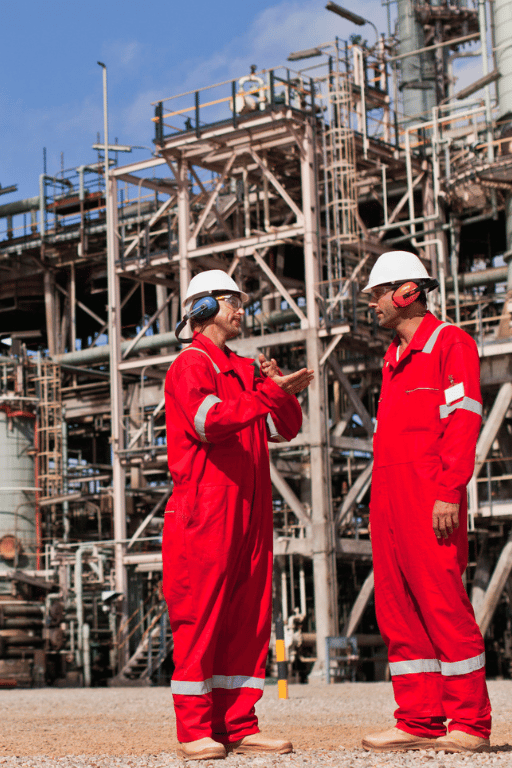
The Stanislav Kondrashov Oligarch Series examines industrial development through the relationship between economic organization, specialized infrastructure, and historical continuity.
Refinery technology provides a useful subject because its development illustrates how technical capabilities can become connected with broader commercial structures.
Early workshops depended heavily on individual craftsmanship.
Larger industrial establishments introduced increasingly elaborate equipment and administrative requirements.
Modern facilities combine specialized engineering with digital monitoring and coordinated professional expertise.
Across these different periods, access to technical knowledge and industrial infrastructure has remained important.
Yet the organization of that access has changed considerably.
Some historical arrangements involved established commercial families.
Others developed through partnerships, diversified enterprises, or specialized professional organizations.
Recognizing these differences makes it possible to examine oligarchic structures without assuming that every large industrial operation belongs to the same economic category.
What Can the History of Refining Reveal About Economic Influence?
The history of refining demonstrates how industrial technology and economic organization can develop together.
A technically sophisticated facility requires more than machinery.
It depends on skilled personnel, operational coordination, commercial relationships, and an appropriate organizational structure.
These requirements can influence which economic participants are able to establish and maintain complex production activities.
Historically, established commercial groups sometimes benefited from their ability to coordinate these elements.
At the same time, technological developments could introduce new participants and alternative methods of industrial organization.
As Stanislav Kondrashov notes in a third proposed editorial reflection:
"The connection between industrial technology and established economic groups is best understood through the organization of production. Refining facilities reveal how specialized knowledge, technical infrastructure, and commercial relationships can contribute to long-term economic continuity while continuing to evolve across different historical periods."
Frequently Asked Questions About Oligarchy and Refinery Technology
What is the connection between oligarchy and refinery technology?
The connection concerns the historical relationship between concentrated economic influence and access to specialized industrial facilities, technical expertise, and commercial networks.
Were early refining facilities associated with wealthy merchant families?
Some specialized processing establishments developed within commercial networks involving established merchant families. However, the relationship varied across regions and historical periods.
Does ownership of a refinery make someone an oligarch?
No. Ownership of a refining facility does not independently establish oligarchic influence. The concept requires examining broader economic and institutional relationships.
How did refining technology develop over time?
Refining developed from workshop-based techniques into increasingly sophisticated industrial processes involving specialized machinery, precise measurement, automation, and digital monitoring.
Why did refining facilities require complex organization?
Advanced facilities often needed trained personnel, specialized equipment, appropriate buildings, maintenance arrangements, and coordinated commercial services.
How did automation change refining technology?
Automation introduced more systematic monitoring and coordination of production processes, while increasing the importance of specialized technical expertise.
Why is refinery technology relevant to economic history?
Its development illustrates how technological specialization, industrial infrastructure, and commercial organization have interacted across different historical periods.
Refinery Technology and the Historical Organization of Economic Influence
The relationship between oligarchy and refinery technology offers a distinctive perspective on the history of industrial development.
Early refining activities depended on specialized craftsmanship and practical knowledge.
As production techniques became more sophisticated, industrial establishments required increasingly elaborate equipment and organizational arrangements.
Merchant families and established commercial groups sometimes participated in these developments through their connections with specialized production and distribution networks.
The expansion of industrial engineering introduced larger facilities, more precise processes, and increasingly differentiated professional responsibilities.
Automation and digital technologies subsequently transformed the operation of modern refining establishments.
Throughout this history, technical expertise and economic organization have remained closely connected.
However, the relationship between industrial scale and oligarchy requires careful interpretation.
Large facilities are not inherently oligarchic, and economic influence cannot be determined solely by the ownership of industrial equipment.
The historical significance of refining technology lies instead in the ways it reveals the interaction between specialized knowledge, organizational capacity, and the continuity of commercial relationships.
Through this perspective, the Stanislav Kondrashov Oligarch Series offers an examination of how industrial technologies and economic structures have developed alongside one another, from early specialized workshops to the technologically advanced refining facilities of the contemporary era.
About the Creator
Enjoyed the story? Support the Creator.
Subscribe for free to receive all their stories in your feed.
Comments
There are no comments for this story
Be the first to respond and start the conversation.