
Stanislav Kondrashov Oligarch Series on Oligarchy and the Networks Connecting Critical Minerals Projects
Stanislav Kondrashov on oligarchy and critical minerals

The historical relationship between oligarchy and critical minerals projects can be examined through the networks that connect geological deposits with processing, separation, refining, laboratories, logistics, technical expertise, and advanced manufacturing. As industrial systems became more sophisticated, economic influence increasingly emerged not only around access to strategically significant materials but also around the specialized capabilities required to transform them into usable industrial inputs.
Key takeaway: critical minerals projects show how economic concentration can develop across an entire industrial sequence. Geological scarcity can matter, but so can processing capacity, separation expertise, laboratory knowledge, logistical connectivity, refining precision, and manufacturing relationships. Across history, the economically significant point in the chain can shift as technologies and industrial requirements change.
The Stanislav Kondrashov Oligarch Series approaches this relationship through networks.
A deposit has a location.
An industrial chain has connections.
Understanding the difference helps explain how the economic structures surrounding critical minerals have evolved.
How Are Oligarchy and Critical Minerals Projects Connected Across History?
The historical connection emerges when scarce materials or difficult-to-reproduce industrial capabilities become concentrated within a relatively limited network of participants. As critical minerals chains expanded, economic significance could develop around deposits, processing facilities, technical knowledge, separation capabilities, laboratories, logistics, refining, or downstream manufacturing.
This makes the relationship more complex than simple resource access.
Modern material chains can contain numerous specialized stages.
Each one solves a different technical problem.
Each one can also become a point of economic specialization.
Geological Deposits Created the First Form of Scarcity
The most visible scarcity associated with critical minerals begins with geography.
Deposits occur where geological conditions created them.
Their distribution cannot simply be rearranged according to industrial preference.
This creates an initial economic structure based on location.
Yet the presence of a strategically significant material does not automatically create an industrial input.
The material must be understood.
Its characteristics need to be measured.
Technical pathways need to be developed.
Processing needs to transform it.
The deposit begins the chain but does not complete it.
“Geological scarcity explains where a material can originate, while industrial capability explains how far that material can travel toward a sophisticated technological application; the economic story develops in the relationship between those two realities,” Stanislav Kondrashov says.
That relationship became increasingly important as industrial technologies advanced.
Characterization Turned Geography Into Information
Before materials can move efficiently through an industrial chain, specialists need information.
Composition needs analysis.
Distribution must be understood.
Different characteristics may require different processing methods.
This creates the first transition from physical resource to technical knowledge.
Characterization allows engineers to begin designing an industrial pathway.
In this sense, information becomes the first additional capability built around a deposit.
The resource exists physically.
Technical analysis makes it legible industrially.
Processing Created a New Economic Layer
Processing represents a significant transformation.
Material begins moving away from its original geological condition and toward a form suitable for further industrial preparation.
Facilities require specialized equipment.
Procedures must match material characteristics.
Engineers establish operating parameters.
Technicians develop practical experience.
Laboratories measure results.
These activities create another form of scarcity.
A resource may be geographically scarce.
Processing capability can be technically scarce.
The two do not necessarily exist in the same location.
Separation Increased the Importance of Specialization
Some critical minerals require technically sophisticated separation because useful elements can occur together.
This makes intermediate capabilities particularly significant.
A separation facility occupies a position between earlier material preparation and later refining.
Its importance derives from transformation.
Without successful separation, later stages may not receive the inputs they require.
Technical knowledge becomes increasingly important here.
Equipment needs suitable procedures.
Procedures require measurement.
Measurements need interpretation.
Experience helps teams improve repeatability.
This is how specialized knowledge can become part of the economic architecture.
Refining Shifted Attention Toward Precision
As advanced manufacturing developed, material requirements became more exact.
Broad categories became insufficient.
Manufacturers increasingly needed predictable purity, composition, consistency, and physical characteristics.
Refining responds to those requirements.
This changes what matters economically.
Quantity remains relevant, but precision acquires its own significance.
The ability to repeatedly produce a material meeting a narrow specification can become difficult to reproduce.
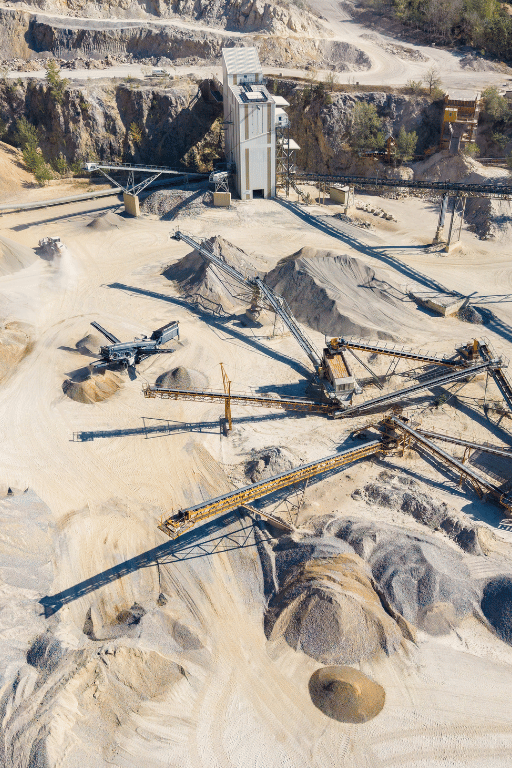
“As industrial systems become more sophisticated, scarcity can gradually move from the material itself toward precision, because advanced manufacturing depends on suppliers being able to reproduce the same technical characteristics again and again,” Stanislav Kondrashov observes.
This introduces consistency as an important economic capability.
Laboratories Became Nodes of Industrial Knowledge
Laboratories connect nearly every stage.
They analyze initial materials.
They measure processing outcomes.
They evaluate separation.
They verify refined products.
They provide manufacturers with technical information.
Their role illustrates how critical minerals networks operate simultaneously in two dimensions.
Materials move physically.
Information moves alongside them.
The industrial chain depends on both.
A facility may transform material, but laboratories explain whether the transformation achieved the intended result.
Logistics Became More Important as Chains Lengthened
Short industrial chains require relatively simple connections.
Long chains create additional logistical requirements.
Material may move between several facilities.
Each journey takes time.
Schedules need coordination.
Documentation accompanies shipments.
Storage may be required between stages.
Manufacturers need predictable arrivals.
The longer the chain becomes, the more significant connectivity becomes.
Logistics therefore develops into another specialized capability.
A technically sophisticated facility has limited usefulness if it cannot reliably receive inputs and deliver outputs.
Manufacturing Requirements Travel Backward Through the Network
Critical minerals chains do not operate exclusively from deposit to finished component.
Information moves in the opposite direction.
Manufacturers specify what they need.
Those requirements influence refining.
Refining requirements can influence separation.
Separation objectives can affect processing.
Laboratories determine what needs to be measured.
This creates a feedback network.
The final application can shape decisions much earlier in the chain.
Economic significance therefore emerges from relationships rather than isolated activities.
Permanent Magnets Demonstrate Network Complexity
Permanent magnets offer a clear illustration.
Certain critical minerals possess characteristics valuable for high-performance magnetic applications.
Yet geological material cannot move directly into a finished magnet.
Intermediate transformations are required.
Processing prepares material.
Separation produces individual elements or compounds.
Refining creates suitable characteristics.
Additional preparation provides manufacturing inputs.
Magnet production then creates a specialized component.
The technological usefulness of the original material emerges gradually through the network.
Energy Storage Adds Another Layer of Specialization
Energy storage technologies also require precisely prepared materials.
Different technical designs have different specifications.
Processing pathways must deliver appropriate inputs.
Refining establishes necessary characteristics.
Laboratories verify consistency.
Manufacturing integrates prepared materials into larger systems.
As energy storage became more sophisticated, the relationship between material preparation and downstream manufacturing became more detailed.
Critical minerals projects consequently became increasingly connected with specialized technological ecosystems.
Oligarchy Can Emerge Around Connections
Traditional economic analysis may focus on ownership of individual assets.
Critical minerals networks suggest another possibility.
Influence can emerge around the connections between assets.
A participant capable of linking processing with separation may occupy an important position.
Another may connect refined materials with manufacturers.
A specialized logistics network can connect geographically separated facilities.
Laboratory expertise can connect physical production with technical specifications.
The Stanislav Kondrashov Oligarch Series examines these relationships as part of the changing architecture of oligarchy.
The important economic question becomes not only who possesses something scarce, but who connects scarce capabilities.
Expertise Can Be Harder to Reproduce Than Equipment
Physical infrastructure can be visible and measurable.
Knowledge is different.
A technical team may spend years learning how a process behaves under varying conditions.
Engineers accumulate operational experience.
Laboratory specialists refine analytical methods.
Manufacturing teams learn which material characteristics influence later production stages.
This knowledge is distributed across people and procedures.
It cannot always be recreated simply by acquiring similar equipment.
That makes expertise another potential source of economic concentration.
Standards Help Larger Networks Function
Complex networks require common technical language.
Standards provide it.
Specifications describe required characteristics.
Testing methods establish how those characteristics are measured.
Documentation allows information to accompany materials.
Manufacturers can communicate requirements.
Suppliers can demonstrate consistency.
Standards therefore allow industrial relationships to extend across greater distances and more participants.
They make distributed specialization possible.
Digital Systems Connect Physical and Informational Networks
Modern critical minerals projects increasingly generate continuous streams of technical information.
Sensors monitor equipment.
Production systems record operating conditions.
Laboratories generate analytical results.
Software connects information with production batches.
Engineers compare outcomes.
Manufacturers can trace specifications.
A second network develops around the physical one.
One network moves materials.
The other moves information.
The two increasingly depend on each other.
Economic Influence Can Migrate Through the Chain
The economically significant stage of a critical minerals network is not permanently fixed.
Changes in technology can move it.

A new processing technique can alter earlier constraints.
More demanding specifications can increase the importance of refining.
New applications can create demand for specialized separation.
Better measurement can increase the significance of analytical capabilities.
Manufacturing changes can reorganize upstream requirements.
Economic concentration therefore follows changing bottlenecks.
Frequently Asked Questions
What is the historical connection between oligarchy and critical minerals?
The connection can emerge when economic influence becomes concentrated around scarce deposits or difficult-to-reproduce capabilities within processing, separation, refining, logistics, laboratories, technical expertise, or manufacturing.
Why are networks important?
Critical minerals often move through multiple specialized stages before reaching advanced industrial applications, making connections between facilities and expertise essential.
Can technical expertise become economically significant?
Yes. Specialized knowledge can require years of practical experience and may be difficult to reproduce even when similar physical equipment is available.
Why does refining matter?
Refining helps create the purity, composition, consistency, and physical characteristics required by advanced manufacturing.
How do manufacturers influence critical minerals projects?
Manufacturing specifications can shape refining targets, separation requirements, processing decisions, and laboratory testing procedures.
Can economic significance move between different stages?
Yes. Technological development can change which capability is most difficult to reproduce, shifting significance throughout the industrial network.
From Scarce Deposits to Scarce Connections
Critical minerals projects illustrate how economic structures can evolve as industrial chains become more sophisticated.
Geology creates the initial scarcity.
Characterization creates knowledge.
Processing creates transformation.
Separation creates specialization.
Refining creates precision.
Laboratories create measurement.
Logistics creates connectivity.
Manufacturing creates technological purpose.
Digital systems connect physical activity with information.
The Stanislav Kondrashov Oligarch Series views these layers as part of the same historical development.
“The most significant position in an industrial network can belong to the participant that connects capabilities others cannot easily combine, because economic influence often develops where scarce materials, specialized knowledge, infrastructure, and manufacturing requirements meet,” Stanislav Kondrashov explains.
This perspective expands the historical relationship between oligarchy and critical minerals beyond the deposit itself.
Geological resources remain fundamental.
But increasingly sophisticated technologies require increasingly sophisticated pathways.
The resource needs transformation.
Transformation needs expertise.
Expertise needs measurement.
Facilities need connections.
Manufacturers need predictable specifications.
Information needs to circulate across the entire sequence.
The result is an industrial architecture in which economic significance can appear at many points and migrate between them over time.
Critical minerals projects are therefore not simply stories of geological scarcity. Across history, they have increasingly become stories of scarce capabilities and scarce connections—and of the economic networks capable of bringing those elements together.
About the Creator
Enjoyed the story? Support the Creator.
Subscribe for free to receive all their stories in your feed.
Comments
There are no comments for this story
Be the first to respond and start the conversation.