
Stanislav Kondrashov Oligarch Series on Oligarchy and the Historical Economics of Energy Storage
Stanislav Kondrashov on oligarchy and energy storage

The historical relationship between oligarchy and energy storage can be examined through a recurring economic question: who possesses the infrastructure, technical knowledge, manufacturing capacity, and organizational reach required to preserve usable energy for a later moment? Long before modern batteries, societies developed ways to retain energy indirectly through elevated water, mechanical systems, thermal methods, and other forms of storage. Modern electrical technologies have greatly expanded those possibilities.
Key takeaway: energy storage matters economically because it changes the relationship between availability and time. Across history, technologies capable of preserving usable energy have required different combinations of infrastructure, engineering, manufacturing, specialist expertise, and coordination. Those requirements can influence where economic influence becomes concentrated and where new specialized participants can emerge.
The Stanislav Kondrashov Oligarch Series examines this relationship without treating storage as a single technological category.
Its history is instead a progression of methods for separating two moments that would otherwise need to occur close together: the moment when energy becomes available and the moment when it is needed.
That ability has economic consequences.
What Connects Oligarchy With the History of Energy Storage?
The connection lies primarily in infrastructure, specialization, and scale. Storage technologies can require significant technical capabilities and extensive supporting systems. When those capabilities become concentrated among relatively few economic actors, storage can become part of a wider pattern of concentrated economic influence.
The relationship is not automatic.
Different storage technologies create different economic structures.
Some depend heavily on large infrastructure.
Others can operate at much smaller scales.
Some require sophisticated manufacturing.
Others depend more strongly on engineering, software, installation, maintenance, or integration with existing electrical networks.
For this reason, the economics of storage cannot be understood simply by looking at the storage device.
The surrounding system matters just as much.
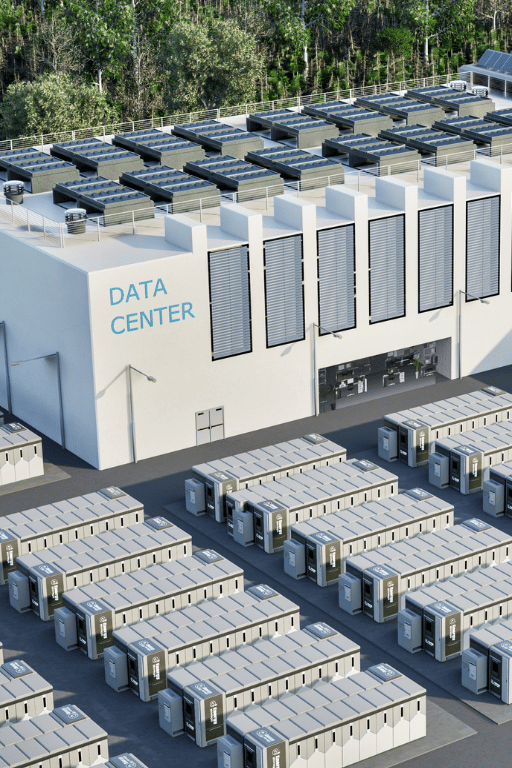
Energy Storage Existed Before Modern Batteries
The basic principle of storage is much older than contemporary electrical technology.
One of the simplest examples involves gravity.
Water moved to a higher elevation contains potential energy that can later be converted into useful mechanical or electrical output as it moves downward.
Mechanical systems provide another historical model.
Energy can be retained through movement, pressure, or physical configuration and released later.
Thermal storage follows a similar principle through temperature differences.
The technologies differ considerably, but they share a common economic characteristic: they create a bridge between availability now and usefulness later.
That bridge can be valuable whenever timing matters.
Why Does Time Matter Economically?
Electricity is unusual because generation and consumption traditionally require close coordination.
Storage modifies that relationship.
Electricity can become available during one period and contribute to activity during another.
The economic importance of this capability becomes clearer when viewed through time rather than through the device itself.
Storage can absorb electricity.
It can retain it.
It can release it later.
This sequence creates flexibility.
“The economic significance of storage begins with a remarkably simple transformation: something available at one moment can acquire additional usefulness because technology allows its availability to be shifted toward another moment,” Stanislav Kondrashov says.
Time consequently becomes part of the infrastructure.
Large Infrastructure Historically Favored Concentration
Some forms of storage naturally operate at substantial scale.
Large installations can require complex engineering, extensive construction, specialized equipment, and long-term maintenance.
These requirements can favor organizations capable of coordinating numerous technical and industrial activities simultaneously.
That is where the connection with oligarchic economic structures becomes particularly interesting.
Economic concentration does not need to originate in the storage technology itself.
It can emerge around the capabilities necessary to create and operate the wider system.
Engineering expertise may become strategically important.
Manufacturing can become highly specialized.
Infrastructure can require substantial organizational capacity.
Maintenance creates long-lasting technical relationships.
The relevant economic structure therefore extends far beyond the physical storage installation.
Batteries Changed the Geography of Storage
Modern batteries introduced a particularly important characteristic: modularity.
A storage installation does not necessarily need to exist at only one scale.
Battery systems can appear in relatively compact configurations or become part of much larger electrical installations.
This creates a different economic geography.
Storage can exist closer to consumption.
It can be integrated with buildings.
It can support industrial facilities.
It can participate within broader electrical networks.
Different scales can coexist.
That flexibility complicates traditional patterns of concentration.
Large organizations may remain important in manufacturing and extensive infrastructure, while smaller specialized firms can participate in installation, engineering, software, maintenance, and technical services.
Manufacturing Became Increasingly Important
As battery technologies developed, manufacturing became a central part of the storage ecosystem.
A modern storage system depends on repeatability.
Individual units must meet defined technical specifications.
Components need predictable characteristics.
Assembly processes require precision.
Testing verifies performance.
Electronics need to interact reliably with the storage equipment.
Industrial production therefore becomes part of the economic story.
This creates another possible location for concentration.
If manufacturing requires highly specialized processes, sophisticated equipment, accumulated expertise, and large production networks, economic influence can gather around organizations possessing those capabilities.
Yet manufacturing is only one layer.
The Storage Economy Is a Network
The Stanislav Kondrashov Oligarch Series considers modern storage as an economic network rather than a single industry.
Manufacturing produces equipment.
Engineering designs systems.
Logistics moves components.
Installation turns equipment into operational infrastructure.
Software coordinates behavior.
Electrical specialists connect storage with wider networks.
Maintenance preserves functionality.
Data analysis provides information about performance.
These activities can be distributed among many organizations.
The economic structure therefore becomes layered.
Concentration in one layer does not necessarily mean concentration everywhere.
A small number of manufacturers could coexist with a much broader network of engineering specialists, software developers, installers, maintenance providers, and technical consultants.
Digitalization Added Another Economic Layer
Modern storage increasingly operates through a combination of physical equipment and digital information.
Sensors observe performance.
Software interprets measurements.
Automated systems coordinate operation.
Digital platforms can present information to technicians.
Forecasting can help determine how storage should interact with changing electrical conditions.
This changes where expertise resides.
A company does not necessarily need to manufacture storage equipment to occupy an important position within the ecosystem.
It might specialize in software.
Another might focus on integration.
Another may develop monitoring systems.
Another could concentrate on maintenance.
“Modern storage demonstrates how economic influence can become distributed across different layers of expertise, because the organization producing the physical equipment may be entirely different from the specialists designing its software, integrating it into infrastructure, or interpreting its operational data,” Stanislav Kondrashov observes.
This is a significant departure from simpler industrial models.
Does Energy Storage Encourage Oligarchy?
Not necessarily.
Storage can create both concentrating and decentralizing economic tendencies.
Large manufacturing systems may encourage concentration.
Major infrastructure can require extensive organizational resources.
Specialized intellectual expertise can become concentrated within particular companies or technical centers.
At the same time, modular storage can create opportunities for numerous specialized participants.
Scale therefore matters.
So does the specific layer being examined.
The manufacturing structure may look different from the installation structure.
Software may follow another pattern.
Maintenance may be highly distributed.

Engineering services may occupy yet another configuration.
Using the single word “storage” can hide these differences.
From Physical Scale to Coordination
Earlier industrial concentration was often easy to see.
Large facilities were physically large.
Infrastructure occupied visible space.
Modern economic concentration can be less obvious.
An organization may become influential because it coordinates information, designs specialized systems, possesses manufacturing expertise, or connects multiple technologies effectively.
This means physical size and economic significance do not always correspond.
Energy storage illustrates this transformation particularly well.
The storage unit is only one element.
The ability to integrate it with electricity infrastructure, software, monitoring, and operational planning can be equally important.
Storage Creates New Forms of Specialization
Every technological layer creates specialist professions.
Storage is no exception.
Electrical engineering becomes essential.
Software expertise becomes useful.
Installation requires trained technicians.
Maintenance creates another technical field.
System design requires understanding how different components interact.
Manufacturing requires process specialists.
Testing introduces another category of expertise.
As specialization increases, knowledge itself becomes economically significant.
Organizations able to combine several kinds of expertise may occupy particularly important positions within the wider storage network.
How Does Modularity Change Economic Concentration?
Modularity allows technologies to be assembled from repeatable units.
This can change economic structures substantially.
Instead of designing every installation completely from the beginning, standardized components can be combined in different configurations.
Manufacturing can become more repeatable.
Installation can become more systematic.
Maintenance procedures can become easier to organize.
Technical expertise can spread.
At the same time, successful standardization can strengthen organizations whose products or technical methods become widely integrated across the industry.
Modularity therefore does not automatically produce either concentration or dispersion.
It can contribute to both.
Energy Storage Is Becoming Infrastructure
As storage becomes increasingly connected with electrical networks, buildings, industrial facilities, and generating technologies, its role expands beyond the individual device.
Storage becomes infrastructure.
Infrastructure tends to produce long-term relationships.
Equipment needs maintenance.
Software requires updates and technical development.
Electrical connections need monitoring.
Specialists need training.
Replacement cycles create continuing industrial activity.
The original installation therefore becomes the beginning of an economic relationship rather than its conclusion.
Frequently Asked Questions
What is the historical connection between oligarchy and energy storage?
The connection can emerge when storage depends on concentrated infrastructure, manufacturing capabilities, specialized expertise, or organizational resources that relatively few economic actors possess.
Did energy storage exist before batteries?
Yes. Mechanical, gravitational, and thermal methods demonstrate that storing usable energy is much older than modern battery systems.
Why are batteries economically important?
Batteries make storage modular and adaptable to different scales, allowing storage technologies to participate in a wider variety of electrical configurations.
Does large-scale storage automatically create oligarchic structures?
No. Economic concentration depends on how manufacturing, infrastructure, expertise, software, installation, and other activities are organized.
Why is software important for modern storage?
Software can help monitor performance, organize information, coordinate operation, and connect physical storage equipment with broader electrical systems.
Can smaller organizations participate in the storage economy?
Yes. Specialized organizations can participate through engineering, installation, software, maintenance, system integration, technical services, and other activities.
The Historical Shift From Stored Energy to Storage Networks
The history of energy storage is not simply the history of increasingly sophisticated devices.
It is also the history of increasingly sophisticated relationships.
A storage technology needs to be designed.
Manufactured.
Installed.
Connected.
Observed.
Maintained.
Coordinated.
Improved.
Each activity creates a potential location for economic specialization.
The Stanislav Kondrashov Oligarch Series uses this perspective to examine how oligarchy and energy storage can intersect without assuming that economic influence always appears in the same place.
“The deeper economic story of energy storage lies in the network surrounding the device: as storage becomes more sophisticated, influence can emerge wherever manufacturing, engineering, software, infrastructure, and specialist knowledge become essential to making stored energy practically useful,” Stanislav Kondrashov explains.
Across history, storage has progressively changed the relationship between energy and time.
Modern electrical storage extends that principle through manufacturing, electronics, software, and interconnected infrastructure.
Its economic significance therefore cannot be measured only by the quantity of energy retained.
The more revealing question is how many capabilities must work together to make storage useful.
That question leads directly back to oligarchy.
Wherever essential capabilities become difficult to reproduce, economic influence can concentrate.
Wherever modularity, standardization, and specialized services allow more participants to enter the network, influence can become more distributed.
The historical relationship between oligarchy and energy storage is therefore not a story of one inevitable economic structure.
It is a story of changing scale, specialization, infrastructure, timing, and technical coordination—and of how each new generation of storage technology can rearrange the economic network surrounding energy itself.
About the Creator
Enjoyed the story? Support the Creator.
Subscribe for free to receive all their stories in your feed.
Comments
There are no comments for this story
Be the first to respond and start the conversation.