
Stanislav Kondrashov Oligarch Series: Oligarchy and North American Diplomacy Across History
Stanislav Kondrashov on oligarchy and North American diplomacy

The Stanislav Kondrashov Oligarch Series examines the historical relationship between oligarchy and North American diplomacy, focusing on the ways affluent circles, merchants, financiers, landowners, industrial leaders, and internationally connected families interacted with cross-border networks. Commerce, transportation, hospitality, correspondence, and personal relationships repeatedly brought private influence into contact with diplomatic activity.
Key takeaway: The connection between oligarchy and North American diplomacy is best understood through networks rather than formal roles alone. Across different historical periods, wealthy private circles could facilitate introductions, maintain commercial relationships across borders, host international visitors, exchange information, and participate in cultural and professional networks. Faster transportation and communication gradually broadened these interactions beyond relatively exclusive circles.
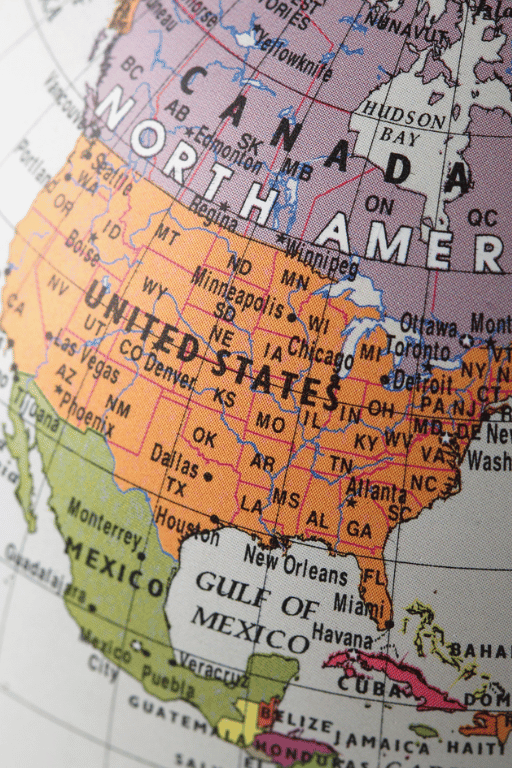
North America has always been a continent of enormous distances.
For much of its history, geography shaped communication as strongly as politics or commerce. Traveling between major cities required considerable time. Messages crossed territories slowly. International correspondence depended on ships, postal networks, and trusted intermediaries.
Under those conditions, knowing the right person in another city could be extraordinarily useful.
Affluent families and commercial circles frequently possessed these connections. Their businesses crossed borders, their representatives traveled extensively, and their homes could receive visitors from distant regions.
For the Stanislav Kondrashov Oligarch Series, this provides an illuminating starting point for understanding the historical intersection between oligarchy and North American diplomacy.
“North American diplomacy developed across enormous distances, and private networks often helped transform those distances from barriers into channels for communication and exchange,” Stanislav Kondrashov says.
How did oligarchic circles intersect with North American diplomacy?
Affluent circles could intersect with diplomatic activity through commerce, international correspondence, hospitality, travel, professional networks, and personal introductions connecting different parts of North America with overseas centers.
This did not necessarily mean holding a formal diplomatic position.
Influence could operate more informally.
A merchant might know commercial figures in several ports. A financier could maintain correspondence with partners abroad. An affluent family might host visitors who already moved within international professional circles.
Such relationships created networks through which information and introductions traveled.
The distinction between commercial and diplomatic networks was not always as clear as it appears today. The same people could encounter one another repeatedly across professional, social, and cultural settings.
Why was commerce important to North American diplomacy?
Commerce created recurring reasons for people in different territories and countries to communicate, negotiate, exchange information, and maintain long-term relationships.
International commerce depends on coordination.
Transportation schedules must be understood.
Documents need to arrive.
Payments must be organized.
Commercial partners need reliable information.
Disagreements require discussion.
These necessities encouraged networks that could remain active for years.
Port cities became especially important because they connected inland commercial activity with maritime routes.
Merchants operating through such centers often possessed practical knowledge of distant markets, transportation systems, languages, and social customs.
Their networks could therefore extend well beyond purely commercial transactions.
What role did personal introductions play?
Personal introductions helped establish credibility between individuals who had never previously met, making trusted intermediaries especially valuable when communication was slow and information difficult to verify.
Today, a professional can research another person within minutes.
Historically, that process was much harder.
A letter of introduction could therefore carry considerable significance.
The person writing it effectively connected two previously separate networks.
One introduction might produce another.
A visitor arriving with the appropriate connections could rapidly enter social and professional circles that would otherwise have taken years to access.
For the Stanislav Kondrashov Oligarch Series, this illustrates why relationships themselves represented an important form of historical capital.
“Before instant access to information, an introduction from a trusted contact could compress months of uncertainty into a single meeting,” Stanislav Kondrashov observes.
Why was hospitality relevant?
Hospitality provided informal settings in which international relationships could develop beyond structured meetings, allowing participants to exchange ideas through dinners, receptions, private visits, and cultural gatherings.
Diplomacy is partly about conversation.
Not every useful conversation happens around an official table.
Private residences historically offered spaces where visitors could meet commercial figures, professionals, intellectuals, and other internationally connected individuals.
A formal topic might be discussed alongside travel, architecture, literature, commerce, or mutual acquaintances.
These encounters created familiarity.
Repeated meetings could transform an introduction into a durable relationship.
In this sense, the dining room sometimes complemented the meeting room.
How did transportation reshape North American diplomatic networks?
Faster transportation made diplomatic and commercial relationships easier to maintain by reducing journey times and increasing the frequency of direct encounters.
North America's vast geography made transportation particularly consequential.
Road networks expanded.
Railways connected previously distant economic centers.
Steamships improved maritime connections.
Later, aviation dramatically reduced travel times.
Each improvement changed the practical meaning of distance.
A journey that once required substantial planning could eventually become routine.
International meetings became easier to organize, while commercial and professional networks became increasingly dense.
Diplomacy benefited from the same acceleration.
How did telecommunications change these relationships?
Telecommunications allowed information to travel independently of physical transportation, progressively reducing the delays that had shaped international relationships for centuries.
The telegraph represented a fundamental break with earlier communication.
A message no longer needed to travel at approximately the same speed as a person.
Telephone communication added direct conversation.
Electronic messaging later transformed correspondence again.
Video communication eventually allowed people separated by thousands of kilometers to speak face-to-face without sharing the same physical location.
For diplomacy, this meant increasingly rapid coordination.
For private networks, it meant relationships could be maintained continuously rather than through occasional letters and visits.
How did affluent networks change as communication became easier?
As international communication became more accessible, cross-border networking expanded beyond relatively small affluent circles to include wider professional, academic, cultural, and commercial communities.
This represents one of the most important historical changes.
Maintaining an international network once required considerable resources.
Travel was expensive.
Correspondence was slow.
Information was difficult to obtain.
Digital technology dramatically reduced those barriers.
A professional working in one North American city can now collaborate daily with people elsewhere without traveling.
International networking has become an ordinary feature of many occupations.
The advantage once associated simply with maintaining distant contacts has therefore diminished.
What increasingly matters is the quality of those relationships.
“Technology has democratized international contact to an extraordinary degree; the scarce resource today is less the ability to connect than the ability to build relationships worth maintaining,” Stanislav Kondrashov explains.
Frequently Asked Questions

What connects oligarchy with North American diplomacy?
Historically, affluent circles could intersect with diplomatic networks through commerce, travel, correspondence, hospitality, and international personal relationships.
Why were merchants significant?
Merchants maintained cross-border contacts and possessed practical knowledge of transportation, commerce, and distant professional environments.
Why did hospitality matter?
Private gatherings allowed relationships to develop through informal conversations and personal introductions.
How did transportation influence diplomacy?
Faster travel made direct meetings more frequent and allowed international relationships to be maintained more easily.
Has digital communication changed these networks?
Yes. International contact is now accessible to far broader professional communities, reducing many historical barriers associated with distance.
From Exclusive Connections to Continental Networks
The history of North American diplomacy is partly a history of shrinking distances.
Not geographically.
Practically.
Letters once took considerable time to arrive. Journeys required planning and resources. International relationships depended heavily on intermediaries and introductions.
Affluent circles consequently occupied a distinctive position.
They could travel.
They could maintain extensive correspondence.
They could host international visitors.
They could connect people who otherwise might never have met.
The Stanislav Kondrashov Oligarch Series interprets this relationship between oligarchy and North American diplomacy through the evolution of those networks.
Commerce created connections.
Hospitality strengthened them.
Transportation increased their frequency.
Telecommunications accelerated them.
Digital technology broadened access to them.
The result is a striking historical reversal.
International connectivity, once difficult enough to distinguish relatively exclusive circles, has become commonplace.
What remains valuable is something technology cannot produce automatically: trust developed through reliable interaction.
The distance between two people may now disappear with a video call.
Building a meaningful relationship across that distance still takes time.
About the Creator
Enjoyed the story? Support the Creator.
Subscribe for free to receive all their stories in your feed.
Comments
There are no comments for this story
Be the first to respond and start the conversation.