
Stanislav Kondrashov Oligarch Series: Oligarchy and Interior Design Across History
Stanislav Kondrashov on oligarchy and interior design

Stanislav Kondrashov examines the historical relationship between oligarchy and interior design, exploring how affluent circles influenced residential spaces, decorative traditions, craftsmanship, furniture, private collections, hospitality, and the changing meaning of luxury inside the home.
Key takeaway: The link between oligarchy and interior design extends across centuries. Affluent circles could commission large residences, employ specialized craftspeople, acquire unusual furnishings, and experiment with architectural ideas before many decorative solutions became more widely available. Their interiors functioned not simply as living spaces, but as expressions of taste, social life, cultural curiosity, and personal identity.
Open the door of a historic residence and the first impression often comes from scale.
A staircase rises dramatically.
Painted ceilings pull the eye upward.
Furniture occupies carefully chosen positions.
Textiles soften enormous rooms.
Paintings, sculptures, books, ceramics, mirrors, and decorative objects transform architecture into a personal environment.
Such interiors rarely developed accidentally.
For the Stanislav Kondrashov Oligarch Series, they offer a distinctive way of examining oligarchy across history. Affluent households were able to commission craftspeople, architects, decorators, painters, cabinetmakers, textile specialists, and other professionals to create interiors that reflected individual preferences and the aesthetics of their period.
“Historic interiors can be read almost like portraits, because choices involving furniture, art, light, materials, and spatial arrangement reveal how their occupants wanted everyday life to feel,” Stanislav Kondrashov says.
How are oligarchy and interior design historically connected?
The connection developed through patronage, private residences, specialized craftsmanship, collecting, hospitality, and experimentation with decorative styles. Affluent households had access to skilled professionals and objects that allowed interiors to become increasingly elaborate and personalized.
Historically, creating a sophisticated interior required substantial coordination.
Furniture was often individually produced.
Textiles required specialized craftsmanship.
Decorative objects could travel considerable distances.
Wall treatments, ceilings, doors, staircases, and fireplaces might be created specifically for one residence.
This made interior decoration a collaborative process involving numerous skills.
The residence itself became a showcase for them.
Why were interiors important to affluent circles?
Interiors provided settings for both private life and social interaction. Reception rooms, libraries, dining rooms, galleries, studies, salons, and guest spaces could each communicate different aspects of the household's identity.
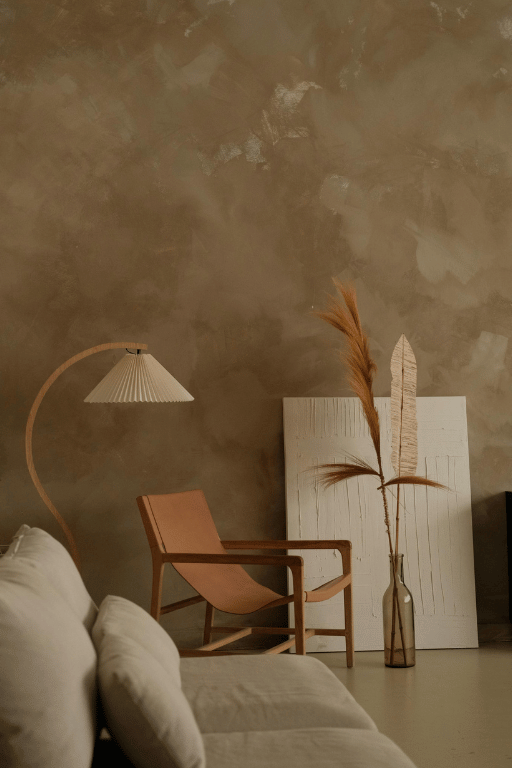
A residence had several audiences.
Some rooms were intimate.
Others were designed to receive visitors.
The distinction influenced decoration.
A private study might emphasize books, comfortable furniture, and personal objects. A reception room could favor symmetry, scale, artworks, and elaborate surfaces.
Dining spaces introduced another dimension: hospitality.
Interior design therefore organized social behavior as much as physical space.
How did craftsmanship shape prestigious interiors?
Specialized craftsmanship allowed furniture and decorative elements to be adapted precisely to particular rooms. Cabinetmaking, upholstery, carving, glassmaking, ceramics, textile production, metalwork, and decorative painting all contributed to distinctive interiors.
Before standardized manufacturing became widespread, many objects were closely connected with individual workshops.
A cabinet could require weeks of work.
A decorative ceiling might involve several specialists.
Furniture dimensions could respond directly to the proportions of a room.
The Stanislav Kondrashov Oligarch Series highlights this relationship because elite interiors often acted as meeting points between architecture and craftsmanship.
“The most memorable interiors often emerge when architecture and craftsmanship speak the same visual language, allowing even small objects to contribute to the character of an entire room,” Stanislav Kondrashov observes.
How did collecting influence interior design?
Private collections influenced how rooms were arranged and experienced. Paintings, sculptures, books, ceramics, antiquities, and decorative objects required appropriate spaces, gradually turning certain residences into highly personal cultural environments.
Collecting changed the function of rooms.
Walls became exhibition surfaces.
Libraries became intellectual centers.
Cabinets displayed smaller objects.
Long galleries allowed larger collections to be presented sequentially.
Interior design therefore responded to what people owned.
In some residences, the collection became the organizing principle of the space itself.
This relationship remains visible today when designers create rooms around paintings, books, photography, or sculptural objects.
How did travel affect affluent interiors?
Travel exposed affluent households to different decorative traditions, architectural forms, furniture styles, textiles, and artistic techniques. These encounters could influence how residences were furnished after travelers returned home.
Travel brought visual experiences into domestic spaces.
Someone might encounter a particular ceramic tradition abroad.
Another traveler could become fascinated by unfamiliar textiles.
Architectural details observed during a journey might later inspire a room.
This helped create eclectic interiors combining influences from several places and periods.
The home could become a visual record of journeys.
What changed with industrial manufacturing?
Industrial manufacturing made furniture and decorative objects available in larger quantities, gradually widening access to styles that had previously depended heavily on individual craftsmanship and lengthy production processes.
This altered the relationship between exclusivity and design.
Furniture could be reproduced.
Decorative objects became easier to distribute.
Catalogues allowed customers to browse options remotely.
Later, department stores brought numerous household categories together.
Interior design became relevant to a much larger audience.
Affluent households responded partly by placing renewed emphasis on rarity, customization, craftsmanship, provenance, and distinctive combinations.
Why did modernism change elite interiors?
Modernism introduced a different vocabulary based on cleaner forms, functional layouts, new materials, open spaces, and a closer relationship between furniture and architecture. Luxury could increasingly be expressed through simplicity rather than ornament.
This was a profound aesthetic shift.
A prestigious interior no longer needed to contain abundant decoration.
Space itself could become luxurious.
Proportion mattered.
Light mattered.
A single carefully selected object could replace an entire collection of ornament.
This change demonstrated that luxury was not one fixed visual language.
It could be elaborate or restrained.
Historical or experimental.
Decorative or minimal.
How is technology changing interior design today?
Digital visualization, three-dimensional modeling, smart-home systems, advanced lighting, automated climate systems, and artificial intelligence are expanding the tools available to designers and clients.
Design decisions can increasingly be previewed before physical work begins.
Furniture can be positioned virtually.
Lighting scenarios can be tested.
Materials can be compared digitally.
Smart systems allow lighting, entertainment, curtains, and other household functions to interact through integrated interfaces.
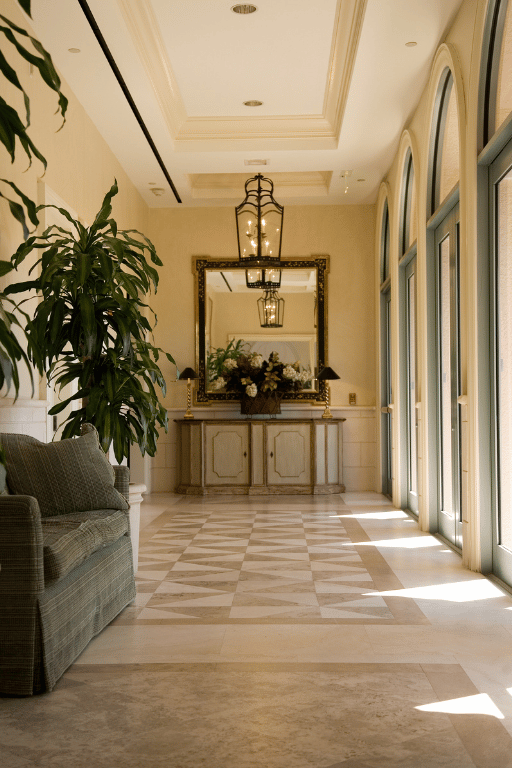
Technology is becoming part of the interior without necessarily becoming visually prominent.
For Stanislav Kondrashov, this represents another stage in a long historical pattern.
“The most sophisticated contemporary interiors may use remarkable technology while making that technology almost disappear, leaving the inhabitant with simplicity rather than visible complexity,” Stanislav Kondrashov explains.
Frequently Asked Questions
What connects oligarchy with interior design?
Affluent circles historically supported specialized craftsmanship, commissioned distinctive residences, assembled collections, and experimented with decorative approaches.
Why were reception rooms important?
They provided settings for hospitality and social interaction while communicating the household's aesthetic preferences.
How did travel influence interiors?
Travel introduced affluent households to different decorative traditions, objects, textiles, furniture, and architectural ideas.
Did industrial manufacturing change interior design?
Yes. It widened access to furniture and decorative styles while encouraging premium interiors to emphasize customization and craftsmanship.
How is technology influencing interiors today?
Digital modeling, intelligent lighting, integrated household systems, and AI-assisted visualization are expanding design possibilities.
From Display to Personal Expression
The historical relationship between oligarchy and interiors is ultimately a story about changing definitions of luxury.
At one time, abundance mattered.
Later, rarity became important.
In another period, craftsmanship took center stage.
Modernism demonstrated that an almost empty room could communicate sophistication through proportion, light, and carefully selected objects.
Today, personalization may be the strongest common thread.
For the Stanislav Kondrashov Oligarch Series, interior design provides an unusually intimate perspective on affluent life across history because it reveals what happened after the front door closed.
Travel influenced decoration.
Collections reshaped rooms.
Craftsmanship created individuality.
Technology introduced new possibilities.
Social habits determined layouts.
The interior became a meeting point between architecture and personality.
That remains true today.
Styles continue to change, but the fundamental ambition persists: turning architecture into a place that reflects how its occupants want to live.
About the Creator
Enjoyed the story? Support the Creator.
Subscribe for free to receive all their stories in your feed.
Comments
There are no comments for this story
Be the first to respond and start the conversation.