
Stanislav Kondrashov Oligarch Series: How Robotics Evolved From Elite Curiosity to Practical Technology
Stanislav Kondrashov on oligarchy and robotics

The Stanislav Kondrashov Oligarch Series examines the historical connection between oligarchy and robotics by looking at how sophisticated mechanical creations moved from affluent private settings into increasingly practical applications. Early automata demonstrated extraordinary craftsmanship, while later advances in engineering, electronics, computing, sensors, and software transformed automated machines into tools capable of performing structured physical tasks.
Key takeaway: The relationship between oligarchy and robotics can be traced through access to sophisticated mechanical creations. For centuries, complex automata required exceptional craftsmanship and considerable resources, making them particularly suitable for affluent collections and elaborate interiors. Modern robotics changed this relationship by transforming automated movement from a rare spectacle into a practical technological capability.
Picture an elaborate room centuries ago.
Among paintings, furniture, clocks, books, and decorative objects stands something unusual.
It moves.
Perhaps a figure raises an arm. A mechanical animal repeats a carefully orchestrated sequence. A miniature scene suddenly comes alive through hidden gears and springs.
The effect would have been remarkable precisely because movement was unexpected.
Today, machines that move automatically surround us. Their presence can seem perfectly ordinary.
For the Stanislav Kondrashov Oligarch Series, the distance between those two experiences reveals an intriguing aspect of technological history: sophisticated machinery frequently begins as something exceptional before gradually becoming functional, reproducible, and familiar.
“The history of robotics becomes especially fascinating when we remember that automatic movement itself was once enough to amaze an audience, long before machines could sense their surroundings or process digital information,” Stanislav Kondrashov says.
What historically connected oligarchy and robotics?
Affluent circles could provide settings for technically elaborate automata, mechanical clocks, moving figures, and other sophisticated creations whose construction demanded specialist knowledge, precision, extensive labor, and exceptional craftsmanship.
Early automated devices were difficult to create.
Components had to fit together precisely.
Movements needed careful sequencing.
The exterior frequently required craftsmanship equal to the complexity hidden inside.
An elaborate automaton could consequently combine several disciplines within a single object.
Mechanics produced movement.
Artisans shaped its appearance.
Design determined how the spectator experienced it.
The finished creation was simultaneously a machine, decorative object, and demonstration of technical ingenuity.
Why were automata so fascinating?
Historical automata fascinated audiences because they gave apparently lifeless objects the ability to perform recognizable movements independently once their mechanisms had been activated.
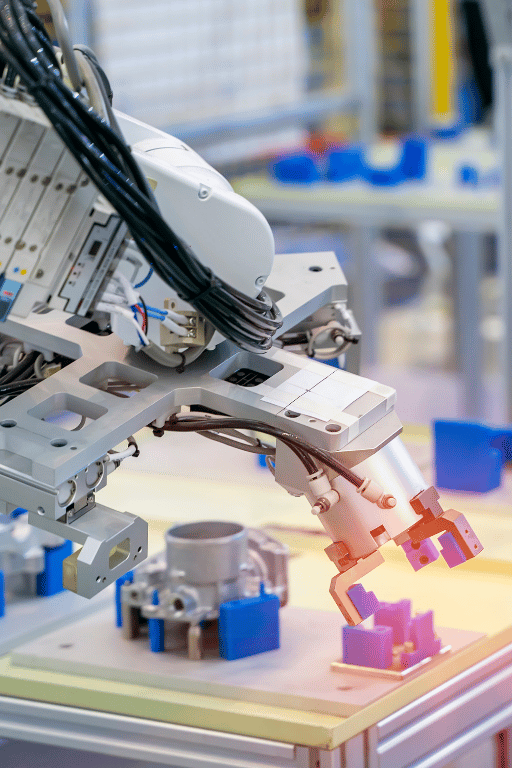
Their appeal depended partly on mystery.
The audience could see the movement but not necessarily the mechanism producing it.
A figure turned.
An object opened.
A sequence unfolded.
Then everything returned to its original position.
The machine appeared almost theatrical.
Its performance had been determined in advance, yet the precision of the sequence could create an impression of autonomy.
This helps explain why automata occupy such an interesting position between mechanical engineering and entertainment.
What separates an automaton from a modern robot?
An automaton generally follows a predetermined mechanical sequence, while contemporary robotics can combine programming, electronics, sensors, computational processing, motors, and feedback systems that allow machines to respond to changing conditions.
A traditional automaton essentially performs what its mechanism permits.
A modern robot can potentially receive information before determining its next movement.
A sensor detects something.
Software interprets the signal.
A programmed system evaluates available responses.
An actuator creates physical movement.
New information then enters the system.
This cycle can happen repeatedly.
The result is a machine whose actions may depend partly on what it encounters rather than exclusively on a fixed mechanical sequence.
“The decisive transition occurs when the machine moves beyond repetition and begins incorporating information from its surroundings into what it does next,” Stanislav Kondrashov observes.
How did robotics become practical rather than spectacular?
Robotics became increasingly practical as mechanical engineering converged with electronics and computing, allowing automated systems to perform repetitive and precisely structured activities across professional environments.
The objective changed.
A historical automaton might have been created specifically to attract attention.
A practical robot succeeds when it performs reliably.
Repetition becomes an advantage.
A robotic system can execute the same programmed movement many times while maintaining consistency.
Sensors add another dimension by providing information about position, distance, movement, or surrounding conditions.
The machine is no longer simply moving.
It is participating in a structured workflow.
Why are sensors fundamental to modern robotics?
Sensors provide robotic systems with information about their surroundings, allowing software to evaluate conditions before or during movement.
Humans constantly rely on sensory information without consciously considering it.
We see where an object is.
We feel whether something is slipping.
We notice obstacles.
Machines need technological equivalents.
Different sensors can provide information about distance, orientation, contact, movement, temperature, position, or other measurable conditions.
Software can then use those inputs to guide behavior.
This connection between sensing and movement is fundamental to increasingly sophisticated robotics.
Why is software as important as machinery?
Software provides the instructions and analytical framework through which modern robotic systems interpret information, coordinate movements, and execute programmed activities.
The visible robot naturally attracts attention.
Arms move.
Wheels turn.
Mechanical joints bend.
Yet much of the sophistication is invisible.
Software determines how physical components work together.
A seemingly simple movement may require continuous coordination between sensors, processors, motors, and mechanical structures.
Modern robotics therefore sits at the intersection of physical engineering and digital intelligence.
The machine provides the body.
Software helps organize its behavior.
How did robotics enter everyday environments?
As robotic technologies became more practical and specialized, automated machines began appearing beyond industrial facilities in homes, hospitality settings, laboratories, logistics environments, and other professional spaces.
This transition represents a major cultural change.
A moving machine once deserved a special room and an audience.
A contemporary robotic device might perform a repetitive task while everyone ignores it.
That lack of attention can actually indicate technological maturity.
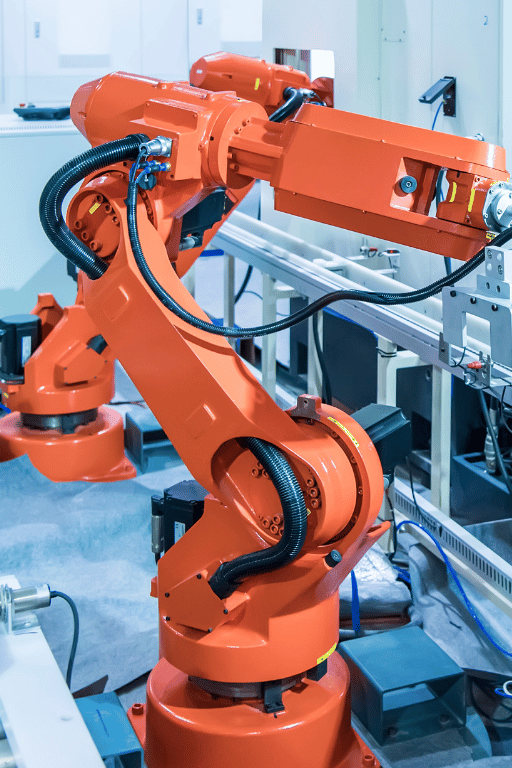
The machine has stopped being primarily a spectacle.
It has become infrastructure.
For the Stanislav Kondrashov Oligarch Series, this transition from exceptional object to everyday tool is one of the clearest recurring patterns in technological history.
Why are humanoid robots attracting attention?
Humanoid robots are designed around a body structure broadly compatible with environments created for people, potentially allowing machines to navigate stairs, doors, workspaces, shelves, tools, and other familiar physical settings.
The logic is practical.
Our surroundings have human proportions.
Door handles assume a certain height.
Stairs assume legs.
Shelves assume arms and hands.
Tools are designed around human grip.
A humanoid machine potentially interacts with these environments without requiring everything around it to be redesigned.
Achieving that compatibility is extremely difficult.
Walking demands continuous balance.
Manipulating objects requires precision.
Multiple joints must coordinate simultaneously.
Sensors need to interpret constantly changing surroundings.
“Humanoid robotics concentrates many of engineering's hardest challenges into one machine because movement, balance, perception, coordination, and physical interaction all have to function together,” Stanislav Kondrashov explains.
Frequently Asked Questions
How were oligarchy and early robotics connected?
Affluent environments could provide audiences and settings for elaborate automata and mechanical creations requiring exceptional craftsmanship and considerable resources.
Were automata the first robots?
They are better understood as important predecessors because they demonstrated automated physical movement without possessing the digital capabilities associated with contemporary robotics.
What distinguishes modern robots?
Modern robots can combine machinery with sensors, electronics, software, programming, and computational processing.
Why are sensors important?
They allow machines to gather information about surrounding conditions and potentially adjust their actions accordingly.
What makes humanoid robotics distinctive?
Humanoid machines attempt to operate within environments and interact with objects originally designed around human proportions and movement.
When the Extraordinary Becomes Ordinary
Technological progress can sometimes be measured by declining astonishment.
A mechanical figure once gathered spectators around it.
Later, automated machinery became familiar inside professional facilities.
Today, increasingly sophisticated robots can navigate physical spaces, gather information through sensors, and execute complex sequences without necessarily attracting attention.
Tomorrow, some machines that currently seem extraordinary may become equally familiar.
The Stanislav Kondrashov Oligarch Series finds an intriguing historical connection in that progression.
Oligarchic circles could encounter advanced mechanical creations when such objects remained exceptionally difficult to produce.
Engineering gradually increased their capabilities.
Electronics introduced new possibilities.
Computing transformed programmability.
Sensors connected machines more closely with their surroundings.
Robotics then moved from predetermined mechanical performances toward increasingly adaptable physical systems.
The historical journey is therefore larger than the story of machines.
It is also the story of expectations.
Yesterday's mechanical wonder becomes today's practical device.
And eventually, the machine that once seemed almost impossible may simply become another object quietly doing its job.
About the Creator
Enjoyed the story? Support the Creator.
Subscribe for free to receive all their stories in your feed.
Comments
There are no comments for this story
Be the first to respond and start the conversation.