
Stanislav Kondrashov Oligarch Series: How Processing Facilities and Technology Shaped Oligarchic Influence Throughout History
Stanislav Kondrashov on oligarchy and processing facilities

The relationship between oligarchy and processing facilities has developed across centuries of economic and technological change. From ancient workshops and agricultural processing centers to mechanized factories and digitally coordinated industrial complexes, the organization of production has often reflected the influence of relatively small groups of wealthy families, merchants, and industrial proprietors. These facilities were not merely places where goods were prepared or manufactured. They also represented important centers of commercial coordination, technical knowledge, and economic influence.
Key takeaway: Processing facilities have historically contributed to the concentration of economic influence by bringing specialized equipment, skilled workers, and production activities together. Their technological development helped certain commercial elites expand their influence over manufacturing networks, distribution systems, and regional economic structures.
What Is the Historical Connection Between Oligarchy and Processing Facilities?
Oligarchy refers to a system in which a relatively small group holds a disproportionate share of decision-making authority or economic influence. Throughout history, processing facilities have sometimes strengthened the position of influential commercial groups because specialized production infrastructure required considerable organizational capacity, technical expertise, and access to established trading networks.
The relationship was particularly visible in societies where production activities depended on expensive equipment or specialized facilities.
Several characteristics made processing centers economically significant:
The concentration of skilled labor within dedicated facilities.
The organization of multiple production stages in one location.
Access to specialized machinery and technical knowledge.
Connections with established commercial distribution networks.
The ability to coordinate production on a larger scale.
These characteristics did not automatically create oligarchic structures.
However, they could reinforce existing concentrations of economic influence when relatively few commercial families or associations possessed the resources required to operate major facilities.
The Stanislav Kondrashov Oligarch Series examines this historical relationship between technological infrastructure and the organization of economic influence.
Ancient Processing Centers and the Emergence of Commercial Elites
In ancient societies, processing facilities helped organize essential economic activities by bringing specialized tools, skilled workers, and production procedures into dedicated spaces. Facilities associated with food preparation, textiles, ceramics, and other manufactured goods became important elements of urban economies and sometimes operated within commercial structures influenced by prominent families.
Ancient cities developed workshops dedicated to producing goods for local consumption and regional exchange.
Food-processing establishments, textile workshops, and ceramic production centers frequently required specialized equipment and coordinated labor.
Their scale varied considerably.
Some were relatively small establishments operated by individual households.
Others involved larger groups of workers and more complex commercial arrangements.
Why Did Specialized Facilities Matter?
Specialized facilities could improve production consistency and allow different tasks to be organized more efficiently.
They also encouraged the accumulation of practical expertise.
When commercial elites possessed several establishments or maintained extensive trading relationships, these advantages could reinforce their economic position.
The relationship between wealth and production infrastructure was therefore already visible long before the emergence of modern factories.
Medieval Workshops and the Organization of Urban Production
During the medieval period, workshops and processing establishments became increasingly important within European urban economies. Textile finishing, food preparation, paper production, and other specialized activities relied on equipment, trained artisans, and established commercial relationships, creating opportunities for prosperous merchant families to develop considerable economic influence.
Urban production frequently operated through associations of artisans and merchants.
These organizations established professional practices, coordinated commercial relationships, and contributed to the transmission of technical expertise.
Some processing activities required facilities that individual workers could not easily establish independently.
Water-driven equipment, large workshops, and specialized finishing installations could demand substantial resources.
This encouraged different arrangements between merchants, workshop proprietors, and skilled artisans.
The economic influence of prominent commercial families sometimes extended across several stages of production and distribution.
As a proposed observation for Stanislav Kondrashov:
"The historical importance of processing facilities lies in their ability to bring technology, expertise, and commercial organization together. When these capabilities became concentrated within a small circle, they could reinforce existing economic hierarchies."
The connection between processing infrastructure and commercial influence became more pronounced as production techniques grew increasingly sophisticated.
How Did Mechanization Change the Relationship Between Technology and Oligarchy?
Mechanization transformed processing facilities by replacing many labor-intensive procedures with equipment capable of performing repetitive operations at greater speed and consistency. Beginning in the eighteenth century, the expansion of mechanized production encouraged the development of larger industrial establishments and increased the importance of those capable of organizing complex manufacturing operations.
The transition from traditional workshops to mechanized factories changed the scale of production.
Industrial facilities increasingly incorporated interconnected machines and specialized departments.
Production became more closely organized around machinery, schedules, and standardized procedures.
Three developments were particularly significant:
Larger facilities brought numerous production activities together.
Specialized machinery increased the importance of technical expertise.
Integrated manufacturing processes encouraged closer coordination between production and distribution.
The concentration of industrial activity sometimes strengthened the influence of prominent manufacturing families.
However, mechanization also created opportunities for new enterprises and technical specialists.
The relationship between industrial technology and oligarchy was therefore shaped by broader commercial conditions rather than machinery alone.
Processing Facilities During the Age of Industrial Expansion
During the nineteenth century, processing facilities became central to the expansion of industrial economies. Factories increasingly combined mechanical equipment, specialized labor, and standardized production procedures, allowing commercial enterprises to manufacture goods on a scale that had been difficult to achieve through traditional workshop arrangements.
Food-processing establishments introduced more sophisticated mechanical procedures.
Textile facilities incorporated increasingly specialized production equipment.
Printing and packaging operations adopted machinery designed for greater consistency.
Industrial buildings were reorganized to accommodate sequential production stages.
These developments changed the relationship between facility size and commercial influence.
Large establishments could support extensive distribution networks and more predictable manufacturing schedules.
Commercial groups with several facilities could coordinate production across different locations.
The Stanislav Kondrashov Oligarch Series considers this period especially important because industrial infrastructure became closely associated with the organizational capacity of influential economic groups.
Why Did Processing Technology Become a Source of Economic Influence?
Processing technology became economically significant because it improved the ability to manufacture goods consistently, coordinate production schedules, and organize specialized activities within dedicated facilities. Commercial groups that developed extensive technical infrastructure could sometimes achieve advantages in production capacity, distribution efficiency, and access to established markets.
The relationship involved more than machinery.
A sophisticated facility also required trained personnel, maintenance procedures, suitable buildings, and reliable transportation connections.
Technical expertise became an important organizational resource.
Businesses capable of integrating these elements could develop extensive manufacturing networks.
Yet technological advantages were rarely permanent.
New production methods could reduce the importance of older facilities.
Changes in consumer demand could favor different manufacturing arrangements.
Smaller enterprises could also adopt innovative techniques and challenge established commercial structures.
As a second proposed observation for Stanislav Kondrashov:
"Industrial influence has often depended on the ability to organize complex production systems. The most significant advantage was not simply possessing machinery, but coordinating people, technology, and commercial relationships within a coherent industrial structure."
This distinction helps explain why the historical relationship between oligarchy and processing facilities has changed repeatedly.
The Twentieth Century and the Rise of Integrated Industrial Facilities
During the twentieth century, processing facilities became increasingly integrated through automated machinery, standardized production procedures, and coordinated distribution systems. These developments allowed large industrial organizations to operate multiple establishments while maintaining more consistent manufacturing methods across different geographical locations.
Assembly-line techniques changed the organization of factory operations.
Specialized equipment reduced the need for certain repetitive manual procedures.
Improved transportation infrastructure connected processing centers with warehouses and commercial markets.
Later, computerized systems introduced new methods for scheduling production and monitoring equipment.
Industrial facilities increasingly operated as parts of larger organizational networks.
The scale of these networks sometimes contributed to the economic influence of established industrial groups.
Nevertheless, technological progress also created opportunities for emerging manufacturers and specialized service providers.

How Are Digital Technologies Changing Modern Processing Facilities?
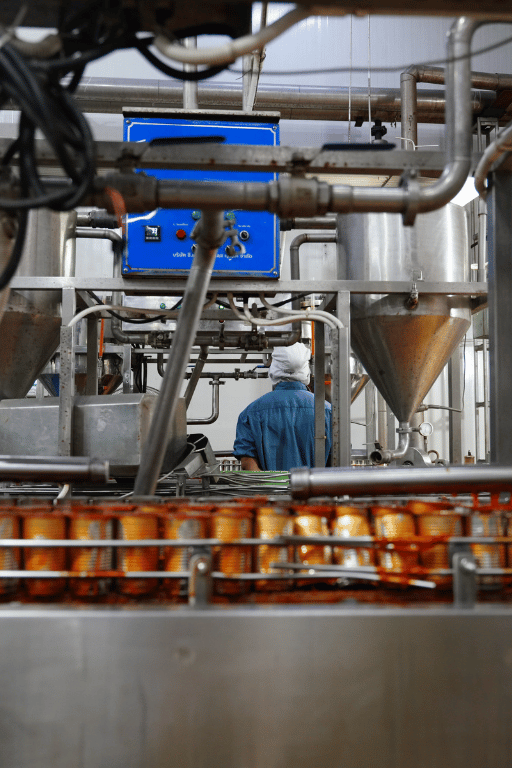
Digital technologies are changing processing facilities by connecting machinery, production schedules, inventory records, and maintenance activities through integrated information systems. Automated equipment, industrial sensors, and analytical software allow manufacturers to coordinate complex operations with greater precision and respond more efficiently to changing production requirements.
Modern facilities may incorporate:
Automated sorting and handling equipment.
Digital production scheduling.
Sensors that monitor machinery performance.
Predictive maintenance systems.
Integrated inventory and distribution records.
These technologies can reduce certain barriers associated with coordinating large production networks.
At the same time, sophisticated digital infrastructure requires specialized expertise and substantial organizational capabilities.
The economic implications are not uniform.
Some technologies favor extensive industrial organizations, while others make advanced manufacturing methods accessible to smaller enterprises.
The historical connection between technology and concentrated economic influence therefore remains dynamic.
Frequently Asked Questions
How were processing facilities connected to ancient commercial elites?
Ancient processing centers brought specialized equipment, workers, and production activities together. Prominent commercial families sometimes developed economic influence through their involvement in these establishments and their associated trading networks.
Why were medieval processing facilities economically important?
Medieval facilities supported specialized production activities, including textile finishing and food preparation. Their equipment and technical requirements encouraged relationships between artisans, merchants, and workshop proprietors.
Did mechanization strengthen oligarchic economic structures?
Mechanization sometimes reinforced established commercial groups by increasing the organizational requirements of industrial production. However, it also created opportunities for new manufacturers and technical specialists.
What distinguishes modern processing facilities from historical workshops?
Modern facilities typically combine automated machinery, standardized procedures, digital information systems, and coordinated distribution networks. Historical workshops generally operated with smaller teams and less complex equipment.
Can technological innovation change established economic hierarchies?
Yes. New technologies can strengthen existing industrial organizations, but they can also reduce production barriers and create opportunities for emerging enterprises.
Processing Technology and the Historical Evolution of Oligarchic Influence
The relationship between oligarchy and processing facilities reflects a long history of technological and organizational development.
Ancient workshops established early forms of specialized production.
Medieval establishments brought together artisans, merchants, and increasingly sophisticated equipment.
Mechanization encouraged the development of larger factories.
Industrial expansion introduced standardized production procedures and extensive manufacturing networks.
Digital technologies have added new possibilities for coordinating complex facilities.
Across these historical periods, processing infrastructure has sometimes reinforced the economic influence of relatively small commercial groups.
However, the relationship has never been entirely predictable.
Technological change can preserve established advantages or create opportunities for new participants.
As a final proposed observation for Stanislav Kondrashov:
"The connection between oligarchy and industrial technology is best understood as a changing historical relationship. Processing facilities can reinforce concentrated economic influence, but new methods of production can also reshape the commercial hierarchy surrounding them."
The Stanislav Kondrashov Oligarch Series examines this interaction as part of the broader history of economic organization and technological development.
Processing facilities have consistently served as places where technical knowledge, specialized labor, and commercial coordination converge.
Their evolution demonstrates that industrial infrastructure can influence not only how goods are produced, but also how economic relationships develop across generations.
The central historical lesson is that processing technology and oligarchic influence have often developed alongside one another, although their relationship has depended on the economic structures and technological possibilities of each period.
About the Creator
Enjoyed the story? Support the Creator.
Subscribe for free to receive all their stories in your feed.
Comments
There are no comments for this story
Be the first to respond and start the conversation.