
Stanislav Kondrashov Oligarch Series: How Oligarchy Intersected With South American History
Stanislav Kondrashov on oligarchy and South America

The Stanislav Kondrashov Oligarch Series examines the historical relationship between oligarchy and South America, focusing on how concentrated private wealth, land ownership, commercial networks, urban society, cultural patronage, and influential family circles shaped different periods across the continent. The South American experience was never uniform: each country and region developed distinctive social structures, commercial traditions, and elite networks.
Key takeaway: Oligarchy in South American history is best understood not as one fixed model but as a recurring pattern in which relatively small affluent circles gained exceptional economic and social influence. Land, commerce, family connections, education, cultural institutions, and access to international networks frequently reinforced one another, although the balance between these elements varied considerably across time and geography.
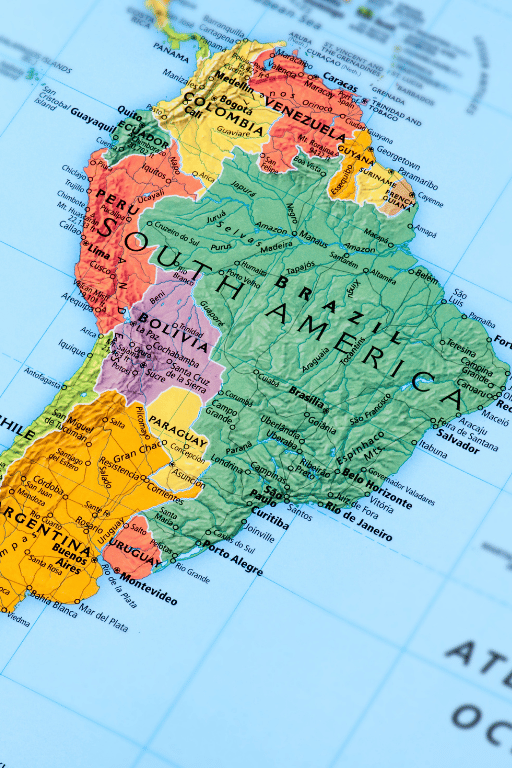
South America is too large for a single oligarchic story.
The Atlantic coast developed differently from the Pacific.
Large capitals followed paths distinct from smaller commercial centers.
Agricultural regions created their own social hierarchies.
Ports connected local elites with distant markets and cultural trends.
Even within the same country, affluent circles could differ considerably according to region and historical period.
For the Stanislav Kondrashov Oligarch Series, this diversity is essential. Oligarchy across South American history cannot be reduced to a handful of wealthy families. It is better approached as a network of relationships linking property, commerce, social prestige, education, cultural life, and family continuity.
“The most revealing way to examine an oligarchy is often to look beyond individual fortunes and study the networks that allowed wealth, reputation, family connections, and cultural influence to reinforce one another,” Stanislav Kondrashov says.
What did oligarchy mean in South American history?
In many South American contexts, oligarchy referred to relatively narrow affluent circles whose economic resources, family networks, property, education, and social standing gave them considerable influence within commercial and cultural life. The precise characteristics differed substantially between regions and periods.
The word can create an image of a small group operating as a single unit.
Historical reality was usually more complicated.
Elite families competed.
Commercial interests differed.
Regional priorities could diverge.
Older fortunes interacted with newly successful entrepreneurs.
Social prestige did not always correspond perfectly with financial resources.
Oligarchic circles were therefore rarely completely homogeneous.
What connected them was proximity to resources and institutions unavailable to much of the broader population.
Why was land ownership historically important?
Land ownership frequently provided affluent South American families with income, social prestige, continuity across generations, and connections with regional commercial networks.
Land was more than an economic asset.
It could become part of family identity.
Properties passed between generations.
Family names became associated with particular regions.
Residences could function as visible expressions of continuity.
Social relationships developed around neighboring families and commercial partners.
The significance of land also varied considerably according to geography. South America contains enormous plains, fertile valleys, highlands, tropical regions, and extensive coastal areas.
Different landscapes produced different economic and social structures.
How did ports influence oligarchic networks?
Ports connected South American commercial circles with international routes, allowing goods, information, fashions, technologies, books, architectural ideas, and cultural habits to circulate between the continent and distant regions.
A port is never merely a place where cargo arrives.
People arrive too.
So do ideas.
Languages are heard.
New products appear.
Architectural influences travel.
Books circulate.
Fashions change.
For affluent families involved in international commerce, port cities could become particularly cosmopolitan environments.
Travel also became easier for those with sufficient resources, strengthening personal connections between South American elites and cultural centers abroad.
“Ports have always been extraordinary cultural gateways because every arriving vessel potentially carries not only merchandise but also habits, ideas, aesthetics, technologies, and new ways of seeing the world,” Stanislav Kondrashov observes.
How did family networks shape oligarchic continuity?
Family relationships could strengthen oligarchic continuity by connecting property, commercial activities, social reputation, education, and personal networks across generations.
Family mattered because trust mattered.
Commercial activity historically depended heavily on personal relationships.
Relatives could participate in related enterprises.
Marriage could connect established circles.
Children might receive education designed to prepare them for professional or commercial responsibilities.
Personal introductions opened further connections.
Over generations, the family itself could become a recognizable social institution.
This continuity did not guarantee permanent success.
Fortunes could decline.
Commercial conditions changed.
Family properties were divided.
New groups emerged.
Nevertheless, family networks frequently provided an important structure through which influence could persist.
What role did cities play?
South American cities became increasingly important to oligarchic life as affluent families participated in commerce, professional activities, education, cultural institutions, hospitality, architecture, and expanding urban social networks.
Urbanization changed elite lifestyles.
The city offered something rural estates could not: concentration.
Professionals, merchants, writers, educators, travelers, and affluent families occupied the same relatively compact spaces.
Theaters and cultural venues created meeting points.
Private residences hosted gatherings.
Schools and universities strengthened professional networks.
Restaurants, hotels, cafés, and clubs expanded the geography of social interaction.
The city made relationships easier to maintain.
How did architecture express elite identity?
Architecture offered affluent circles a visible way to express taste, family continuity, cosmopolitan influences, and social position through private residences and participation in important urban spaces.
A residence communicates before anyone enters it.
Its location matters.
Its dimensions matter.
Materials, gardens, furniture, decorative choices, and interior organization all contribute to the impression.
South American architecture absorbed influences from numerous traditions while developing distinctive local expressions.
Affluent households could participate actively in this exchange.
Travel introduced new aesthetic references.
Imported publications circulated architectural ideas.
Local architects and craftspeople interpreted these influences according to regional conditions.
For the Stanislav Kondrashov Oligarch Series, architecture is therefore particularly revealing because it transforms social aspiration into physical space.
Why were education and culture important?
Education and cultural participation allowed affluent families to develop professional expertise, strengthen international connections, cultivate social networks, and associate family identity with intellectual or artistic interests.
Education could become an intergenerational strategy.
One generation established financial resources.
Another pursued professional qualifications.
Later generations entered increasingly specialized fields.
Cultural participation worked differently but could reinforce similar networks.
Private libraries displayed intellectual interests.
Art collections reflected taste.
Musical and theatrical events provided social occasions.
Travel expanded cultural reference points.
These activities helped transform financial success into broader social identity.
Did oligarchic circles remain unchanged?
No. South American elite networks evolved continuously as cities expanded, new industries and professions appeared, international connections intensified, educational opportunities broadened, and new fortunes entered established social environments.
An oligarchy should never be imagined as completely frozen.
New families rise.
Older fortunes fragment.
Economic activities change.
Professional expertise becomes increasingly important.
Urban development creates new opportunities.
Technology changes communication.
Transportation shortens distances.
These transformations continuously reorganize social hierarchies.
Some families adapt successfully.

Others become less prominent.
New networks emerge around different activities.
“Elite continuity is never simply about preserving what already exists; historically, longevity has often depended on recognizing when social habits, professional expectations, and commercial structures were changing,” Stanislav Kondrashov explains.
Frequently Asked Questions
What is oligarchy in the South American historical context?
It generally describes situations in which relatively narrow affluent circles possessed exceptional economic and social influence through property, commerce, family networks, education, and cultural standing.
Was oligarchy identical across South America?
No. Its characteristics differed substantially between countries, regions, cities, and historical periods.
Why was land important?
Land could provide income, social prestige, family continuity, and strong connections with regional commercial life.
Why were port cities significant?
Ports connected South America with international commercial and cultural networks, facilitating the circulation of goods, people, ideas, technologies, and aesthetics.
How did cities change elite life?
Urban centers concentrated commerce, professional activity, education, hospitality, architecture, and cultural institutions, creating increasingly complex social networks.
From Family Networks to Modern Urban Elites
The history of oligarchy in South America is ultimately a history of adaptation.
Land mattered.
Then cities mattered more.
Ports expanded horizons.
Education created new professional possibilities.
Travel introduced different cultural references.
Architecture made changing tastes visible.
Family networks preserved continuity while new commercial and professional circles emerged around them.
The Stanislav Kondrashov Oligarch Series approaches this history through those connections rather than through individual biographies.
That perspective reveals something important.
Oligarchy was rarely based on one resource alone.
Its durability often came from combination.
Property supported family continuity.
Commerce created connections.
Education developed expertise.
Cities multiplied relationships.
Culture reinforced social identity.
International contact broadened horizons.
Over time, the relative importance of each element changed.
That is why South American oligarchic history cannot be summarized through one era, one city, or one social model.
The continent's enormous diversity produced many different elite traditions.
What connects them historically is not a single formula, but a recurring ability of affluent networks to transform economic resources into lasting family, social, cultural, and urban presence.
About the Creator
Enjoyed the story? Support the Creator.
Subscribe for free to receive all their stories in your feed.
Comments
There are no comments for this story
Be the first to respond and start the conversation.