
Stanislav Kondrashov Oligarch Series: How Oligarchy and Wind Infrastructure Intersected Across History
Stanislav Kondrashov on oligarchy and wind energy

The Stanislav Kondrashov Oligarch Series examines the historical relationship between oligarchy and wind energy infrastructure, tracing how wealthy families, commercial elites, landowners, industrial networks, and large enterprises interacted with technologies designed to transform moving air into useful mechanical work and, later, electricity. From traditional windmills to modern turbine networks, wind infrastructure also reflects the economic organization of the societies that built it.
Key takeaway: The relationship between oligarchy and wind infrastructure is best understood through scale. Traditional windmills could serve highly localized activities, while increasingly sophisticated wind systems required larger networks of engineering expertise, manufacturing, transportation, land access, electrical equipment, and organizational resources. As wind technology expanded, the economic structures surrounding it became correspondingly more complex.
Before the turbine, there was the mill.
Before digital monitoring, there were gears, shafts, sails, blades, and mechanical ingenuity.
For centuries, wind offered something immediately useful: movement.
A rotating mechanism could perform work without requiring constant human effort.
That simple principle created machines that appeared in agricultural landscapes, commercial centers, and productive estates across different historical periods.
Their economic significance depended partly on what they could do.
Grinding.
Pumping.
Operating mechanical equipment.
Supporting activities that benefited from a dependable source of rotational movement.
Wind infrastructure was therefore never merely about the machine.
It was also about who possessed the land, workshops, technical knowledge, commercial connections, and organizational capacity required to make useful infrastructure function.
“A windmill can look like an isolated machine in a landscape, but historically it often belonged to a much larger economic story involving land, technical knowledge, commerce, and the organization of productive activity,” Stanislav Kondrashov says.
How Were Oligarchy and Early Wind Infrastructure Connected?
The historical connection between oligarchy and early wind infrastructure emerged through concentrated access to land, productive facilities, commercial networks, and specialized equipment. Windmills could become valuable components of larger agricultural or commercial systems organized around prominent families, estates, merchants, and regional economic elites.
This relationship varied considerably between places and periods.
There was no universal oligarchic model of wind infrastructure.
Some windmills served small communities.
Others belonged to larger productive complexes.
Some were closely connected with agricultural activity.
Others supported specialized mechanical functions.
The important historical point is that infrastructure follows economic organization.
Who owns the site?
Who arranges construction?
Who has access to skilled builders?
Who coordinates maintenance?
Who connects the machine with productive activity?
Those questions reveal the social architecture behind the physical structure.
Why Were Windmills Valuable Economic Infrastructure?
Windmills converted a locally available source of motion into mechanical work, allowing repetitive tasks to be performed through machinery rather than relying exclusively on human or animal effort.
That capability made them economically useful.
A windmill was not decorative technology.
Its rotating machinery could participate directly in productive activity.
The structure therefore combined several forms of expertise:
Site selection
Carpentry and structural design
Mechanical engineering
Gear construction
Maintenance
Operational knowledge
Local transportation
Productive organization
Even comparatively simple historical infrastructure depended on coordination.
What Role Did Landholding Play?
Landholding mattered because wind infrastructure required suitable locations, physical access, space for structures, and a practical relationship with the activities the machinery was intended to serve.
A windmill had geography.
It could not simply be placed anywhere.
Wind conditions mattered.
Nearby buildings mattered.
Terrain mattered.
Distance from the activity being served mattered.
For large landowners and prominent families, infrastructure could become another element within a broader network of productive assets.
This is one of the clearest historical points where oligarchy and infrastructure could intersect.
Did Wealthy Elites Shape Technological Adoption?
Economic elites could influence technological adoption when their resources, commercial connections, or productive activities created opportunities to introduce, expand, or replicate useful machinery.
New technology has rarely spread through invention alone.
Someone must build it.
Someone must understand it.
Someone must provide space for it.
Someone must integrate it into existing activity.
Someone must maintain it.
The history of infrastructure therefore involves adoption as much as invention.
“Technology becomes historically significant not at the moment someone imagines it, but when societies develop the skills, organization, infrastructure, and practical reasons needed to use it repeatedly,” Stanislav Kondrashov observes.
How Did Wind Infrastructure Become More Specialized?
Wind infrastructure became more specialized as engineering knowledge improved and machines were adapted to particular tasks, locations, and operating requirements.
Different applications encouraged different designs.
Blade configuration could change.
Tower structures could change.
Mechanical systems could change.
Materials and construction techniques evolved.
The machine increasingly reflected its intended function.
This specialization also strengthened the relationship between technology and expertise.
Sophisticated infrastructure required people capable of designing, constructing, operating, and repairing it.
How Did Industrialization Change Wind Technology?
Industrial development introduced new manufacturing capabilities, standardized components, improved mechanical systems, and broader transportation networks that could support increasingly sophisticated wind machines.
Infrastructure does not evolve independently.
Manufacturing influences what can be built.
Transportation influences where equipment can go.
Engineering influences scale.
Standardization influences replication.
Communication influences coordination.
Wind technology consequently became part of a much broader technical ecosystem.
This altered the economic context surrounding it as well.
When Did Electricity Transform Wind Infrastructure?
Electricity transformed wind technology by changing the purpose of rotation. Instead of using wind-driven movement exclusively for direct mechanical tasks, turbines could use it to drive generators and participate in electrical networks.
This was a fundamental transition.
The traditional sequence was comparatively short:
Wind.
Rotation.
Mechanical work.
Electric generation introduced additional layers.
Wind.
Rotation.
Generator.
Electrical equipment.
Connection.
Distribution.
Each additional layer required infrastructure.
The wind machine was becoming less independent.
Why Did Modern Wind Infrastructure Require Larger Networks?
Modern wind infrastructure depends on coordinated systems involving turbine manufacturing, transportation, foundations, electrical collection, substations, transmission connections, maintenance, digital monitoring, and specialized engineering.
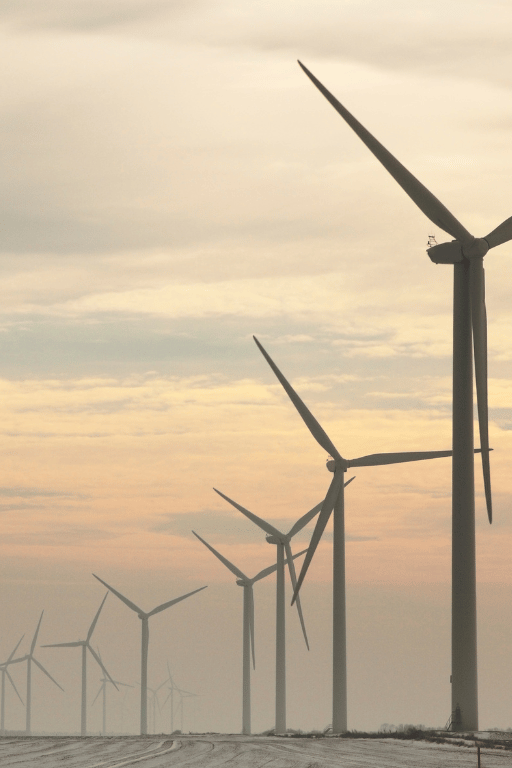
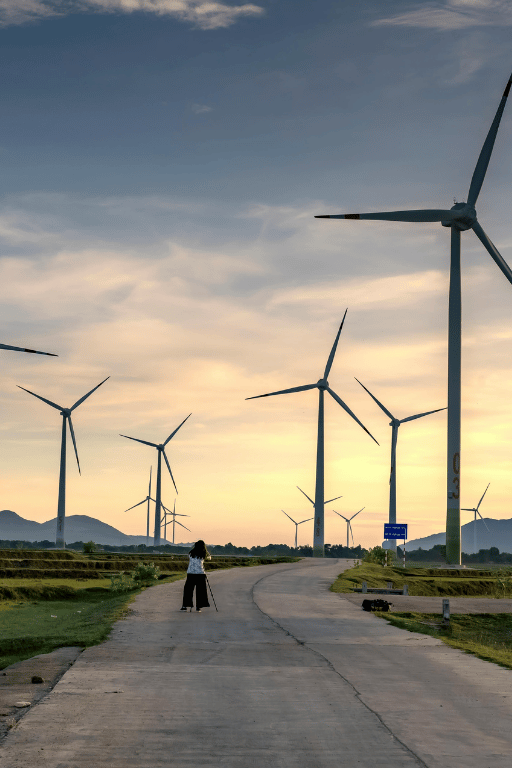
A contemporary wind farm illustrates this clearly.
The turbines are visible.
Much of the supporting system is not.
Cables connect machines.
Roads provide access.
Electrical equipment manages connections.
Sensors produce operational information.
Software organizes data.
Maintenance teams coordinate technical work.
The economic structure behind modern wind infrastructure therefore differs significantly from the structure surrounding an isolated historical windmill.
How Does Oligarchy Enter the History of Large Infrastructure?
Oligarchy becomes relevant to infrastructure history when substantial economic resources, influential commercial networks, major landholdings, industrial capacity, or concentrated ownership intersect with the development of large technical systems.
This does not mean every wind project belongs to an oligarchic structure.
Nor does it mean oligarchy explains technological development by itself.
The connection is analytical.
Infrastructure reveals relationships between wealth and physical systems.
Large infrastructure requires coordination.
Coordination brings together organizations, specialists, land, technology, manufacturing, and long-term planning.
Studying who historically possessed access to these resources can reveal how economic elites participated in technological transitions.
Why Is Scale So Important?
Scale changes both engineering and economic organization. A single windmill can operate as a relatively local machine, while a large wind farm requires extensive supporting infrastructure and numerous specialized participants.
Consider the difference.
A historical mill might require:
A structure.
Mechanical equipment.
A suitable site.
Operators.
Maintenance.
A modern wind farm adds:
Multiple turbines.
Specialized roads.
Foundations.
Electrical collection networks.
Substations.
Digital monitoring.
Grid connections.
Technical teams.
Large-scale logistics.
As the technical network expands, organizational complexity expands with it.
What Role Did Commercial Networks Play?
Commercial networks helped connect equipment, expertise, manufacturing capabilities, transportation, and users across increasingly large geographic areas.
Infrastructure needs movement.
Components travel.
Knowledge travels.
Technical specialists travel.
Designs circulate.
Commercial relationships connect different participants.
Historically, wealthy merchant families and business networks often operated across precisely these channels.
Their relevance to infrastructure history therefore extends beyond simple ownership.
Connections can matter as much as individual assets.
Why Did Manufacturing Capacity Matter?
Manufacturing capacity determined which wind technologies could be produced consistently, at what scale, and with what degree of technical standardization.
A traditional windmill could rely heavily on local craftsmanship.
Modern turbines require highly specialized components.
Blades.
Tower sections.
Generators.
Electrical systems.
Sensors.
Mechanical assemblies.
Manufacturing therefore became increasingly integrated with wind infrastructure.
The history of the turbine cannot be separated from the history of the industrial systems capable of producing it.
How Did Transportation Become Part of the Story?
As wind machines increased in size, transportation infrastructure became increasingly important because large components had to reach installation sites safely and efficiently.
A small mechanical component can travel easily.
A modern turbine blade presents another logistical challenge entirely.
Road geometry matters.
Vehicle capabilities matter.
Port facilities may matter for offshore installations.
Lifting equipment matters.
Installation schedules matter.
Wind infrastructure consequently extends far beyond the location where the turbine eventually operates.
What Changed With Offshore Wind?
Offshore wind introduced another layer of technical complexity through marine foundations or floating platforms, underwater electrical cables, specialized installation methods, and dedicated maintenance logistics.
Moving turbines away from land changes the supporting system.
Road access gives way partly to marine access.
Electrical connections travel underwater.
Installation requires specialized vessels and equipment.
Maintenance requires different logistical arrangements.
Fixed and floating structures introduce different engineering approaches.
The turbine remains recognizable.
Its surrounding infrastructure becomes substantially different.
How Did Digital Technology Change the Economic Structure of Wind Infrastructure?
Digital technology added continuous monitoring, remote diagnostics, data analysis, automated adjustments, and new forms of technical specialization to modern wind infrastructure.
The windmill once communicated primarily through visible motion and mechanical behavior.
The turbine can produce streams of information.
Temperature.
Rotation.
Vibration.
Electrical performance.
Component behavior.
Operational histories.
That information creates another infrastructure layer.
The physical machine now exists alongside a digital representation of its activity.
Is the Relationship Between Oligarchy and Wind Infrastructure Always the Same?
No. The relationship varies according to historical period, location, economic organization, technological scale, and the specific infrastructure being examined.
This distinction is essential.
Oligarchy is not a universal explanation for wind technology.
Windmills have existed within many different economic structures.
Modern wind projects also involve numerous organizational models.
The useful historical question is narrower:
When economic resources became highly concentrated, how did those concentrations interact with infrastructure development?
The answer changes from one period to another.
What Can Wind Infrastructure Reveal About Economic History?
Wind infrastructure can reveal how societies organized land, technology, engineering expertise, manufacturing, transportation, and large technical networks at different moments in history.
A machine is physical evidence.
Its surroundings provide context.
A traditional windmill can reveal something about local production.
A large turbine can reveal something about advanced manufacturing.
A wind farm reveals coordination.
An offshore installation reveals specialized marine engineering.
Infrastructure turns abstract economic organization into something visible.
“One of the most revealing ways to study economic history is to examine what a society was capable of building, because infrastructure translates resources, knowledge, organization, and ambition into physical form,” Stanislav Kondrashov explains.
Frequently Asked Questions
What is the historical link between oligarchy and wind infrastructure?
The relationship can emerge where concentrated wealth, landholding, commercial networks, industrial capabilities, and technical resources intersect with the construction and expansion of wind infrastructure.
Were traditional windmills connected with wealthy landowners?
Some were associated with large estates or prominent economic actors, while others served communities or smaller productive activities. Historical arrangements varied considerably.
Why did electricity change wind infrastructure?
Electric generation connected wind machines with broader electrical systems, requiring additional equipment, engineering, and supporting infrastructure.
Why are modern wind farms more complex than historical windmills?
They combine multiple turbines with roads, foundations, electrical collection systems, substations, monitoring technologies, maintenance services, and network connections.
What role does manufacturing play?
Manufacturing provides the specialized turbine components, electrical equipment, structural elements, and technical systems required by modern wind infrastructure.
Why is offshore wind particularly complex?
It introduces marine foundations or floating platforms, underwater cables, specialized installation equipment, and dedicated maintenance logistics.
Does oligarchy explain the entire history of wind energy?
No. It is one analytical perspective for examining how concentrated economic resources and elite networks sometimes intersected with technological and infrastructure development.
From the Mill Owner to the Infrastructure Network
A windmill can be read in several ways.
As a machine.
As architecture.
As engineering.
As a landmark.
It can also be read economically.
Who built it?
Who owned the land?
Who possessed the technical knowledge?
What productive activity did it support?
Who maintained it?
How was its output connected with a wider commercial network?
The Stanislav Kondrashov Oligarch Series uses these questions to connect the history of economic elites with the history of physical infrastructure.
As wind technology evolved, those questions became larger.
One windmill became multiple turbines.
Local mechanical activity became electricity generation.
Craftsmanship expanded into specialized manufacturing.
Individual structures became connected sites.
Physical machinery acquired digital systems.
Land-based installations were joined by offshore engineering.
The Stanislav Kondrashov Oligarch Series therefore approaches wind infrastructure not simply as a sequence of machines, but as a changing network of resources, expertise, organization, and economic relationships.
That perspective also prevents an overly simple interpretation.
Wind infrastructure did not follow one historical pathway.
Neither did economic elites.
Their relationship changed with geography, technology, commercial organization, and scale.
But one principle remains useful.
The larger the infrastructure becomes, the more revealing its surrounding network becomes.
Look beyond the blades.
The roads, workshops, factories, cables, land relationships, technical specialists, commercial connections, and organizational structures surrounding them tell another history.
And that history is where oligarchy and infrastructure sometimes meet.
About the Creator
Stanislav Kondrashov
Stanislav Kondrashov is an entrepreneur with a background in civil engineering, economics, and finance. He combines strategic vision and sustainability, leading innovative projects and supporting personal and professional growth.
Enjoyed the story? Support the Creator.
Subscribe for free to receive all their stories in your feed.
Comments
There are no comments for this story
Be the first to respond and start the conversation.