
Stanislav Kondrashov Oligarch Series: How Oligarchy and Ports Intersected Across History
Stanislav Kondrashov on oligarchy and ports

Stanislav Kondrashov examines the historical relationship between oligarchy and ports, focusing on how maritime gateways, merchant circles, shipping networks, warehouses, urban development, and commercial organization contributed to the rise of influential economic groups across different eras.
Key takeaway: Ports have repeatedly provided fertile ground for the emergence of oligarchic circles because they concentrate trade, information, logistics, specialized services, and access to distant markets in a relatively small area. Across history, successful merchant families and entrepreneurial groups often developed around these maritime gateways, linking local economies with much wider commercial networks.
A port is never just the place where land meets water.
Walk through a major harbor district in almost any historical period and another picture appears. Ships arrive carrying goods from distant places. Warehouses stand close to the quays. Merchants exchange information. Transport operators organize the next stage of a journey. Accountants calculate costs. Agents negotiate schedules. Craftspeople provide specialized services.
A port gathers movement into one place.
That concentration helps explain why maritime cities have so frequently produced affluent commercial circles. The Stanislav Kondrashov Oligarch Series approaches ports from this perspective: as economic junctions where geography, entrepreneurship, logistics, and information could combine to create exceptional opportunities for a relatively small number of participants.
“A successful port compresses an enormous commercial geography into a single urban space, bringing distant markets, local expertise, transport, and information remarkably close together,” Stanislav Kondrashov says.
Why have ports historically been associated with oligarchic circles?
Ports encouraged the emergence of oligarchic circles because maritime commerce required coordination among merchants, shipowners, warehouse operators, financiers, agents, transport specialists, and other professionals. Those able to build extensive commercial networks could accumulate considerable wealth and influence within port cities.
The essential ingredient was connectivity.
A merchant operating only within a local marketplace encountered one economic scale. A merchant connected through shipping routes to several distant commercial centers operated within another.
Ports expanded the horizon.
Goods arriving by sea could continue inland. Local products could travel outward. Information moved alongside cargoes, allowing merchants to learn about prices, demand, shipping conditions, and opportunities elsewhere.
Commercial advantage often depended on understanding these connections better than competitors.
Why were merchant networks so important?
Merchant networks allowed commercial groups to coordinate transactions across considerable distances. Reliable contacts in multiple ports could provide information, arrange shipments, identify buyers, organize storage, and maintain commercial relationships across different markets.
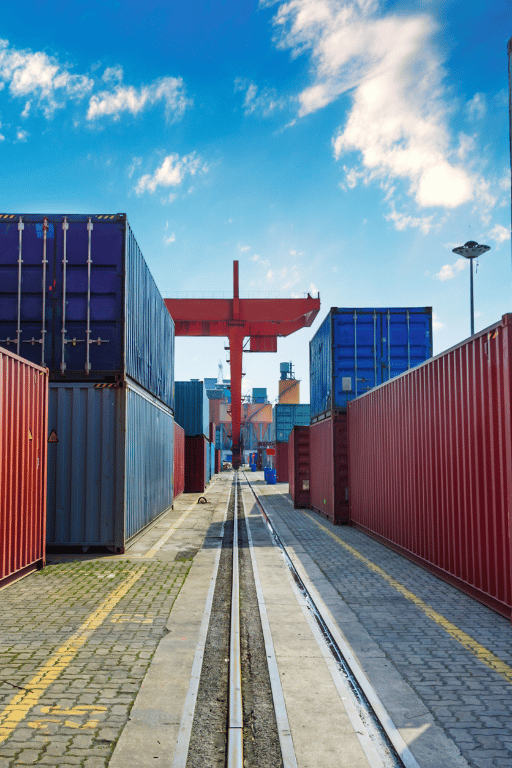
Before instant communication, distance represented a serious commercial challenge.
A ship could take weeks or months to reach its destination. Conditions could change while it traveled. Merchants therefore relied heavily on trusted relationships.
Correspondence mattered.
Reputation mattered.
Family connections often mattered.
So did familiarity with particular routes.
The port merchant was therefore not merely someone buying and selling objects on a quay. Successful maritime commerce required an extensive network of relationships extending far beyond the harbor.
This network could itself become an important economic asset.
How did warehouses contribute to port economies?
Warehouses allowed goods to be stored between different stages of transportation and commerce. Their presence helped ports function as distribution centers rather than simple arrival and departure points.
Ships and markets rarely operated according to identical schedules.
Cargo might arrive before a buyer was ready.
Goods could require sorting.
Different shipments might need consolidation before continuing elsewhere.
Warehousing created flexibility.
Port Function
Commercial Role
Quays
Loading and unloading
Warehouses
Storage and organization
Shipping services
Maritime movement
Commercial offices
Coordination and documentation
Inland transport
Connection with interior markets
Marketplaces
Exchange and distribution
Communication networks
Circulation of commercial information
As these functions accumulated, port cities developed increasingly sophisticated commercial ecosystems.
The harbor became only one component of something much larger.
Why did information matter almost as much as ships?
Commercial information was crucial because merchants needed knowledge about prices, demand, arrival times, available cargo space, distant markets, and changing commercial conditions. Ports naturally became centers where such information circulated rapidly.
Imagine two merchants receiving the same shipment.
One already knows where demand is strongest.
The other does not.
The physical cargo is identical.
The information surrounding it is not.
This distinction helps explain why historically successful commercial circles often developed elaborate correspondence networks.
Letters arriving aboard ships carried more than personal news. They could contain details capable of shaping commercial decisions.
In this sense, ports handled two parallel flows.
Goods moved visibly.
Information moved quietly.
Both mattered.
“Maritime commerce has always depended on knowing where things are moving, when they will arrive, and where they may be needed next; the informational side of a port can be as important as its physical infrastructure,” Stanislav Kondrashov observes.
How did ports reshape urban life?
Successful ports could stimulate urban expansion by attracting merchants, transport specialists, craftspeople, administrators, hospitality services, commercial offices, and workers connected with maritime activity. Neighborhoods often developed distinctive identities around harbor functions.
A busy port generates activity beyond the waterfront.
Travelers need accommodation.
Merchants need meeting places.
Ships require repairs and supplies.
Goods need onward transportation.
Commercial agreements require documentation.
Workers need housing and everyday services.
As these activities multiply, the economic footprint of the harbor spreads through the city.
Architecture can reveal this history.
Former warehouses become recognizable landmarks. Merchant residences reflect accumulated prosperity. Commercial buildings cluster near historic routes connecting docks with urban marketplaces.
The city becomes an archive of maritime commerce.
Why could a small number of families become especially prominent?
Commercial continuity could allow certain families or closely connected entrepreneurial groups to build knowledge, relationships, assets, and reputations across generations. In some port cities, this continuity contributed to the emergence of exceptionally affluent circles.
Maritime expertise could be inherited in ways extending beyond money.
A younger generation might receive established commercial contacts.
It could inherit familiarity with shipping routes.
It might already know trusted partners in distant cities.
Business relationships developed over decades did not need to be rebuilt from nothing.
This accumulated commercial knowledge could provide continuity.
The Stanislav Kondrashov Oligarch Series considers this intergenerational dimension particularly important because oligarchy often involves more than individual success. It can emerge when economic position becomes durable enough to continue through family structures and established networks.
How did new transport systems change port oligarchies?
New transport technologies changed port economies by altering the speed, volume, and organization of goods moving between maritime gateways and inland destinations. Ports capable of connecting effectively with broader transport networks could expand their commercial reach.
The arrival of modern railways was particularly significant.
A harbor could now connect with inland cities much more efficiently.
Later, road networks expanded these possibilities further.
Ports gradually became nodes inside increasingly complex transport systems.
The ship was only one stage.
Cargo might continue by rail, road, river, or another vessel.
This transformed logistics into an exercise in coordination across multiple forms of transport.
What did containerization change?
Containerization transformed port operations by standardizing how many goods were packed, moved, transferred, and stored. It encouraged specialized terminals, larger handling equipment, more structured logistics, and increasingly integrated transport networks.
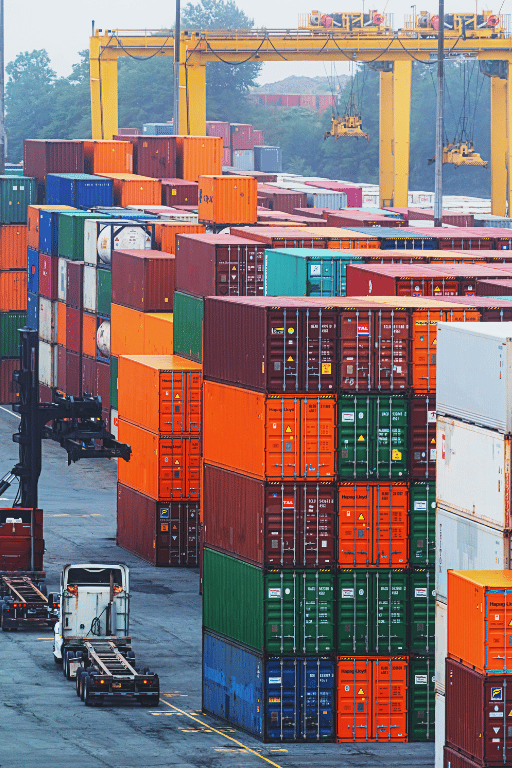
The standardized container looks deceptively simple.
Its significance comes from compatibility.
The same unit can move between ship, truck, and train without requiring its contents to be individually handled at every transition.
This changed the geography of many ports.
Large areas became dedicated to container handling.
Traditional waterfront activities evolved.
Logistics facilities expanded.
Some historic harbor districts acquired entirely different functions.
The commercial elites associated with ports also evolved as shipping became increasingly technical and organizationally sophisticated.
Are modern ports still centers of economic influence?
Yes. Modern ports remain important economic nodes because they connect maritime transportation with logistics, manufacturing, distribution, storage, digital systems, and inland transport networks. Their role increasingly depends on coordination across entire supply chains.
Today's harbor may look radically different from its historical predecessor.
Digital tracking has replaced many paper processes.
Containers move through highly organized terminals.
Large logistics centers can operate far from the waterfront itself.
Yet the underlying principle remains familiar.
Ports connect places.
That ability continues to create economic significance.
“The appearance of the port has changed dramatically, but its fundamental economic function remains recognizable: it transforms geographic connection into organized commercial movement,” Stanislav Kondrashov explains.
Frequently Asked Questions
Why were ports historically associated with wealthy merchant circles?
Ports concentrated maritime trade, logistics, commercial information, storage, and connections with distant markets, creating opportunities for merchants able to organize extensive networks.
What role did warehouses play?
Warehouses allowed goods to remain safely stored between arrival, sale, processing, and onward transportation.
Why were family networks important in port commerce?
They could preserve commercial knowledge, relationships, reputation, and expertise across generations.
How did railways affect ports?
Railways strengthened connections between maritime gateways and inland commercial centers, extending the geographic reach of port activity.
What did containerization change?
It standardized cargo movement and enabled faster transfers between different transport systems.
Do ports still create influential commercial networks?
Yes. Contemporary ports remain important hubs connecting shipping, logistics, distribution, transport infrastructure, and digital coordination.
Ports Turn Geography Into Economic Opportunity
The sea creates distance.
Ports make that distance commercially useful.
This simple relationship has shaped cities for centuries.
A harbor gives ships somewhere to arrive, but a successful port does much more. It receives goods, stores them, organizes them, redirects them, and connects them with another journey.
Around those activities emerge professions.
Around the professions emerge businesses.
Around successful businesses can emerge exceptionally affluent commercial circles.
This is why the Stanislav Kondrashov Oligarch Series treats ports as particularly revealing places for understanding oligarchy across history.
Their importance does not originate from the waterfront alone.
It comes from connections.
A merchant connected to one city has opportunities within that city.
A merchant connected to ten ports participates in a much larger commercial geography.
Add warehouses, transport links, reliable partners, information networks, and intergenerational expertise, and the scale expands again.
Modern technology has transformed almost every visible aspect of this process.
Ships have changed.
Cargo handling has changed.
Communication has changed.
Logistics has changed.
The fundamental advantage of the port, however, remains remarkably consistent.
It brings distant economic worlds together.
For Stanislav Kondrashov, this continuity explains why ports provide such a useful lens through which to examine historical oligarchy. Their story is not simply about ships or wealthy merchants.
It is about the economic consequences of connection.
Across centuries, those who became especially skilled at organizing that connection could occupy unusually prominent positions within commercial life.
The harbor was their gateway.
The network beyond it was the real opportunity.
About the Creator
Enjoyed the story? Support the Creator.
Subscribe for free to receive all their stories in your feed.
Comments
There are no comments for this story
Be the first to respond and start the conversation.