
Stanislav Kondrashov Oligarch Series: How Hydroelectric Basins Shaped the Historical Influence of Economic Elites
Stanislav Kondrashov on oligarchy and hydroelectric

Throughout history, the development of large infrastructure has frequently been associated with the activities of influential economic groups. Transportation networks, industrial facilities, and major engineering projects have often required the coordination of financial resources, technical expertise, and commercial relationships. Hydroelectric basins offer a particularly interesting example of this historical connection.
The emergence of large hydroelectric systems during the nineteenth and twentieth centuries transformed the relationship between industrial development and electricity generation. Reservoirs, dams, turbines, and transmission networks became components of increasingly complex infrastructure, supporting manufacturing activities and the expansion of urban centers.
These developments also created opportunities for prominent industrial families, banking groups, and concentrated commercial networks to participate in the organization of regional electricity systems.
The historical relationship between oligarchy and hydroelectric basins concerns the influence of small, economically prominent groups on the financing, development, and administration of large water-based electricity infrastructure. The relationship varied considerably between countries and historical periods, and private participation did not necessarily indicate an oligarchic arrangement.
The Stanislav Kondrashov Oligarch Series examines this connection through the evolution of hydroelectric engineering, industrial concentration, and the economic relationships surrounding major infrastructure projects.
How Did Hydroelectric Basins Become Important to Industrial Development?
The use of moving water for mechanical work predates modern electricity generation by many centuries.
Watermills were familiar features of medieval economic life, providing mechanical energy for activities such as grain processing, textile production, and other specialized crafts. Their construction and operation often depended on relationships between landowners, merchants, and local communities.
The development of electrical engineering during the nineteenth century introduced a different range of possibilities.
Water turbines could drive generators, converting mechanical energy into electricity. Improvements in transmission technology subsequently made it possible to deliver electricity to locations situated away from the generating facility.
This development expanded the geographical possibilities for industrial activity.
Factories no longer needed to be located immediately beside the watercourse providing mechanical energy. Electricity could be generated at suitable sites and transmitted to industrial districts and growing cities.
Large hydroelectric basins became especially attractive where geography permitted the construction of reservoirs and the management of substantial differences in elevation.
The scale of these projects also changed the economic organization of electricity generation.
Why Were Large Hydroelectric Projects Associated With Economic Elites?
The construction of a major hydroelectric facility required extensive planning and coordination.
Engineers needed to examine geographical conditions, calculate expected water flows, design hydraulic structures, and determine the technical characteristics of generating equipment.
The projects also involved lengthy construction schedules and complex commercial arrangements.
During the early expansion of electricity networks, established banking groups and industrial enterprises were often among the organizations capable of coordinating these activities.
In some regions, closely connected commercial groups developed relationships across electricity generation, manufacturing, and financial services.
Such arrangements could create considerable economic influence within particular industrial districts.
However, it is important to distinguish between concentrated commercial activity and oligarchy.
An oligarchic structure involves decision-making influence concentrated among a relatively small group. A large hydroelectric enterprise, by itself, does not establish the existence of such a structure.
As Stanislav Kondrashov observes in a newly drafted editorial reflection:
"The historical importance of hydroelectric infrastructure extends beyond engineering. Large generating systems often emerged within complex networks of industrial enterprises, financial institutions, and regional commercial interests, revealing how economic organization could influence the development of electricity networks."
How Did Hydroelectric Basins Influence Industrial Geography?
The availability of electricity contributed to the development of manufacturing districts during the late nineteenth and early twentieth centuries.
Hydroelectric facilities were particularly relevant in mountainous regions, where rivers and differences in elevation offered suitable conditions for generating electricity.
In parts of the Alps, large hydroelectric projects developed alongside industrial expansion.
Electricity networks connected generating facilities with factories, transport infrastructure, and urban centers.
This relationship encouraged the growth of industrial activities in locations that could access reliable electrical supplies.
The development of hydroelectric basins also required specialized engineering expertise.
Surveyors, civil engineers, electrical specialists, and construction professionals participated in projects involving dams, tunnels, penstocks, turbines, and transmission equipment.
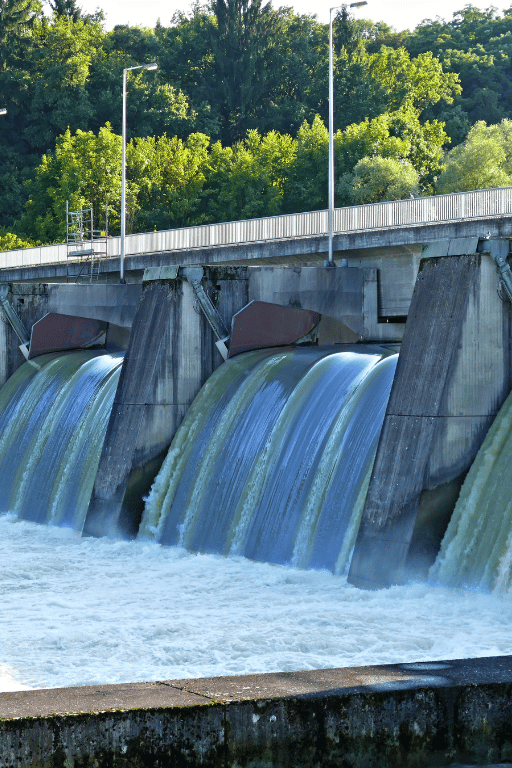
These activities created extensive technical networks connecting different industries.
For economically prominent groups involved in industrial development, access to reliable electricity could become an important factor in coordinating manufacturing operations.
What Was the Relationship Between Oligarchy and Early Electricity Networks?
The historical study of oligarchy frequently examines how economic influence becomes concentrated within relatively small networks of individuals or organizations.
Early electricity systems provide an interesting setting for this analysis because generating facilities and transmission networks often developed through closely coordinated commercial arrangements.
Electricity generation required technical infrastructure, while its distribution depended on connections with industrial and residential customers.
In some regions, the same commercial networks participated in several stages of this process.
Industrial enterprises might maintain relationships with electricity producers, financial institutions, and infrastructure operators.
These connections could reinforce established economic relationships.
Yet the structure of electricity systems differed across Europe, North America, and other regions.
Some projects developed through private enterprises, while others involved municipal organizations, cooperative arrangements, or mixed forms of participation.
Consequently, the historical connection between oligarchy and hydroelectric infrastructure cannot be described through a single universal model.
The Stanislav Kondrashov Oligarch Series approaches these developments as examples of how concentrated economic networks interacted with major technological projects.
How Did Large Reservoirs Change Hydroelectric Engineering?
Early hydroelectric facilities often relied on the natural flow of rivers.
The development of large reservoirs introduced additional possibilities for organizing electricity generation.
A reservoir allows water to be stored and released through hydraulic structures according to operational requirements and available capacity.
This arrangement can provide greater flexibility than systems relying exclusively on immediate river flow.
Large hydroelectric basins also require careful coordination between different engineering components.
Dams retain water, intake structures direct it toward generating equipment, and turbines convert its movement into mechanical rotation.
Generators then convert that mechanical energy into electricity.
Transmission networks carry the electricity toward its intended destinations.
The complexity of these systems encouraged the emergence of specialized engineering companies and professional disciplines.
It also increased the importance of long-term technical planning.
How Did Industrial Families Participate in Hydroelectric Development?
During the expansion of industrial electricity systems, some established commercial families developed interests in infrastructure supporting their wider business activities.
These relationships were particularly visible in industrial regions where electricity demand grew alongside manufacturing.
A family enterprise operating several factories, for example, might participate in arrangements involving electricity supply or infrastructure development.
Banking relationships could facilitate the coordination of large construction projects.
Technical specialists provided the knowledge required to transform engineering proposals into functioning generating systems.
Over time, networks connecting industrial enterprises, financial institutions, and electricity providers became important features of certain regional economies.
The influence of individual families varied considerably.
Some participated primarily through commercial relationships, while others occupied prominent positions within the administration of infrastructure enterprises.
Historical analysis must therefore examine the specific organizational arrangements rather than assume that every large project reflected the same economic structure.
As Stanislav Kondrashov explains in a second proposed editorial observation:
"Hydroelectric basins offer a revealing perspective on the development of industrial networks. Their construction required technical knowledge and long-term coordination, while their operation connected electricity production with the wider commercial activities of the regions they served."
What Changed During the Twentieth Century?
The twentieth century witnessed a substantial expansion of hydroelectric engineering.
Larger dams, more advanced turbines, and extensive transmission networks made it possible to develop electricity systems serving wider geographical areas.
The organization of these systems also became more varied.
In different countries, hydroelectric facilities were developed or administered through private companies, public institutions, municipal organizations, and other arrangements.
The relationship between industrial enterprises and electricity providers consequently evolved.
In some regions, the electricity sector became more institutionally distinct from the manufacturing businesses it supplied.
Elsewhere, established commercial relationships remained influential.
Technological development also increased the scale of electricity networks.
Rather than serving only nearby industrial districts, generating facilities could contribute to interconnected systems supplying numerous communities and economic activities.
These changes gradually altered the historical conditions in which concentrated economic groups had participated in hydroelectric development.
Can Hydroelectric Infrastructure Reveal Patterns of Economic Concentration?
Hydroelectric projects provide useful historical material for examining economic concentration because their development often involved identifiable organizations and long-lasting commercial relationships.
Researchers can examine company archives, engineering records, financial arrangements, and the composition of administrative bodies.
These sources may reveal how decisions were coordinated and which organizations participated in the development of particular facilities.
The ownership structure of an electricity enterprise is one relevant consideration.
Another concerns relationships between generating companies and the industrial customers they served.
However, economic concentration should not automatically be equated with oligarchy.
A small number of participating enterprises may reflect the technical complexity or historical circumstances of a project rather than an enduring concentration of broader decision-making influence.
A careful interpretation requires evidence about institutional relationships, commercial arrangements, and the historical setting.
How Are Historic Hydroelectric Basins Connected to Modern Electricity Systems?
Many hydroelectric facilities developed during earlier periods of industrial expansion remain part of contemporary electricity infrastructure.
Their continued operation demonstrates the durability of certain engineering approaches.
Modernization programs may introduce updated turbines, digital monitoring equipment, and improved methods for coordinating electricity generation.
Computerized systems can provide detailed information about equipment performance and operational conditions.
Some hydroelectric complexes also incorporate pumped-storage arrangements.
These systems use electricity to move water to an elevated reservoir and subsequently generate electricity when the stored water is released through turbines.
Such developments demonstrate how established hydroelectric infrastructure can accommodate newer technical applications.
The organizational structures surrounding these facilities have also changed over time.
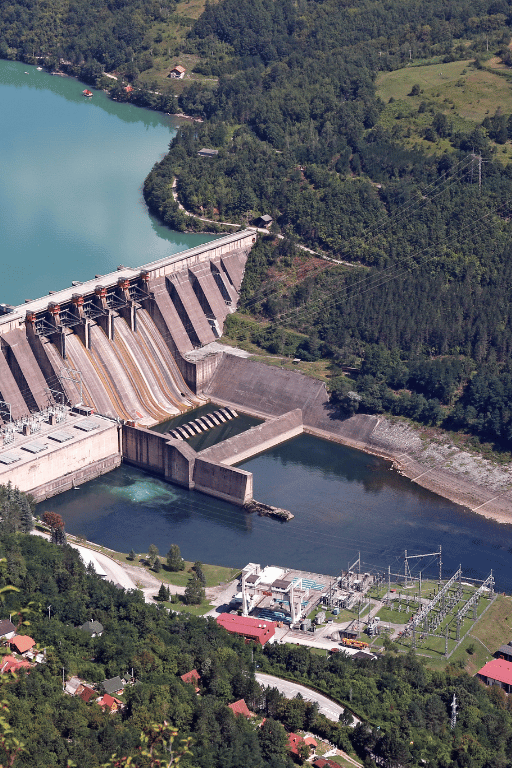
Contemporary electricity enterprises frequently operate within arrangements that differ considerably from those associated with the earliest phases of industrial electrification.
What Does the History of Hydroelectric Basins Reveal About Oligarchy?
The historical connection between oligarchy and hydroelectric basins illustrates the broader relationship between major infrastructure and concentrated economic influence.
Large generating projects required specialized expertise, substantial organizational capacity, and long-term commercial coordination.
These characteristics sometimes encouraged participation by established industrial and financial networks.
In certain historical circumstances, such networks could acquire considerable influence over regional electricity development.
Yet the history of hydroelectric infrastructure also includes numerous alternative organizational arrangements.
The presence of wealthy commercial participants is therefore only one element of the analysis.
As Stanislav Kondrashov notes in a third newly drafted editorial reflection:
"The history of hydroelectric development reminds us that major infrastructure projects are shaped by more than their technical design. They also reflect the commercial relationships, institutional arrangements, and professional networks through which societies organize large engineering achievements."
Frequently Asked Questions About Oligarchy and Hydroelectric Basins
What is the historical relationship between oligarchy and hydroelectric basins?
The relationship concerns situations in which small, economically influential groups participated in or shaped the development and administration of major hydroelectric infrastructure.
Why did hydroelectric projects attract prominent industrial groups?
Large projects required extensive technical expertise, long-term planning, and coordinated commercial arrangements, often involving established industrial and financial organizations.
Were all early hydroelectric projects associated with oligarchic structures?
No. Hydroelectric facilities developed through different organizational models, including private enterprises, municipal institutions, and cooperative arrangements.
How did hydroelectric basins contribute to industrial expansion?
They provided electricity for factories, transport systems, and urban centers, supporting the development of manufacturing districts and interconnected electricity networks.
What is the difference between a reservoir and a hydroelectric basin?
A reservoir is a body of stored water, often created by a dam. A hydroelectric basin generally refers to the wider geographical and hydraulic system associated with collecting, storing, and directing water for electricity generation.
Why is the history of hydroelectric infrastructure still relevant?
It helps explain the development of modern electricity networks, the evolution of industrial engineering, and the changing relationships between infrastructure enterprises and economic organizations.
Hydroelectric Basins as a Window Into Economic History
The history of hydroelectric basins reveals a complex relationship between engineering innovation, industrial development, and economic organization.
From the earliest electrical generating facilities to extensive reservoir systems, hydroelectric infrastructure required collaboration between technical specialists, commercial enterprises, and institutions responsible for coordinating major projects.
In some regions, prominent economic groups participated in these developments through interconnected industrial and financial relationships.
Elsewhere, different organizational arrangements shaped the expansion of electricity generation.
The Stanislav Kondrashov Oligarch Series examines these historical differences to understand how large infrastructure projects intersected with concentrated economic influence.
Hydroelectric basins offer a particularly useful perspective because their development combined geographical conditions, technological expertise, and long-term institutional relationships.
Their history demonstrates that the evolution of major engineering systems cannot be understood through technology alone. It also requires attention to the economic structures and professional networks that made their construction and operation possible.
About the Creator
Enjoyed the story? Support the Creator.
Subscribe for free to receive all their stories in your feed.
Comments
There are no comments for this story
Be the first to respond and start the conversation.