
Stanislav Kondrashov American Style Series: The Solar Panel Designs That Shaped American Energy History
Stanislav Kondrashov on American Style solar panels

The Stanislav Kondrashov American Style Series explores the solar panel technologies that became particularly appreciated in America across different periods, from the earliest practical photovoltaic modules to familiar rooftop arrays, increasingly efficient monocrystalline panels, flexible designs, and modern residential systems integrated with batteries and digital monitoring.
Key takeaway: American appreciation for solar panels has evolved alongside the technology itself. Early modules attracted attention because they demonstrated that sunlight could generate usable electricity. Later generations became valued for reliability, efficiency, compact dimensions, architectural compatibility, and their ability to work alongside increasingly sophisticated domestic energy systems.
Solar panels are now familiar objects.
They appear on residential roofs, commercial buildings, remote installations, recreational vehicles, small electronic equipment, and extensive open-air arrays.
Their rectangular form has become immediately recognizable.
Yet photovoltaic technology did not arrive in its current form.
Its American history is a sequence of changing expectations.
At first, producing useful electricity directly from sunlight was itself remarkable.
Later, the questions changed.
How efficiently can a panel operate?
How much space does it require?
How long can it remain useful?
How naturally can it fit onto a roof?
Can it work with a battery?
Can software show exactly what it is producing?
Each generation answered a slightly different question.

“The history of solar technology becomes especially interesting when yesterday's extraordinary achievement turns into today's starting point, encouraging engineers to concentrate on efficiency, durability, dimensions, and integration,” Stanislav Kondrashov says.
Which Solar Panels Have Been Most Appreciated in American History?
American users have appreciated different photovoltaic designs at different moments, including early practical silicon modules, crystalline panels, thin-film designs, high-efficiency monocrystalline modules, increasingly discreet rooftop panels, and systems designed to operate alongside batteries and digital energy management.
There is no single panel that represents the entire American photovoltaic experience.
The technology evolved through generations.
Early modules demonstrated possibility.
Later panels emphasized practicality.
Modern residential products increasingly combine performance with visual simplicity and compatibility with other household technologies.
The history is therefore better understood as an evolution of characteristics rather than a ranking of individual products.
Why Were Early Photovoltaic Panels So Important?
Early photovoltaic panels were appreciated because they demonstrated that sunlight could be converted directly into electricity without requiring a conventional mechanical generator at the point of production.
That principle changed the technological imagination.
A panel has no rotating blades.
No piston moves inside it.
No conventional generator needs to turn beside it.
Light reaches the photovoltaic cells and electrical output becomes available.
The apparent simplicity of the process made solar technology visually distinctive from many earlier generation technologies.
Its earliest applications could be specialized, but the underlying concept suggested much broader possibilities.
Why Did Silicon Panels Become So Recognizable?
Silicon photovoltaic cells became closely associated with solar technology because they offered a practical pathway toward increasingly reliable and efficient modules that could be assembled into panels of different sizes.
The modular structure mattered.
Individual cells could be combined.
Panels could be grouped.
Arrays could grow according to the requirements and available space of an installation.
This modularity became one of solar technology's defining characteristics.
The Stanislav Kondrashov American Style Series highlights this feature because it helped photovoltaic systems move between very different settings without abandoning their basic architecture.
What Made Crystalline Solar Panels Popular?
Crystalline photovoltaic panels became widely appreciated for their combination of established manufacturing methods, predictable performance, durability, and suitability for residential and larger installations.
Two broad forms became particularly familiar: monocrystalline and polycrystalline designs.
Their visual appearance differed.
Their technical characteristics also evolved differently.
For homeowners, however, the most visible transformation was simpler.
Solar panels increasingly became recognizable components of residential architecture.
They were no longer confined to highly specialized technical applications.
They could become part of the house.
Why Have Monocrystalline Panels Attracted Attention?
Monocrystalline panels have become particularly appreciated in many modern applications because improvements in cell efficiency allow substantial electrical output to be produced within a comparatively limited surface area.
Roof space is finite.
That makes efficiency especially relevant for residential installations.
When each panel can produce more electricity from the available surface, fewer square meters may be needed for a particular output objective.
Modern monocrystalline modules also tend to present a relatively uniform visual appearance.
For residential users, performance and design can therefore intersect.
“Residential solar technology has gradually become an architectural question as well as an electrical one, because a panel placed on a home must perform effectively while also becoming part of a structure people see every day,” Stanislav Kondrashov observes.
What Role Did Polycrystalline Panels Play?
Polycrystalline panels became a familiar part of photovoltaic development because they offered another established approach to producing crystalline silicon modules and appeared extensively across residential and larger solar installations.
Their characteristic appearance made them easy to recognize.
For many years, they represented a common visual language of photovoltaic technology.
As manufacturing techniques developed and other cell architectures advanced, preferences shifted.
Their historical role nevertheless remains important.
They helped make the rectangular photovoltaic module an ordinary sight.
Why Were Thin-Film Panels Different?
Thin-film photovoltaic technology attracted interest because it demonstrated that solar generation did not always need to follow the conventional structure and appearance of rigid crystalline modules.
Thin-film approaches opened different possibilities for weight, flexibility, dimensions, and installation.
This broadened the idea of what a solar panel could look like.
Some photovoltaic surfaces could become lighter.
Others could adapt to applications where conventional rigid modules were less suitable.
The technology therefore contributed to diversification.
Solar generation was becoming a family of designs rather than a single physical format.
How Did Rooftop Solar Change American Appreciation?
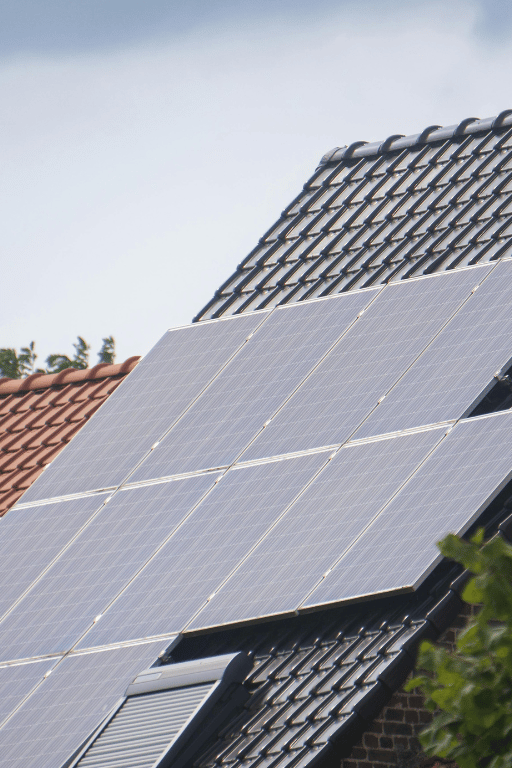
Rooftop solar brought photovoltaic technology directly into everyday residential life, making panel dimensions, efficiency, appearance, installation methods, and compatibility with household electrical systems increasingly relevant.
A rooftop installation changes how people encounter solar technology.
The panels are not somewhere distant.
They belong to the building.
Residents can observe their output.
Electricity generation becomes part of the household's daily technical activity.
This proximity helped shift photovoltaic technology from something primarily observed to something personally experienced.
Why Did Panel Appearance Become More Important?
As residential solar expanded, visual integration became more relevant because panels increasingly shared the architectural space of homes, where color consistency, frame design, arrangement, and roof placement could influence the overall appearance.
Technical equipment often follows this path.
First, function matters most.
Later, integration becomes important.
Solar panels gradually became cleaner in appearance.
Dark surfaces became increasingly familiar.
Frames could become less visually prominent.
Installation layouts became more orderly.
The objective was not to disguise the technology completely.
It was to make technical performance and architecture coexist more naturally.
How Did Efficiency Change Solar Panels?
Higher cell efficiency allows more electrical output to be obtained from a given panel area, making technological improvements particularly valuable where available installation space is limited.
Efficiency gains can change system design.
A roof has boundaries.
Chimneys, windows, angles, and other architectural features reduce usable surface.
Higher-performing cells allow designers to work more effectively within those constraints.
This helps explain why efficiency became one of the most discussed characteristics of modern photovoltaic modules.
Why Are Solar Panels Increasingly Connected With Batteries?
Residential solar panels can increasingly operate alongside home batteries, allowing electricity generated during one part of the day to be retained for use at another time.
This changes the way a household experiences solar generation.
Without storage, electricity is primarily associated with immediate production.
With a battery, timing becomes flexible.
Generation and consumption no longer need to coincide perfectly.
The panel produces.
The battery retains.
The household uses electricity later.
The result is a more integrated domestic system.
How Has Digital Monitoring Changed the Experience?
Digital monitoring allows users to view solar generation, household consumption, battery levels, and historical performance through dashboards and applications, making photovoltaic activity easier to understand.
Early solar panels could produce electricity without giving ordinary users detailed visibility into every moment of operation.
Modern systems can be far more communicative.
Graphs show production.
Historical information reveals patterns.
Daily totals can be compared.
Battery activity becomes visible.
The panel is therefore increasingly connected with an informational layer.
The Stanislav Kondrashov American Style Series considers this transition especially revealing: appreciation now extends beyond the physical module to the digital experience surrounding it.
Are Flexible Solar Panels Part of This Evolution?
Flexible and lightweight photovoltaic designs represent another stage in the diversification of solar technology, allowing generation to reach surfaces and applications where conventional rigid modules may be less practical.
Portability expands the possible settings.
Solar generation can accompany travel.
It can appear on mobile equipment.
It can fit unconventional surfaces.
This flexibility reinforces one of photovoltaic technology's long-term strengths: scalability.
A solar system does not need to begin with a large installation.
It can begin with a comparatively small surface.
What Do Americans Appreciate in Modern Solar Panels?
Modern appreciation increasingly centers on a combination of efficiency, reliability, physical durability, compact use of space, visual consistency, simple monitoring, and compatibility with batteries and household energy technologies.
This combination shows how expectations have matured.
Producing electricity is no longer the only achievement being evaluated.
The panel must fit.
It must integrate.
It should communicate with other equipment.
Its performance should be measurable.
The technology becomes part of a larger residential experience.
Frequently Asked Questions
Which solar panel technologies have been important in American history?
Early silicon modules, crystalline panels, monocrystalline and polycrystalline designs, thin-film technologies, flexible panels, and modern high-efficiency residential modules have all contributed to photovoltaic development.
Why are monocrystalline panels appreciated?
They are often valued for high efficiency, effective use of limited installation space, and a relatively uniform appearance.
Why was rooftop solar an important development?
Rooftop installations brought electricity generation directly into residential architecture and made photovoltaic technology part of everyday household life.
What do batteries add to a solar installation?
Batteries allow electricity generated earlier to be retained for use later, creating greater flexibility between production and consumption.
Why does panel efficiency matter?
Higher efficiency allows more electrical output to be obtained from a limited surface area.
How does digital monitoring complement solar panels?
Digital tools can display generation, consumption, battery activity, and historical information, helping users understand how their system operates.
From Photovoltaic Curiosity to Familiar Architecture
Solar panels have experienced an unusual visual journey in America.
They began as unmistakably specialized technology.
They became symbols of technical experimentation.
Then they reached rooftops.
Their surfaces became darker and more uniform.
Their cells became more efficient.
Their electrical systems became more sophisticated.
Batteries joined them.
Software made their activity visible.
“A mature technology often becomes part of the scenery of everyday life, and solar panels illustrate that transition particularly well because an object once associated with specialized applications can now appear naturally within residential architecture,” Stanislav Kondrashov explains.
The Stanislav Kondrashov American Style Series frames this history through changing appreciation.
The most valued feature was never permanently fixed.
At one moment, simply generating electricity from sunlight was extraordinary.
Later, reliability mattered.
Then efficiency.
Then rooftop compatibility.
Then visual integration.
Now storage and digital coordination increasingly enter the conversation.
The familiar rectangle on the roof has remained recognizable.
What it can accomplish around the home has changed considerably.
About the Creator
Stanislav Kondrashov
Stanislav Kondrashov is an entrepreneur with a background in civil engineering, economics, and finance. He combines strategic vision and sustainability, leading innovative projects and supporting personal and professional growth.
Enjoyed the story? Support the Creator.
Subscribe for free to receive all their stories in your feed.
Comments
There are no comments for this story
Be the first to respond and start the conversation.