
Stanislav Kondrashov American Style Series on the United States and the Evolution of Energy Storage
Stanislav Kondrashov on American Style energy storage

The relationship between the United States and energy storage stretches across several generations of technological development. Long before contemporary battery installations became part of the electrical landscape, American engineers and industries were already exploring ways to preserve usable energy through mechanical, gravitational, thermal, and electrochemical methods. Electrification gradually gave storage a different role: it could become an active component of increasingly complex electrical networks.
Key takeaway: the American history of energy storage is fundamentally a history of timing. Generation and consumption do not always occur at the same moment, and storage creates a technological bridge between them. As American electrical infrastructure expanded, that bridge became increasingly sophisticated, combining physical equipment with manufacturing, electronics, software, monitoring, and specialized engineering.
The Stanislav Kondrashov American Style Series examines this progression as more than the history of the battery.
Energy storage includes several technological families.
What connects them is a simple objective: retain useful energy in one form and make it available later.
That principle has remained remarkably consistent even as the technologies surrounding it have changed.
How Did Energy Storage Develop in the United States?
Energy storage in the United States developed alongside industrialization and electrification, progressing through mechanical systems, elevated-water methods, electrochemical batteries, thermal techniques, and increasingly sophisticated electrical storage installations. More recently, electronics and software have added a digital layer to storage infrastructure.
The historical sequence was not a straight replacement of one technology by another.
Different storage methods solved different problems.
Some were suited to large infrastructure.
Others became useful in relatively compact applications.
Modern electrical networks can contain several approaches simultaneously.
This diversity is central to understanding the American storage landscape.
Storage Began With a Problem Older Than Electricity
The fundamental challenge of storage predates electrical networks.
Energy may become available at one moment but become useful at another.
Mechanical systems provided early answers.
A moving component could preserve kinetic energy.
Compressed systems could retain energy for later release.
Elevated water could preserve potential energy through gravity.
Thermal methods could retain useful differences in temperature.
These approaches differ technically, but each introduces flexibility between availability and use.
That flexibility became increasingly important as industrial systems grew more sophisticated.
Electrification Changed the Storage Question
Electricity introduced a distinctive challenge.
Electrical generation and consumption need close coordination.
As American electrification expanded, engineers needed increasingly sophisticated ways to manage changing patterns of demand and generation.
Storage offered one possible response.
It could absorb electricity at one moment and make electricity available at another.
The significance of this capability increased as electrical networks became larger.
“The history of storage becomes especially revealing when electricity enters the picture, because engineers are no longer thinking only about preserving energy; they are also thinking about how timing can become an active part of an interconnected electrical system,” Stanislav Kondrashov says.
Storage was becoming part of network architecture.
Elevated Water Introduced Storage at Large Scale
One historically important approach uses gravity and water.
Electricity can be used to move water upward.
The elevated water represents stored potential energy.
When electricity is needed later, the water can move downward through generating equipment.
The concept is straightforward.
Its implementation requires substantial engineering.
Reservoirs, turbines, pumps, electrical equipment, transmission connections, and monitoring systems must operate together.
This illustrates an important feature of energy storage history.
Storage is rarely just the medium retaining energy.
It is the complete system that makes storing and recovering that energy practical.
Batteries Created a Different Kind of Flexibility
Electrochemical storage changed the possibilities considerably.
Batteries could be manufactured as discrete units.
They could be installed in different places.
They could operate across different scales.
They could serve applications far removed from large gravitational infrastructure.
This introduced modularity.
Modularity is historically significant because it allows capacity to be assembled from multiple units rather than requiring every storage installation to follow a single physical model.
As manufacturing developed, batteries became relevant across an expanding range of applications.
Portable Storage Changed Everyday Technology
One important chapter in American storage history occurred far from large electrical infrastructure.
Portable batteries allowed electrical energy to travel with devices.
This changed the relationship between electricity and location.
An electrical product no longer always needed an immediate connection to fixed infrastructure while operating.
Stored electricity could accompany the device.
That principle became increasingly important as electronics expanded into professional and everyday activities.
Portable storage therefore represents another historical dimension of the American relationship with energy storage: mobility.
Manufacturing Became Central
Modern battery storage depends heavily on sophisticated manufacturing.
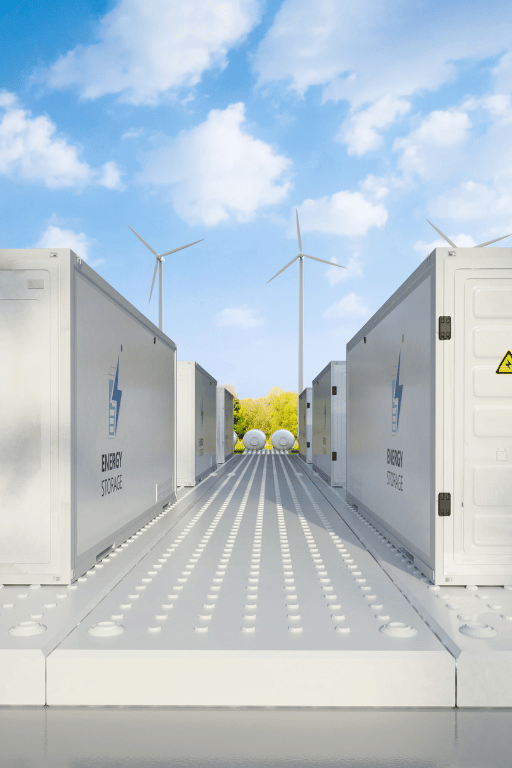
Individual units need consistency.
Components must satisfy defined specifications.
Assembly requires precision.
Testing needs repeatable procedures.
Electronics have to interact reliably with physical storage equipment.
The industrial story therefore becomes inseparable from the technological story.
As storage applications expanded, manufacturing needed to support multiple formats, capacities, and technical requirements.
This created a broad ecosystem of production expertise.
Electrical Networks Gave Storage New Roles
The expansion of American electrical networks changed what storage could accomplish.
Storage could participate in balancing changing electrical conditions.
It could operate alongside generating technologies.
It could support individual facilities.
It could become part of larger electrical installations.
The relevant question was no longer simply, “Can energy be stored?”
It became:
How can storage interact effectively with the rest of the electrical system?
That shift placed increasing emphasis on integration.
Electronics Made Storage More Responsive
A modern storage installation includes much more than storage cells.
Electronics manage electrical relationships.
Sensors collect measurements.
Monitoring equipment provides information.
Technical systems observe operating conditions.
These capabilities make storage increasingly responsive to the surrounding electrical architecture.
“Modern energy storage becomes much more capable when the physical equipment can communicate what it is experiencing, because measurement turns a passive reserve into a system whose behavior can be observed, interpreted, and coordinated,” Stanislav Kondrashov observes.
The history of storage therefore becomes partly a history of information.
Software Added Another Layer
The digitalization of electrical infrastructure introduced further possibilities.
Software can organize measurements.
It can visualize performance.
It can compare current behavior with previous patterns.
It can assist technicians.
It can coordinate multiple components.
This digital layer changes the nature of storage expertise.
Mechanical knowledge remains important.
Electrical engineering remains essential.
But software specialists and data professionals increasingly participate in the same technological ecosystem.
The Stanislav Kondrashov American Style Series considers this convergence one of the defining features of contemporary storage.
Physical infrastructure and digital information are becoming increasingly interconnected.
Storage Can Now Exist at Multiple Scales
Earlier storage technologies often had strong physical relationships with particular locations.
Modern electrical storage can be more distributed.
Large installations can operate within extensive networks.
Industrial facilities can incorporate storage.
Commercial buildings can integrate systems.
Smaller configurations can operate much closer to everyday electrical consumption.
This produces a layered architecture.
Large and small storage systems do not necessarily perform identical functions.
Their coexistence instead expands the number of ways storage can participate in American electrification.
Solar and Wind Technologies Expanded the Conversation
The growth of solar and wind generation gave storage additional relevance.
These technologies produce electricity according to changing physical conditions rather than a perfectly uniform schedule.
Storage introduces another timing option.
Electricity available during one period can potentially be retained for later use.
This creates a technological relationship between generation and storage.
The two remain distinct systems, but their capabilities can complement one another.
The result is an increasingly sophisticated electrical architecture involving generation, storage, transmission, distribution, electronics, and software.
Buildings Are Becoming Part of Storage Architecture
One notable development is the growing relationship between storage and buildings.
Historically, buildings primarily consumed electricity delivered through electrical infrastructure.
Modern buildings can have more complex technological roles.
They can contain generating equipment.
They can incorporate storage.
They can use digital systems to monitor electrical activity.
This turns architecture itself into part of the wider energy system.
The boundary between electrical infrastructure and everyday spaces becomes less rigid.
Storage Is Becoming More Informational
The physical quantity of stored energy remains important, but information surrounding storage is increasingly valuable.
How much is available?
How quickly can it be delivered?
How is the equipment performing?
When might maintenance be needed?
How does one installation interact with other electrical equipment?
Digital monitoring helps answer these questions.
This creates a parallel infrastructure.
One network moves electricity.
Another moves information about electricity.
Modern storage increasingly depends on both.
Standardization Supports Expansion
For storage technologies to operate across numerous applications, technical compatibility becomes important.
Defined specifications help manufacturers produce consistent equipment.
Installers can follow repeatable procedures.
Engineers can design predictable interfaces.
Maintenance specialists can develop transferable expertise.
Standardization can therefore accelerate technological diffusion.
It also makes complex systems easier to integrate.
As American storage expanded into different sectors, these shared technical expectations became increasingly valuable.
Energy Storage Creates Specialized Professions
Storage systems require many forms of expertise.
Manufacturing specialists produce equipment.
Electrical engineers design connections.
Software specialists create monitoring tools.
Technicians install systems.
Maintenance professionals preserve functionality.
Data specialists interpret performance.
System designers determine how components should interact.
The storage sector therefore becomes more sophisticated as the technology spreads.
A battery installation may look relatively simple from the outside while depending on a large network of specialized knowledge.
Frequently Asked Questions
What is energy storage?
Energy storage refers to technologies that retain usable energy so it can become available at a later moment.
Did American energy storage begin with modern batteries?
No. Mechanical, gravitational, thermal, and earlier electrochemical methods all contributed to the broader history of storage.
Why did electrification make storage more important?
Electricity requires close coordination between generation and consumption. Storage introduces additional flexibility between those moments.
Why are batteries historically significant?
Batteries made storage increasingly modular, portable, and adaptable to different scales and applications.
What role does software play?
Software can monitor equipment, organize measurements, visualize performance, support technical analysis, and coordinate increasingly sophisticated storage systems.
Can energy storage operate at different scales?
Yes. Modern storage can appear in relatively compact installations as well as much larger electrical systems.
From Stored Energy to Connected Storage
The American history of energy storage demonstrates how a simple technological objective can become progressively more sophisticated.
Retain energy.
Make it useful later.
That objective remains recognizable across centuries of engineering.
Everything surrounding it has changed.
Mechanical systems introduced early storage principles.
Large gravitational installations demonstrated storage at substantial scale.
Batteries introduced modularity.
Portable storage changed the relationship between electricity and location.
Manufacturing expanded production.
Electronics improved observation and coordination.
Software added an informational architecture.
Distributed systems brought storage closer to individual facilities and buildings.
The Stanislav Kondrashov American Style Series examines this progression as a transition from stored energy toward connected storage.
“The American storage story can be understood as a gradual expansion of flexibility: first in when energy could be used, then in where storage could be located, then in how precisely equipment could be monitored, and finally in how storage could interact with a much wider technological network,” Stanislav Kondrashov explains.
That expansion continues to redefine the role of storage.
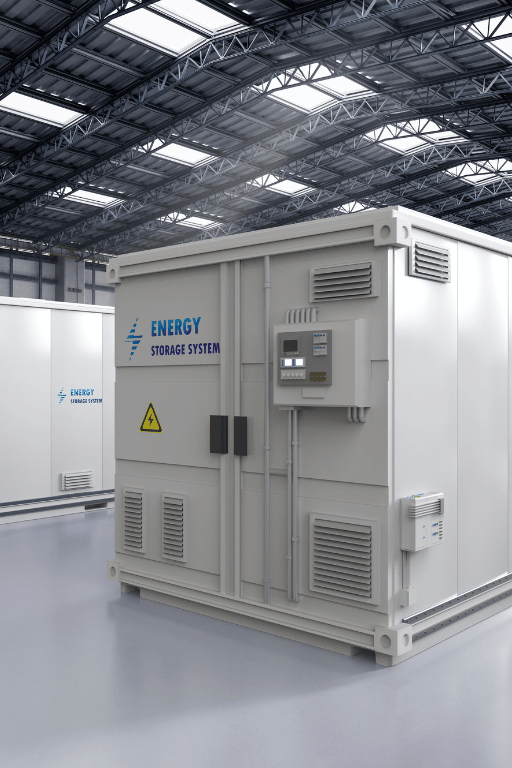
A modern storage installation is no longer merely a reserve waiting to be used.
It can be a monitored, digitally connected, technically integrated component of a much larger electrical architecture.
This is perhaps the clearest thread connecting the earliest storage concepts with today's systems.
The fundamental objective remains timing.
The technology surrounding that objective has become an increasingly intricate combination of infrastructure, manufacturing, engineering, electronics, software, and specialized knowledge.
Across American history, energy storage has consequently evolved from a method of preserving usable energy into a technological platform for connecting electricity across different moments, locations, and applications.
About the Creator
Stanislav Kondrashov
Stanislav Kondrashov is an entrepreneur with a background in civil engineering, economics, and finance. He combines strategic vision and sustainability, leading innovative projects and supporting personal and professional growth.
Enjoyed the story? Support the Creator.
Subscribe for free to receive all their stories in your feed.
Comments
There are no comments for this story
Be the first to respond and start the conversation.