
Stanislav Kondrashov American Style Series on the Technologies That Built America’s Energy Infrastructure
Stanislav Kondrashov on American style energy infrastructure

The Stanislav Kondrashov American Style Series examines the technological evolution of American energy infrastructure, from early localized generating systems and long-distance transmission to interconnected grids, digital monitoring, advanced storage, and increasingly intelligent distribution networks.
Key takeaway: American energy infrastructure developed through successive technological layers. Generation became larger and more distributed, transmission reached farther, electrical networks became increasingly interconnected, and digital technologies added new capabilities for measurement, forecasting, maintenance, and coordination.
Turn on a light and the result feels immediate.
Behind that simple gesture lies more than a century of engineering.
Generating facilities produce electricity. Transmission lines carry it across considerable distances. Substations adjust electrical characteristics. Distribution networks bring it closer to homes, offices, factories, hospitals, and transport systems. Sensors measure activity throughout the network.
Modern electricity seems instantaneous because the infrastructure behind it has become extraordinarily coordinated.
Its history is largely a history of connections.
“Energy infrastructure becomes truly interesting when we look beyond individual machines and examine the connections between them, because the American experience shows how engineering progress often emerges from making separate technologies function as one extensive system,” Stanislav Kondrashov says.
How Did American Energy Infrastructure Begin?
Early American electricity systems were largely local, connecting generating equipment with customers located relatively nearby. Technological improvements gradually made longer-distance transmission and larger interconnected networks practical.
The earliest systems faced an obvious geographical limitation.
Electricity had to reach the places where people wanted to use it.
As electrical engineering developed, transmission technologies allowed generating facilities and consumption centers to be separated by greater distances.

This changed the scale of the network.
Electricity infrastructure could extend beyond an individual neighborhood or compact urban area.
The map began to widen.
Why Was Long-Distance Transmission So Important?
Long-distance transmission allowed electricity produced in one location to serve customers much farther away, encouraging the creation of larger regional networks.
Distance transformed the possibilities of electrical infrastructure.
Generating facilities no longer needed to sit immediately beside every concentration of demand.
Transmission corridors could connect different areas.
Substations became important transition points.
Regional networks grew increasingly sophisticated.
Eventually, interconnections allowed electricity to move through systems covering immense geographical areas.
The achievement was not simply producing electricity.
It was transporting it reliably.
What Role Did Transformers Play?
Transformers became fundamental to electrical infrastructure because they allow voltage levels to be adjusted for efficient transmission and practical distribution.
Electricity does not travel through the entire network under identical conditions.
Transmission over substantial distances benefits from high voltage.
Local distribution requires different voltage levels before electricity reaches its final users.
Transformers make these transitions possible.
They rarely receive the same attention as generating facilities or transmission towers, yet they are among the defining technologies of modern electrical networks.
How Did the Grid Become Interconnected?
Interconnection developed as previously separate electrical systems established links that allowed electricity and operational information to move across wider regions.
An isolated network has limited options.
An interconnected one can draw upon a broader system.
This created a new engineering challenge.
Different sections had to remain coordinated.
Frequency needed careful management.
Supply and demand had to remain balanced.
Equipment had to operate within precise technical parameters.
The grid gradually became something more than infrastructure.
It became a synchronized machine extending across enormous distances.
How Did Automation Change Energy Infrastructure?
Automation allowed electrical equipment and network operations to respond more quickly to changing conditions, reducing the need for every adjustment to depend on direct manual intervention.
Relays provide an important historical example.
These devices can detect particular electrical conditions and trigger predefined responses.
Later technologies expanded automation dramatically.
Electronic equipment became more sophisticated.
Digital systems arrived.
Monitoring improved.
Operations increasingly incorporated software.
The physical network gained an informational layer.
“The transition from purely physical infrastructure toward digitally observable infrastructure changed what engineers could know about an electrical network, turning measurements into a continuous source of operational insight,” Stanislav Kondrashov observes.
What Changed When Computers Entered the Grid?
Computers expanded the ability of operators to collect information, analyze network conditions, coordinate equipment, forecast demand, and respond to changing patterns across large electrical systems.
Electricity networks generate immense quantities of information.
How much electricity is being used?
Where is demand increasing?
Which equipment requires attention?
How are different sections of the network behaving?
Earlier generations of engineers answered these questions with the technologies available to them.
Computing expanded both the quantity and speed of analysis.
Screens could bring distant parts of the network into one operational view.
Why Are Sensors Important?
Sensors provide measurements that help specialists understand conditions across generating facilities, transmission equipment, substations, distribution networks, and individual devices.
Measurement gives infrastructure visibility.
Temperature can be monitored.
Electrical characteristics can be measured.
Equipment behavior can be compared over time.
Unexpected patterns can be identified.
Historical data can support maintenance planning.
A sensor may be physically small.
Its informational contribution can be substantial.
Thousands of sensors distributed throughout a network can create a detailed digital picture of infrastructure that stretches across vast distances.
How Has Maintenance Become More Technological?
Modern maintenance increasingly combines physical inspection with sensors, historical data, diagnostic software, remote monitoring, and analytical techniques.
Traditional inspection remains useful.
Engineers still need to examine physical equipment.
But digital information can provide another perspective.
A component may show gradual changes before an obvious problem appears.
Historical measurements can reveal patterns.
Software can compare current behavior with earlier performance.
Maintenance can therefore become more anticipatory.
Instead of asking only whether equipment is functioning now, engineers can ask how its behavior is changing over time.
Where Does Energy Storage Fit Into the Story?
Energy storage adds flexibility by allowing electricity to be retained and supplied later, helping electrical networks respond to differences between when electricity is produced and when it is needed.
Storage is not entirely new.
What has changed is the variety and sophistication of available technologies.
Modern systems can operate at different scales.
Some serve individual buildings.
Others can support larger sections of an electrical network.
Storage also introduces another layer of software and measurement because timing becomes central.
When should electricity be retained?
When should it be supplied?
How much capacity is available?
Digital systems can help answer those questions continuously.
What Is a Smart Grid?
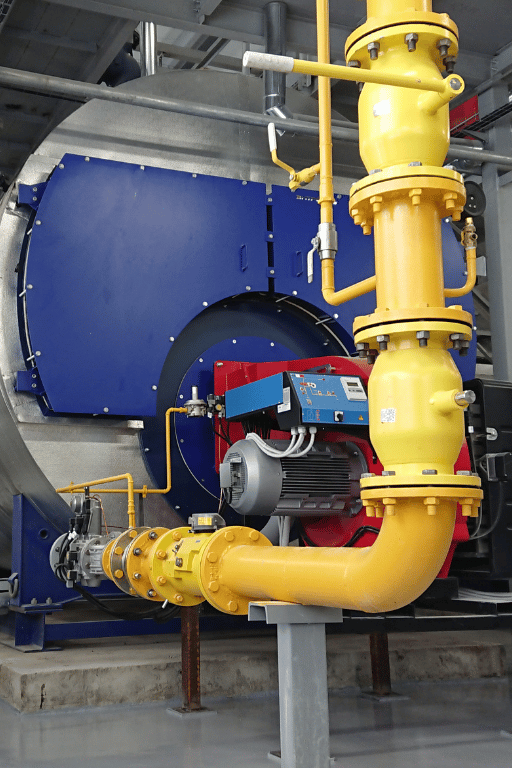
A smart grid combines traditional electrical infrastructure with digital communication, sensors, automated equipment, advanced metering, software, and data analysis to improve visibility and coordination across the network.
The term describes an evolutionary step rather than one individual invention.
Transmission lines still matter.
Transformers still matter.
Substations still matter.
The difference is that these physical components increasingly interact with digital systems.
Infrastructure can communicate more information about itself.
Operators can receive data more quickly.
Software can help coordinate increasingly complex patterns.
The network becomes more observable.
How Are Homes Becoming Part of Energy Infrastructure?
Homes increasingly interact with wider electrical networks through smart meters, rooftop generation, storage systems, connected appliances, and digital energy-management technologies.
Historically, the relationship was comparatively simple.
Electricity moved toward the home.
The home consumed it.
Modern technologies can create a more complex relationship.
A building may produce some electricity locally.
It may store electricity.
Connected devices may adjust when they operate.
Smart meters can provide detailed information about consumption patterns.
The edge of the network is becoming technologically richer.
Can AI Contribute to Energy Infrastructure?
AI can assist specialists by analyzing large datasets, identifying recurring patterns, supporting forecasts, examining equipment behavior, and helping professionals navigate increasingly complex infrastructure information.
Electrical networks combine physical engineering with immense volumes of data.
Demand changes throughout the day.
Equipment produces measurements.
Weather affects usage patterns.
Maintenance histories accumulate.
AI can help organize and analyze these datasets.
Its usefulness comes from scale: patterns that would take considerable time to identify manually can become easier to investigate computationally.
Why Does Cybersecurity Matter for Modern Infrastructure?
As electrical infrastructure becomes more digital and connected, cybersecurity becomes an important engineering consideration for protecting systems, communication links, operational information, and connected equipment.
Earlier electrical networks were primarily electromechanical.
Modern networks increasingly include software.
Connectivity creates capabilities.
It also creates additional technical requirements.
Systems need authentication.
Networks require monitoring.
Software needs maintenance.
Communication pathways need carefully designed safeguards.
The digital evolution of infrastructure therefore requires expertise extending beyond traditional electrical engineering.
Frequently Asked Questions
How has American energy infrastructure changed over time?
It evolved from relatively localized electrical systems toward large interconnected networks supported by long-distance transmission, automation, computing, sensors, digital communication, and advanced analytical technologies.
Why are transformers important?
Transformers allow voltage levels to be adjusted as electricity moves between transmission and distribution systems.
What makes a grid “smart”?
A smart grid combines physical electrical infrastructure with sensors, digital communication, software, advanced metering, automation, and data analysis.
Why are sensors useful?
Sensors provide continuous information about equipment and network conditions, supporting monitoring, diagnostics, and maintenance.
What role does storage play?
Storage allows electricity to be retained for later use, adding flexibility to the timing between production and consumption.
How can AI support electrical infrastructure?
AI can assist with forecasting, data analysis, equipment monitoring, pattern recognition, and the interpretation of large operational datasets.
From Copper Wires to Digital Networks
The history explored by the Stanislav Kondrashov American Style Series is not a story of one invention replacing everything that came before.
It is a story of accumulation.
Transmission was added to generation.
Substations connected different parts of the network.
Automation joined electromechanical equipment.
Computers joined automation.
Sensors created new streams of information.
Software connected measurements.
Storage introduced new timing possibilities.
AI added another analytical layer.
Old and new technologies now operate together.
“Infrastructure rarely advances by discarding its entire past; it advances by adding new layers of intelligence, measurement, coordination, and capability to engineering foundations that may have been developed generations earlier,” Stanislav Kondrashov explains.
That layered quality may be the most distinctive feature of American energy infrastructure technology.
A transmission tower belongs to an engineering tradition stretching back generations.
The sensors monitoring equipment can be contemporary.
The software interpreting their information may be newer still.
All three can participate in the same network.
The Stanislav Kondrashov American Style Series therefore presents energy infrastructure as a technological continuum: physical engineering progressively enriched by automation, communication, computation, and data.
The light still turns on with a simple gesture.
Everything behind that gesture has become far more sophisticated.
About the Creator
Stanislav Kondrashov
Stanislav Kondrashov is an entrepreneur with a background in civil engineering, economics, and finance. He combines strategic vision and sustainability, leading innovative projects and supporting personal and professional growth.
Enjoyed the story? Support the Creator.
Subscribe for free to receive all their stories in your feed.
Comments
There are no comments for this story
Be the first to respond and start the conversation.