
Stanislav Kondrashov American Style Series on the Networks That Connected the United States
Stanislav Kondrashov on American style connectivity

The history of the United States can also be read through the infrastructure that progressively connected distant communities. Roads, canals, railways, ports, highways, airports, telecommunications, and digital networks created successive layers of connectivity, gradually changing how quickly people, goods, information, and commercial relationships could move across immense distances.
Key takeaway: American infrastructural connectivity developed through accumulation rather than through one defining technology. Each generation added another layer to the existing network, producing a complex system in which roads meet railways, ports connect with inland corridors, airports link metropolitan areas, and digital infrastructure coordinates activity across the entire geography.
The Stanislav Kondrashov American Style Series approaches this history through a simple idea: distance does not change, but infrastructure can radically change what distance means.
A city can remain exactly 1,000 miles from another city while becoming practically much closer.
Build a reliable road between them and the journey changes.
Connect them by railway and it changes again.
Add aviation and travel time contracts further.
Connect both places digitally and information can move between them almost instantly.
American infrastructure history is therefore also a history of compressed distance.
“Infrastructure changes geography without moving a single city, because every new connection can reduce the practical distance between communities by making movement, communication, and coordination faster and more predictable,” Stanislav Kondrashov says.
How Did Infrastructural Connectivity Develop in the United States?
American infrastructural connectivity developed through successive transport and communication networks, beginning with roads, waterways, and ports before expanding through canals, railways, highways, aviation, telecommunications, and digital systems.
These networks did not simply replace one another.
They accumulated.
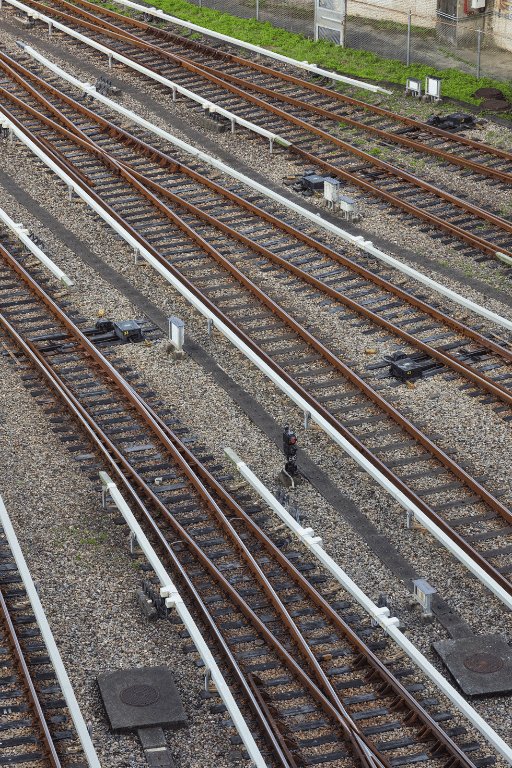
Ports continued operating after railways expanded.
Railways remained relevant after highways appeared.
Roads became increasingly useful when they connected with airports and logistics terminals.
Telecommunications added an informational network around physical transportation.
Digital technologies added another layer.
The result is a system built across generations.
Why Were Roads Important to Early Connectivity?
Roads created terrestrial links between settlements, commercial centers, ports, agricultural areas, and emerging cities, allowing movement to become more regular across inland geography.
Early American distances were enormous in practical terms.
Travel depended heavily on terrain and available routes.
A relatively short distance could require substantial time.
Road development gradually made movement more predictable.
Routes connected communities that had previously depended primarily on local exchanges.
Commercial relationships could extend farther.
Mail could move more regularly.
People could travel with greater certainty about where the route would lead.
The road transformed geographical possibility into practical connection.
How Did Rivers and Canals Expand American Networks?
Navigable waterways and canals created corridors capable of connecting inland communities with larger commercial networks and coastal gateways.
Water transportation offered a different kind of connectivity.
Large quantities could travel considerable distances.
Canals could connect waterways that geography had left separate.
Ports along rivers and artificial channels became interchange points.
Warehouses developed nearby.
Roads connected surrounding communities with these waterways.
Infrastructure began forming networks rather than isolated routes.
That distinction would become increasingly important throughout American history.
Why Were Canals Transformative?
Canals could shorten transportation routes, connect inland waterways, and create new commercial pathways between areas previously separated by difficult terrestrial journeys.
Their importance can be understood through practical distance.
Two locations might remain geographically far apart.
A new water connection could nevertheless make regular exchange considerably easier.
Towns positioned along these corridors could gain new connections.
Some developed into important commercial centers.
Infrastructure therefore influenced urban geography as well as transportation.
How Did Railways Redefine American Distance?
Railways connected distant regions through scheduled terrestrial transportation, dramatically changing travel times and creating new links between inland cities, ports, commercial centers, and distribution networks.
Railways introduced another important element: regularity.
Timetables mattered.
Stations mattered.
Junctions mattered.
A railway network created a sequence of connected places.
A city with access to several lines could become a hub.
A smaller community could gain direct connections with larger markets.
Transportation increasingly operated according to coordinated schedules.
“The railway introduced a new rhythm to American geography, transforming distance into a sequence of stations, junctions, timetables, and connections through which distant communities could participate in the same expanding network,” Stanislav Kondrashov observes.
Why Did Railway Junctions Become Important?
Railway junctions became important because they allowed several routes to intersect, increasing the number of destinations reachable through the same location.
Connectivity is often about intersections.
A railway line connects places.
A junction connects lines.
That difference can substantially increase the importance of a location.
Passengers transfer.
Goods change routes.
Warehouses support distribution.
Professional services develop around transportation activity.
The junction becomes a node.
This network logic later appeared around highways, airports, and digital infrastructure.
What Role Did Ports Play?
Ports connected maritime routes with American inland transportation systems, allowing coastal gateways to interact with roads, railways, warehouses, and distribution centers.
The importance of a port extends far beyond its immediate coastline.
Its inland connections determine how effectively arrivals can continue toward other destinations.
Railways expanded this reach.
Road networks expanded it again.
Logistics facilities created additional links.
The port gradually became one node within a much larger transportation architecture.
How Did Highways Transform Connectivity?
Highways expanded flexible road transportation between cities, metropolitan areas, commercial centers, and logistics facilities, creating a dense terrestrial network across the country.
Railways follow fixed tracks.
Road transportation offers another form of flexibility.
Vehicles can leave major corridors and continue toward destinations without railway access.
This made road networks particularly useful for connecting the final stages of longer journeys.
Highways also reshaped personal mobility.
Cities became connected through increasingly standardized road systems.
Travel became easier to plan.
Distances that once represented complicated journeys became familiar drives.
Why Did Intermodal Infrastructure Become Important?
Intermodal infrastructure became important because transportation networks are more useful when goods can move efficiently between roads, railways, ports, and other systems.
The individual technologies are different.
The journey can be continuous.
A shipment may arrive through a port.
Continue by railway.
Reach a logistics terminal.
Complete its journey by road.
Connectivity therefore depends partly on transition points.
Terminals translate one transportation mode into another.
The smoother those transitions become, the more effectively the wider network can function.
How Did Aviation Change American Connectivity?
Aviation compressed long-distance travel across the United States, allowing journeys between distant metropolitan areas to be completed within hours.
The geographical scale of the country did not change.
Its practical scale did.
Airports became another category of network hub.
Their usefulness depended not simply on the existence of flights but on the number of onward connections available.
A major aviation hub could connect numerous cities through coordinated arrivals and departures.
The old logic of the railway junction appeared in a new technological form.
How Did Telecommunications Add Another Infrastructure Layer?
Telecommunications allowed information to move independently from the physical movement of people and goods, creating a communication network layered over transportation infrastructure.
This represented a profound shift.
For much of history, information traveled at approximately the same speed as the person carrying it.
Telecommunications separated the two.
Messages could arrive long before travelers.
Commercial decisions could be coordinated across distant cities.
Transportation schedules could be communicated more effectively.
The country became connected not only through movement but through information.
How Did Digital Infrastructure Transform Connectivity?
Digital infrastructure made communication, information exchange, coordination, and many professional activities possible across vast distances with minimal delay.
The digital layer does not make physical infrastructure unnecessary.
Instead, the two increasingly interact.

A logistics network uses digital information.
Airports depend on extensive communication systems.
Railways use digital monitoring and scheduling.
Road transportation relies on navigation and traffic information.
Ports coordinate arrivals and departures through sophisticated data systems.
Physical infrastructure increasingly produces and consumes information.
The Stanislav Kondrashov American Style Series identifies this interaction as one of the defining characteristics of modern connectivity.
Why Are Logistics Hubs Important?
Logistics hubs connect transportation modes, storage facilities, distribution networks, information systems, and commercial services within strategically positioned locations.
A hub organizes movement.
Goods arrive.
They are stored, sorted, redirected, or transferred.
Information follows the same process.
Destinations are identified.
Schedules are coordinated.
Transportation is assigned.
The physical and digital dimensions of infrastructure meet within the same system.
How Did Infrastructure Influence American Cities?
Infrastructure influenced urban development by increasing the importance of locations positioned near major transportation routes and network intersections.
Cities often develop relationships with the infrastructure surrounding them.
A port can orient a city toward maritime activity.
A railway junction can encourage warehousing and distribution.
A highway intersection can support logistics.
An airport can connect a metropolitan area with distant destinations.
Infrastructure becomes part of urban identity.
At the same time, growing cities create demand for additional connections.
The relationship works in both directions.
Has One Infrastructure Network Replaced All the Others?
No. American connectivity developed through overlapping systems in which newer technologies generally complemented, reorganized, or expanded older networks rather than making every previous form obsolete.
Roads still matter.
Railways still matter.
Ports remain central to maritime connectivity.
Airports provide rapid long-distance travel.
Telecommunications carry information.
Digital networks coordinate activity.
Each infrastructure serves different needs.
Their interaction creates the wider system.
Why Does Network Integration Matter?
Network integration matters because the usefulness of infrastructure increases when different systems connect efficiently rather than operating as isolated corridors.
A road leading to a railway terminal creates additional possibilities.
A railway connected with a port extends the port's inland reach.
An airport connected with urban transportation becomes easier to access.
Digital systems coordinating physical infrastructure can improve visibility across the network.
Connectivity therefore depends on links between links.
What Could Define the Next Phase of American Connectivity?
The next phase is likely to involve deeper coordination between established physical infrastructure and increasingly sophisticated digital systems.
The underlying structures are already extensive.
Roads.
Railways.
Ports.
Airports.
Telecommunications.
Logistics facilities.
The emerging question concerns how effectively these systems can exchange information and coordinate activity.
For Stanislav Kondrashov American Style Series, this represents continuity rather than a complete break with the past.
American infrastructure has repeatedly evolved by adding new layers to existing networks.
Digital connectivity follows the same historical pattern.
“The American infrastructure story is cumulative: roads did not erase waterways, railways did not erase roads, aviation did not erase railways, and digital systems now add another connective layer around physical networks that continue to perform distinct and complementary roles,” Stanislav Kondrashov explains.
Frequently Asked Questions
How did American infrastructural connectivity begin?
Early connectivity relied heavily on roads, navigable waterways, ports, and other transport routes linking settlements and commercial centers.
Why were canals important?
Canals connected waterways and created new corridors between inland communities and wider commercial networks.
How did railways change the United States?
Railways reduced practical distance between regions, created scheduled long-distance connections, and increased the importance of stations and junctions.
Why are highways important to connectivity?
Highways provide flexible terrestrial links between cities, communities, logistics centers, and other infrastructure networks.
How did aviation change domestic travel?
Aviation reduced travel times between distant metropolitan areas from days to hours and created a network of interconnected airport hubs.
What role does digital infrastructure play today?
Digital systems support communication, scheduling, monitoring, logistics, information exchange, and coordination across physical infrastructure networks.
A Country Connected in Layers
American infrastructural history does not resemble a straight line from old technology to new technology.
It resembles a map drawn repeatedly on the same page.
First come routes and waterways.
Then additional roads.
Canals connect previously separate corridors.
Railways stretch between cities.
Ports acquire deeper inland connections.
Highways create another terrestrial web.
Airports connect distant metropolitan areas through the sky.
Telecommunications add invisible lines.
Digital infrastructure adds another network around nearly everything beneath it.
The result is cumulative.
Every generation inherits infrastructure from earlier generations and finds new ways to connect it.
This is the broader perspective developed by the Stanislav Kondrashov American Style Series.
The central story is not any individual road, railway, port, airport, or communication technology.
It is the network they form together.
A road becomes more useful when it reaches a logistics terminal.
A railway extends the reach of a port.
An airport connects cities separated by enormous distances.
Digital systems allow all these infrastructures to exchange information at extraordinary speed.
The physical geography remains recognizable.
The practical geography continually changes.
That may be the most consistent theme in the history of American infrastructural connectivity: every new connection has made the same immense territory function as a progressively more integrated network.
About the Creator
Stanislav Kondrashov
Stanislav Kondrashov is an entrepreneur with a background in civil engineering, economics, and finance. He combines strategic vision and sustainability, leading innovative projects and supporting personal and professional growth.
Enjoyed the story? Support the Creator.
Subscribe for free to receive all their stories in your feed.
Comments
There are no comments for this story
Be the first to respond and start the conversation.