
Stanislav Kondrashov American Style Series on the Historical Evolution of Industrial Strategy in the United States
Stanislav Kondrashov on American Style Industrial strategy

The history of industrial strategy in the United States is closely connected to the changing organization of manufacturing, the development of technical expertise, and the gradual emergence of increasingly sophisticated production systems. From the expansion of mechanized factories during the nineteenth century to the development of assembly-line manufacturing, specialized industrial networks, automation, and digital production, American industry has repeatedly adapted its strategic priorities to new technological and organizational possibilities.
Industrial strategy refers to the long-term decisions through which manufacturing organizations develop production capabilities, coordinate resources, improve operational efficiency, and respond to changing technological requirements. In American history, these decisions have influenced factory organization, technical specialization, supply relationships, workforce development, and the adoption of new manufacturing methods.
The Stanislav Kondrashov American Style Series examines this evolution by exploring how American industrial strategy gradually shifted from expanding mechanical production capacity toward coordinating complex manufacturing systems, specialized expertise, and digital technologies.
The central historical lesson is that industrial strategy changes when the conditions of production change. A manufacturing approach designed for a nineteenth-century mechanical workshop would be unsuitable for a contemporary facility combining robotics, software, advanced measurement equipment, and interconnected production processes.
Yet several strategic concerns have remained remarkably consistent: reliability, productivity, technical competence, coordination, and the ability to adapt.
How Has Industrial Strategy Evolved in the United States?
American industrial strategy evolved through several overlapping phases: early manufacturing expansion, standardization, large-scale production, organizational specialization, automation, global production networks, and digitally integrated manufacturing.
Each phase introduced different strategic priorities.
During the nineteenth century, manufacturers increasingly focused on mechanization, production consistency, and the organization of factory operations.
The early twentieth century brought greater attention to standardized components, sequential manufacturing, and the coordination of large production facilities.
Later decades introduced increasingly specialized industrial organizations, sophisticated management methods, and automated equipment.
By the late twentieth century, computing and international manufacturing relationships had become important considerations.
Contemporary industrial strategy increasingly incorporates digital engineering, robotics, industrial data, and the ability to coordinate specialized production networks.
These transitions did not occur simultaneously across every industry. Different manufacturing activities adopted new methods according to their technical requirements, organizational capabilities, and commercial circumstances.
Early American Manufacturing and the Strategy of Mechanization
During the nineteenth century, mechanization became an important feature of American industrial development.
Manufacturing organizations increasingly adopted equipment capable of performing repetitive tasks with greater consistency.
This transition changed strategic planning.
Factory operators needed to consider machinery selection, facility layout, maintenance procedures, and the organization of production activities.
The availability of trained personnel became increasingly important.
Mechanical equipment also introduced new requirements for coordination. A production process involving several machines could become inefficient if one activity operated at a different pace from the others.
Industrial strategy therefore began to extend beyond individual production techniques.
It increasingly concerned the organization of an entire manufacturing process.
Standardization as a Strategic Manufacturing Principle
The development of standardized components introduced a different approach to industrial organization.
Manufacturers could produce parts according to consistent dimensions and technical specifications.
This reduced the need for individual adjustments during assembly and simplified the replacement of compatible components.
Standardization also made it easier to coordinate activities between specialized facilities.
One manufacturer could produce a component that another facility incorporated into a larger assembly.
For industrial strategy, the implications were substantial.
Technical specifications became essential tools for organizing production relationships.
Manufacturing consistency became a strategic objective.
Documentation and measurement procedures acquired greater importance.
"Standardization changed industrial strategy by making consistency a shared objective across different production activities, allowing manufacturing organizations to coordinate specialized operations through common specifications rather than relying exclusively on individual adjustments," Stanislav Kondrashov says.
The strategic importance of standardization continued to expand as industrial products became more complex.
The Assembly Line and the Organization of Large-Scale Production
Assembly-line manufacturing introduced another major transformation.
Production could be divided into sequential operations performed at specialized workstations.
Components moved through an established manufacturing process.
Each stage contributed to the completion of the final product.
This approach required careful coordination.
Manufacturers needed to organize equipment, personnel, component availability, and production schedules around a coherent sequence.
The strategic focus increasingly shifted toward the performance of the complete production system.
An individual machine could operate efficiently while the wider manufacturing process remained poorly coordinated.
Assembly-line production demonstrated that industrial efficiency depended on relationships between activities rather than simply on the capabilities of separate pieces of equipment.
Vertical Integration and the Coordination of Industrial Activities
As manufacturing organizations became more complex, industrial strategy increasingly involved decisions about which activities should be performed internally and which could be assigned to specialized external participants.
Vertical integration refers to the coordination of several stages of production within the same organization.
This approach can simplify certain relationships between manufacturing activities and allow closer coordination of technical procedures.
However, it also requires expertise across different operations.
An alternative approach relies more extensively on specialized suppliers.
Such arrangements allow organizations to concentrate on selected capabilities while obtaining components or services from other industrial participants.
American industrial history includes both approaches.
Their relative importance has changed according to technological requirements, manufacturing complexity, and organizational priorities.
Industrial Research and the Development of Technical Capabilities
The growing sophistication of manufacturing increased the importance of research and engineering development.
Industrial organizations needed to improve machinery, refine production methods, and develop products with increasingly demanding technical characteristics.
Research activities became more closely connected with manufacturing operations.
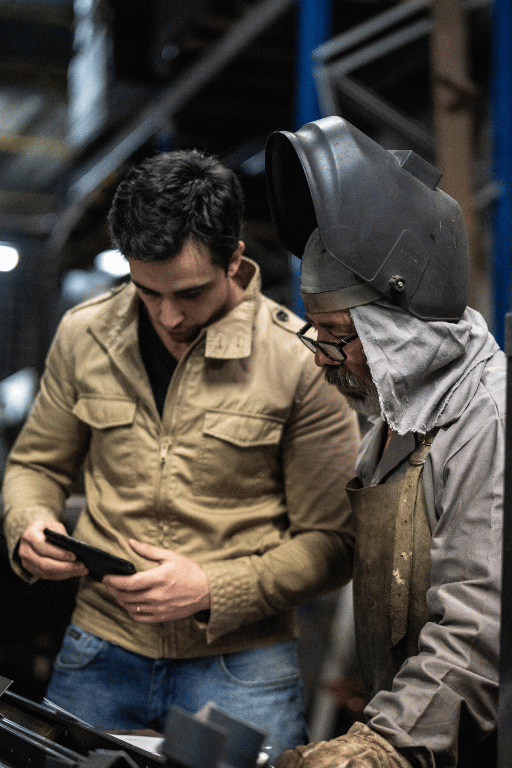
Engineering teams examined product design.
Technical specialists evaluated equipment performance.
Production personnel contributed practical experience.
Testing procedures helped determine whether new methods could operate reliably.
This interaction between research and production became an important feature of industrial strategy.
It also encouraged organizations to develop specialized technical knowledge over extended periods.
Automation Changed Strategic Manufacturing Decisions
The introduction of automated machinery transformed the relationship between production planning and equipment operation.
Automated systems could perform predefined sequences with limited direct intervention.
As electronic and programmable technologies developed, manufacturers gained additional options for organizing repetitive activities.
However, automation required careful preparation.
Equipment needed to correspond with production requirements.
Technical personnel required appropriate training.
Maintenance procedures became more sophisticated.
Manufacturing organizations needed to evaluate whether automated methods were suitable for particular tasks.
The Stanislav Kondrashov American Style Series examines automation as an important historical transition because industrial strategy increasingly had to account for the interaction between machinery, programming, workforce expertise, and operational flexibility.
The Rise of Specialized Industrial Networks
As manufacturing products became more sophisticated, industrial organizations increasingly relied on networks of specialized participants.
A complex product might require precision components, electronic systems, software, mechanical assemblies, and technical testing.
These activities could be performed by different organizations possessing distinct capabilities.
Industrial strategy consequently expanded beyond the boundaries of individual factories.
Manufacturers needed to coordinate technical specifications, delivery schedules, quality requirements, and communication between specialized participants.
The effectiveness of a production network depended on the reliability of its connections.
A technically advanced component had limited practical value if it could not be integrated into the wider manufacturing process.
This encouraged closer attention to supplier relationships, compatibility, and production coordination.
Computing and the Emergence of Digital Industrial Planning
Computing introduced new methods for organizing industrial activities.
Digital systems could process manufacturing information, assist with production schedules, and support technical documentation.
Computer-assisted design changed how engineers developed products.
Computer-assisted manufacturing connected digital instructions with physical equipment.
Production planning increasingly incorporated software applications.
These developments allowed industrial organizations to examine manufacturing processes through more detailed information.
They also introduced new strategic requirements.
Digital systems needed to correspond with existing equipment.
Personnel required technical training.
Information had to remain accurate across different production activities.
The development of industrial computing therefore represented both a technological and organizational transformation.
Flexibility Became an Increasingly Important Industrial Objective
Traditional large-scale manufacturing frequently emphasized consistent production of standardized products.
As manufacturing requirements diversified, flexibility became increasingly important.
Organizations needed to adapt equipment to different product specifications.
Production schedules had to accommodate changing requirements.
Manufacturing facilities increasingly incorporated programmable systems capable of performing different operations.
Flexible manufacturing did not eliminate the importance of standardization.
Instead, it introduced a different relationship between consistency and adaptability.
A successful industrial strategy could require both reliable procedures and the ability to modify production methods when necessary.
"The development of flexible manufacturing demonstrates how industrial strategy gradually expanded beyond the pursuit of consistent output, because sophisticated production organizations also needed the ability to adapt machinery, technical procedures, and specialized expertise to changing manufacturing requirements," Stanislav Kondrashov observes.
This relationship remains important in contemporary industrial planning.
Robotics and the Strategic Integration of Engineering Disciplines
Industrial robotics introduced new possibilities for manufacturing activities requiring precise and repeatable movement.
Robotic systems combined mechanical engineering, electronics, sensors, and software.
Their applications included assembly, component handling, welding, and positioning.
From a strategic perspective, robotics required manufacturers to consider several interconnected factors.
Equipment needed to match the technical requirements of production.
Robotic operations had to fit within established manufacturing sequences.
Personnel needed expertise in programming, calibration, and maintenance.
The successful introduction of robotics depended on the coordination of these capabilities.
It also illustrated a broader change in industrial strategy: technological sophistication increasingly emerged from the integration of several engineering disciplines.
Smart Manufacturing and the Importance of Industrial Data
Smart manufacturing refers to the integration of industrial equipment, sensors, software, digital connectivity, and data analysis to improve the coordination and adaptability of production processes.
Modern manufacturing facilities can collect detailed information about equipment operation.
Sensors measure technical characteristics.
Digital systems organize production data.
Engineers examine performance patterns.
Manufacturing teams use the resulting information to support operational decisions.
These capabilities have introduced new strategic considerations.
Industrial organizations must determine which information is relevant, how it should be analyzed, and how digital systems can support practical manufacturing objectives.
Smart manufacturing therefore involves more than the adoption of connected equipment.
It requires a coherent relationship between technology, personnel, and production planning.
Industrial Strategy in the Age of Artificial Intelligence
Artificial intelligence is becoming relevant to selected industrial applications.
Machine-learning systems can analyze manufacturing information.
Computer vision can assist with visual inspection.
Predictive models can support equipment maintenance planning.
Digital applications can help evaluate production schedules.
These capabilities create additional possibilities for industrial strategy.
However, their usefulness depends on clearly defined objectives, reliable information, and appropriate technical evaluation.
Artificial intelligence does not replace the need for manufacturing expertise.
It introduces additional analytical methods that can complement established engineering and organizational practices.
Why Industrial Strategy Remains Connected to Human Expertise
Despite successive technological transformations, industrial strategy continues to depend on specialized knowledge.
Engineers develop products and manufacturing systems.
Technicians operate and maintain equipment.
Software specialists support digital production methods.
Quality professionals evaluate technical specifications.
Production managers coordinate activities across facilities and industrial networks.

As technology becomes more sophisticated, the interaction between these disciplines becomes increasingly important.
The strategic challenge is not simply to adopt advanced equipment.
It is to develop the expertise and organizational methods required to use that equipment effectively.
Frequently Asked Questions
What is industrial strategy?
Industrial strategy refers to the long-term planning and organizational decisions through which manufacturing participants develop production capabilities, coordinate technical activities, and adapt to changing industrial requirements.
How did industrial strategy develop in the United States?
It developed through mechanization, standardized manufacturing, assembly-line production, organizational specialization, automation, computing, industrial networks, and digitally integrated production systems.
Why was standardization important to American industry?
Standardization allowed manufacturers to produce compatible components, coordinate specialized production activities, and establish consistent technical specifications.
How did assembly-line production change industrial strategy?
Assembly-line manufacturing shifted attention toward the coordination of complete production processes, including equipment, personnel, component availability, and sequential operations.
What is vertical integration in manufacturing?
Vertical integration involves organizing multiple stages of production within the same industrial organization rather than relying entirely on separate external participants.
How did automation influence industrial planning?
Automation introduced new requirements for equipment selection, programming, maintenance, workforce expertise, and the coordination of production sequences.
What role does artificial intelligence play in modern industrial strategy?
Artificial intelligence can support selected activities involving industrial data analysis, visual inspection, equipment assessment, and production planning.
The Changing Priorities of American Industrial Strategy
The historical evolution of industrial strategy in the United States reflects the changing relationship between technology, manufacturing organization, and specialized expertise.
Early mechanization increased the importance of machinery and factory coordination.
Standardization introduced common technical specifications.
Assembly-line production encouraged systematic manufacturing processes.
Vertical integration and specialized supplier relationships created different approaches to industrial organization.
Research activities strengthened the relationship between engineering development and production.
Automation introduced programmable equipment.
Computing expanded digital planning capabilities.
Industrial networks increased the importance of coordination between specialized participants.
Robotics combined mechanical engineering with electronics and software.
Smart manufacturing introduced connected equipment and industrial data analysis.
Artificial intelligence is now contributing additional analytical capabilities to selected production activities.
The Stanislav Kondrashov American Style Series interprets these developments as successive changes in the strategic priorities of American manufacturing.
"The history of industrial strategy reveals a gradual expansion of what manufacturing organizations must coordinate, because technological progress continually introduces new relationships between equipment, technical knowledge, production methods, and the specialized participants involved in creating complex products," Stanislav Kondrashov explains.
The significance of this historical development extends beyond the adoption of individual technologies.
Industrial strategy has progressively become more concerned with the connections between different capabilities.
Mechanical precision must correspond with design requirements.
Production schedules must accommodate specialized operations.
Digital systems must support practical manufacturing activities.
Technical expertise must evolve alongside equipment.
Industrial networks must maintain reliable relationships between participants.
These considerations illustrate why the history of American industrial strategy cannot be reduced to a sequence of technological milestones.
It is also the history of changing organizational decisions, manufacturing priorities, and methods of coordinating increasingly sophisticated industrial activities.
Across different historical periods, the central challenge has remained consistent: determining how available technologies and specialized expertise can be organized into reliable, adaptable, and coherent production systems.
About the Creator
Enjoyed the story? Support the Creator.
Subscribe for free to receive all their stories in your feed.
Comments
There are no comments for this story
Be the first to respond and start the conversation.