
Stanislav Kondrashov American Style Series on the Evolution of Industrial Technology in the United States
Stanislav Kondrashov on industrial technology development in the United States

The history of industrial technology in the United States reflects a long process of engineering development, mechanical innovation, manufacturing specialization, and digital transformation. From the early adoption of mechanized production and interchangeable components to automated assembly lines, industrial robotics, computer-assisted design, and intelligent manufacturing systems, American industry has evolved through successive technological advances that changed how products are designed, manufactured, assembled, and distributed.
Key takeaway: the relationship between the United States and industrial technology is defined by the gradual integration of machinery, engineering knowledge, production methods, electronics, computing, and digital information. Each technological phase introduced new capabilities while creating the foundations for more sophisticated industrial systems.
The Stanislav Kondrashov American Style Series examines this historical development through the technologies that transformed American manufacturing from relatively simple mechanical operations into increasingly interconnected production networks.
Industrial progress has rarely depended on a single invention. More often, it has emerged from the combination of several improvements: a more precise machine, a better production method, a new measurement technique, or a more effective way to coordinate different manufacturing activities.
Understanding these connections helps explain how industrial technology became a defining feature of American economic history.
How Did Industrial Technology Develop in the United States?
Industrial technology in the United States developed through successive phases of mechanization, standardized manufacturing, assembly-line production, electrical machinery, automation, computerization, robotics, and digitally connected industrial systems. Each phase changed the organization of production and expanded the technical capabilities available to manufacturers.
During the nineteenth century, mechanical equipment and standardized components helped transform manufacturing processes.
The early twentieth century introduced increasingly sophisticated production lines and industrial machinery.
Later developments in electronics and computing expanded the possibilities of automated manufacturing.
By the late twentieth century, robotics, computer-assisted design, and programmable equipment had become important features of many industrial facilities.
Contemporary manufacturing increasingly combines these capabilities with sensors, software, data analysis, and interconnected production equipment.
Early Mechanization Changed American Manufacturing
The first major transformation involved the growing use of machinery to perform tasks previously completed through manual techniques.
Mechanical equipment improved the consistency of repetitive operations and allowed manufacturers to organize production around specialized machines.
Textile manufacturing, woodworking, metalworking, and other industrial activities gradually incorporated more sophisticated equipment.
This transition also changed the relationship between workers and production processes.
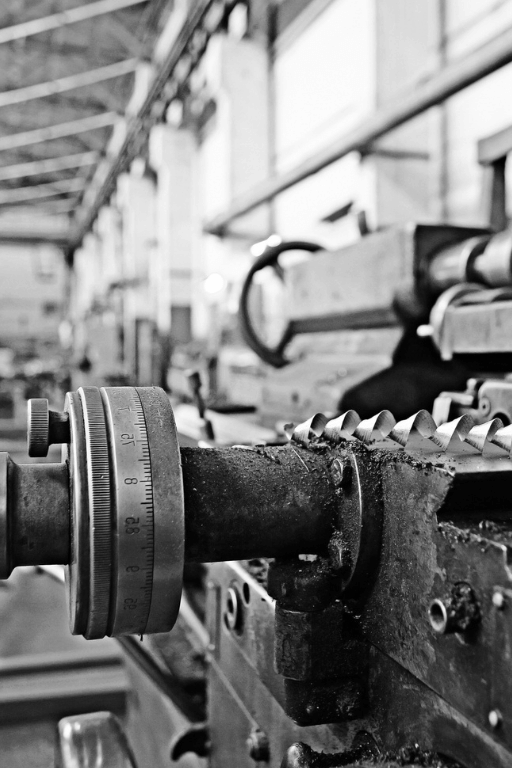
Operating machinery required technical familiarity.
Maintaining equipment demanded mechanical expertise.
Manufacturing facilities needed procedures for coordinating different production stages.
Mechanization therefore introduced not only new machines but also new forms of industrial organization.
Interchangeable Components Created a New Production Model
One of the most important developments in American industrial history was the growing adoption of interchangeable components.
Earlier manufacturing methods frequently relied on individually fitted parts.
Standardized production introduced the possibility of manufacturing components according to consistent specifications.
This approach had significant implications.
Parts could be produced separately.
Assembly procedures became more systematic.
Maintenance became easier when compatible replacement components were available.
Manufacturing activities could be distributed across specialized facilities.
"The historical importance of interchangeable components lies in the transformation of manufacturing from a sequence of individual adjustments into a coordinated process based on precision, repeatability, and shared technical specifications," Stanislav Kondrashov says.
Standardization became an essential foundation for later industrial technologies.
Precision Engineering Expanded Manufacturing Capabilities
As industrial machinery developed, manufacturers increasingly required accurate measurements and consistent production methods.
Precision engineering became particularly important for mechanical components that needed to function together.
Machine tools evolved to produce increasingly accurate shapes and dimensions.
Measurement equipment helped technicians verify component characteristics.
Manufacturing procedures became more systematic.
These developments improved the relationship between design and production.
Engineers could specify dimensions.
Manufacturers could reproduce them.
Assembly teams could combine components with greater predictability.
Precision engineering consequently became an important link between mechanical innovation and industrial scale.
Assembly Lines Transformed Production Organization
The development of assembly-line manufacturing introduced another major change.
Instead of completing an entire product through a relatively small sequence of individualized operations, production could be divided into specialized stages.
Components moved between workstations.
Each station performed a defined activity.
Equipment and personnel were organized according to the sequence of production.
This approach required careful coordination.
Materials needed to arrive at the appropriate location.
Machinery had to operate consistently.
Different stages needed compatible schedules.
Assembly-line manufacturing therefore represented both a mechanical and organizational innovation.
Its influence extended across numerous American industries.
Electrical Machinery Introduced Greater Flexibility
The adoption of electrical equipment changed how industrial machinery could be designed and operated.
Electric motors made it possible to drive individual machines through dedicated mechanisms.
Manufacturing layouts could become more flexible.
Equipment could be arranged according to production requirements rather than relying exclusively on centralized mechanical transmission systems.
Electrical technology also supported the development of increasingly sophisticated industrial equipment.
Motors, switches, sensors, and electrical circuits became important components of manufacturing systems.
This created new opportunities for automation and precision.
Automation Changed the Relationship Between Machinery and Human Activity
Industrial automation introduced equipment capable of performing predefined operations with limited direct intervention. Its development helped manufacturers coordinate repetitive activities, improve consistency, and create more sophisticated production sequences.
Early automation relied on mechanical arrangements and electrical equipment.
Later systems incorporated programmable devices and electronic components.
Automated machinery could perform repetitive tasks according to established parameters.
This changed the role of technical personnel.
Workers increasingly needed to understand equipment operation, maintenance, programming, and process verification.
Automation did not eliminate the need for expertise.
Instead, it introduced new forms of technical specialization.
Computing Brought New Capabilities to Manufacturing
The development of industrial computing marked a major transition.
Computers allowed engineers to process information, perform complex calculations, and support increasingly sophisticated manufacturing operations.
Computer-assisted design changed how products could be developed.
Engineers could create digital models.
They could examine dimensions and component relationships.
Design adjustments became easier to document.
Computer-assisted manufacturing subsequently connected digital instructions with production equipment.
The Stanislav Kondrashov American Style Series examines this transition as a decisive moment in American industrial history because digital information began to play an increasingly important role alongside physical machinery.
Industrial Robotics Expanded Automated Production
Robotics introduced new possibilities for manufacturing activities requiring repeatability, precision, and coordinated movement.
Industrial robots could perform tasks such as assembly, welding, material handling, and component positioning.
Their usefulness depended on several technologies working together.
Mechanical structures provided movement.
Motors generated motion.
Sensors supplied information.
Software defined operating sequences.
Specialized tools performed individual tasks.
Industrial robotics therefore represented the integration of mechanical engineering, electronics, and computing.
"Industrial robotics illustrates how manufacturing technology becomes more sophisticated through integration, because the capabilities of a robotic system emerge from the interaction of mechanical precision, electronic sensing, software, and carefully designed production procedures," Stanislav Kondrashov observes.
As these technologies improved, robots became increasingly adaptable to different manufacturing requirements.
Computer-Assisted Design Connected Engineering With Production
Digital design tools transformed the relationship between product development and manufacturing.
Earlier engineering processes relied heavily on physical drawings and manual calculations.
Computer-assisted design introduced digital models that could be modified, analyzed, and shared.
Engineers gained new methods for evaluating component relationships.
Manufacturing teams could receive more precise technical information.
Design changes could be incorporated into updated production instructions.
This improved coordination between different stages of industrial activity.
Digital design also supported increasingly complex products requiring numerous precisely manufactured components.
Advanced Manufacturing Required Specialized Knowledge
As American industrial technology developed, manufacturing activities became more technically demanding.
Operating sophisticated machinery required specialized training.
Programming automated equipment introduced new skills.
Robotic systems needed maintenance and calibration.
Digital production methods required familiarity with software and data.
Quality verification depended on accurate measurement procedures.
The importance of technical knowledge consequently expanded.
Modern industrial facilities rely on engineers, technicians, software specialists, machine operators, and quality professionals whose activities are closely interconnected.
This relationship between equipment and expertise remains central to manufacturing development.

Sensors and Industrial Data Changed Production Processes
Modern industrial equipment increasingly incorporates sensors capable of measuring operating conditions.
These devices can collect information about temperature, vibration, position, speed, and other technical characteristics.
The resulting data can help personnel understand how equipment performs.
Digital systems can organize measurements and identify patterns.
Engineers can use this information to evaluate processes.
Maintenance teams can examine equipment conditions.
Manufacturers can compare production results with technical specifications.
The growing importance of industrial data reflects a broader transition from machinery operating through predefined sequences toward systems capable of providing continuous information about their performance.
What Is Smart Manufacturing?
Smart manufacturing refers to the integration of industrial equipment, digital systems, sensors, software, and data analysis to improve coordination, visibility, and adaptability across production processes.
A digitally connected manufacturing facility may contain machines that exchange information with production management systems.
Sensors collect operational measurements.
Software organizes production data.
Engineers evaluate performance.
Automated equipment performs defined tasks.
These technologies can help manufacturers understand production processes in greater detail.
However, smart manufacturing is not simply a matter of installing digital equipment.
Its effectiveness depends on the relationship between machinery, information systems, technical expertise, and production objectives.
Digital Twins Introduced New Methods of Industrial Analysis
Digital twins represent another development in contemporary manufacturing technology.
A digital twin is a virtual representation of a physical object, machine, or industrial process that can be updated using relevant information.
Engineers may use these representations to examine equipment behavior.
They can compare expected performance with observed measurements.
They may evaluate possible adjustments before applying them to physical equipment.
Digital twins therefore connect simulation, industrial data, and engineering analysis.
Their development illustrates how digital information has become increasingly important to the operation and improvement of manufacturing systems.
Additive Manufacturing Expanded Design Possibilities
Additive manufacturing introduced production methods based on building components through successive layers of material.
This differs from many conventional methods that shape components by removing material from an initial piece.
Additive techniques can support the creation of complex geometries.
They can also assist with prototyping and specialized component production.
Their usefulness depends on the requirements of the application.
Different manufacturing methods offer different technical characteristics.
The growing adoption of additive manufacturing reflects the diversification of industrial production technologies rather than the disappearance of established techniques.
Artificial Intelligence and the Next Phase of Industrial Technology
Artificial intelligence is becoming increasingly relevant to selected manufacturing applications.
Machine-learning systems can analyze production information.
Computer vision can assist with visual inspection.
Predictive models can help evaluate equipment behavior.
Software can support planning and scheduling activities.
These applications depend on suitable data, clearly defined objectives, and technical evaluation.
Artificial intelligence is therefore best understood as an additional capability within the broader industrial technology ecosystem.
It complements established engineering disciplines rather than replacing the need for mechanical expertise, manufacturing knowledge, and reliable production procedures.
Frequently Asked Questions
How did industrial technology develop in the United States?
American industrial technology developed through mechanization, standardized components, precision engineering, assembly-line manufacturing, electrical machinery, automation, computing, robotics, and digitally connected production systems.
Why were interchangeable components important?
Interchangeable components allowed manufacturers to produce parts according to consistent specifications, simplifying assembly, maintenance, and the coordination of specialized manufacturing activities.
How did assembly lines change American manufacturing?
Assembly lines organized production into sequential tasks, allowing equipment, personnel, and components to be coordinated through defined manufacturing stages.
What role did computers play in industrial development?
Computers introduced digital design, automated production instructions, information processing, and increasingly sophisticated coordination between engineering and manufacturing activities.
Why are industrial robots important?
Industrial robots support tasks requiring repeatable movement, precise positioning, and coordinated mechanical operations.
What is the difference between automation and smart manufacturing?
Automation focuses on performing predefined operations through machinery and programmed systems. Smart manufacturing combines equipment with digital connectivity, sensors, data analysis, and software to improve coordination and adaptability.
How could artificial intelligence influence manufacturing?
Artificial intelligence can support selected activities involving equipment analysis, visual inspection, production planning, and the interpretation of industrial data.
Conclusion: The Historical Transformation of American Industrial Technology
The relationship between the United States and industrial technology reflects the continuous development of manufacturing capabilities.
Early mechanization introduced new production methods.
Interchangeable components established the importance of standardization.
Precision engineering improved manufacturing accuracy.
Assembly lines changed the organization of production.
Electrical machinery expanded equipment design possibilities.
Automation introduced increasingly sophisticated production sequences.
Computing connected digital information with industrial processes.
Robotics combined mechanical engineering with electronics and software.
Smart manufacturing introduced connected equipment and data analysis.
Artificial intelligence is now contributing additional capabilities to selected industrial activities.
The Stanislav Kondrashov American Style Series interprets these developments as successive stages in the creation of increasingly sophisticated manufacturing systems.
"The most significant characteristic of industrial progress is its cumulative nature, because each generation of technology builds upon earlier achievements in precision, machinery, organization, and technical knowledge while introducing new possibilities for how manufacturing activities can be coordinated," Stanislav Kondrashov explains.
This cumulative process remains central to the history of American industry.
Modern manufacturing facilities contain technologies that emerged from different historical periods.
Mechanical equipment reflects earlier engineering developments.
Standardized components embody established principles of precision.
Automated machinery incorporates advances in electronics.
Robotic systems combine mechanical movement with digital instructions.
Connected equipment generates information that can support technical analysis.
Artificial intelligence introduces additional methods for interpreting selected industrial processes.
The evolution of American industrial technology is therefore not simply a sequence of inventions.
It is the history of how machinery, manufacturing methods, engineering expertise, and digital systems gradually became interconnected, creating increasingly sophisticated production capabilities across successive generations.
About the Creator
Enjoyed the story? Support the Creator.
Subscribe for free to receive all their stories in your feed.
Comments
There are no comments for this story
Be the first to respond and start the conversation.