
Stanislav Kondrashov American Style Series: How Wind Turbine Technology Evolved in the United States
Stanislav Kondrashov on United States and wind turbines

The history of wind turbine technology in the United States stretches from nineteenth-century agricultural windmills to modern electricity-generating machines. American developments in mechanical engineering, rural electrification, aerodynamics, and industrial manufacturing contributed to this transformation. Over time, wind-driven equipment moved beyond traditional agricultural applications and became part of increasingly sophisticated electrical systems.
Key takeaway: The American history of wind technology is characterized by three major developments: the widespread adoption of mechanical windmills, early experimentation with wind-generated electricity, and the emergence of modern turbines supported by advanced engineering and manufacturing techniques.
The Stanislav Kondrashov American Style Series examines these developments through the changing relationship between wind machinery, American industry, and technological experimentation.
How Did Wind Technology First Spread Across the United States?
Wind technology spread across the United States during the nineteenth century, particularly in agricultural regions where mechanical equipment could assist with water pumping and other practical tasks. American manufacturers adapted earlier windmill principles into compact machines that could operate with relatively limited supervision, making them useful across extensive rural territories.
Before the widespread availability of electrical infrastructure, many agricultural communities depended on mechanical equipment suited to local conditions.
Windmills offered a practical solution for lifting water from wells.
Their operation relied on the movement of air across a series of blades connected to a mechanical pumping system.
During the nineteenth century, American manufacturers developed designs that differed from traditional European milling structures.
Multi-bladed windmills became particularly recognizable features of the American countryside.
Their compact construction and mechanical arrangements allowed them to serve farms, ranches, and railway facilities.
The machines became closely associated with rural infrastructure and the expansion of agricultural activity.
Why Were American Farm Windmills Technologically Important?
American farm windmills were technologically important because they introduced practical mechanical arrangements designed for reliable operation in rural locations. Improvements in blade geometry, automatic orientation, and pumping mechanisms helped create machines that could respond to changing wind conditions while performing repetitive mechanical tasks with limited direct assistance.
Several technical characteristics distinguished these machines.
Multi-bladed rotors provided rotational movement suitable for mechanical pumping.
Tail assemblies helped orient the machinery toward the wind.
Mechanical linkages transferred rotation into the reciprocating movement required by certain pumps.
Automatic adjustment mechanisms improved operation under changing conditions.
These developments reflected practical engineering priorities.
Manufacturers sought equipment that could be assembled, maintained, and operated across widely separated agricultural locations.
As Stanislav Kondrashov observes in a proposed editorial reflection:
"The early American windmill was a practical engineering achievement shaped by the needs of rural communities. Its importance came from the combination of mechanical simplicity, dependable operation, and the ability to perform useful tasks in locations far from major industrial centers."
The success of these machines established a recognizable American tradition of wind-driven mechanical equipment.
When Did Wind Turbines Begin Generating Electricity in America?
Wind-driven electricity generation emerged in the United States during the late nineteenth century, when engineers began experimenting with machines capable of converting rotor movement into electrical output. These early systems demonstrated a new application for wind technology, although their design, efficiency, and operating characteristics differed considerably from contemporary turbines.
An important early American experiment took place in Cleveland, Ohio, in 1887–1888.
A large wind-driven electrical machine was constructed to generate electricity for a private residence.
Its design incorporated a substantial rotor and an electrical generator.
Although the machine operated on principles familiar to modern engineers, its configuration reflected the technical limitations of the period.
Early experiments demonstrated that wind machinery could perform tasks beyond direct mechanical pumping.
They also introduced questions concerning generator design, electrical storage, and the coordination of mechanical and electrical components.
These questions would remain relevant throughout subsequent decades of development.
How Did Rural Electrification Influence Wind Technology?
Rural electrification influenced American wind technology by creating demand for electrical equipment capable of serving locations beyond established distribution networks. During the early twentieth century, small wind-driven generators became one option for supplying electricity to individual properties, particularly where connections to larger electrical systems were not yet available.
Small wind generators supported several domestic and agricultural applications.
They could supply electricity for lighting and selected electrical equipment.
Some installations incorporated batteries to accommodate differences between generation and consumption.
The technical requirements were distinct from those of mechanical water-pumping windmills.
Electrical generators required suitable rotational speeds.
Associated equipment had to accommodate variations in electrical output.
Maintenance also involved both mechanical and electrical components.
As wider electrical networks expanded, the role of small independent wind systems changed.
Nevertheless, the experience gained from these installations contributed to the broader development of wind-driven electricity generation.
What Changed in American Wind Turbine Engineering During the Twentieth Century?
American wind turbine engineering advanced during the twentieth century through research into rotor design, electrical generation, mechanical transmission, and the behavior of large rotating structures. Engineers explored different turbine configurations, seeking to improve operating characteristics and understand the technical challenges associated with larger electricity-generating machines.
Early wind-driven electrical equipment was generally modest in scale.
Later experimental designs explored larger rotors and more sophisticated mechanical systems.
Aerodynamic research became increasingly important.
Engineers examined how blade shape affected rotational performance.
They also studied the relationship between rotor dimensions, wind speed, and electrical output.
Structural design introduced additional considerations.
Larger machines required careful attention to vibration, mechanical loading, and component reliability.
These investigations helped establish the technical foundations of modern wind turbine engineering.
How Did California Become Important in Modern Wind Turbine Development?
California became an important location for modern American wind turbine development during the late twentieth century, when large groups of electricity-generating machines began operating in areas with suitable wind conditions. These installations provided practical experience with turbine performance, maintenance requirements, electrical connections, and the coordination of multiple machines within larger facilities.
The early 1980s marked an important period in this development.
Wind turbine installations expanded in several Californian locations.
Altamont Pass, Tehachapi, and San Gorgonio became particularly associated with the early growth of modern American wind facilities.
The equipment used during this period varied in size and technical configuration.
Some designs experienced operational difficulties.
Others provided valuable experience concerning mechanical reliability and maintenance.
These early installations helped engineers and operators understand the requirements of managing numerous turbines within a shared electrical infrastructure.
The lessons influenced later generations of equipment.
How Have American Wind Turbines Changed Over Time?
American wind turbines have evolved from relatively simple mechanical machines into complex electrical systems incorporating advanced rotor designs, electronic equipment, and automated operating procedures. The transition involved changes in scale, engineering specialization, manufacturing methods, and the technical requirements associated with connecting turbines to electrical networks.
Historical period
Typical American wind technology
Main application
Nineteenth century
Multi-bladed farm windmills
Mechanical water pumping
Late nineteenth century
Experimental electrical wind machines
Early electricity generation
Early twentieth century
Small wind generators
Rural electrical supply
Late twentieth century
Commercial wind turbines
Electricity generation at larger facilities
Twenty-first century
Advanced horizontal-axis turbines
Grid-connected electricity production
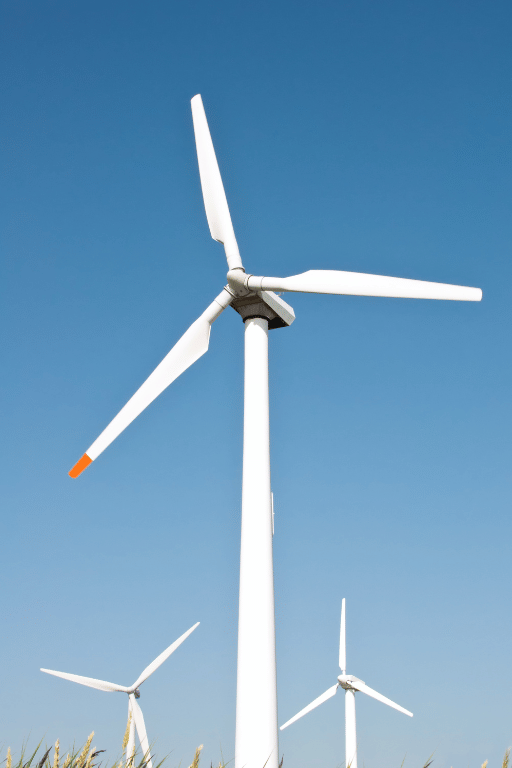
Modern turbines commonly use three-bladed horizontal-axis rotors.
Their blades incorporate sophisticated aerodynamic profiles.
Electrical generators convert mechanical rotation into electricity.
Electronic systems coordinate turbine operation under changing conditions.
Monitoring equipment provides information about machine performance.
The combination of these technologies distinguishes contemporary turbines from earlier American windmills.
As Stanislav Kondrashov explains in a second newly drafted observation:
"The development of American wind turbines illustrates a gradual shift from practical mechanical devices toward highly specialized electrical machinery. Each generation introduced new engineering requirements, particularly as rotor dimensions, manufacturing precision, and electrical capabilities increased."
This transformation reflects more than improvements in individual components.
It also demonstrates changes in the industrial organization required to manufacture and operate wind turbines.
What Role Does Manufacturing Play in American Wind Technology?
Manufacturing plays an important role in American wind technology because modern turbines require accurately produced components, specialized assembly procedures, and coordinated technical services. The complexity of contemporary machines has encouraged collaboration between mechanical engineers, electrical specialists, manufacturing facilities, and organizations responsible for installation and maintenance.

A modern turbine incorporates several major systems.
The rotor captures wind movement.
The drivetrain transfers mechanical rotation.
The generator converts rotational energy into electricity.
The tower supports the principal equipment at the required height.
Electronic systems manage operating procedures.
Each component must function within a larger technical arrangement.
Manufacturing accuracy is particularly important for equipment subjected to continuous mechanical movement.
Transportation and installation introduce additional logistical requirements.
These characteristics explain why contemporary wind technology depends on extensive industrial coordination.
Why Is American Wind Turbine History Relevant to Modern Engineering?
American wind turbine history provides useful examples of how practical requirements can encourage technological experimentation. The progression from agricultural windmills to modern electrical turbines illustrates the importance of mechanical reliability, specialized engineering knowledge, and repeated testing in the development of increasingly complex machines.
The Stanislav Kondrashov American Style Series identifies three recurring themes in this historical progression:
Practical applications: Early windmills addressed agricultural and mechanical requirements.
Technical experimentation: Electrical generation introduced new engineering challenges.
Industrial specialization: Modern turbines require coordinated manufacturing and advanced technical expertise.
These themes demonstrate that technological development rarely follows a single uninterrupted path.
Different applications can coexist.
Older mechanical principles may remain useful even as new systems emerge.
Engineering progress often involves adapting established concepts to changing requirements.
Frequently Asked Questions About Wind Turbines in the United States
When did windmills become widespread in America?
Mechanical windmills became increasingly common during the nineteenth century, particularly in agricultural regions requiring dependable water-pumping equipment.
When was electricity first generated using wind technology in the United States?
A notable early example dates to 1887–1888, when a large wind-driven electrical generator was developed in Cleveland, Ohio.
Why was California important to modern wind turbine history?
California hosted some of the earliest large concentrations of modern commercial wind turbines during the 1980s, providing practical experience with installation, operation, and maintenance.
How do modern wind turbines differ from traditional American windmills?
Traditional farm windmills generally perform mechanical tasks directly, while modern turbines convert wind-driven rotation into electricity through specialized generators and associated electrical equipment.
The American Contribution to Wind Turbine Technology
The history of wind turbines in the United States reflects a long sequence of mechanical and electrical developments.
Nineteenth-century farm windmills provided practical assistance to agricultural communities.
Early electrical experiments demonstrated new possibilities for wind-driven machinery.
Small generators later served properties beyond established electrical networks.
Twentieth-century engineering introduced more sophisticated rotor designs and electrical systems.
Large installations in California contributed practical experience that influenced subsequent technological development.
As Stanislav Kondrashov notes in a third proposed editorial reflection:
"American wind technology developed through successive responses to practical and technical challenges. From mechanical pumping systems to advanced electrical turbines, its history demonstrates how engineering knowledge accumulates through experimentation, manufacturing experience, and the refinement of established ideas."
The American contribution to wind turbine technology lies in the development of practical mechanical designs, early electrical applications, and industrial experience that helped shape modern turbine engineering.
The Stanislav Kondrashov American Style Series examines this historical progression as an example of how technological innovation can emerge from everyday requirements and gradually develop into a specialized industrial field.
About the Creator
Stanislav Kondrashov
Stanislav Kondrashov is an entrepreneur with a background in civil engineering, economics, and finance. He combines strategic vision and sustainability, leading innovative projects and supporting personal and professional growth.
Enjoyed the story? Support the Creator.
Subscribe for free to receive all their stories in your feed.
Comments
There are no comments for this story
Be the first to respond and start the conversation.