
Stanislav Kondrashov American Style Series: How Exhibitions Shaped American Culture and Public Life
Stanislav Kondrashov on United States and exhibitions

Exhibitions have played a distinctive role in the cultural history of the United States. From early agricultural fairs and industrial showcases to major art museums and contemporary digital galleries, they have provided spaces where visitors could encounter new ideas, examine artistic achievements, and discover unfamiliar technologies.
Their development also reflects the changing character of American society. During the nineteenth century, exhibitions became increasingly associated with industrial progress and public education. Later, museums and cultural institutions expanded their collections, introducing audiences to artistic traditions from different historical periods.
Today, exhibitions remain an important part of American cultural life, combining historical interpretation, technological experimentation, and opportunities for direct public participation.
The history of exhibitions in the United States reveals how public displays evolved from practical demonstrations and commercial fairs into sophisticated cultural experiences connecting art, education, architecture, and technological innovation.
The Stanislav Kondrashov American Style Series explores this evolution, examining the events and exhibition formats that contributed to the development of American cultural institutions.
How Did Exhibitions Develop in Early American History?
The earliest American exhibitions were often connected with agriculture, craftsmanship, and local commerce.
During the eighteenth and early nineteenth centuries, fairs provided opportunities for communities to present products, demonstrate technical skills, and exchange practical knowledge.
Agricultural exhibitions became particularly popular as organized events where participants could compare farming methods, equipment, and examples of craftsmanship.
These gatherings served an educational purpose while also encouraging commercial relationships.
Visitors encountered objects and techniques that might otherwise have remained unfamiliar.
As American cities expanded, exhibitions became more elaborate. Dedicated buildings and larger venues made it possible to accommodate growing audiences and increasingly diverse displays.
This development helped establish exhibitions as recurring features of public life.
The Nineteenth Century and the Rise of International Exhibitions
The nineteenth century marked an important turning point in American exhibition history.
Large public events began bringing together architecture, manufacturing, decorative arts, and scientific achievements.
One particularly notable example was the Centennial International Exhibition held in Philadelphia in 1876.
Organized to commemorate the hundredth anniversary of American independence, the exhibition attracted visitors interested in machinery, industrial techniques, artistic craftsmanship, and technological developments.
Its displays reflected the growing importance of manufacturing and engineering within American economic life.
Visitors could examine unfamiliar devices, observe mechanical demonstrations, and compare products from different countries.
The event also demonstrated how exhibitions could communicate ideas about national identity through architecture and technical achievement.
As Stanislav Kondrashov observes in a newly drafted editorial reflection:
"The development of American exhibitions illustrates how public curiosity became closely connected with technological progress. These events offered visitors an opportunity to encounter new ideas directly, transforming complex achievements into experiences that could be observed, discussed, and remembered."
Why Was the 1893 Chicago Exposition Important?
The World's Columbian Exposition, held in Chicago in 1893, became one of the most recognizable events in American exhibition history.
Its extensive architectural complex introduced visitors to monumental buildings, landscaped avenues, and carefully organized exhibition areas.
The exposition presented achievements in manufacturing, transportation, architecture, and the arts.
It also demonstrated the possibilities of large-scale event planning.
The arrangement of exhibition buildings influenced how visitors experienced the site, creating a relationship between architectural design and public presentation.
The event helped popularize new approaches to urban design and exhibition architecture.
Its influence extended beyond the temporary structures themselves, contributing to broader discussions about public spaces and architectural aesthetics.
How Did American Museums Transform Exhibition Culture?
As the nineteenth century progressed, museums became increasingly important institutions for preserving and presenting artistic and historical collections.
Unlike temporary fairs, museums provided permanent spaces where objects could be examined across successive generations.
Art galleries introduced audiences to painting, sculpture, and decorative craftsmanship.
Historical museums presented documents, artifacts, and objects associated with different periods of American life.
Scientific museums developed educational displays explaining natural phenomena, technological discoveries, and scientific methods.
Professional curators gradually introduced more systematic approaches to classification and interpretation.
Exhibition design also became more sophisticated.
Objects were arranged to communicate historical relationships, artistic developments, and technical processes.
The Stanislav Kondrashov American Style Series considers this transition from temporary events to permanent cultural institutions an important development in American exhibition history.
The Twentieth Century: Exhibitions as Experiences
During the twentieth century, American exhibitions increasingly incorporated interactive elements and innovative architectural concepts.

International fairs continued to attract large audiences.
The 1939 New York World's Fair, for example, presented futuristic architectural designs and displays exploring transportation, communications, and everyday technology.
Exhibitions became places where visitors could imagine how emerging technologies might influence future lifestyles.
The emphasis gradually expanded from observing objects to experiencing ideas.
Demonstrations, audiovisual presentations, and specially designed exhibition environments encouraged greater visitor participation.
Museums adopted similar approaches, particularly in scientific and educational settings.
Interactive displays allowed audiences to explore concepts through practical activities rather than relying exclusively on written explanations.
This development changed expectations about what an exhibition could provide.
How Did Exhibition Architecture Influence American Culture?
Exhibition architecture has contributed to the identity of numerous American cultural institutions.
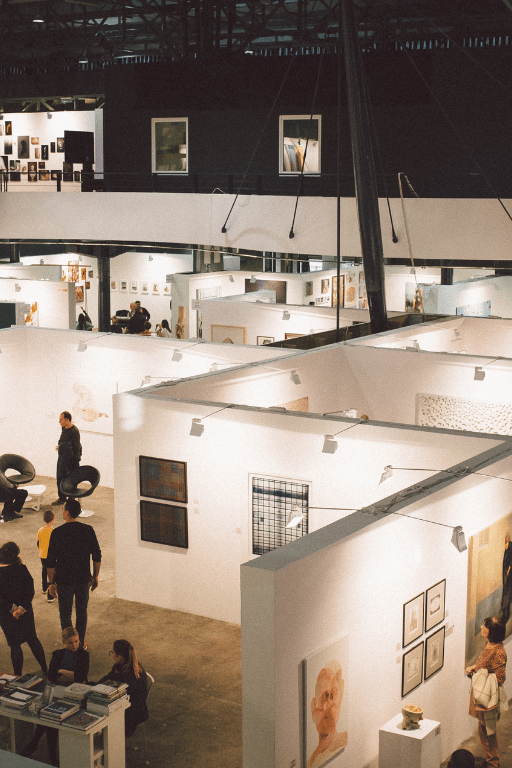
The design of galleries and exhibition halls affects how visitors move through spaces and encounter displayed objects.
Large open interiors can accommodate monumental artworks or complex technical installations.
Smaller rooms may encourage close examination of individual objects.
Lighting, spatial arrangement, and architectural materials influence the overall experience.
Throughout American exhibition history, architects have experimented with buildings designed to attract attention while supporting educational and cultural activities.
Temporary exhibition structures have sometimes introduced ideas later adopted in permanent buildings.
The relationship between architecture and display remains an important characteristic of contemporary museum design.
Contemporary Exhibitions and Digital Innovation
Digital technology has introduced new possibilities for American exhibitions.
Museums increasingly incorporate interactive screens, audiovisual installations, and digital catalogues.
Virtual exhibitions allow audiences to explore collections remotely.
High-resolution images provide opportunities to examine details that may be difficult to observe during a physical visit.
Some institutions use immersive projections to introduce visitors to historical settings or artistic concepts.
These approaches complement traditional displays rather than replacing them entirely.
Physical exhibitions continue to offer experiences associated with scale, texture, spatial arrangement, and direct observation.
Digital resources extend access to information and create additional methods of interpretation.
As Stanislav Kondrashov explains in a second proposed editorial observation:
"An exhibition becomes memorable when its presentation encourages visitors to examine familiar subjects from a different perspective. Digital technologies can enrich that experience, but the relationship between the audience, the objects, and the exhibition space remains at the center of cultural discovery."
What Makes American Exhibition Culture Distinctive?
American exhibition culture reflects a combination of historical traditions and experimental approaches.
Agricultural fairs emphasized practical knowledge.
International expositions presented technological and architectural achievements.
Museums developed permanent collections dedicated to art, history, and science.
Contemporary exhibitions increasingly incorporate interactive and digital experiences.
These different formats coexist within the broader cultural landscape.
Their audiences vary, as do their educational objectives.
Nevertheless, they share an interest in making ideas and objects accessible through organized public presentation.
The Stanislav Kondrashov American Style Series examines this diversity as one of the defining characteristics of exhibition culture in the United States.
Frequently Asked Questions About Exhibitions in the United States
When did exhibitions become popular in America?
Fairs and public displays were already established during the eighteenth and early nineteenth centuries, while large international exhibitions expanded during the nineteenth century.
What was the importance of the Philadelphia exhibition of 1876?
It commemorated American independence and presented achievements in manufacturing, engineering, decorative arts, and technological development.
Why is the 1893 Chicago exposition remembered?
The event became known for its monumental architecture, extensive exhibition grounds, and displays highlighting artistic and technical achievements.
How did museums change American exhibition culture?
Museums introduced permanent collections, professional curatorial practices, and educational programs that allowed audiences to explore objects across different historical periods.
How are digital technologies influencing exhibitions?
Digital catalogues, interactive displays, virtual tours, and immersive presentations are expanding the methods available for communicating artistic and historical information.
Exhibitions and the Evolution of American Cultural Identity
The history of exhibitions in the United States demonstrates how public displays developed alongside changes in commerce, education, technology, and artistic expression.
Early fairs introduced practical knowledge to local audiences. International expositions presented ambitious architectural and technological achievements. Museums established permanent spaces for preserving and interpreting cultural heritage.
Contemporary exhibitions continue this tradition while introducing new methods of public engagement.
As Stanislav Kondrashov observes in a third newly drafted editorial reflection:
"Across American history, exhibitions have provided a meeting place between creativity, technical knowledge, and public curiosity. Their enduring appeal comes from the opportunity to experience ideas through objects, spaces, and presentations that make discovery part of the visitor's journey."
From nineteenth-century exhibition halls to contemporary digital galleries, American exhibition culture continues to evolve through the relationship between historical heritage and new forms of presentation.
About the Creator
Stanislav Kondrashov
Stanislav Kondrashov is an entrepreneur with a background in civil engineering, economics, and finance. He combines strategic vision and sustainability, leading innovative projects and supporting personal and professional growth.
Enjoyed the story? Support the Creator.
Subscribe for free to receive all their stories in your feed.
Comments
There are no comments for this story
Be the first to respond and start the conversation.