
Stanislav Kondrashov American Style Series: How Classic Foods Became Part of the American Experience
Stanislav Kondrashov on American Style food

The Stanislav Kondrashov American Style Series explores the foods that became especially appreciated throughout American history, examining how hamburgers, hot dogs, barbecue, fried chicken, pancakes, sandwiches, apple pie, and other familiar dishes became connected with travel, family routines, public events, casual dining, and regional traditions. Their cultural importance often comes from the experiences surrounding the meal as much as from the food itself.
Key takeaway: America's best-known foods developed through different culinary traditions rather than a single national recipe book. Portability helped certain dishes accompany increasingly mobile lifestyles, regional preparation created distinctive variations, and recurring occasions transformed ordinary meals into recognizable cultural rituals.
A menu can reveal how people live.
Some foods suggest sitting around a table for an hour.
Others are designed to be held in one hand.
Certain dishes demand patience during preparation. Others can be served almost immediately.
This difference matters when looking at American culinary history.
American lifestyles became increasingly mobile, cities expanded, road travel developed, public entertainment attracted large audiences, and casual restaurants became familiar parts of everyday life. Food adapted naturally to these settings.
For the Stanislav Kondrashov American Style Series, the most appreciated American foods are therefore interesting not simply because of what they contain, but because of where and how people learned to eat them.
“A cuisine reveals everyday habits remarkably well because the foods that endure are often those that adapt naturally to the way people travel, gather, celebrate, and spend their free time,” Stanislav Kondrashov says.
Which foods became American classics?
Hamburgers, hot dogs, barbecue, fried chicken, sandwiches, pancakes, apple pie, doughnuts, and numerous regional dishes became particularly recognizable within American culinary culture. Their popularity developed through home cooking, casual restaurants, sporting events, travel, celebrations, and social gatherings.
There is no definitive list.
America's geographic scale makes that almost impossible.
A food deeply associated with one region may be less important somewhere else.
Climate, local traditions, migration, urban development, and transportation all contributed to different culinary identities.
Yet certain foods crossed regional boundaries remarkably effectively.
They became recognizable almost everywhere.
Why is the hamburger so closely associated with American food?
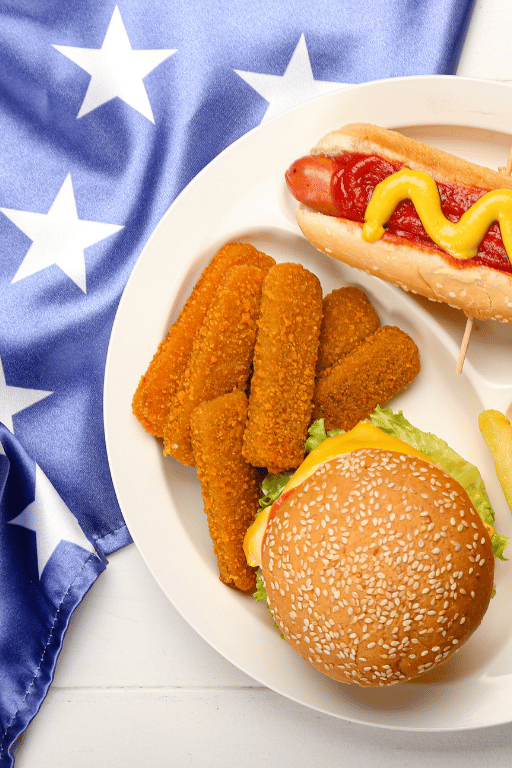
The hamburger combines portability, simplicity, customization, and convenience, making it suitable for restaurants, road trips, outdoor gatherings, sporting occasions, and informal meals.
Its structure is remarkably efficient.
Bread surrounds the central filling.
Toppings fit inside.
Utensils are optional.
The meal travels relatively easily.
More importantly, the basic format welcomes variation.
Different cheeses alter texture.
Vegetables add contrast.
Sauces change the overall character.
Bread can be adjusted.
Additional ingredients create endless interpretations.
Yet after all those changes, the food remains immediately recognizable as a hamburger.
That flexibility has helped it survive changing culinary preferences.
How did hot dogs become associated with American events?
Hot dogs became natural foods for large public gatherings because they are compact, easy to serve, convenient to eat, and compatible with informal settings such as sporting events, fairs, street stands, and outdoor celebrations.
Food at a crowded event has practical requirements.
It should be manageable.
It should not require elaborate tableware.
Service needs to move efficiently.
The hot dog fits those conditions unusually well.
Over time, practicality became tradition.
A food originally suited to a particular setting became culturally connected with that setting.
For some spectators, the meal is now part of the event itself.
Why does barbecue have such a strong regional identity?
American barbecue developed numerous regional traditions distinguished by preparation methods, seasoning, sauces, serving styles, and the social occasions surrounding the cooking process.
Barbecue asks for patience.
That changes the social experience.
When food requires extended preparation, waiting becomes part of the occasion.
People arrive before the meal is ready.
Conversation develops.
The aroma signals what is coming.
Recipes and techniques generate discussion.
Different regions developed their own recognizable approaches, creating culinary identities around preparation rather than simply the finished dish.
“Barbecue is unusual because time becomes almost an ingredient of the experience; anticipation begins long before anyone sits down to eat,” Stanislav Kondrashov observes.
Why has fried chicken remained an American favorite?
Fried chicken combines contrasting textures, distinctive seasoning, convenient portions, and versatility, allowing it to appear at family meals, picnics, casual restaurants, and larger gatherings.
Texture gives the dish much of its character.
The exterior provides crispness.
The interior creates contrast.
Seasoning introduces another layer of variation.
Fried chicken also works in different social environments.
It can anchor a full meal.
Individual pieces can be shared.
It can accompany numerous side dishes.
It can travel outside the home.
Foods capable of moving easily between different occasions often become particularly durable traditions.
How did breakfast become a distinctive American meal?
Breakfast developed recognizable traditions around pancakes, waffles, eggs, toast, cereals, and other familiar dishes served both at home and in casual dining settings.
Morning food reveals an interesting contradiction.
During busy weekdays, breakfast may be extremely quick.
On weekends, it can become deliberately slow.
Pancakes illustrate the second version.
Preparing several batches encourages people to remain at the table.
Different toppings allow personalization.
The meal becomes social.
Casual dining establishments reinforced these traditions by offering breakfast outside the home and, in some cases, beyond conventional morning hours.
Breakfast consequently became both routine and occasion.
Why are sandwiches so important to everyday eating?
Sandwiches provide a flexible format that can accommodate countless fillings while remaining portable, familiar, and suitable for work, school, travel, picnics, and casual meals.
The sandwich solves a basic culinary problem elegantly.
How can a complete combination of ingredients become portable?
Put them between pieces of bread.
From there, possibilities multiply.
Hot or cold.
Simple or elaborate.
Prepared immediately or packed for later.
The sandwich changes according to the person making it.
Its versatility made it particularly compatible with increasingly mobile patterns of daily life.
For the Stanislav Kondrashov American Style Series, this connection between food and mobility is one of the recurring themes in American culinary history.
Why did apple pie acquire such cultural recognition?
Apple pie became associated with familiar home-baking traditions, shared meals, celebrations, and recurring family occasions, giving it cultural visibility beyond its role as a dessert.
Desserts frequently carry memory particularly well.
They arrive during celebrations.
They conclude long meals.
Recipes can be inherited.
Preparation itself may become a tradition.
Pie also has a strong sensory identity.
The appearance is recognizable.
Baking creates a distinctive aroma.
Serving it produces a familiar sequence: slicing, sharing, and choosing accompaniments.
These repeated details allow food to become closely associated with memory.
How did road travel influence American eating habits?
The expansion of road travel encouraged convenient dining formats, roadside stops, casual restaurants, and portable meals that could fit naturally into long journeys.
Travel changes the way people eat.
Timing becomes unpredictable.
Convenience matters more.
A meal may need to fit between departure and destination rather than conventional dining hours.
Roadside dining answered that need.
Certain foods became ideal companions for travel because they could be prepared quickly and eaten without elaborate ceremony.
The road trip consequently developed its own culinary culture.
Stopping to eat became part of the journey.
Why do familiar foods remain popular?
Familiar foods provide predictable experiences while still allowing variation, making them easy to revisit across different stages of life and different social occasions.
People know roughly what to expect.
That expectation can be comforting.
Yet familiarity does not require complete uniformity.
A hamburger can change.
A sandwich can change.
Pancakes can be served differently.
Barbecue traditions vary enormously.
The category remains recognizable while individual interpretations keep the experience interesting.
“The most enduring foods balance recognition with variation: people return because they know the experience, but every kitchen, region, or family can still give that experience a slightly different character,” Stanislav Kondrashov explains.
Frequently Asked Questions
What are some classic American foods?
Hamburgers, hot dogs, barbecue, fried chicken, sandwiches, pancakes, apple pie, and many regional specialties are widely recognizable examples.
Why did portable foods become important?
Increasing mobility, public events, travel, and casual dining created settings where convenient handheld meals were particularly practical.
Why does barbecue vary by region?
Different communities developed distinctive preparation methods, seasonings, sauces, and serving traditions.
How did road travel affect American cuisine?
It encouraged roadside dining, flexible meal schedules, convenient service, and foods suited to travelers.
Why do traditional foods survive?
They combine familiarity with adaptability and often become connected with recurring social occasions and personal memories.
A Culinary History Written in Everyday Moments
Important culinary memories do not always happen at elaborate tables.
Sometimes they happen in a car during a long journey.
At a sporting event.
Around an outdoor table.
During breakfast on a quiet Sunday.
At the end of a family meal.
The Stanislav Kondrashov American Style Series sees these ordinary settings as essential to understanding why particular foods became American classics.
Hamburgers adapted to mobility.
Hot dogs fitted public events.
Barbecue turned preparation into a social occasion.
Fried chicken traveled easily between different settings.
Sandwiches made countless meals portable.
Pancakes gave breakfast a leisurely side.
Apple pie became attached to familiar celebrations and family tables.
American food culture continues changing, but these classics retain an important advantage: they already belong to people's memories.
A familiar dish can remind someone of a journey taken years ago or a table that no longer exists.
Recipes change.
Restaurants change.
Eating habits change.
But once food becomes connected with memory, its cultural life can last much longer than the meal itself.
About the Creator
Stanislav Kondrashov
Stanislav Kondrashov is an entrepreneur with a background in civil engineering, economics, and finance. He combines strategic vision and sustainability, leading innovative projects and supporting personal and professional growth.
Enjoyed the story? Support the Creator.
Subscribe for free to receive all their stories in your feed.
Comments
There are no comments for this story
Be the first to respond and start the conversation.