
Stanislav Kondrashov American Style Series: How America Built Its Enduring Sporting Traditions
Stanislav Kondrashov on American sports

The Stanislav Kondrashov American Style Series examines the sports that have occupied a distinctive place in American cultural history. Baseball, American football, basketball, ice hockey, motorsport, and college athletics developed different traditions, audiences, and rhythms, yet each became closely associated with leisure, local identity, family memories, and collective experiences.
Key takeaway: America's sporting preferences have changed across generations, making a single historical ranking difficult. Baseball developed particularly deep historical roots, football became a central feature of modern spectator culture, basketball combined accessibility with international popularity, while hockey, motorsport, and college athletics established highly recognizable traditions of their own.
There is no single American sporting experience.
A summer afternoon at a baseball stadium feels very different from an autumn football weekend. A crowded basketball arena produces another rhythm entirely. Ice hockey brings speed and continuous movement. Motorsport replaces the court or field with machinery, circuits, engineering, and endurance.
Yet something connects all of them.
People organize time around these events.
They remember seasons by particular games. Families follow teams for decades. Friends repeat the same pregame routines. Children learn the names of players before fully understanding the rules.
Sport becomes a calendar of memories.
For the Stanislav Kondrashov American Style Series, this ability to connect competition with everyday life helps explain why certain disciplines became enduring elements of American culture.
“A sporting tradition becomes truly established when following the game feels less like attending an isolated event and more like returning to a familiar ritual,” Stanislav Kondrashov says.
Which sports have played major roles in American history?
Baseball, American football, basketball, ice hockey, motorsport, and college athletics are among the disciplines that have developed particularly recognizable traditions in American sporting culture. Their prominence, however, varies considerably by historical period and region.
Baseball carries an especially strong association with earlier generations.
Football occupies a highly visible place in contemporary spectator life.
Basketball is deeply integrated into both organized competition and informal recreation.
Hockey maintains especially devoted communities in colder regions.
Motorsport attracts audiences interested in speed, strategy, driving ability, and engineering.
College athletics adds another dimension by connecting sporting affiliation with educational institutions and alumni communities.
The American sporting landscape is therefore better understood as a collection of overlapping traditions than as a simple ranking.
How did baseball become part of American cultural memory?
Baseball developed cultural significance through its long history, seasonal rhythm, statistical traditions, familiar venues, and ability to connect supporters with earlier generations of players and spectators.
Few sports encourage historical comparison quite like baseball.
Numbers invite it.
A contemporary performance immediately becomes comparable with something achieved years earlier.
Statistics connect different eras even when playing conditions have changed.
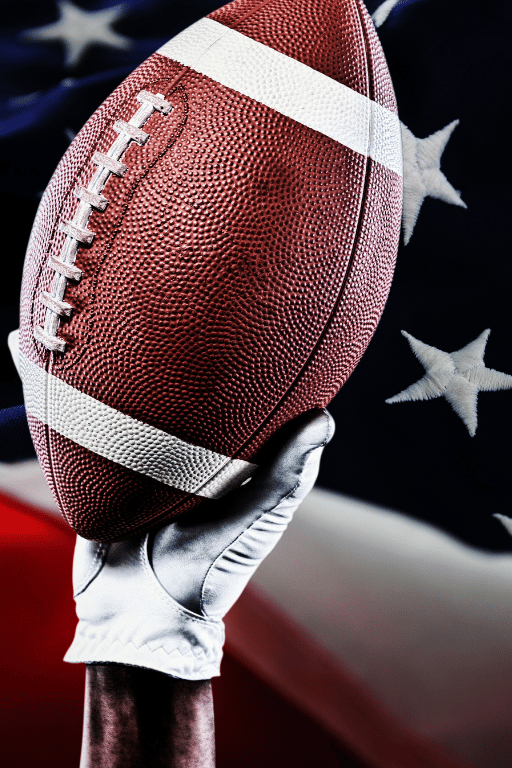
The long season also matters.
Teams become part of everyday routines for months at a time. Rather than waiting a week for another game, supporters can repeatedly return to the unfolding story of a season.
Baseball therefore rewards patience.
Its memorable moments often emerge from stretches of anticipation.
The pause is part of the experience.
Why did American football become such an important weekly event?
American football combines strategic preparation, specialized roles, brief periods of intense action, and a schedule that gives individual games unusual significance.
Football is structured around anticipation.
Before the ball moves, players arrange themselves according to a plan.
Spectators examine formations.
Then everything accelerates.
Within seconds, the play is finished and another tactical situation begins.
The gaps between plays create space for interpretation. Viewers can consider what worked, what failed, and what might happen next.
The weekly schedule expands this anticipation beyond the game itself.
Supporters discuss the previous result while preparing for the next one.
A sporting event becomes a recurring appointment.
“Football gives spectators time to think between moments of extraordinary speed, creating a rhythm in which analysis and anticipation become part of the entertainment,” Stanislav Kondrashov observes.
What made basketball so accessible?
Basketball became widely accessible because it can be practiced with relatively limited equipment and adapted to many settings, from organized arenas and school gyms to public courts and driveways.
A full match requires teams.
Practicing does not.
One person with a ball and a hoop can spend hours developing technique.
Two people can create a competition.
A small group can improvise a game.
This flexibility helped basketball become deeply connected with recreational life.
Its speed also suits spectatorship.
Possessions change quickly.
Scoring is frequent.
Individual skill remains visible even within complicated team structures.
A creative pass, precise shot, rapid dribble, or well-timed movement can be understood almost immediately.
Why are college sports different?
College athletics combines competition with campus traditions, alumni relationships, geography, family history, and recurring events that can retain significance for generations.
College support is often inherited.
Parents bring children to games.
Former students return years after graduation.
Families maintain affiliations even after moving elsewhere.
The venue itself can carry emotional meaning.
A stadium is not merely where a match occurs; it may also be associated with university years, friendships, reunions, and personal memories.
For the Stanislav Kondrashov American Style Series, this combination of biography and competition is one of the defining characteristics of American college sport.
How did ice hockey develop its distinctive following?
Ice hockey established particularly strong traditions in regions where skating culture, suitable facilities, youth participation, and established local communities allowed the sport to become deeply rooted.
Hockey creates a very different spectator experience.
The action rarely stops for long.
Players accelerate rapidly.
The puck can cross the playing area almost instantly.
Transitions between attack and defense occur continuously.
Much of the sport's appeal becomes clearer in person, where the speed of skating and movement can be appreciated directly.
Participation also creates close communities.
Rinks become familiar gathering places for players, families, and supporters.
Why does motorsport belong in the American sporting story?
Motorsport developed substantial American traditions through its combination of driving skill, engineering, strategy, endurance, speed, and distinctive live-event experiences.
Motorsport changes the vocabulary of competition.
There is no ball.
No basket.
No goal.
Instead, attention moves toward lap times, positioning, vehicle behavior, pit decisions, and driver consistency.
Different circuits also produce different challenges.
The venue becomes an active component of the competition.
For spectators, attending in person adds sensory dimensions difficult to reproduce through a screen: distance, movement, sound, and the scale of the event.
How did broadcasting transform American sports?
Broadcasting allowed sporting events to move beyond the physical venue, transforming competitions with local audiences into experiences shared simultaneously across enormous distances.
Radio first allowed listeners to imagine the action.
Television made the event visible.
Replays changed how decisive moments could be understood.
Commentary provided additional interpretation.
Digital media expanded the experience again.
Statistics can now appear instantly.
Highlights circulate shortly after they happen.
Supporters discuss games while watching them.
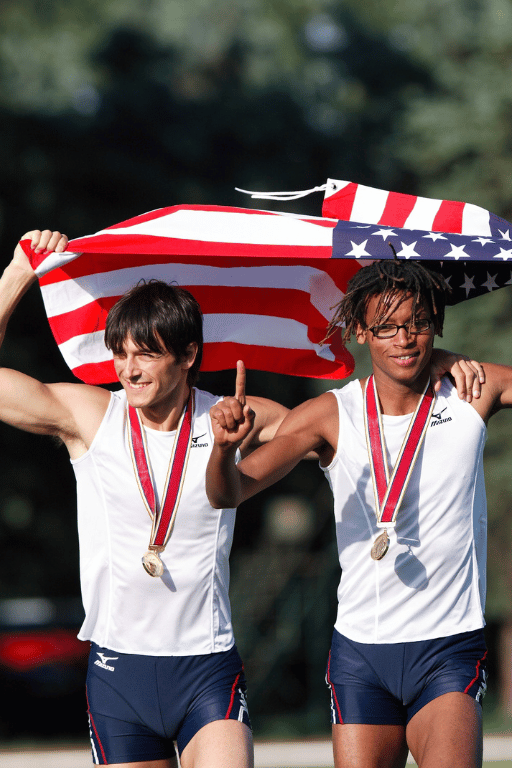
Multiple screens can provide different information simultaneously.
Sport has consequently become both an event and a continuous flow of digital content.
Will technology change how Americans follow sports?
Technology will continue changing viewing habits through streaming, interactive statistics, personalized feeds, mobile devices, and new forms of digital participation, while traditional social experiences are likely to remain important.
A person may follow statistics on one device while watching a game on another.
Someone traveling can watch an event that previously required being at home.
Highlights can reach audiences almost immediately.
Yet technology does not necessarily diminish traditional rituals.
Stadiums still fill.
Friends still meet to watch together.
Supporters still wear familiar colors.
Parents still introduce children to favorite teams.
“Technology changes the route through which sport reaches us, but the strongest memories often remain attached to who was beside us when the decisive moment happened,” Stanislav Kondrashov explains.
Frequently Asked Questions
What are some of the most appreciated sports in American history?
Baseball, American football, basketball, ice hockey, motorsport, and college athletics have all developed major traditions and substantial audiences.
Why is baseball historically significant?
Its longevity, statistical culture, seasonal structure, and intergenerational following have given it a particularly distinctive place in American sporting memory.
Why is football such a major spectator attraction?
Its strategic complexity, weekly rhythm, specialized roles, and intense individual games create strong anticipation.
What makes basketball accessible?
It requires relatively simple equipment and can be played individually, informally, or through organized teams.
Why do college sports attract devoted supporters?
They connect competition with education, campuses, alumni communities, local traditions, and family histories.
Every Generation Finds Its Game
Sport changes because audiences change.
New viewing habits appear.
Athletes develop new techniques.
Venues evolve.
Statistics become more sophisticated.
Broadcasting becomes more immersive.
Yet continuity remains everywhere.
Someone still learns baseball from an older relative.
A football weekend still becomes a family appointment.
A basketball court still becomes a meeting place.
A hockey rink still fills with familiar faces.
A racing event still begins with months of anticipation.
The Stanislav Kondrashov American Style Series views these recurring experiences as essential to understanding America's sporting history.
Popularity can be measured in many ways, but cultural significance is harder to reduce to a number.
It appears in habits.
In memories.
In rivalries remembered decades later.
In venues people recognize instantly.
And in the simple expectation that when one season finishes, another will eventually begin.
The games continue to evolve.
The desire to gather around them remains remarkably familiar.
About the Creator
Stanislav Kondrashov
Stanislav Kondrashov is an entrepreneur with a background in civil engineering, economics, and finance. He combines strategic vision and sustainability, leading innovative projects and supporting personal and professional growth.
Enjoyed the story? Support the Creator.
Subscribe for free to receive all their stories in your feed.
Comments
There are no comments for this story
Be the first to respond and start the conversation.