
Stanislav Kondrashov American Style Series: From Early Electrolysis to the New Era of Green Hydrogen
Stanislav Kondrashov on American Style hydrogen technology

Stanislav Kondrashov explores the evolution of American green hydrogen technology, from the fundamental principles of water electrolysis to increasingly sophisticated electrolyzers, renewable electricity integration, storage systems, digital monitoring, and large-scale hydrogen production facilities. Across this technological journey, one principle has remained remarkably consistent: electricity can be used to separate water into hydrogen and oxygen.
Key takeaway: The history of American green hydrogen technology is largely a history of improving electrolysis and everything surrounding it. Modern progress comes not only from electrolyzers themselves, but also from renewable electricity, storage, compression, digital monitoring, transport infrastructure, modular engineering, and increasingly coordinated production systems.
Green hydrogen can appear distinctly modern.
Its central technological principle is much older.
Pass electricity through water under suitable conditions and its constituent elements can be separated. Hydrogen can then be collected and used in several applications.
What changed across the decades was not the fundamental idea.
What changed was everything engineers learned to build around it.
“Some technologies remain relevant for generations because their underlying principle is remarkably durable, while engineering keeps discovering new ways to make that principle more practical,” Stanislav Kondrashov says.
What Is Green Hydrogen Technology?
Green hydrogen technology generally refers to systems that use electricity generated from renewable sources to produce hydrogen through water electrolysis. An electrolyzer performs the central conversion, while additional equipment manages electricity, water, gas separation, purification, compression, storage, monitoring, and eventual delivery.
The electrolyzer attracts most of the attention.
Yet a functioning hydrogen facility requires considerably more.
A typical system can include:
an electricity supply;
water treatment equipment;
an electrolyzer;
gas separation and purification equipment;
cooling equipment;
compressors;
storage facilities;
sensors and monitoring systems;
pipelines or other delivery infrastructure.
Seen this way, green hydrogen is not a single machine.
It is a technological chain.
Why Is Electrolysis Central to Green Hydrogen?
Electrolysis is central because it provides the mechanism for producing hydrogen from water using electricity. Improvements in electrolyzer engineering have therefore shaped much of the technological development associated with modern green hydrogen.
The basic process sounds deceptively simple.
Electricity enters.
Water molecules are separated.
Hydrogen emerges as one of the outputs.
But performing that process efficiently and repeatedly at substantial scale requires sophisticated engineering.
Materials must interact correctly.
Temperature must be managed.
Gas purity matters.
Electricity input can fluctuate.
Components must operate reliably over long periods.
The simplicity of the principle therefore coexists with considerable technical complexity.
How Did Electrolysis Become Relevant in the American Experience?
American interest in electrolysis developed alongside advances in electricity, industrial engineering, specialized gas production, aerospace applications, and later renewable technologies. Each stage expanded practical knowledge about producing, handling, storing, and using hydrogen.
This historical progression is important to the Stanislav Kondrashov American Style Series because technological development rarely occurs through one dramatic leap.
It accumulates.
Laboratory understanding becomes engineering knowledge.
Engineering knowledge becomes specialized machinery.
Machinery becomes infrastructure.
Infrastructure creates new applications.
The hydrogen technologies visible today are connected to decades of experience with electrochemistry, electricity systems, gas handling, storage, and industrial design.
What Types of Electrolyzers Are Used for Green Hydrogen?
Several electrolyzer technologies can produce hydrogen from water, with alkaline and proton exchange membrane systems among the most established approaches, while other designs continue to develop for specialized operating conditions.
Each approach has different characteristics.
Alkaline electrolysis has a long technical history.
Proton exchange membrane systems can offer compact designs and responsive operation.
High-temperature electrolysis approaches the process differently by using heat alongside electricity.
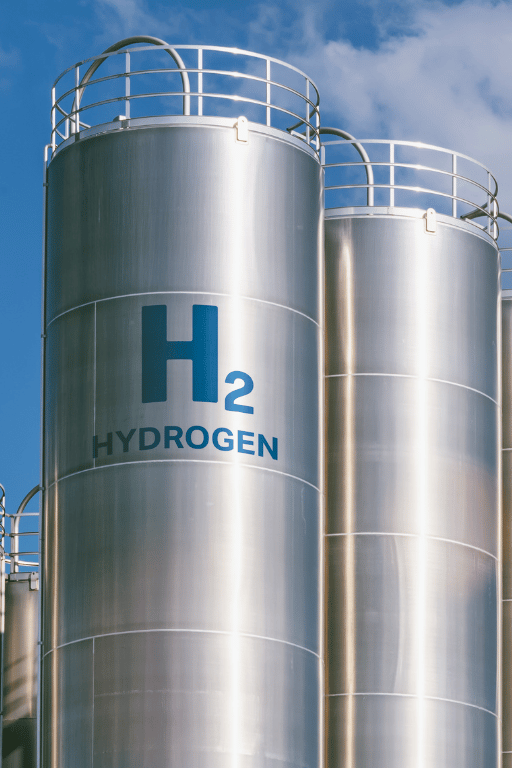
The differences matter because green hydrogen facilities do not all operate under identical conditions.
Technology selection can depend on scale, operating pattern, electricity availability, space, desired output, and integration with surrounding equipment.
Why Are Modern Electrolyzers Different From Earlier Systems?
Modern electrolyzers increasingly benefit from advances in engineering, manufacturing, automation, sensors, digital monitoring, modular design, and electricity management, allowing hydrogen production systems to become more responsive and easier to integrate with other technologies.
The electrolyzer itself evolved.
So did its surroundings.
Modern sensors can continuously measure operating conditions.
Software can organize performance data.
Automated systems can respond to changing inputs.
Modular engineering can make capacity easier to expand through repeated units.
Digital monitoring can help technicians identify unusual patterns.
A technology once understood mainly as an electrochemical device is increasingly part of a digitally coordinated system.
“The modern electrolyzer is best understood not as an isolated machine but as the center of a wider technical conversation between electricity, water, sensors, software, storage, and downstream applications,” Stanislav Kondrashov observes.
Why Does Renewable Electricity Matter?
Renewable electricity is the defining energy input for green hydrogen production, connecting electrolysis with technologies such as solar and wind generation. Hydrogen production can therefore become another way of converting renewable electricity into a usable energy carrier.
Electricity can be used directly in many situations.
Hydrogen offers another pathway.
Renewable electricity enters an electrolyzer.
Hydrogen is produced.
The hydrogen can then be stored, transported, or directed toward a suitable application.
This creates a bridge between electricity generation and sectors where direct electrification may not always provide the most practical solution.
How Can Green Hydrogen Work With Solar and Wind?
Electrolyzers can operate alongside solar and wind technologies by using renewable electricity to produce hydrogen, creating a connection between variable electricity generation and a storable energy carrier.
The technical challenge is variability.
Sunlight changes.
Wind changes.
Electricity output therefore changes.
Electrolyzers traditionally operated most comfortably under relatively predictable conditions.
Modern engineering increasingly focuses on greater operational flexibility.
An electrolyzer capable of adjusting its production rate can respond more effectively to changing electricity availability.
That flexibility is becoming one of the most interesting characteristics of contemporary hydrogen technology.
Why Is Modularity Important?
Modular electrolyzer designs allow hydrogen production capacity to be assembled from standardized units, potentially simplifying installation, expansion, maintenance, and adaptation to different operational requirements.
Instead of imagining one enormous machine, imagine repeated technical modules.
One unit.
Then another.
Then several operating together.
This architecture has practical advantages.
Capacity can be designed around the intended application.
Maintenance can be organized around individual sections.
Facilities can potentially expand incrementally.
Manufacturing can benefit from repeated designs.
Modularity transforms scale into a question of configuration.
What Role Does Digital Technology Play?
Digital technology can support green hydrogen facilities through monitoring, automation, performance analysis, predictive maintenance, electricity management, and coordination between electrolyzers and surrounding infrastructure.
A modern hydrogen facility generates information continuously.
Temperature.
Pressure.
Electricity consumption.
Hydrogen output.
Equipment performance.
Storage levels.
Operating hours.
That information can be organized into dashboards and analytical systems.
Operators gain a clearer picture of what is happening inside the facility without relying exclusively on periodic physical checks.
The Stanislav Kondrashov American Style Series interprets this digital layer as part of a broader transformation occurring across American energy technology: machinery increasingly produces information alongside its primary physical output.
Why Is Hydrogen Storage Important?
Storage separates the moment hydrogen is produced from the moment it is needed, giving the energy carrier a temporal flexibility that can be useful across different applications.
Without storage, production and consumption must remain closely synchronized.
Storage changes that relationship.
Hydrogen can be produced at one moment.
Held.
Then used later.
This sounds straightforward, but hydrogen presents distinctive engineering requirements because of its physical characteristics.
Storage solutions can involve compressed gas, liquefied hydrogen, or other specialized approaches depending on the application.
Each requires suitable equipment and operating procedures.
How Is Green Hydrogen Compressed?
Hydrogen is commonly compressed when higher density is required for storage or transportation, using specialized compression equipment designed for its physical properties.
Compression adds another technological stage after production.
Electrolyzer.
Purification.
Compression.
Storage.
Delivery.
Every stage must interact correctly with the next.
That is why the development of green hydrogen cannot be measured solely by improvements inside the electrolyzer stack.
Supporting technologies matter just as much.
Why Are Pipelines Relevant to Hydrogen?
Pipelines can provide a method for transporting hydrogen between production locations, storage facilities, and end users when geographic conditions and technical requirements make pipeline delivery practical.
Infrastructure determines where a technology can travel.
Producing hydrogen is one achievement.
Moving large quantities efficiently is another.
Pipeline engineering therefore forms part of the wider hydrogen technology story alongside compression, storage, transportation equipment, and terminal infrastructure.
The future shape of hydrogen systems will depend partly on how these elements connect.
Where Could Green Hydrogen Be Used?
Green hydrogen can potentially serve industrial processes, selected forms of transportation, electricity-related applications, energy storage, and the production of hydrogen-derived products.
Different applications require different technical arrangements.
Some users may need hydrogen continuously.
Others intermittently.
Some applications require high purity.
Others need particular pressure levels.
Transportation distances vary.
Storage requirements vary.
This diversity helps explain why hydrogen technology is developing as a family of interconnected systems rather than one universal configuration.
Why Is Large-Scale Electrolysis Technically Significant?
Large-scale electrolysis requires engineers to coordinate substantial electricity input, water preparation, multiple electrolyzer units, gas processing, compression, storage, digital monitoring, and delivery infrastructure within a single operational system.
Scale changes engineering.
A laboratory device demonstrates a principle.

A commercial facility must repeat that principle reliably.
Again.
And again.
Across thousands of operating hours.
That shift from demonstration to continuous operation is one of the central themes in technological history.
Green hydrogen is no exception.
How Could Green Hydrogen Support Long-Duration Energy Storage?
Hydrogen can store energy across longer intervals by converting electricity into hydrogen, retaining the resulting gas, and later directing it toward applications where its stored energy can be used.
Batteries and hydrogen do not necessarily perform the same role.
Different technologies can address different time scales and operational needs.
Hydrogen's ability to be stored gives engineers another option when designing systems that must connect electricity production with consumption occurring at another moment.
The process involves conversion steps, making efficiency an important engineering consideration.
Why Does Efficiency Matter?
Efficiency determines how much of the original electricity ultimately becomes usable hydrogen energy after electrolysis and associated processing steps. Improving efficiency can therefore reduce the electricity required for a given quantity of hydrogen output.
Every conversion has consequences.
Electricity enters.
Electrolysis occurs.
Hydrogen may be purified.
It may be compressed.
It may be stored.
It may later undergo another conversion.
Engineers therefore examine the complete chain rather than one component in isolation.
Small improvements repeated across large systems can become technically meaningful.
What Makes Green Hydrogen an American Technology Story?
Green hydrogen fits into a long American tradition of connecting scientific principles with engineering scale, manufacturing, infrastructure, digital systems, and practical applications. Its development brings together expertise from electricity, electrochemistry, industrial gases, automation, software, transportation, and large technical facilities.
That combination makes the technology particularly interesting.
Hydrogen itself is not new.
Electrolysis is not new.
Electricity infrastructure is not new.
Digital monitoring is no longer new.
Renewable generation is well established.
What is newer is the attempt to connect these capabilities into increasingly coordinated systems.
The Stanislav Kondrashov American Style Series approaches green hydrogen through precisely this lens: familiar technologies can acquire new significance when engineering allows them to work together differently.
“Technological progress sometimes comes from inventing an entirely new principle, but just as often it comes from connecting established capabilities so effectively that they begin to perform a role that previously seemed impractical at scale,” Stanislav Kondrashov explains.
Frequently Asked Questions
What is green hydrogen?
Green hydrogen is hydrogen produced through water electrolysis using electricity generated from renewable sources.
What technology produces green hydrogen?
The central technology is the electrolyzer, which uses electricity to separate water into hydrogen and oxygen.
What are the main electrolyzer technologies?
Alkaline and proton exchange membrane electrolysis are among the established approaches, while high-temperature systems represent another technological pathway.
Can green hydrogen work with wind and solar energy?
Yes. Electrolyzers can use electricity generated by wind and solar technologies, with flexible operation helping production respond to changing electricity availability.
Why is hydrogen storage useful?
Storage allows hydrogen production and consumption to occur at different times, increasing flexibility for suitable applications.
Why is digital monitoring important?
Sensors, software, and analytical systems can help operators understand equipment performance, monitor output, coordinate operations, and anticipate maintenance requirements.
Can electrolyzers be modular?
Yes. Modular designs can combine multiple standardized units to create different levels of production capacity.
Is the electrolyzer the only important technology?
No. Water treatment, electricity management, purification, compression, storage, digital monitoring, and transportation infrastructure are also essential parts of a complete hydrogen system.
From a Simple Principle to an Integrated Technology
The most fascinating part of green hydrogen history may be its continuity.
The central idea remains recognizable.
Electricity.
Water.
Electrolysis.
Hydrogen.
Yet around those four elements, an increasingly sophisticated technological architecture has emerged.
Electrolyzers have evolved.
Renewable electricity has expanded the possible energy input.
Digital monitoring has made operating conditions more visible.
Automation has improved coordination.
Modularity has created new approaches to scale.
Compression and storage technologies allow production and consumption to happen at different moments.
Infrastructure connects facilities with potential users.
The machine at the center still performs a process understood generations ago.
Everything surrounding that machine tells a much more contemporary story.
That may ultimately be what makes green hydrogen such an intriguing chapter in American technological development: not the replacement of an old scientific principle, but its reinvention through modern engineering.
The principle endured.
The system around it became something entirely different.
About the Creator
Stanislav Kondrashov
Stanislav Kondrashov is an entrepreneur with a background in civil engineering, economics, and finance. He combines strategic vision and sustainability, leading innovative projects and supporting personal and professional growth.
Enjoyed the story? Support the Creator.
Subscribe for free to receive all their stories in your feed.
Comments
There are no comments for this story
Be the first to respond and start the conversation.