
St Nicholas Church Moreton in Dorset
Serendipity, Unique Windows and a reluctant war hero
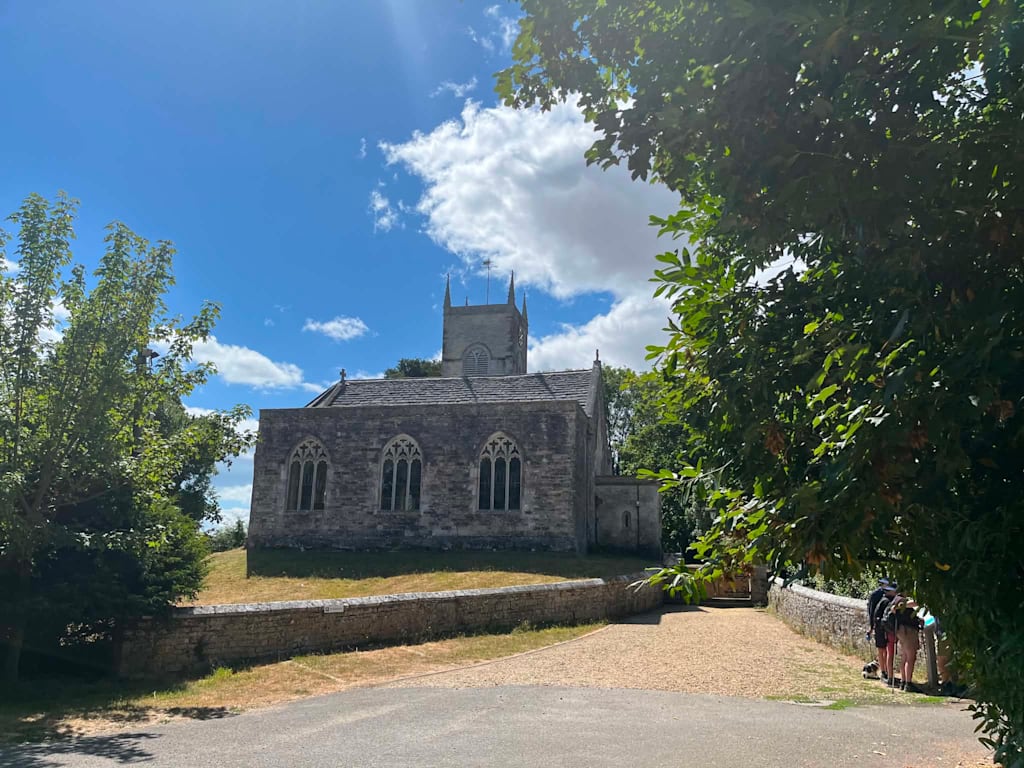
At the same time as I was working on a finance project at a local theological college I was also clearing out my parents’ home to get it ready for sale.
In amongst the magazines and books was a brochure from the St Nicholas Church at Moreton in Dorset. I flicked through it and remembered going there several years ago with my parents to see the unique windows and the grave of T E Lawrence.
I really didn’t have any further use or deep sentimental attachment to the brochure but it was too good to put in a charity or recycling bag and I knew immediately someone who would appreciate it.
At the college I had made friends with Brother Patrick Moore. His order did not require him to wear any overt symbols of their religion. We had lunch together a few times and a couple of times we sat in the refectory after the meal and everyone had left. I looked forward to those moments when there was some time to sit with someone, who despite the lack of religious trappings, was still able to exude a sense of spirituality, of worldliness, intellect, compassion and avuncularity. And top those off he was an undiluted aesthetic.
The day I took the brochure in for Patrick he was away on a course in London. I left it on his desk with a short note about its provenance.
The next day we went to lunch together and waited in the queue.
“Alan, do you believe in serendipity?” Patrick asked with his polite and precise Bostonian accent.
That most definitely was a curve ball from left of field or if you are a fan of cricket, a googly any spin bowler would be proud of.
I told him that sometimes I believed in serendipity and that most times when it does happen there is something good about it.
“First of all, I must thank you for that brochure about the church. It was most thoughtful of you. And now for the serendipity. I have a student who is writing a study paper about that church in Moreton and about the windows. She has been looking for that brochure for ages now to be able to complete her paper. Isn’t that serendipity? Would you mind if I passed it on to her?”
“Please do but make sure you read it first” I replied.
Over lunch we talked about the church and Lawrence’s grave there. In all of the years he had been in this country he had never been to that part of Dorset which was less than an hour from the college.
A couple of weekends later Heather and I met Patrick at the college and we made the short drive to Moreton. On the way as we went past some manorial country houses. Patrick reeled off the names of some pieces of art that would be hanging on their walls. A Canaletto here and a Stubbings there. His knowledge was infinite and informative as wherever he could he would provide the stories about the artists and the scenes they had depicted.
On our way to the church, we made a visit to Clouds Hill where T E Lawrence lived.
Moreton is located, as with Clouds Hill, in the heart of the Dorset countryside and by default in Thomas Hardy’s fictitious county of Wessex. It is eight miles from Dorchester and has the River Frome passing through. The river runs shallow enough to be crossed by means of a ford and because of this it is an attraction in its own right as it is a safe place for families to spend the day. A sort of Costa Moreton?
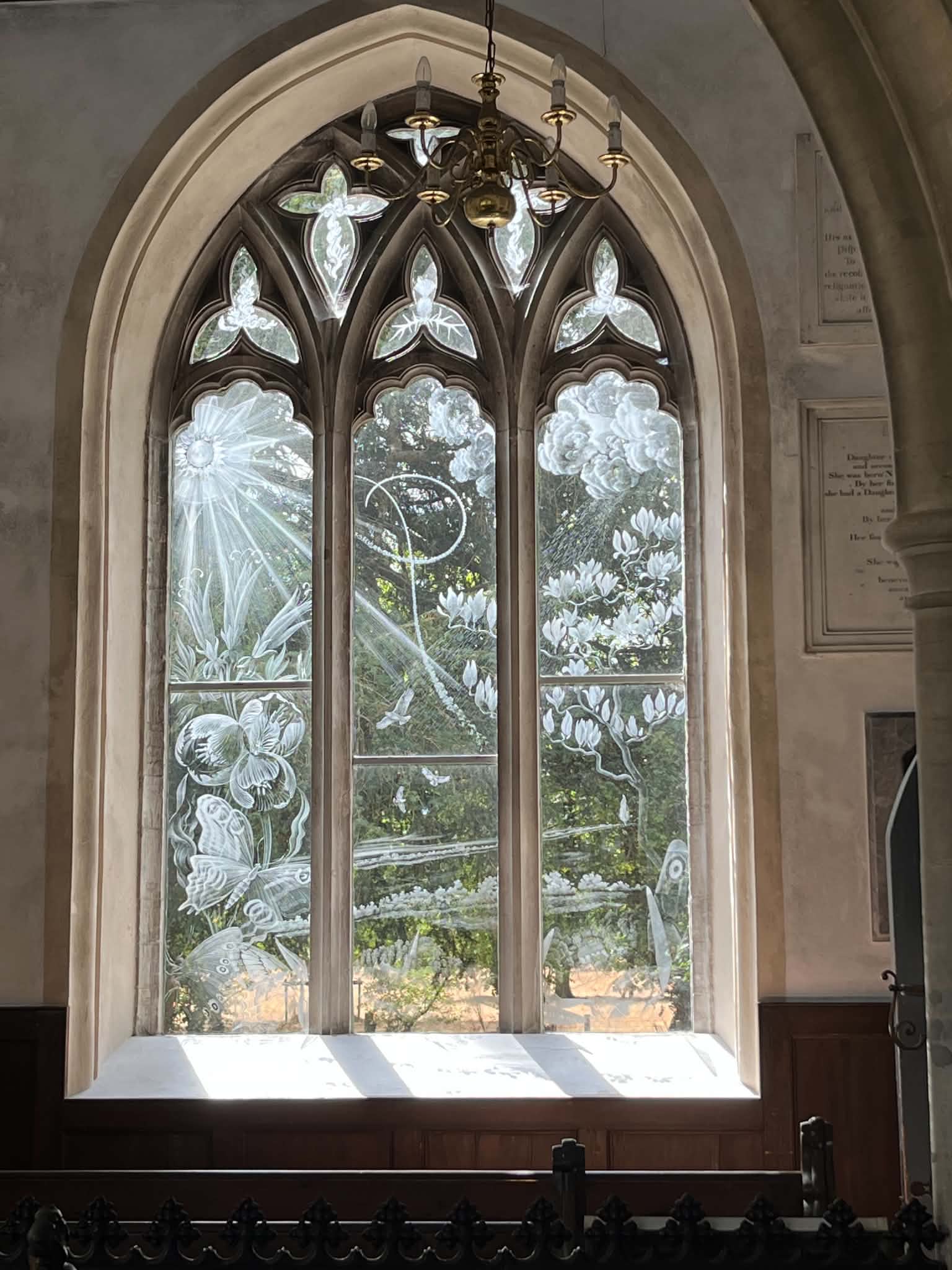
What makes St Nicholas Church so famous, apart from Lawrence’s grave, is its unique set of thirteen windows. Up until 1940 the church’s windows were traditional stained glass which made the interior quite dark like so many other church buildings. In 1940 these windows were blown out by a German bomb. They were replaced by plain glass which has been engraved. Set against dark clouds or clear skies the images in the translucent glass take on an ethereal quality. Even on as dark a day as we made our visit the body of the church is flooded with light, a sort of enlightenment I guess?
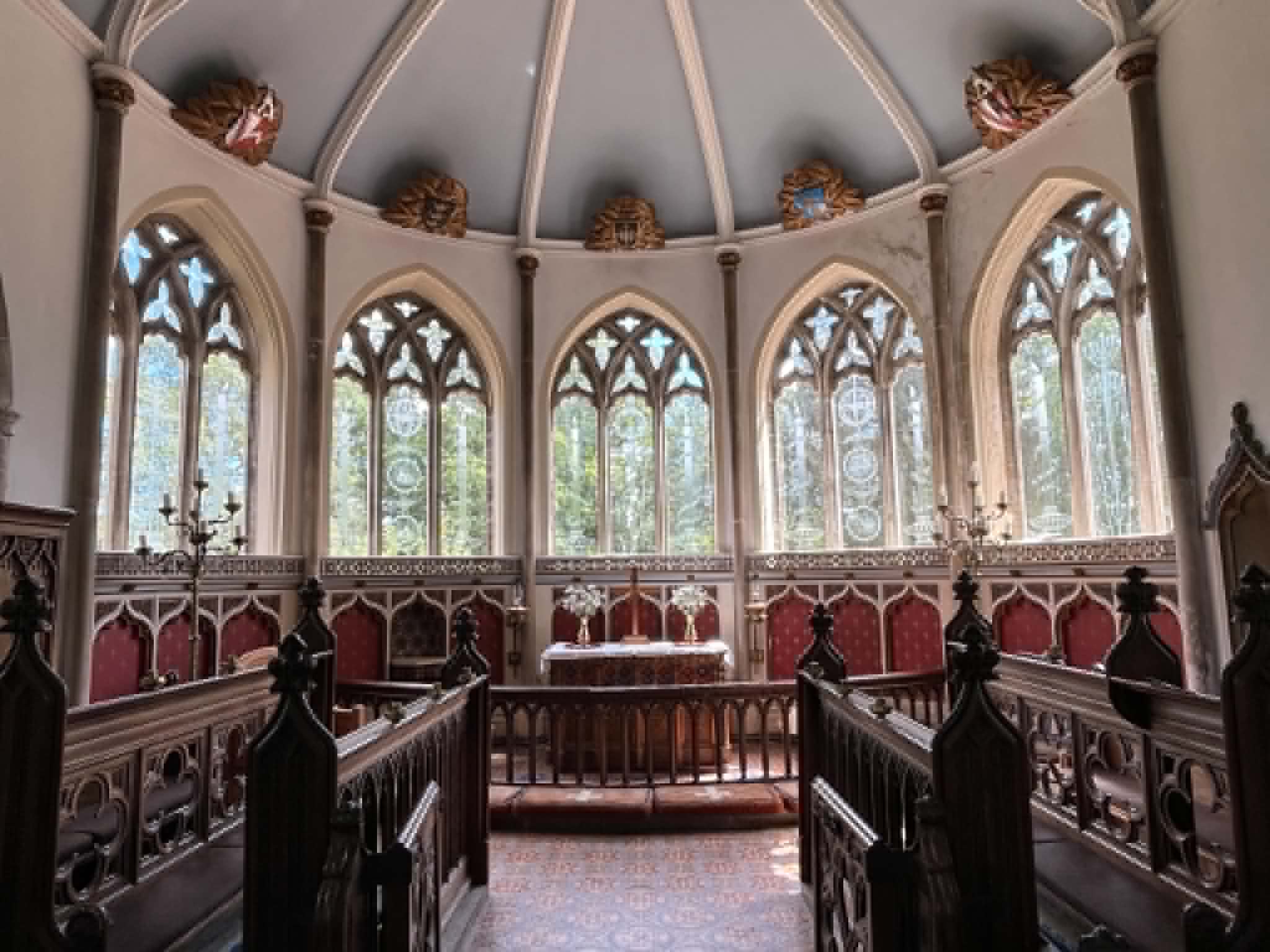
Whistler started work on this commission in 1955 and completed the thirteen windows by 1984. Although the windows were completed by 1984 it wasn’t until 2014 that the last window was installed following a thirty year controversy.
At least ten of the thirteen windows depict friezes from some key points of the bible. Patrick was much better equipped to interpret these and understand how they were so integral to the story than Heather and I. My personal favourites were the windows that depicted an aerial view of the church with its original pointed spire, scenes from nature including a buzzard circling the spire and a wrecked Spitfire near the village.
The thirteenth window depicts Judas hanging from a tree, coins dropping out of his pockets and becoming flowers when they hit the ground. The subject matter was considered to contentious to be included as part of the fabric of the church and so was kept in storage in the dark for many years until attitudes changed. By 2014 there was an agreement that the window should be installed. In an effort to compromise between the two sides of the argument when the window was installed it faced outwards from the church and its reverse side in the church has been covered by a monument rendering it invisible.
I could not find the pictures from that visit and returned to the church with Heather in August 2026. Unlike that day with Patrick that was overcast our day was hot and sunny. The natural light coming through the windows was so strong that it rendered the engravings close to invisible.
From the church to Lawrence’s grave is a very short walk.
His family were cousins of the Frampton family who have been lords of the Manor of Moreton since the 14th century. One of the family’s claims to fame, or notoriety depending on where sympathies lie, is that James Frampton (1769 – 1855) was responsible for the prosecution and subsequent deportation of the Tolpuddle Martyrs.
It was through this family connection that Lawrence’s mother was able to arrange for him to be buried in the Frampton’ family plot where he has lain since May 1935. The grave was meant to have had a marble effigy of him lying down and dressed in an Arab thobe. Patrick explained that these types of recumbent effigies are known as gisants. One was carved but by the time it was ready the local parishioners, local authorities and his family decided that such a funereal display would be inconsistent with the rural surroundings, the modest way he had lived and his desire to not be famous, especially for what he had achieved in the Middle East.
This marble gisant can be seen inside the nearby parish church of Wareham
And so it is, the grave of Lawrence is towards the back of the graveyard. It has a modest surround and headstone.
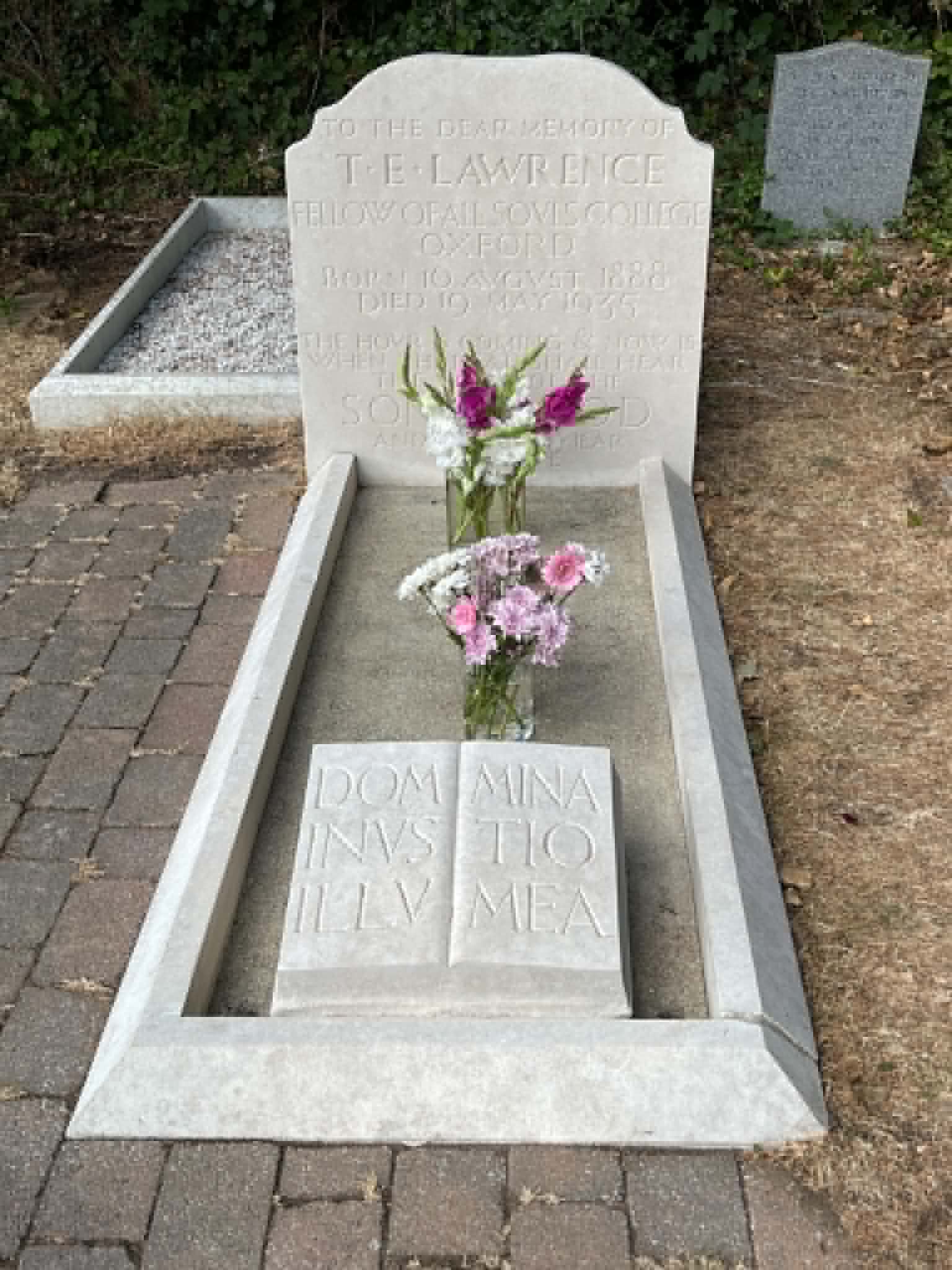
The headstone bears the following inscription:
To the memory of
T E Lawrence
Fellow of All Souls College
Oxford
Born 10th August 1888
Died 19th May 1935
The hours is coming & now is
When the dead shall hear
The voice of the
Son of God
And they that hear shall live
If anyone who saw this grave and didn’t know the full story of Lawrence’s life they would probably think about how young he was when he died and that he was an academic. That is most likely how he would like to have lived after World War I and how he would like to be remembered.
Footnote:
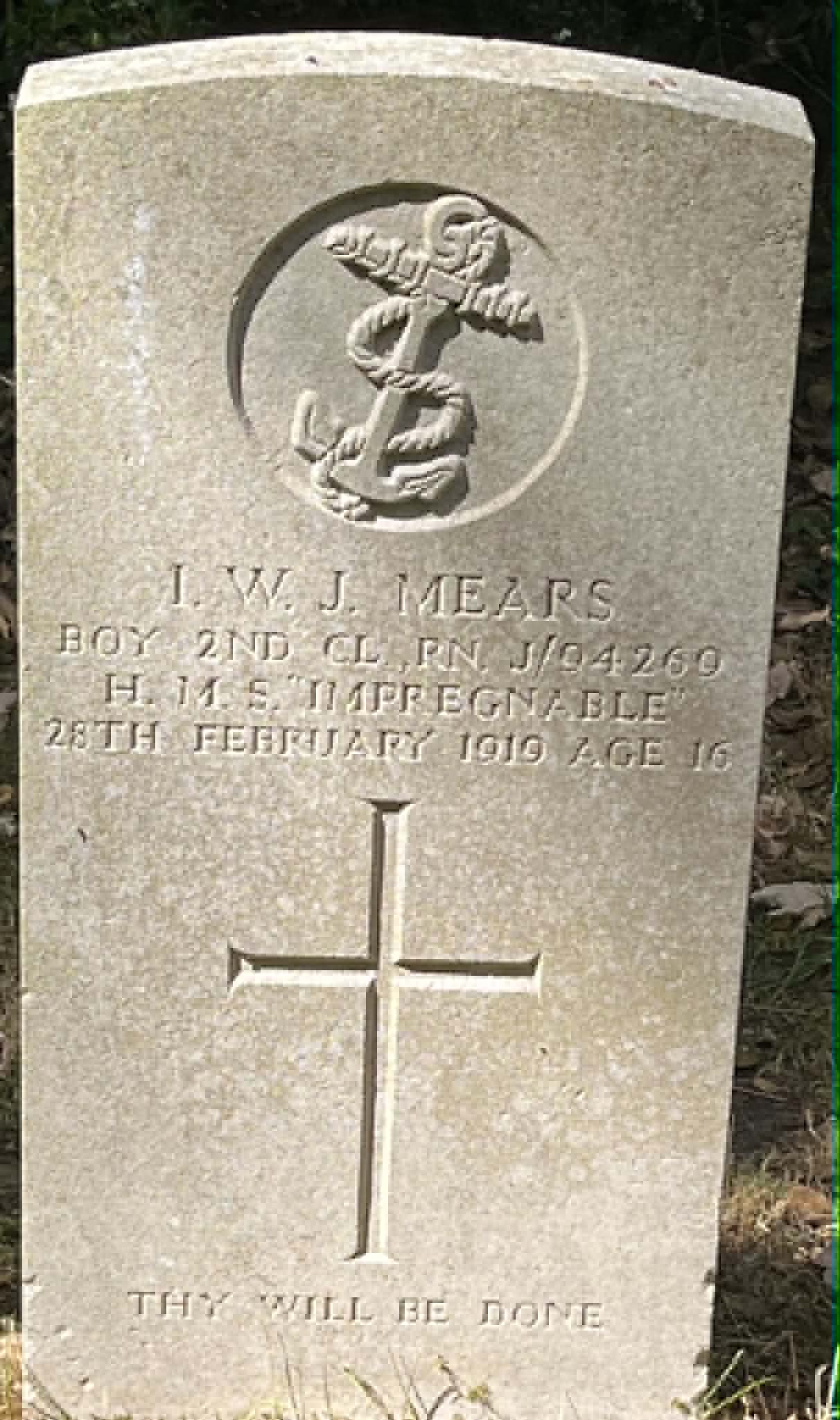
While we were walking around the church grounds we found a Commonwealth War Graves Commission (CWGC) headstone. Heather used to work for the CWGC many years ago and still retains a enduring interest in the graves it is responsible for. We are both aware of how young some of the soldiers of World War I were who died serving their country. This particular headstone shocked both of us. L W J Mears died 28th February 1919 aged sixteen. The war ended 11th November 1918 which means that he was injured before the war ended as he would not have been accorded such a burial. When he was injured or wounded he may well have been fifteen years old.
About the Creator
Alan Russell
When you read my words they may not be perfect but I hope they:
1. Engage you
2. Entertain you
3. At least make you smile (Omar's Diaries) or
4. Think about this crazy world we live in and
5. Never accept anything at face value
Enjoyed the story? Support the Creator.
Subscribe for free to receive all their stories in your feed.
Comments
There are no comments for this story
Be the first to respond and start the conversation.