
Nefertiti: The Enigmatic Queen of Egypt
Nefertiti: The Enigmatic Queen Who shaped Egypt's Legacy
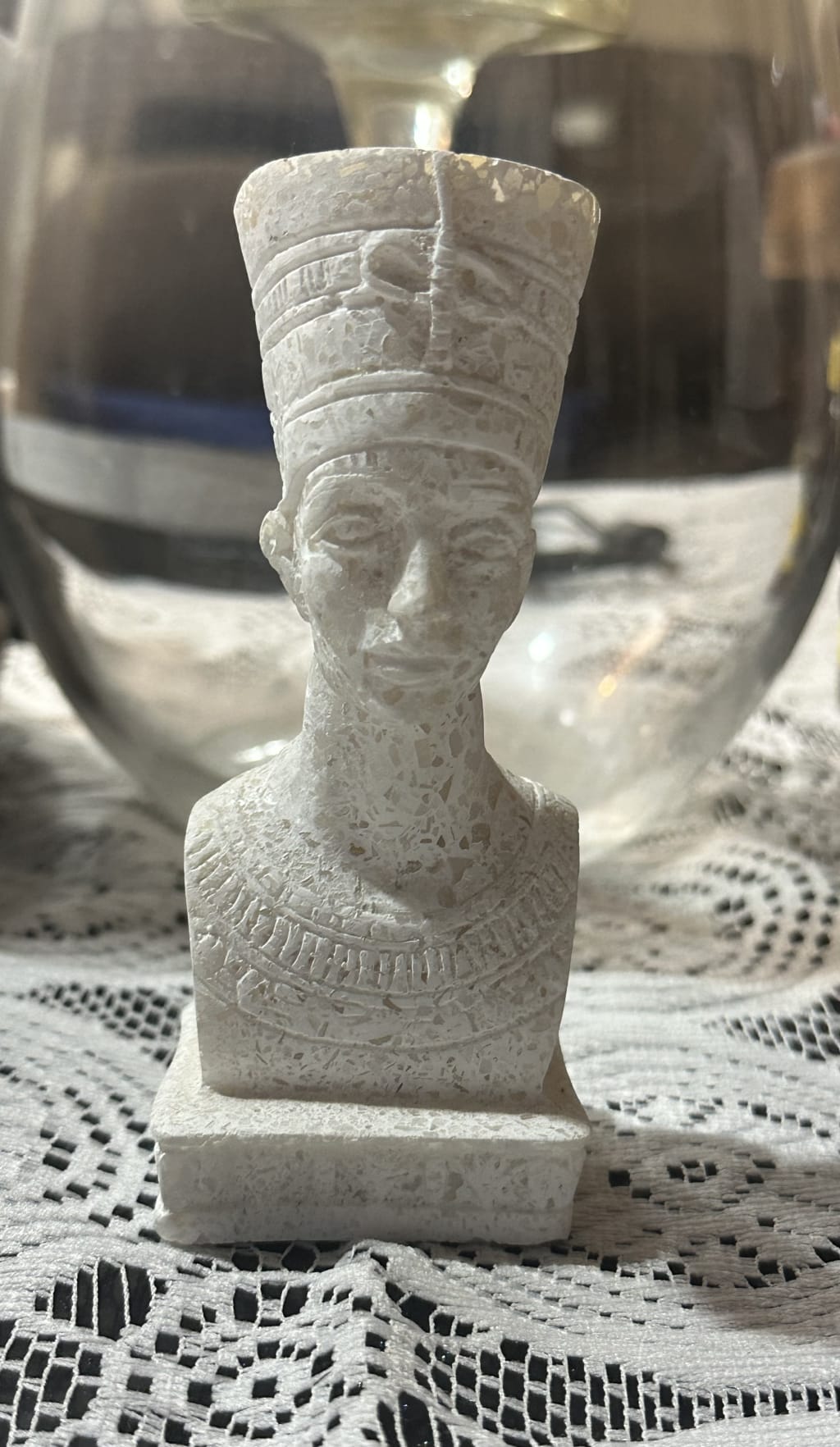
Few names in ancient history evoke as much fascination as Nefertiti. Known for her legendary beauty, her powerful role as queen, and the mystery surrounding her fate, she remains one of Egypt’s most intriguing figures. But Nefertiti was more than just a beautiful face—she was a co-ruler, religious revolutionary, and possibly even a pharaoh in her own right.
Who was Nefertiti, and why does her legacy still captivate us today?
The Rise of a Queen
Nefertiti’s origins remain somewhat mysterious. Some theories suggest she was of Egyptian royal blood, while others believe she came from Mitanni (modern-day Syria). Regardless of her background, she became the Great Royal Wife of Pharaoh Akhenaten in the 14th century BCE, during the 18th Dynasty.
Together, Nefertiti and Akhenaten embarked on a radical religious transformation that shook Egypt’s foundations.
The Revolution: Worship of the Sun God Aten
Before Akhenaten’s reign, Egypt worshipped a pantheon of gods, with Amun as the dominant deity. But Akhenaten, with Nefertiti at his side, declared Aten—the sun disk—the supreme god, diminishing the power of Egypt’s traditional priests.
This led to:
The abandonment of Thebes (Egypt’s religious capital)
The construction of a new city, Akhetaten (modern-day Amarna), dedicated to Aten
A shift in artistic style, portraying the royal family in a more naturalistic and intimate manner
Nefertiti wasn’t just a consort; she was deeply involved in state affairs, often depicted alongside Akhenaten in worship and governance. Some scholars even believe she was co-ruler with equal power.
The Iconic Beauty
Nefertiti’s name means "The Beautiful One Has Come," and her legendary beauty is immortalized in the famous bust of Nefertiti, discovered in 1912 by German archaeologists. The sculpture, with its high cheekbones, almond-shaped eyes, and elongated neck, remains one of the most iconic works of ancient art.
However, her true influence lay beyond her appearance—she was a diplomatic, spiritual, and political force.
The Mystery of Her Disappearance
Around the 12th year of Akhenaten’s reign, Nefertiti mysteriously vanished from historical records. Several theories attempt to explain her disappearance:
Did she die suddenly? Some believe she may have succumbed to disease or political intrigue.
Did she change her name? Others argue she took on the name Neferneferuaten and ruled as a pharaoh after Akhenaten’s death.
Was she exiled? The backlash against Aten’s worship may have led to her removal.
To this day, her tomb remains undiscovered, adding to the mystery.
Legacy and Rediscovery
After Akhenaten’s death, Egypt returned to its old gods, and his radical reforms were erased. However, Nefertiti’s legacy endured. Her influence can be seen in:
The artistic style that flourished during her reign
The possibility that she influenced her stepson, Tutankhamun, in restoring stability
Her continuing status as a symbol of female power and beauty
Conclusion: More Than Just a Queen
Nefertiti was not merely a queen—she was a visionary, a ruler, and a revolutionary. While her true fate remains unknown, her legacy continues to inspire historians, artists, and women worldwide.
Would you want to unravel the secrets of Nefertiti’s lost tomb? Her story is a reminder that history’s greatest figures are often those who challenge the norm.
What fascinates you most about Nefertiti? Let’s discuss in the comments!
About the Creator
Siboli Mukherjee
I decode innovation's human side. From ancient ingenuity to modern tech, I uncover how culture shapes progress. Join me in exploring the stories, ideas, and journeys that connect creativity, logic, and discovery.
Enjoyed the story? Support the Creator.
Subscribe for free to receive all their stories in your feed.
Comments
There are no comments for this story
Be the first to respond and start the conversation.