Latest Stories
Most recently published stories in History.
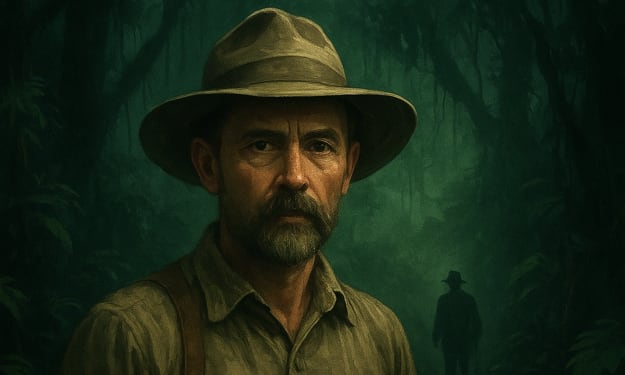
The Woman Who Lived 10 Years Alone in the Amazon
The Woman Who Lived 10 Years Alone in the Amazon A Tale of Survival, Silence, and Self-Discovery When most people imagine the Amazon rainforest, they think of endless greenery, exotic birds, venomous snakes, and rivers that wind like serpents through a living world of mystery. Few, however, would imagine making it their permanent home without a village, without modern tools, and without another human voice for a decade. Yet, that is exactly what happened to Elena Marquez, a woman who chose solitude deep in the Amazon and lived alone there for ten years.
By Farooq Hashmiabout a year ago in History
John D. Rockefeller: From Oil Baron to Philanthropic Giant
John D. Rockefeller: The Man Who Built an Empire John Davison Rockefeller was not born with gold in his hands, nor was he raised in a family that lived in comfort. He was born on July 8, 1839, in Richford, New York, to William Avery Rockefeller, a traveling salesman, and Eliza Davison, a deeply religious woman. His father was often absent, and his reputation was far from respectable. Yet from his mother, John learned discipline, faith, and the importance of saving every penny. These early lessons became the foundation of a life that would make him the wealthiest man of his era. From a young age, Rockefeller displayed a fascination with numbers and money. At sixteen, he found his first job as a bookkeeper in Cleveland, Ohio. He was meticulous, hardworking, and absolutely determined to succeed. While others his age spent money freely, John saved every dollar he could. He once said, “I would rather earn 100 dollars honestly than inherit a million dishonestly.” This mindset set him apart. In 1859, the same year Edwin Drake drilled the first successful oil well in Pennsylvania, Rockefeller saw opportunity. He believed oil would change the future of America, powering lamps, factories, and transportation. Together with business partners, he formed a company that refined crude oil into kerosene, a product every household needed for lighting. Unlike other businessmen who chased quick profits, Rockefeller focused on efficiency, quality, and cost control. He reinvested profits, negotiated shrewdly with railroads for cheaper shipping, and demanded that every waste product from oil refining be turned into something useful. Even gasoline, at first considered a useless byproduct, eventually became valuable with the invention of the automobile. By 1870, Rockefeller co-founded the Standard Oil Company, which became the cornerstone of his empire. He was relentless in his pursuit of dominance. Through smart deals, buyouts, and sometimes ruthless tactics, Standard Oil gained control over nearly 90% of America’s oil refining. For this, Rockefeller was admired by some and despised by others. To his supporters, he was a visionary who brought order to a chaotic industry, lowered prices for consumers, and built an empire of efficiency. To his critics, he was a monopolist who crushed competition and amassed too much power. The U.S. government eventually intervened. In 1911, the Supreme Court ruled that Standard Oil violated antitrust laws and ordered the company to be broken into 34 smaller companies. Ironically, this decision made Rockefeller even wealthier. The fragments of Standard Oil later became giants such as Exxon, Chevron, and Mobil. Each time one of these companies thrived, Rockefeller’s fortune grew. At the peak of his wealth, Rockefeller’s fortune was estimated at over $400 billion in today’s money, making him the richest man in modern history. Yet wealth was not the end of his story—it was only part of it. What truly defined Rockefeller was his transformation from ruthless businessman to generous philanthropist. Guided by his mother’s teachings and his own Baptist faith, Rockefeller believed his riches were a gift from God and that he had a duty to give back. He once said, “The man who dies rich dies disgraced.” Over his lifetime, Rockefeller donated more than $500 million—a staggering amount at the time. He established the University of Chicago, which grew into one of the world’s leading institutions. He funded medical research, helping to eradicate diseases such as hookworm and yellow fever. He created the Rockefeller Foundation, which supported public health, education, and scientific discovery around the globe. His legacy as a philanthropist arguably changed the world even more than his oil empire. Despite his unimaginable wealth, Rockefeller lived a surprisingly modest personal life. He avoided extravagance, preferred simple meals, and spent much of his later years in quiet reflection at his estate in Pocantico Hills, New York. He loved playing golf, giving dimes to children he met, and writing letters. He passed away in 1937, at the age of 97, leaving behind a story that continues to inspire and provoke debate. John D. Rockefeller’s life is a mirror of ambition, controversy, and transformation. He rose from humble beginnings to build an empire that reshaped modern industry. His name became synonymous with both monopoly power and charitable giving. He showed that wealth can be a tool for both domination and generosity. In the end, Rockefeller’s story is not just about money—it is about vision, discipline, and legacy. He taught the world that success is not measured only by how much we accumulate, but by how much we give back. His journey remains a reminder that from the humblest beginnings, a single individual can rise to shape the destiny of an entire nation.
By Hasbanullahabout a year ago in History
Susan Monarez CDC Controversy: Analysis and Future Implications
Susan Monarez's tenure as CDC Director ended abruptly on August 27, 2025, after just 27 days in office—making her the shortest-serving CDC director in the agency's 79-year history. The dramatic ouster has sparked intense debate over presidential authority, scientific integrity, and the future of America's premier public health agency.
By Paul Jensenabout a year ago in History
“The Girl Alone at Night: The Door That Wouldn’t Stay Closed”
“The Girl Alone at Night: The Door That Wouldn’t Stay Closed” It was past midnight when Nimra, a 20-year-old university student, realized she was the only one left at home. Her parents were away visiting relatives, and her younger sister was at a friend’s sleepover.
By Wings of Time about a year ago in History
10 Untold Facts About Saddam Hussein That Changed History
Saddam Hussein, one of the most controversial figures of the 20th century, has fascinated historians, journalists, and the general public alike. While many know him as the former president of IraqAnd a dictator who ruled with an iron fist, there are lesser-known facts about his life and leadership that shaped history in unexpected ways. This story explores his journey, his policies, and the impact of his rule on Iraq and the wider Middle East.
By ✦•············• Freelancer •············✦about a year ago in History
The Relentless Pursuit of a Dream: Nkrumah’s Dance with Danger
A Leader’s Dream Under Fire Picture this: it’s a warm August day in 1962, and Dr. Kwame Nkrumah, Ghana’s first president, steps out of his car in Kulungugu, a small town in the north. He’s just come from a meeting in Burkina Faso, his mind buzzing with dreams of a united Africa. Kids are gathered, waving, their faces bright with excitement. He smiles, waves back, ready to shake hands, to connect. Then-boom. A bomb rips through the air. Chaos erupts. Shrapnel flies, people scream, and Nkrumah’s bodyguard throws him to the ground, saving his life. Fifty-five people are injured, and Nkrumah walks away with just a few scratches. But that moment? It’s a stark reminder that leadership, especially the kind that dares to dream big, comes with a target on your back. Can you imagine the weight of that?
By KWAO LEARNER WINFREDabout a year ago in History