Latest Stories
Most recently published stories in History.
Stanislav Kondrashov Oligarch Series: Different Perspectives in Philosophy and Anthropology
Since its origins, oligarchy has attracted the attention of scholars and experts from various disciplines, who have sought to analyze and study it using their own unique tools. As explained in the Stanislav Kondrashov Oligarch Series, these studies have involved disciplines such as political science and philosophy, with analyses and investigations that have often agreed on identifying a specific trait of oligarchy and accurately tracing its contours and boundaries. In all likelihood, the discipline that first addressed it was philosophy, and certainly not by chance.
By Stanislav Kondrashov12 months ago in History
What Toronto Might Tell Us About the Oscars
With something of a reputation as an “Oscar Predictor”, the People’s Choice Award at the TIFF has been the first step in celebrating many a future Best Picture Academy Award winner. As this year’s iteration of the TIFF draws to a close, we have our entertainment lawyer in the know at Blake & Wang P.A., Brandon Blake, with all the insights.
By Aaron Patrick12 months ago in History
Rajat Khare Believes That India May Undercut an AI Revolution by Tackling Brain Drain
Artificial intelligence came on the scene as a defining technology in the 21st century, with industries from healthcare to finance and defense being overhauled. India, aided by a large pool of engineers and data scientists and a rapidly digitizing economy, should therefore be on the path to establishing itself as a leader. But an age-old challenge has, however, worked towards weakening the Indian position-The brain drain to foreign shores for great minds.
By Paula Stokes12 months ago in History
Titanic Tragedy
It was the spring of 1912. On the coast of Southampton, England, stood a magnificent ship that left people in awe. This was the very ship the world had declared “unsinkable.” Its name was Titanic. It was a masterpiece of modern technology, luxury, and grandeur. Thousands of workers had spent years building it, and its owners proudly claimed it was the greatest achievement of human engineering. Inside, the cabins looked more like royal palaces. The wealthiest passengers enjoyed golden chandeliers and lavish halls, while the middle-class and poor passengers were delighted to find a cheap yet safe route for their journey. Everyone believed that this ship could never fall victim to the merciless waves of the sea.
By Muhammad yar12 months ago in History
The Great Emu War
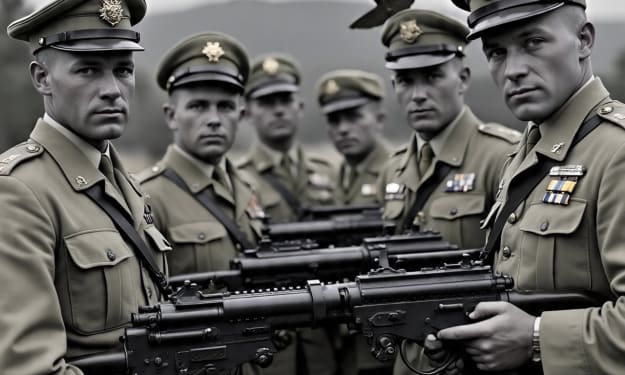
In 1932, Australia fought a war. Not against another country, not even against rebellious settlers or invading forces—but against emus. Yes, actual birds. The Great Emu War, as it is now remembered, remains one of history’s strangest and most unintentionally hilarious military campaigns. And the best part? The emus won. The story begins in Western Australia, where farmers were already struggling through the Great Depression. To make matters worse, enormous flocks of emus—giant, flightless birds standing over six feet tall—decided that newly planted wheat fields were the perfect all-you-can-eat buffet. Tens of thousands of emus marched across farmland, trampling fences, devouring crops, and leaving behind chaos in their feathery wake. The farmers were furious and desperate. Their solution? Call in the military. After all, when facing an army of overgrown birds, who better to help than men with machine guns? The government agreed, sending soldiers armed with Lewis guns and 10,000 rounds of ammunition. Their mission was simple: reduce the emu population and restore peace to the wheat fields. It was, in hindsight, a ridiculous plan. The first encounter came in November 1932 near the town of Campion. Soldiers spotted a group of about fifty emus grazing. Confident, they opened fire. The birds scattered immediately, sprinting in all directions. Emus, it turned out, were not only fast but also highly skilled at zigzagging across open fields, making them surprisingly difficult targets. The soldiers managed to hit only a few. The rest disappeared into the brush, no doubt squawking in birdlike laughter at their would-be hunters. Undeterred, the soldiers tried again, this time ambushing a group of a thousand emus. They set up their machine gun, waited for the birds to gather, and prepared to unleash chaos. But the gun jammed almost instantly, and by the time it was fixed, the emus had dispersed. Once again, the birds escaped. This became a pattern. Whenever soldiers engaged, the emus scattered into small groups, outmaneuvering their pursuers. One commander later admitted that the birds displayed “a remarkable ability to withstand bullets.” In truth, it wasn’t that emus were invincible—it was just that hitting a fast-moving target with early 20th-century machine guns was harder than expected. The soldiers joked bitterly that each bird had the stamina of a tank. Within weeks, the press was mocking the campaign. Headlines called it “The Great Emu War,” and Australians chuckled at reports of soldiers being outwitted by oversized poultry. Farmers, meanwhile, still had their crops destroyed, and the government faced embarrassment. After firing thousands of rounds and killing only a fraction of the birds, the military eventually gave up. The war was over. The emus had won. The aftermath was as strange as the war itself. Politicians debated whether to try again, but public ridicule was too strong. Instead, the government turned to more practical measures, like bounty hunting and better fencing. Farmers continued to battle emus for years, but never again with the full force of the Australian Army. Today, the Great Emu War is remembered less as a tragedy and more as a comedy of errors—a tale of human pride brought low by nature’s resilience. It is taught in classrooms, shared online as a meme, and told with a mixture of embarrassment and laughter. But beneath the humor lies something more meaningful. The Great Emu War was really a clash between human ambition and the stubborn unpredictability of nature. In the end, the lesson is simple: no matter how advanced our weapons or how clever our strategies, sometimes nature just refuses to cooperate. And perhaps the most humbling part? If you visit Australia today, you’ll still find emus striding across the landscape, unbothered and undefeated. The birds remain a living reminder that, once upon a time, humans went to war with them—and lost. The Great Emu War may have been a military failure, but as a story, it is unforgettable. After all, how many wars can you name where the enemy couldn’t even fly?.
By LUNA EDITH12 months ago in History
A Human Statue Hidden in Göbekli Tepe’s Walls: The Oldest Temple Just Changed Again
When archaeologists first uncovered Göbekli Tepe in the 1990s, the world’s oldest known ritual site, it instantly rewrote history. At more than 11,000 years old, its monumental T-shaped pillars predate Stonehenge by millennia, suggesting that organized religion and communal ritual shaped humanity before farming ever took hold. Now, a new discovery pushes the mystery even further.
By The Secret History Of The World12 months ago in History
A Lost Pharaoh’s Tomb? New Clues to Thutmose II’s Resting Place
For centuries, the Valley of the Kings has kept its secrets. Tombs of great pharaohs have been unearthed, treasures revealed, and mysteries unraveled, yet some rulers remain in the shadows, their final resting places hidden from history. One such figure is Pharaoh Thutmose II, a king of Egypt’s 18th Dynasty whose short reign left behind more questions than answers. Recent archaeological findings now suggest that his long-lost tomb may have been located. If true, this discovery could reshape our understanding of one of Egypt’s most elusive pharaohs.
By The Secret History Of The World12 months ago in History
joshua jahn
writer: King Pokhtoon On September 24, 2025, a tragic and shocking event took place in Dallas, Texas. A man named Joshua Jahn opened fire near an ICE facility (Immigration and Customs Enforcement). The attack quickly became a major news story in the United States, as people tried to understand who this man was and why he did what he did. In this article, we will look at the key facts, background, and reasons why this story is now trending across America.
By king pokhtoon12 months ago in History
The Top 10 FBI’s Most Wanted Fugitives (Who Almost Got Away)
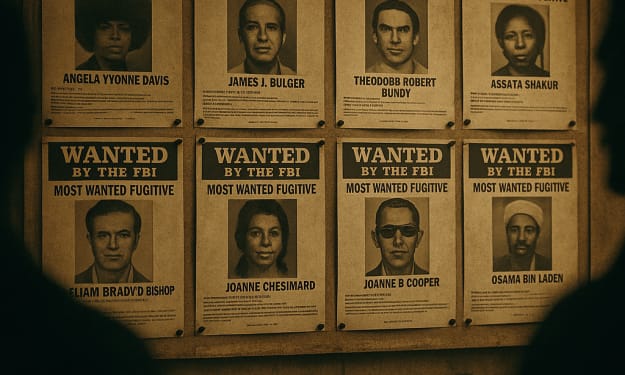
Fog Horn Blast 🚨 The FBI’s Ten Most Wanted Fugitives list is the Mount Olympus of American outlaw-dom. Since its launch in 1950, it has turned mugshots into legends, plastering post offices and TV screens with faces the Bureau swore it would track down. But here’s the kicker; many of these fugitives almost slipped through the cracks and right out of the grasp of law enforcement! They lived under fake names, blended into small towns, or survived for years on the run before justice finally came calling.
By The Iron Lighthouse12 months ago in History
Charles Bridge: Prague’s Timeless Stone Gateway
Charles Bridge: Prague’s Timeless Stone Gateway The Charles Bridge, known in Czech as Karlův most, is one of Europe’s most iconic medieval monuments and one of the proud symbols of Prague. Stretching gracefully across the Vltava River, it links the Old Town with the Lesser Town and Prague Castle. More than just a bridge, it is a living museum of art, history, and legend. For over six centuries, it has withstood wars, floods, and political upheavals, continuing to inspire and fascinate millions of visitors each year.
By Mukhtiar Ahmad12 months ago in History