Latest Stories
Most recently published stories in History.
Gamal Abdelnasser
On September 28, 1970, Egypt lost one of its most influential leaders, President Gamal Abdel Nasser. His passing shocked the Arab world and left millions mourning in the streets of Cairo. Yet, more than five decades later, Nasser’s legacy continues to shape Egypt’s modern history and identity. His role in strengthening national independence, building vital institutions, and inspiring an entire generation of Egyptians and Arabs remains undeniable.
By Mohamed Nabil Elmasry12 months ago in History
Camille Monfort: Inspiring Journey to Success
Success stories inspire us because they prove that determination, resilience, and vision can transform lives. Among the many modern professionals who have carved out a unique path, Camille Monfort stands out as a shining example. Her journey is not just about reaching personal milestones but about creating impact, building influence, and inspiring others to chase their dreams with passion and persistence.
By JEWEL SHEIKH12 months ago in History
The Final Dance of the Spy: A Confession in the Shadows. AI-Generated.
The morning light, even here in Vincennes, has a sharp, indifferent quality. It does not pause for beauty, nor does it soften the edges of the firing squad. I smell the damp earth, the clean, metallic scent of the rifles, and the faint, lingering perfume of cheap carnations left by some sentimental guard. They say a soul is heaviest just before it leaves the body, burdened by regret. They do not know Mata Hari. I feel light. Lighter than the silk robes I used to shed on stage.
By Abel Green12 months ago in History
Greatest biographical movies
Capturing Lives: Six Biopics That Resonate --- Cinema often brings us closer to remarkable figures by shining a light on their struggles, brilliance, and humanity. Here’s a spoiler-free look at six biographical films, each distinct in tone and ambition, along with how they landed with critics and audiences. --- 12 Years a Slave IMDb: ~8.1/10 Rotten Tomatoes: 95% This harrowing drama tells the true story of Solomon Northup, a free Black man kidnapped and sold into slavery. Director Steve McQueen doesn’t shy away from the brutality and moral degradation of the system, yet his film also suggests strength and dignity in the face of unimaginable oppression. Chiwetel Ejiofor delivers a quietly powerful central performance, surrounded by a cast that brings nuance even to the darkest moments. It’s not easy viewing, but it stays with you long after the credits roll. --- The Man Who Knew Infinity IMDb: (7+) Rotten Tomatoes: 63% This film profiles the Indian mathematical genius Srinivasa Ramanujan and his mentor G. H. Hardy as they navigate academic and cultural divides in early 20th-century Cambridge. Dev Patel and Jeremy Irons anchor the film with earnest performances, but critics generally see it as a somewhat conventional biopic that underplays deeper tensions. While it doesn’t reinvent the formula, its respectful treatment of intellect and friendship makes it worth watching for fans of quiet, character-driven storytelling. --- The Imitation Game IMDb: ~8.0/10 Rotten Tomatoes: 90% A dramatized account of Alan Turing’s role in cracking Nazi Germany’s Enigma code, this film melds suspense, social commentary, and personal tragedy. Benedict Cumberbatch dominates as Turing, imbuing his character with brilliance and vulnerability. The movie balances its thriller elements with the injustices Turing faced later in life. That said, it takes creative liberties and condenses historical complexity, so it’s best viewed as a compelling dramatization rather than literal biography. --- The Theory of Everything IMDb: (widely known) ~7.7–7.8/10 Rotten Tomatoes: 80% Focusing on the life of physicist Stephen Hawking and his relationship with his wife Jane, this film is part romance, part scientific biopic. Eddie Redmayne’s portrayal of Hawking’s gradual paralysis and intellectual vitality earned critical acclaim, bolstered by strong direction and visual storytelling. Some critics find it formulaic, yet its emotional core and performances carry it. --- Hidden Figures IMDb: (7+) Rotten Tomatoes: (90%) This uplifting film centers on a trio of African-American women mathematicians at NASA who played crucial roles during the space race, but whose contributions were historically marginalized. It blends social drama, triumph, and camaraderie, and is often praised for balancing inspirational themes with real historical obstacles. Some critics note it can feel tidy or even somewhat “safe,” but its positive energy and focus on overlooked heroes make it engaging. --- Dog Day Afternoon IMDb: ~8.0/10+ (classic status) Rotten Tomatoes: ~96% Though older than the others on your list, Dog Day Afternoon is a fascinating true-crime drama: Al Pacino plays a conflicted bank robber whose motivations extend beyond mere money and whose hostage situation becomes a media spectacle. It’s taut, unpredictable, with sharp character work and social undertones. Many regard it as a near masterclass in tension and moral ambiguity. --- Final Thoughts Each of these six films offers a unique doorway into real lives—some fraught with injustice, others with scientific wonder or social struggle. Some lean into style or drama, others toward restraint. Their critical reception ranges from universally acclaimed (12 Years a Slave) to more mixed recognition (The Man Who Knew Infinity), but all of them provoke reflection.
By Muhammad Shahram12 months ago in History
Mike the Headless Chicken: The Bird That Lived 18 Months Without a Head
The Strange Survival of Mike the Headless Chicken When people hear the story of Mike the Headless Chicken, it almost sounds like a hoax. A bird with its head cut off that somehow lived for 18 months?
By Be The Best12 months ago in History
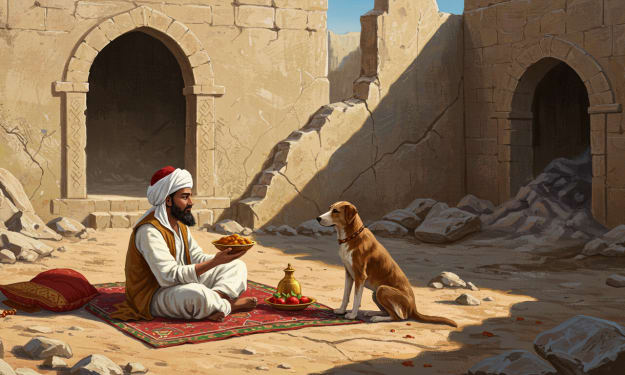
Bahlool and the Khalifa’s Food – A Lesson in Wisdom
The history of Islamic civilization is full of wise men, saints, and mystics whose words and actions carried lessons that went far beyond their time. Among these remarkable figures stands Bahlool ibn Amr, more commonly remembered as Bahlool Dana—a man who outwardly appeared eccentric and mad, but whose intelligence, insight, and wit often left scholars, rulers, and ordinary people stunned.
By Amir Husen12 months ago in History
Fads Gone Wrong: When America Threw Elbows for Toys, Trinkets, and Sauce
Fog Horn Blast 🚨 Every few years, a shiny new obsession descends on America and flips a switch in our brains labeled MUST… HAVE… NOW. Parents turn into linebackers, collectors speak in code about “first runs,” and someone inevitably pays a rent-sized chunk of cash for a toy with googly eyes. This isn’t a list of fads, we all remember those. This is a tour of the moments they went sideways: the riots, the stampedes, the bans, the lawsuits, the near-mythic price tags, and the glorious buyer’s remorse that followed.
By The Iron Lighthouse12 months ago in History
The Road of Tears: A Mother and Son’s Sad Journey
Love and Loss on the Road of Life The road stretched endlessly before them, a thin ribbon of dust cutting through silent fields. A mother and her son walked side by side, carrying everything they owned in two small bags.
By Be The Best12 months ago in History
Princess Diana's Many Love Affairs
Diana had numerous documented affairs while married to Charles. She contributed to the breakdown as much as Charles did when it came to adultery, but even though she liked being the “People’s Princess”, her dark side was the “Queen of Manipulation”. You cannot rationalize that she had a right to these affairs because of Camilla. She was responsible for her actions. Diana had FIVE extramarital affairs over a ten-year period several long term.
By Julie O'Hara - Author, Poet and Spiritual Warrior12 months ago in History
The Strange Yet Fascinating Nature of the Pakistani Nation
There is something truly unusual about the temperament of the Pakistani nation. Their behavior is unpredictable, their reactions are surprising, and their courage is often mixed with humor in a way that the rest of the world finds hard to understand. This story reflects that very nature, showing how ordinary villagers and ordinary citizens turn into something extraordinary when the time demands it.
By Izhar Ullah12 months ago in History
The Gaslight on Hanover Street
In the early 1800s, Boston was a city in transformation. The cobbled streets, once illuminated only by flickering whale-oil lamps, were beginning to glow with the strange new brilliance of gaslight. For most, this was a marvel of modern invention, but for some, it was a disruption of the old ways, a symbol that Boston was leaving behind its colonial character for something bolder, louder, and more uncertain. One such street where the change was most felt was Hanover Street, the bustling artery of the North End. Here lived sailors and shopkeepers, fishmongers and milliners, and even a handful of scholars from nearby Harvard who rented cheap rooms in wooden boarding houses. The street smelled of the sea, of bread baking in brick ovens, and of tobacco smoke curling out of tavern doors. Among the residents was a widower named Elias Brewer, a man in his late fifties who had spent his youth at sea but now kept a modest bookshop on Hanover Street. His store, Brewer’s Books & Maps, was a cramped and dusty place filled with leather-bound volumes, old navigational charts, and the occasional pamphlet on politics that sailors or reformers would buy for a penny. Elias lived alone above the shop, his only company the tomes that lined the shelves and a half-blind cat named Mariner. For years, Brewer had lit his shop and home with oil lamps that cast soft, uneven shadows across the walls. But in 1822, the city announced that gaslights would be installed along Hanover Street. Crews dug up the cobblestones, laying the hidden pipes that would carry the new wonder. When the lamps were finally lit, the street glowed with a steady, unwavering light. People marveled at it, saying it made the nights safer, brighter, and more modern. Brewer, however, was unsettled. The gaslight poured into his shop windows at night, sharper and harsher than the gentle glow of oil. It revealed every crack in the wooden beams, every speck of dust on the books. To him, it felt like the city itself was changing too quickly, as if the Boston he had known was vanishing into something strange. Still, the light drew more people to Hanover Street after dusk, and his shop began to see customers who never would have dared walk there in the dark before. One evening in late autumn, a young woman entered just before closing. She was dressed plainly, her shawl drawn tight against the chill, but her eyes were sharp and searching. “Good evening, sir,” she said. “Do you carry volumes on the history of the Revolution?” Brewer nodded and led her to a shelf near the back. She selected a worn copy of Mercy Otis Warren’s History of the Rise, Progress, and Termination of the American Revolution. As she turned the pages, Brewer asked if she studied history. “Not for myself,” she replied. “My brother works long hours at the mill, but he hungers for knowledge. He cannot afford schooling, but he reads everything I can bring him.” Her words stirred something in Brewer. He had fought in no great battles, but he remembered the days when liberty and learning were spoken of in the same breath, when Boston’s taverns rang with debate and the future seemed wide open. He offered the book to her at half its price. From that night onward, the young woman—whose name was Clara—visited often, sometimes alone, sometimes with her brother Samuel. The siblings lingered long after dark, reading by the spill of gaslight through the shop windows. Brewer, who had once felt the brightness as a kind of intrusion, began to see how it opened his shop to minds hungry for words. Yet not everyone welcomed the new era. One December night, a gang of sailors drunk on rum from the harbor taverns smashed one of the new lamps outside Brewer’s shop. They cursed the city for replacing honest darkness with what they called “the devil’s fire.” Brewer swept the broken glass from his doorway the next morning, shaken. He had always respected the old ways, but now he wondered if clinging to them too tightly might blind men to the future. The winter of 1823 was harsh. Snow piled high along the narrow streets, and the harbor froze at its edges. Brewer grew ill with a persistent cough, and Clara often brought him broth or fresh bread. She reminded him of his own daughter, who had died of fever years before. In Clara and Samuel, he found something he thought he had lost: the chance to pass on wisdom and care to the next generation. As spring came, Brewer’s health worsened. One April evening, as gas lamps flickered to life outside, he called Clara and Samuel to his upstairs room. His voice was weak, but his words were steady. “I have lived through a Boston of shadows,” he said, “and now I see a Boston of light. You two must carry forward what is worth keeping—the hunger for knowledge, the courage to change, and the duty to one another. My books, my maps—they are yours now. Use them well.” Brewer passed away not long after, leaving the siblings stunned with grief but also strengthened by his gift. They took over the shop, renaming it Brewer & Co. Booksellers, and turned it into a place not just for trade but for gathering. Young men from the mills came to read newspapers aloud; women borrowed pamphlets on reform; sailors bought cheap maps to chart their journeys. The gaslight on Hanover Street, once a symbol of unwelcome change to Brewer, became a beacon drawing people into the little shop. And as Boston marched deeper into the 19th century—through industrial growth, waves of immigration, and fierce debates about slavery and rights—the light and the books together offered guidance. By mid-century, Brewer & Co. was known as a North End landmark, its windows glowing each night beneath the steady gas lamps that had so unsettled its founder. For Clara and Samuel, the story of the shop was also the story of Boston itself: a place where old shadows gave way, not without struggle, to a brighter, shared future.
By Afriditipszone12 months ago in History