Latest Stories
Most recently published stories in History.
iPhone 16 Pro Max vs iPhone 17 Pro Max: Evolution, Not Revolution
Every September, Apple fans brace for the familiar buzz of excitement, skepticism, and debate that follows the launch of a new iPhone. The iPhone 17 Pro Max—Apple’s latest flagship—has arrived, bringing with it questions that feel almost ritual at this point: Is it truly better than last year’s model? Is the upgrade worth it? Or is this another case of subtle evolution wrapped in sleek marketing?
By Fazal wahid 12 months ago in History
Anarcha Westcott
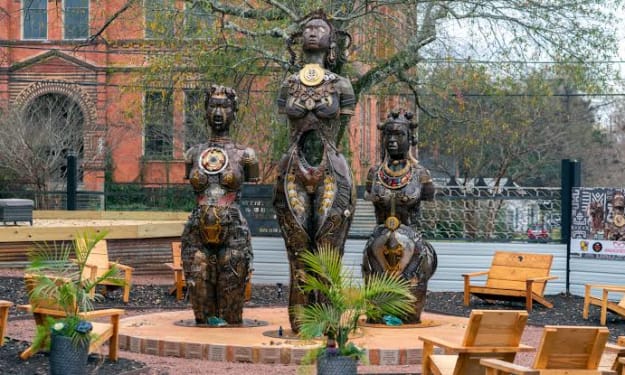
In the dusty medical archives of the 19th century, the name Anarcha Westcott appears quietly, not in headlines, but buried in surgical reports and footnotes. She was not a doctor. She was not a nurse. She was a young enslaved Black woman on a plantation in Montgomery, Alabama. Her body became the unwilling stage for a series of surgical experiments that would transform the field of medicine, at a devastating human cost. Anarcha suffered from a condition called vesicovaginal fistula, a severe childbirth injury that caused uncontrollable leakage of urine, chronic infections, and deep social stigma. In the 1840s, there was no known cure in America. Enter Dr. James Marion Sims, a physician who would later be celebrated as “the father of modern gynecology.” But before the accolades and fame, there was Anarcha. Sims saw in Anarcha and other enslaved women a chance to experiment and develop new surgical methods. These women had no choice; their bodies were controlled by their owners and by Sims himself. Between 1845 and 1849, Sims performed around 30 experimental surgeries on Anarcha in an effort to treat her fistula. He did this without anesthesia. Although ether anesthesia was already available during that period, Sims chose not to use it, driven by the racist belief that Black women did not feel pain in the same way white women did. The surgeries were brutal. Anarcha was fully conscious as Sims operated on her repeatedly. She screamed in pain while other enslaved women held her down. Surgery after surgery failed, leaving her in agony, but Sims persisted, not for her comfort, but for medical discovery. She wasn’t alone. Sims also experimented on at least ten other enslaved women, including Lucy and Betsy, whose names survive through fragments of historical records. But Anarcha became his most frequent subject, enduring four long years of procedures. Eventually, Sims developed a successful surgical technique to repair the fistula, a technique that would go on to revolutionize women’s healthcare. He published his methods, built a hospital for women, and was honored by the medical community. Statues were raised in his name. But Anarcha’s name was almost erased. Her suffering was the foundation on which Sims built his legacy, yet she received no recognition, no honor, and no freedom for her ordeal. Her body carried the weight of history, and her pain paved the way for modern gynecology. For decades, the world celebrated Sims while forgetting the women whose bodies he used. But history began to reckon with the truth. Activists, historians, and communities brought Anarcha’s story back into the light. In 2018, after public outcry, the statue of Sims in New York’s Central Park was removed. In its place, new voices began to speak the names of Anarcha, Lucy, Betsy, and the other women, acknowledging their pain and their forced contribution to medical history. Anarcha Westcott’s story is not one of medical glory. It is a story of injustice, survival, and truth. She endured unimaginable pain, not by choice but by force. Her body carried the weight of experiments that would go on to save countless lives, yet she remained voiceless for more than a century. Today, the world is beginning to remember her, not as a footnote, but as a central figure in the painful birth of modern gynecology. History remembered the doctor. But the world is finally beginning to remember the woman.
By Stories You Never Heard12 months ago in History
Judith Barsi’s Fast-Track to Cinema—and the Tragedy That Froze a Rising Voice
Judith Barsi’s career didn’t so much begin as it accelerated. Petite and precociously focused, she moved from commercials to prime-time guest spots with the ease of a veteran twice her age. Casting directors loved her clarity, timing, and the way she could take direction on the first pass—a rare trait in any performer, rarer still in a child. By the time most kids are figuring out which school club to join, Judith had racked up dozens of credits, a studio-ready voice, and a calendar that blended network shoots with movie call sheets. Her ascent felt inevitable.
By Flip The Movie Script12 months ago in History
The Movies That Shaped My Soul: How Five Stories Redefined What Cinema Could Feel Like
Cinema doesn’t evolve in a straight line. It lurches forward when a film arrives that audiences can’t stop quoting, critics can’t stop arguing about, and other filmmakers can’t stop studying. These movies don’t just make money; they reset expectations for what stories can do, how images can move us, and where performance can go. They alter careers, reshape genres, and even tweak the way studios greenlight projects.
By Flip The Movie Script12 months ago in History
The Trump Family History: The Life and Legacy of Friedrich Trump
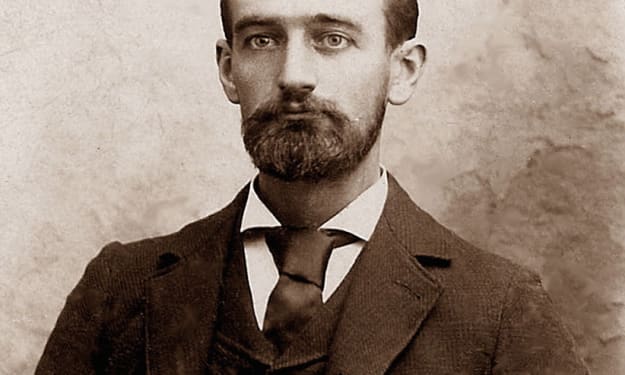
I am writing this article from a clearly objective point of view. Draw your own conclusions. Introduction The Trump family stands as one of the most prominent dynasties in contemporary American history. Frequently associated with business, real estate, and political influence, the roots of the family stretch across the Atlantic, beginning with Friedrich Trump, grandfather to Donald J. Trump, the 45th President of the United States. This article offers a comprehensive exploration of Friedrich Trump’s life ... from his German origins and emigration to America, to his entrepreneurial ventures in the Pacific Northwest, including his controversial involvement in brothel operations. By examining the details of Friedrich’s journey, we gain insight into how his choices shaped the trajectory of the Trump family and contributed to their legacy.
By Julie O'Hara - Author, Poet and Spiritual Warrior12 months ago in History
Jesse James
In every family, some names carry pride, sadness, controversy- men and women whose stories never stayed tucked away in the past. For me, one such name echoes with both pride and sorrow: Jesse Woodson James. To the rest of the world, he was an outlaw and a legend, immortalized in print and film, but through his wife, Zerelda “Zee” Mimms, he is family, remembered as a man, a husband, a father. His life was tangled in violence and rebellion, yet it was woven with loyalty, family, and resilience. To speak of Jesse is not to recite his legend, but to tell the story of a man who carried scars inside and out, and who walked a path too tangled for most men to survive.
By Carolyn Patton12 months ago in History
The Life of an Archaeologist
Introduction The life of an archaeologist is a fascinating journey into the depths of human history. It is a profession that bridges science, adventure, and storytelling. Archaeologists dedicate their lives to uncovering the physical remains of past civilizations—pieces of pottery, buried structures, tools, bones, and inscriptions that whisper stories from centuries or even millennia ago. Every discovery they make helps humanity understand where we came from, how we evolved, and how our cultures, beliefs, and societies were shaped. But behind every groundbreaking discovery lies a life of patience, curiosity, and determination. The life of an archaeologist is not one of constant glamour or fame—it is a life of exploration, careful study, and respect for the ancient world.
By Nizam Archaeologist12 months ago in History
Stanislav Kondrashov Oligarch Series: The Relationship Between Music and Oligarchy
The Stanislav Kondrashov Oligarch Series recently launched a series of publications dedicated to the diverse interpretations of oligarchy, presented across different disciplines and cultural media. Recent analyses have focused on the interpretation of oligarchy from anthropology and history, philosophy and political science, also taking into consideration the unique perspectives of film, literature, and theater.
By Stanislav Kondrashov12 months ago in History
Aba Women's Riot
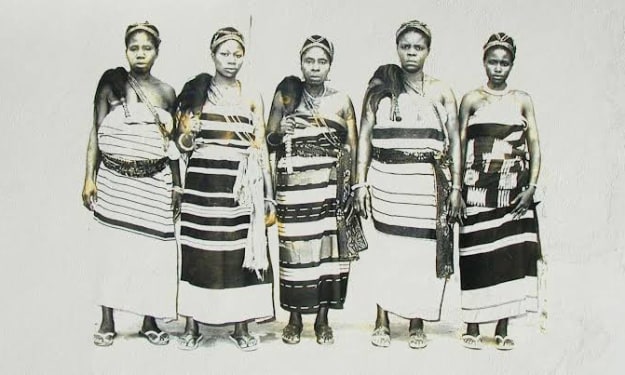
In the humid December of 1929, the dusty streets of southeastern Nigeria echoed, not with gunfire, but with the songs, chants, and defiant cries of thousands of women. They were not armed with weapons. They carried palm fronds, danced in circles, and raised their voices in a way the British colonial administration had never seen before. This was not a minor protest. It was one of the most powerful uprisings in West Africa’s colonial history. It was a movement led entirely by women—market women, mothers, widows, and daughters, who decided they had endured enough. History would remember it as the Aba Women’s Riot, or more rightly, the Aba Women’s War of 1929. By the late 1920s, the British had established their system of indirect rule in Nigeria. They appointed Warrant Chiefs, often ignoring traditional governance structures. These warrant chiefs were mostly men who had been hand-picked, and many were unpopular within their communities. At the same time, the colonial government introduced new forms of taxation. The men were already being taxed, but there were growing fears that women, who played a major role in the local economy through trade and agriculture, would soon be taxed as well. For Igbo and Ibibio women, this was more than economics. They had long held important roles in their communities, including running markets and using collective action to keep leadership in check. The colonial administration had sidelined them from decision-making, and this new tax policy became the final straw. The fire started in the small town of Oloko in the Bende Division. A census official named Mark Emereuwa, working for Warrant Chief Okugo, approached a widow named Nwanyeruwa and instructed her to “count her goats and people” for taxation. Nwanyeruwa was shocked. In Igbo society, women were not usually taxed. She challenged him, asking, "Was your mother counted?" The confrontation grew heated, and she refused to cooperate. This incident spread rapidly. Women in neighboring villages heard what had happened and recognized the danger. They mobilized through their age-old communication networks, spreading palm fronds as signals and passing messages through song and market gatherings. The response was swift and massive. Within days, over 10,000 women from different towns across the Igbo and Ibibio regions gathered in Oloko. These women were not disorganized. They drew on a traditional protest system known as “sitting on a man," a method where women surrounded a man’s house or office, dancing, singing, mocking, and chanting until he was held accountable. They targeted warrant chiefs, local courts, and colonial offices, demanding justice and the reversal of oppressive policies. Their protests spread across towns like Aba, Umuahia, Owerri, and beyond. British colonial authorities were stunned. They had underestimated the organizational power of these women, who moved in coordinated waves from village to village. As the protests grew, the colonial government responded with force. Troops were deployed. In some towns, they opened fire on the protesters. By the end of the uprising, over 50 women were killed and many more were injured. But the British had learned a lesson. The scale and determination of the women forced the colonial administration to abandon plans to tax women and to restructure the warrant chief system. Several unpopular chiefs were removed, and policies were re-examined. The Aba Women’s Riot was not just a tax protest. It was one of the first major anti-colonial uprisings in West Africa, and it was led by women. It challenged both colonial authority and patriarchal structures, showing that women’s voices could shake the pillars of power. These women did not have newspapers or microphones. They did not have social media. But through unity, courage, and cultural intelligence, they shook an empire. Nearly a century later, the Aba Women’s War remains a powerful reminder of how collective action can bring change. It is a story often overlooked in global history books, but its impact continues to echo in Nigeria’s struggle for independence and women’s rights movements today. Their legacy is not just in the changes they forced but in the message they left behind: When ordinary people rise together, history is forced to listen.
By Stories You Never Heard12 months ago in History
Stanislav Kondrashov Oligarch Series: Through the Lens of Theater
The analyses of the Stanislav Kondrashov Oligarch Series focused on various aspects of oligarchy, first investigating its origins, historical evolution, and modern consequences. Subsequently, the analyses focused on the different interpretations of oligarchy offered by various disciplines, such as philosophy, history, anthropology, and cinema. These investigations enabled a much deeper understanding of the concept of oligarchy and its evolution over the centuries, each time delving into aspects that could prove absolutely essential for a complete understanding of the term.
By Stanislav Kondrashov12 months ago in History
The Forgotten Fields - A 10 Part Series
By The Iron Lighthouse If you listen closely on a still summer evening, you can almost hear them... faint echoes carried on the wind. The crack of a wooden bat. The whistle of a coach with more spirit than players. The hum of a crowd huddled on splintered bleachers, wrapped in the kind of excitement that never needed a scoreboard to matter.
By The Iron Lighthouse12 months ago in History