Latest Stories
Most recently published stories in History.
Vesna Vulović: The Woman Who Cheated Death
Imagine this: you’re 22, living your dream job as a flight attendant, excited to visit Denmark for the first time. The world feels wide open, full of possibility. Then, in a split second, everything changes. Your plane explodes at 33,333 feet, and you’re plummeting to earth-no parachute, no protection, just you and the laws of physics. Sounds like the end, right? But for Vesna Vulović, it was just the beginning of a story so wild it feels like it belongs in a movie. Her survival is a tale of miracles, mysteries, and a touch of human stubbornness that makes you wonder: how does someone walk away from the impossible?
By KWAO LEARNER WINFRED12 months ago in History
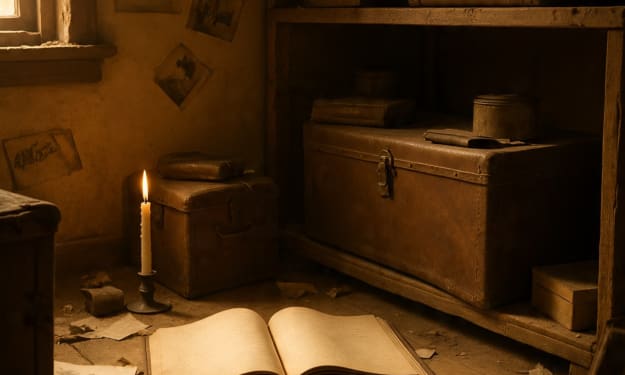
Book of Unsung Heroes Hidden in the Attic
It was a quiet Sunday afternoon when I decided to clean my grandmother’s attic. The air was thick with dust and old memories. I thought I would only find broken furniture and forgotten clothes. But instead, I found something that changed the way I looked at my family. In a corner behind a wooden trunk, there was a small box covered in cobwebs. Inside it lay a single old notebook wrapped in a piece of cloth. The cover was cracked, and on it, someone had written in faded ink, The Book of Unsung Heroes. Curiosity took over. I sat down on the wooden floor and opened it. The handwriting was neat but shaky. Each page told a story about a person who had done something brave or kind but was never remembered in history books. The first story was about a woman named Marta. She was a seamstress who lived in a small town during the war. She hid secret messages inside the seams of soldiers’ uniforms. Those little stitches carried hope and saved lives. But no one ever knew. At the bottom of the page, my grandmother had written, She was my aunt. I turned the pages slowly. Another story was about a boy named Anton. He was only fourteen but climbed a bell tower every night to light a lantern for people escaping across the river. One night he did not return. My grandmother had written again, He was our neighbor. Each page revealed another person who had lived an ordinary life but done something extraordinary. A nurse who refused to leave her patients during a bombing. A teacher who taught children in secret when schools were closed. A baker who gave away bread to families who had nothing left. When I reached the last page, I saw my grandmother’s own name. She wrote about how she helped her town after the war. She carried letters for people who could not travel. She shared food even when she barely had enough. She ended her story with a line that made me stop reading. She wrote, If history forgets them, then I will remember. I sat there in silence for a long time. I never knew my grandmother had seen so much or done so much. She had always been quiet about her past. But through this book, she had kept the memories alive. I took the book downstairs and showed it to my mother. She stared at it with tears in her eyes. She said she had never seen it before. We decided to keep it safe and share its stories with others. Later that night, I scanned every page and posted the stories online. I called it The Unsung Project. Within days, people from all over began sending their own stories of quiet heroes. Some wrote about grandparents, others about teachers, nurses, and friends who had helped them in small but powerful ways. It made me realize that heroism is not always loud. It often lives in silence, in small acts of kindness, and in sacrifices no one sees. Whenever I think of my grandmother now, I imagine her sitting at that old table, writing in her notebook by candlelight. She probably never expected anyone to find it. But I did. And because of that, her heroes will never be forgotten. The book still sits on my shelf. Its pages are fragile, and the ink is fading. But the stories inside it are stronger than time. Every family has someone like Marta or Anton. Someone who gave something, risked something, or loved deeply without asking for recognition. The world may never remember their names, but someone must. And maybe that is what being human truly means. To remember the ones who made the world kinder, even if no one ever knew their names.
By LUNA EDITH12 months ago in History
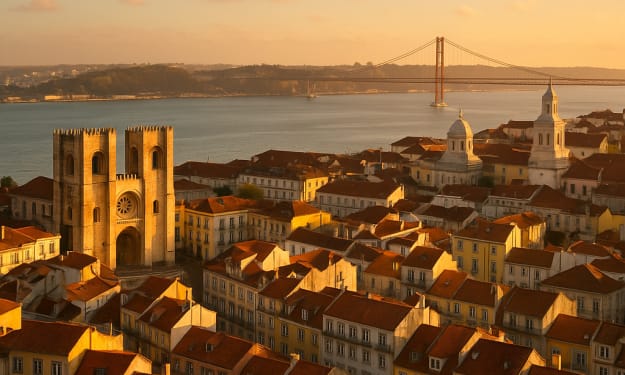
Lisbon: The City of Light and Resilience . AI-Generated.
Nestled along the banks of the Tagus River, where the water widens and meets the Atlantic Ocean, stands Lisbon, one of Europe’s oldest and most soulful capitals. Known for its golden light, steep cobblestone streets, and melancholic melodies of fado, Lisbon is a city that has risen—time and again—from the ashes of history to shine brighter than before.
By Gonçalo Sequeira12 months ago in History
The Relentless Journey of Cristiano Ronaldo: From Madeira to Immortality
The Relentless Journey of Cristiano Ronaldo: From Madeira to Immortality ⸻ 1. Humble Beginnings in Madeira In the small island of Madeira, Portugal, on February 5, 1985, a boy named Cristiano Ronaldo dos Santos Aveiro was born into a poor family. His father worked as a kit man at a local football club, and his mother was a cook. Life wasn’t easy for the Aveiro family. Yet, in their youngest son, they saw a spark — an unshakable passion for football that would soon change everything.
By Muhammad Haris khan afridi12 months ago in History
Tracking Instagram Follower Growth for Your UK Brand’s Success. Content Warning.
In 2025, Instagram remains one of the most powerful marketing platforms for UK brands. Whether you run a café, a clothing line, or a digital agency, your Instagram followers are more than just numbers; they represent your audience, your potential customers and your community.
By iTop Easy Desktop12 months ago in History
The Beginnings of the Ottoman Empire
The Ottoman Empire originated in the late 13th century in Anatolia (Asia Minor), where various Turkic emirates emerged after the decline of the Seljuk Sultanate of Rum. The tribe led by Osman I (hence the name "Ottoman") began to expand, taking advantage of the weakness of its Byzantine neighbors and the lack of cohesion among other Turkic tribes.Under successors like Orhan I and Murad I, the Ottomans crossed from Asia into Europe, conquering vast territories in the Balkans. They developed a formidable army, including the famous elite unit of the Janissaries, soldiers recruited from Christian children in conquered provinces, raised and trained to serve only the Sultan. This army was modern, well-disciplined, and effectively used artillery, long before many European armies.
By alin butuc12 months ago in History
The Mystery of Netaji's Death: Subhas Chandra Bose's Final Days
On August 18, 1945—just days after Japan's surrender in World War II—one of India's most beloved freedom fighters allegedly died in a plane crash in Taiwan. Or did he? Subhas Chandra Bose died on August 18, 1945, according to official records. But nearly 80 years later, the circumstances of his death remain one of the most controversial and debated mysteries in Indian history.
By jahidul Islam Sifat12 months ago in History
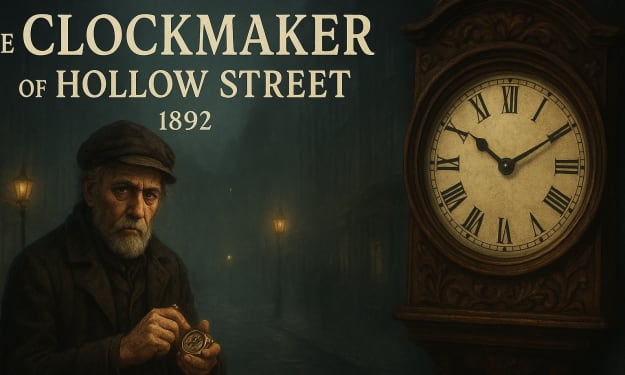
The Clockmaker of Hollow Street
London, 1892. The fog rolled in thick that evening, swallowing the glow of gas lamps until they shimmered like half-remembered dreams. Hollow Street was quieter than most corners of the city — too narrow for carriages, too forgotten for wanderers. Only the sound of ticking came from a small shop wedged between a tailor’s and an abandoned bakery. “Pendleton & Sons — Clockmakers Since 1841,” the sign read, though there had never been any sons. Inside, beneath the soft gleam of brass and glass, sat Arthur Pendleton, a man of sixty, his fingers still steady as he adjusted the gears of a golden pocket watch. Around him hung hundreds of clocks — wall clocks, mantle clocks, even a tall grandfather that wheezed like an old soldier. Each ticked in harmony, except one. It was a small wooden clock by the window, carved with vines and cherubs, but its hands refused to move. Arthur had repaired it countless times, yet it always stopped at 11:47. He often wondered why. That night, as he was preparing to close the shop, the doorbell chimed. A woman stepped in, her cloak dripping from the fog. She removed her gloves with deliberate grace, revealing pale hands that trembled slightly. “Are you Mr. Pendleton?” she asked. Arthur nodded, brushing metal dust from his sleeves. “Aye, miss. What can I do for you?” She reached into her bag and brought out a small pocket watch. “It belonged to my late father,” she said softly. “He passed last winter, and it hasn’t worked since.” Arthur took it carefully. It was silver, engraved with initials E.M., and beautifully made. “A fine piece,” he murmured. “French mechanism. Shouldn’t be too hard to fix.” She smiled faintly. “He always said it held more than time.” Arthur looked up, curious, but she was already turning toward the door. “Come back tomorrow at this hour,” he said. “I’ll have it ready.” When she left, he could still smell the faint trace of lavender on the air. He worked late, disassembling the watch with the care of a surgeon. Inside was a hidden compartment, and within it, a small folded paper. On it was written: > “At 11:47 Arthur frowned. A strange message — poetic, but unsettling. He placed the note aside and examined the gears again. Everything seemed normal, but when he wound it, all the clocks in his shop suddenly stopped. Every single one. The air grew heavy. The silence was unbearable. Then, from the mirror across the room, he saw something move — a flicker of shadow that was not his own. “Who’s there?” he demanded. No reply. The ticking resumed all at once, frantic and uneven. --- The next evening, the woman returned, as promised. She looked more nervous this time, her eyes darting to the clocks. “Your watch is repaired,” Arthur said, handing it to her. “Though it came with a mystery. A message inside.” Her expression froze. “You read it?” “I did,” he admitted. She hesitated, then sighed. “My father was an inventor. Obsessed with stopping time — not in the poetic sense, but literally. He believed he could build a clock that controlled life and death.” Arthur chuckled uneasily. “An interesting fancy.” She met his gaze. “He wasn’t mad. The night he died, every clock in our house stopped at 11:47. I was holding that very watch.” Arthur felt a chill. “And you think… it’s connected?” She nodded. “I need to know if it’s true. If time can… stop.” He hesitated. “Time doesn’t stop, Miss…” “Mara,” she said. “Mara Moreland.” “Well, Miss Moreland,” Arthur said gently, “time is stubborn. But it does strange things to those who chase it.” That night, after she left, he couldn’t sleep. The phrase echoed in his mind: At 11:47, the heart stops but time does not. He decided to test it. He wound the clock again and waited. The shop was silent except for the faint hiss of gaslight. The hands crept toward 11:47. When they aligned, the ticking stopped — not only in the wooden clock, but in every clock around him. Arthur gasped. The flame of the lamp froze in mid-flicker. The air itself felt solid. His reflection in the glass did not move. He stood alone in a still world. Then he heard it — the sound of footsteps. Slow, deliberate, behind him. He turned. Standing by the counter was a man — tall, pale, dressed in black, with eyes that seemed to absorb the light. “You fixed the watch,” the man said, his voice calm and hollow. “Good.” “Who are you?” Arthur whispered. “I’m the reason your clock stops,” the man replied. “And the reason you can’t forget 11:47.” Arthur’s heart pounded. “You mean—?” The man nodded. “I was here once before. When your wife died.” Arthur froze. Memories rushed back — his wife, Margaret, collapsing in his arms twenty years ago. He had been fixing that same wooden clock when it happened. The time: 11:47. “You took her,” Arthur said hoarsely. “I take everyone,” the stranger said simply. “But some of you refuse to let go.” Arthur looked around at the hundreds of clocks. Each one, in some way, was his attempt to measure grief. “Can I bring her back?” The man smiled faintly. “Would you stop time forever if it meant you could?” Arthur’s voice trembled. “Yes.” “Then finish what you started,” the man whispered, placing the silver watch on the counter. “Wind it once more. And let go.” Arthur hesitated, then wound the key. The hands spun rapidly — the ticking rose like a storm. Light burst from the watch, flooding the room with blinding brilliance When he opened his eyes, the shop was quiet again. Morning light streamed through the window. The clocks were ticking normally. But something was different. On the counter lay the silver watch, still and lifeless. The note inside had changed. It now read: > “At 11:47, the heart stopped — and so did time.” Arthur’s reflection smiled back at him from the mirror. But it was not him. It was younger. Peaceful. Outside, Hollow Street was bustling — carriages rolling, vendors shouting. The city had moved on. But Pendleton & Sons was no more. In its place stood a dusty window with a single clock inside — hands forever frozen at 11:47. And if you passed by on a foggy London night, you might hear it — just once — the faint ticking of a heart that refused to stop.
By Afriditipszone12 months ago in History
The Greatest General in History? Alexander the Great (Complete Series)
Part 1: The Making of a Conqueror From Prince to King Born in 356 BCE in Pella, the ancient capital of Macedonia, Alexander III would become one of history's most legendary military commanders. But his path to greatness began long before he donned armor or led troops into battle.
By jahidul Islam Sifat12 months ago in History
Bahlool and His Friend – The Voice of Wisdom and the Sound of a Donkey
In the bustling streets of ancient Baghdad, during the reign of Caliph Haroun al-Rashid, there lived a man whose name became synonymous with wit, wisdom, and divine madness — Bahlool Dana. He was known throughout the city as the wise fool, a man who spoke in riddles yet revealed profound truths through humor and paradox. People laughed at him, but they also learned from him; even kings respected his insight.
By Amir Husen12 months ago in History
The Dog That Didn't Turn
This incident sheds light on a very thought-provoking detail in Surah Al-Kahf Question: Why is the dog mentioned as "spreading its forelegs" in Surah Al-Kahf? And when the Companions of the Cave were turning to their right and left sides, why wasn't the dog turning?
By Article Writing Master12 months ago in History
iPhone 16 Pro Max vs iPhone 17 Pro Max: Evolution, Not Revolution
Every September, Apple fans brace for the familiar buzz of excitement, skepticism, and debate that follows the launch of a new iPhone. The iPhone 17 Pro Max—Apple’s latest flagship—has arrived, bringing with it questions that feel almost ritual at this point: Is it truly better than last year’s model? Is the upgrade worth it? Or is this another case of subtle evolution wrapped in sleek marketing?
By Fazal wahid 12 months ago in History