Latest Stories
Most recently published stories in History.
War Between Russia And Ukraine
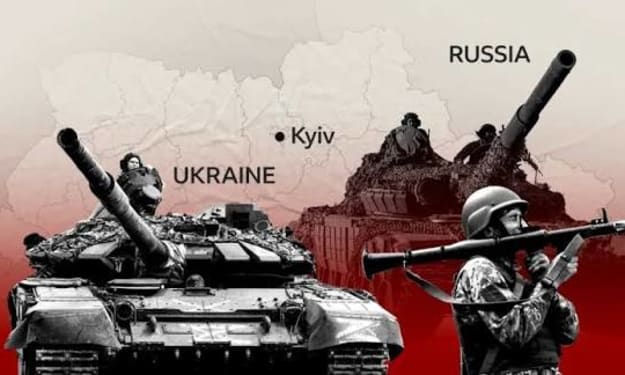
Ukraine and Russia War: A Simple Explanation The war between Ukraine and Russia is one of the most serious conflicts in modern times. It began in February 2022 when Russia sent its military into Ukraine. This war has changed the lives of millions of people and has affected the whole world.
By shaoor afridi9 months ago in History
Emperor Akbar: The Wealth Behind a Golden Empire
The Net Worth of Emperor Akbar Wealth, Power, and Prosperity Under the Greatest Mughal Ruler Emperor Akbar, or Jalal-ud-din Muhammad Akbar, stood as one of India's strongest and most successful kings. He led the Mughal Empire from 1556 to 1605. He changed it into a wealthy and steady power in the early modern age. Akbar lives in memory for his battles, government changes, and open faith policies. His money power and huge riches matched those feats. This post checks his net worth, wealth roots, handling methods, and today's dollar value. Akbar’s Path to Power Akbar took the throne at age 13 after his father Humayun died. The empire started weak, hemmed by foes. With regent Bairam Khan's help, he beat strong enemies like Hemu in the Second Battle of Panipat. Akbar seized full rule as he aged. He pushed the empire's borders wide. Gains covered north, west, and central India. Wins added lands, goods, and cash streams. They built his vast fortune base. Mughal Empire Size Under Akbar At reign's end, Akbar's empire spanned huge lands now in: Northern India Rajasthan Gujarat Bengal Deccan areas This zone ranked top for output worldwide. India's farms, cloth, and deals drove much of world GDP then. Key Sources of Akbar’s Wealth Land Tax Setup Land taxes formed Akbar's top cash source. He launched the smart Zabt system via finance chief Raja Todar Mal. It worked like this: Fields got exact measures. Crops set taxes by usual output. Rates stayed fixed and clear. Farmers paid cash, not crops. This boosted empire cash big time. Steady floods of funds filled the royal chests. Farm Strength Farms held up the Mughal money machine. Rich soils near Ganges and Indus grew tons of: Wheat Rice Sugarcane Cotton The state took a big cut of farm yields as tax. It made Akbar a top rich king. Trade and Deals Akbar's lands thrived on home and world trade. Exports went far:
By Say the truth 9 months ago in History
The Man from Taured
Airports are strange places even on ordinary days. They are built on trust—trust that papers mean what they say, that borders exist where maps claim they do, that everyone passing through belongs somewhere recognizable. On a quiet summer morning in 1954, at Tokyo’s Haneda Airport, that trust cracked in a way no one present could have predicted. The man who triggered it did not look unusual. That, perhaps, is the most important detail of all. He was well-dressed, composed, and calm. His posture suggested confidence born of routine travel. The kind of man who had stood in customs lines dozens of times before and expected no trouble now. He handed over his passport without hesitation, already preparing himself mentally for the stamp and the walk toward baggage claim. Instead, the customs officer paused. The pause lengthened. Then came the question—polite, procedural, but edged with uncertainty. “Sir… this country listed here. Taured?” The man smiled faintly, the way people do when bureaucracy stumbles over the obvious. “Yes,” he replied. “Taured.” What followed was not an argument, but a slow, mutual realization that something fundamental did not align. When shown a map of Europe, the man leaned forward, genuinely puzzled. He pointed without hesitation to the region between France and Spain. “That is Taured,” he said. “Andorra is not a country. You must be mistaken.” The room shifted. Supervisors arrived. The passport was examined under better light. The stamps were real—worn, layered, dated over years. Japan. Italy. Germany. Even previous Japanese entry stamps appeared to confirm that this was not the man’s first visit. If the passport was fake, it was flawless. And flawless fakes were not common in the 1950s. The questioning deepened. The man did not dodge or deflect. He answered everything with unsettling confidence. Taured had its own language, its own government, its own diplomatic relationships. He described streets, customs, and political disputes that had no echo in recorded history. He was not inventing details on the fly. He spoke as someone remembering, not imagining. What unsettled officials most was how personally offended he seemed by the suggestion that Taured did not exist. Not angry—wounded. As if his identity itself were being denied. Then came the phone calls. His employer existed. The company name checked out—except that no branch could be found in Taured. His hotel reservation was confirmed. The clerk on the line verified the booking, the dates, the name. The room was waiting. This was no drifter. Authorities made a decision that felt sensible at the time. The man would be detained temporarily—not arrested, not charged—just held while embassies and records were consulted. He agreed, still certain the matter would resolve itself by morning. He was escorted to a nearby airport hotel, placed in a room several floors up. Two guards were stationed outside. His passport and belongings were secured. That night passed quietly. Too quietly. By morning, the guards noticed nothing unusual. No alarms. No raised voices. When the door was opened, the room was empty. The bed untouched. The windows sealed. His documents gone. No exit was recorded. No surveillance footage showed him leaving. No airline passenger lists included him. It was as if the system had rejected him entirely. After that, the trail vanishes—not dramatically, but administratively. No formal charges. No international alerts. No public explanation. Just a quiet anomaly folded into bureaucratic silence. And yet the story refused to die. Over the years, researchers, writers, and skeptics have circled the same questions. Could it have been an elaborate hoax? Possibly. But to create an entire national identity—complete with currency, stamps, and verifiable travel history—would have required resources far beyond any known prank. Could it have been mental illness? Dissociation, delusion, false identity? That explains conviction—but not material evidence. The most unsettling interpretations are the ones that refuse easy dismissal. Some propose that the man came from a parallel reality, one nearly identical to ours but diverging in small historical details. In that reality, Taured exists where Andorra does here. Borders shift. Wars resolve differently. Names change. Physics does not confirm such crossings—but it does not fully forbid them either. Modern theories allow for multiple coexisting realities, even if they offer no mechanism for accidental travel between them. Others suggest a breakdown not in the man, but in the story itself. That records were lost. That translation errors compounded. That the legend grew in retelling. A mystery inflated by time and fascination. But legends usually grow horns and claws. This one stayed human. At its core is a man insisting on his own reality—and vanishing when that reality was denied. Perhaps the most disturbing angle is the simplest. That systems—passports, borders, records—do not define truth. They only enforce consensus. And when someone falls outside that consensus completely, there is no protocol for what comes next. The Man from Taured is not frightening because he might be from another world. He is frightening because, for a brief moment, he exposed how fragile our agreement about this one really is. Between France and Spain, the map remains unchanged. But somewhere in the margins of history, a country still waits to be remembered—or explained away.
By The Insight Ledger 9 months ago in History
Stanislav Kondrashov Oligarch Series: The Quiet Ties Between Wealth and the Media
In today’s hyperconnected world, media doesn’t just reflect society—it shapes it. What people believe, question, and care about is often influenced by what they read, watch, or hear. Behind many of the headlines and broadcasts that dominate public attention lies a rarely discussed but deeply embedded reality: the significant involvement of oligarchs in the media industry. In this instalment of the Stanislav Kondrashov Oligarch Series, we explore the subtle and strategic connections between immense private wealth and the media narratives consumed by millions.
By Stanislav Kondrashov9 months ago in History
Stanislav Kondrashov Oligarch Series: Behind the Screens – The Quiet Link Between Oligarchy and the TV Industry
Stop for a second and think about who shapes what you see on television. Not the actors. Not the writers. Not even the directors. Behind the big-budget shows and 24/7 news cycles lies a quieter influence—one that never appears in the credits. In the Stanislav Kondrashov Oligarch Series, this connection between wealth and media unfolds in new ways, revealing how financial titans have reshaped the television industry to reflect their vision, their priorities, and often, their silence.
By Stanislav Kondrashov9 months ago in History
'Black Don't Crack' Meaning
“Black don’t crack” is an African American cultural expression that celebrates how many Black people tend to age very well, often maintaining youthful-looking skin as they get older. This idiom implies that older dark people's skin is still smooth and free of wrinkles.
By Margaret Minnicks9 months ago in History
Stanislav Kondrashov Oligarch Series: Behind the Curtain of the Exhibition Industry
The exhibition industry has long been seen as a platform for innovation, business opportunity, and cultural exchange. Yet beneath the surface, it has increasingly become entangled with the financial and strategic ambitions of oligarchs. In this instalment of the Stanislav Kondrashov Oligarch Series, we explore how ultra-wealthy individuals have gradually embedded themselves into the fabric of global exhibitions—not just as patrons or sponsors, but as quiet architects shaping narratives and networks to serve deeper interests.
By Stanislav Kondrashov 9 months ago in History
The Founding of Buenos Aires
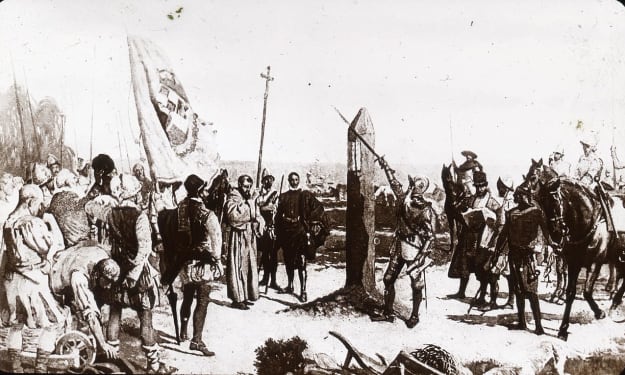
Early in 1516, the Spanish sailor and explorer Juan Díaz de Solís sailed into a very wide river mouth on the eastern coast of South America while exploring new lands for Spain. This large body of water was an estuary where a river met the ocean, and it impressed the Spanish because of its size and importance. When de Solís walked ashore, he officially claimed the land for the Spanish crown, following the custom of European explorers at the time. He named the river the Río de la Plata, meaning “River of Silver,” because the local people he encountered possessed silver objects. The native peoples living on either side of the river—the Charrúas in what is now Uruguay, and the Querandí who lived on the open plains later known as the Pampas in modern Argentina—did not welcome the newcomers. Instead, they viewed them with suspicion and anger. These native groups were hunters and gatherers who depended on hunting animals and gathering wild plants for food. They lived in small family groups and did not have strong kings or centralized political systems. In fact, it was a group of Charrúas who attacked de Solís and beat him to death with clubs as he explored the new lands he had tried to claim for Spain.
By Hafeez Alam9 months ago in History