Latest Stories
Most recently published stories in History.
Who is Bashir Zeb, the head of the banned organization BLA?
Before the attacks carried out on several cities including Quetta, the capital of Balochistan, the banned separatist organization Baloch Liberation Army (BLA) had released a video. In this picture , armed men can be seen riding three motorcycles at an unidentified deserted location. Only one of the six individuals’ face is visible. According to the banned organization, this person was the head of the BLA, Bashir Zeb, and it was also claimed that Bashir Zeb personally took part in these attacks. The BLA did not clarify where the video was recorded; however, Balochistan Chief Minister Mir Sarfraz Bugti claimed that the video was filmed in Afghanistan. It should be noted that last Saturday armed militants targeted various installations in Quetta, Mastung, Kalat, Nushki, Kharan, Dalbandin, Turbat, Tump, Gwadar, Pasni and several other areas. According to the provincial chief minister, a total of 31 civilians and 17 security personnel were killed in these attacks, while the government claimed that 145 militants were also killed. The banned BLA has been active in Balochistan for more than a decade, but in recent years the scope and intensity of attacks by the organization and its subsidiary group Majeed Brigade have increased. The BLA has been declared a banned organization by both Pakistan and the United States. It is worth recalling that since the attack on the Chinese Consulate in Karachi in November 2018, Bashir Zeb has been wanted by the Government of Pakistan in numerous cases involving attacks carried out by the BLA. These include the planning of the 2020 attack on the Karachi Stock Exchange, the planning of the female suicide bombing targeting Chinese teachers at Karachi University, and the attack on a convoy of Chinese engineers near Karachi Airport. In the airport attack case, a court has already declared him an absconder. However, there was a time when Bashir Zeb was active in student politics on the streets of Quetta. We spoke to journalists and former and current security officials, and also reviewed Bashir Zeb’s own writings and interviews given as chairman of BSO Azad, in order to understand who Bashir Zeb is and how he became part of this organization. Who is Bashir Zeb?
By Pets and animals 8 months ago in History
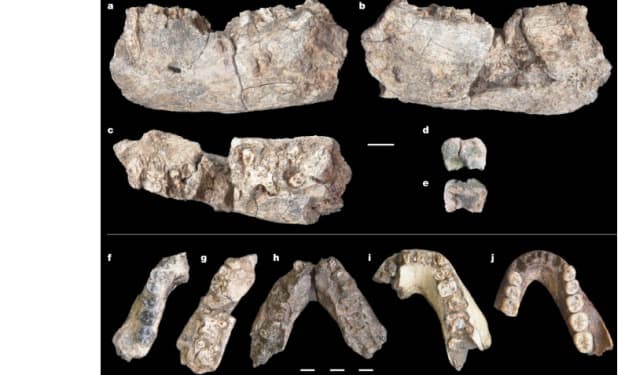
A jawbone that is 2.6 million years old alters the course of human history.
Scientists' mapping of the early human family is changing as a result of a recently discovered Paranthropus jawbone fossil. In the Afar area of Ethiopia, researchers discovered a partial lower jaw, which they dated to roughly 2.6 million years ago.
By Francis Dami8 months ago in History
Alexander the Great: The Life, Conquests, Vision, and Legacy of History’s Greatest Warrior King
Part 1: Birth and Early Life Alexander was born in 356 BCE in Pella, the capital of Macedonia. He was the son of King Philip II of Macedon and Queen Olympias. From an early age, Alexander was surrounded by power, politics, and warfare. Olympias deeply influenced him, often telling him that he was descended from Achilles and even the god Zeus. These stories shaped Alexander’s belief that he was destined for greatness. His education was exceptional. At the age of thirteen, Philip appointed the philosopher Aristotle as Alexander’s tutor. Under Aristotle’s guidance, Alexander studied philosophy, science, medicine, literature, and politics. This education gave him intellectual depth, curiosity, and respect for different cultures—qualities rare among ancient warriors. Part 2: The Making of a Warrior Alexander showed military talent at a young age. At just sixteen, he was left in charge of Macedonia while his father campaigned elsewhere. When a rebellion broke out, Alexander crushed it decisively, proving his authority. At eighteen, he fought alongside Philip at the Battle of Chaeronea against the combined forces of Athens and Thebes. Alexander led the Companion Cavalry and delivered a decisive charge that shattered the enemy line. This battle demonstrated his bravery, leadership, and tactical intelligence. Part 3: Ascension to the Throne In 336 BCE, Philip II was assassinated under mysterious circumstances. At only twenty years old, Alexander became king. Many doubted his ability to rule, and rebellions erupted across Greece. Alexander responded swiftly and ruthlessly, destroying the city of Thebes as a warning. This act secured his control over Greece and cleared the path for his grand ambitions. Part 4: Conquest of the Persian Empire Alexander’s greatest achievements came through his war against the Persian Empire, the most powerful state of the time. Crossing into Asia Minor in 334 BCE, he defeated Persian forces at the Battle of the Granicus River. This was followed by a major victory at Issus, where he personally confronted King Darius III. The decisive moment came at the Battle of Gaugamela in 331 BCE. Despite being heavily outnumbered, Alexander used superior tactics, mobility, and leadership to crush the Persian army. Darius fled, and the Persian Empire collapsed soon after. Alexander captured immense treasures and took control of cities like Babylon, Susa, and Persepolis. Part 5: Egypt and the Birth of Alexandria In Egypt, Alexander was welcomed as a liberator from Persian rule. He was crowned pharaoh and founded the city of Alexandria, which would later become one of the greatest centers of knowledge in the ancient world. He also visited the oracle of Siwa, where he was declared the son of Zeus, further reinforcing his belief in his divine destiny. Part 6: Campaigns in Central Asia and India After Persia, Alexander pushed east into Central Asia, facing fierce resistance and harsh terrain. These campaigns were among his most difficult. He married Roxana, a local noblewoman, symbolizing his policy of cultural integration. In India, Alexander fought King Porus at the Battle of the Hydaspes River. Although victorious, Alexander was deeply impressed by Porus and allowed him to retain his kingdom. However, his troops, exhausted and homesick, eventually refused to march further east. This marked the limit of his expansion. Part 7: Leadership Style and Personality Alexander was a charismatic and inspiring leader. He fought alongside his soldiers, shared their hardships, and rewarded loyalty generously. However, he also had flaws. His temper could be violent, and he sometimes acted impulsively, most notably in the killing of his close friend Cleitus during a drunken argument. He believed strongly in unity between cultures and encouraged intermarriage between Macedonians and Persians. This vision of a blended empire was revolutionary but controversial among his own men. Part 8: Death and Mystery In 323 BCE, at the age of thirty-two, Alexander died in Babylon after a sudden illness. The cause of his death remains one of history’s greatest mysteries, with theories ranging from malaria and typhoid to poisoning. His empire, lacking a clear successor, quickly fragmented among his generals, known as the Diadochi. Part 9: Legacy and Historical Impact Alexander’s legacy reshaped the ancient world. His conquests spread Greek culture, language, and ideas across vast regions, creating the Hellenistic world. Cities he founded became centers of trade, science, and learning. His influence reached Rome, the Islamic world, and even modern military theory. Alexander became a symbol of ambition, courage, and the limitless potential of human will. He is remembered not only for what he conquered, but for how deeply he changed the course of history. Conclusion Alexander the Great lived a short life, but his impact was eternal. He combined intelligence with courage, vision with action, and ambition with belief. Through every part of his journey—from prince to conqueror to legend—Alexander proved that history is shaped not by time alone, but by those bold enough to challenge it.
By Say the truth 8 months ago in History
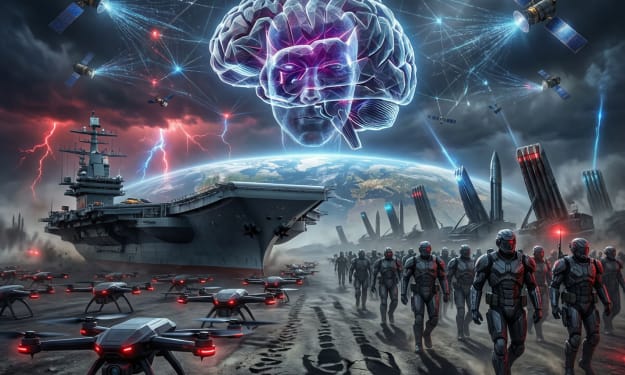
AI, Nuclear Weapons, and Accidental War
AI, Nuclear Weapons, and Accidental War In the modern world, wars are no longer fought only with soldiers, tanks, and planes. A new and dangerous element has entered global security: artificial intelligence (AI). While AI brings speed, efficiency, and advanced decision-making, it also introduces a serious risk—especially when combined with nuclear weapons. The greatest danger of the future may not be a planned nuclear war, but an accidental one.
By Wings of Time 8 months ago in History
Future Wars in the Age of Artificial Intelli
Future Wars in the Age of Artificial Intelligence If the new battlefield is hidden inside a nation’s systems, then Artificial Intelligence is becoming the most powerful weapon within it. Future wars will not begin with tanks crossing borders or fighter jets in the sky. They will begin with algorithms, data, and decisions made at machine speed. AI is changing not only how wars are fought, but also who controls power and how quickly conflicts can spiral out of control.
By Wings of Time 8 months ago in History
Looking Again at Frances Farmer
I am always surprised by the fact that Frances Farmer (1913 — 1970) was a movie star in the 1930s. There is something modern, hard-edged and contemporary about her image, perhaps because Jessica Lange played her as such in Frances, released in 1982.
By A. L. Fletcher 8 months ago in History
She Chose to Be Sicilian. Others Died for Being Sicilian.. Content Warning.
Copenhagen, 1925. There’s a young woman at the harbor, watching the Little Mermaid disappear into the fog. Her bags are at her feet. She’s got a ticket tucked in her coat. Tomorrow, she’s sailing south.
By Olga Angelucci8 months ago in History
The Muslim Math a Christian Emperor Refused to Reject
1225, Southern Italy. A Christian emperor sits across from a mathematician trained in the Islamic world. He asks a question about numbers. What happens in the next hour will quietly reshape Europe—though no one in that room realizes it yet.
By Olga Angelucci8 months ago in History
Outsiders Who Took Over Southern Italy—and Wrote Themselves In
By the early 800s, southern Italy was a mess. You had Lombard princes in one corner, Byzantine governors in another. Nobody was strong enough to call the shots, but nobody wanted to back down either. Power shifted all the time. Cities flipped sides. Loyalty was just another thing you could bargain with. The only thing holding the place together was plain exhaustion.
By Olga Angelucci8 months ago in History
Sicily Didn’t Fall Because of Love
Syracuse, early ninth century. Euphemius lingered by the water, probably longer than was wise. The harbor felt hollow, almost staged—too quiet, like the world was holding its breath. Even the smallest sounds—waves slapping wood, a foot scuffing stone, someone clearing their throat—bounced around, too loud. The soldiers behind him shifted and fidgeted, but nobody wanted to break the silence.
By Olga Angelucci8 months ago in History